 Preview
 Send
Send Share
Share
 Details

 Download
 Similars
 X-Ray
X-Ray Diaporama
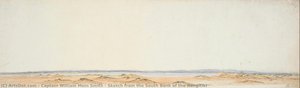
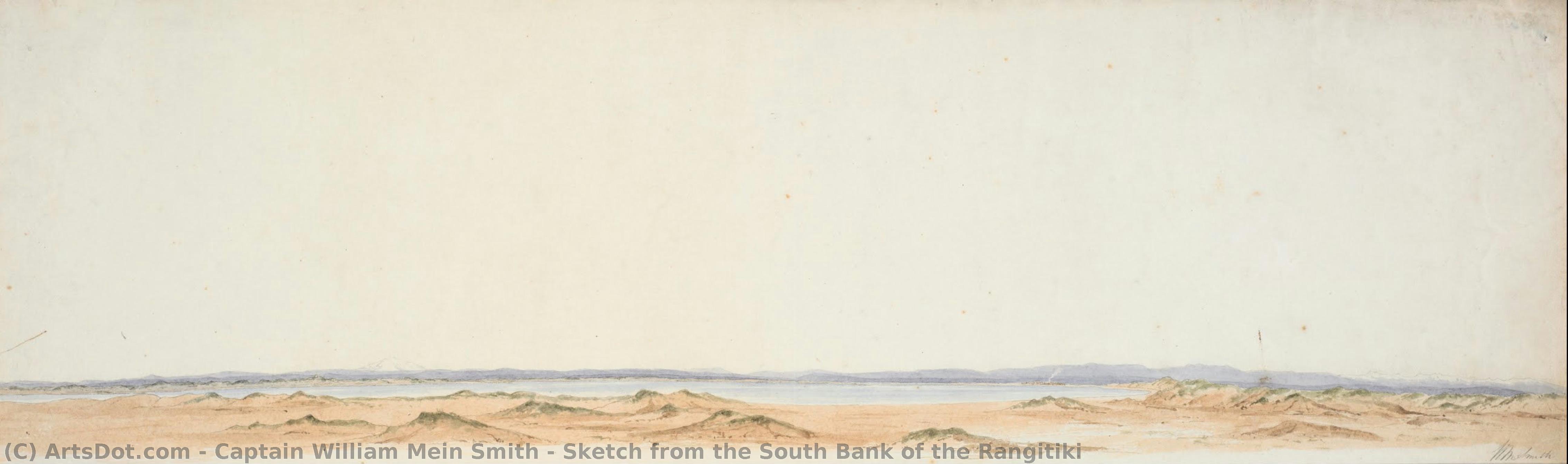
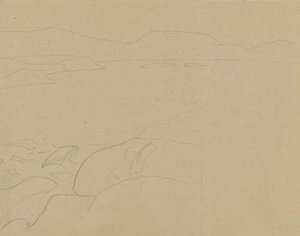
Sketch from the South Bank of the Rangitiki


 Read More
Giclée / Art Print
Museum-quality giclée or canvas print with fast production and flexible finish options. ( Buy Hand Made Painting Buy Image)




P118B $10

P118H $10

P118W $10

P438Z $10

P508JH $12

P508YH $12

P805H $10

P805Z $10

P919BZ $10

P919G $10

P919XJ $10

P959ZH $10

P968JZ $12

W106C $8

W218G $10

W218JH $8

W218Y $10

W307PJ $10

W316G $10

W316PJ $8

W316Y $10

W398PJ $8

W4111J $10

W500HY $15

W500JH $15

W692G $12

W849H $8

W940BG $15

W953PJ $8




Pick from our preset sizes that match the artwork's original proportions.

You may enter your own dimensions to fit a specific frame or space. If your selected size does not match the original image's proportions, we will either crop the artwork or extend the image with a mirrored or solid-fill edge. A digital mockup will be sent for your approval before production begins.
Please note that the on-screen preview does not reflect the actual cropping or extension. Only the mockup will accurately show the final composition.
While custom sizes are available, we recommend selecting a dimension from the predefined list to preserve the original proportions.
Worldwide Delivery () in 2 weeks instead of standard 4/5 weeks. (3 September)

Free Worldwide Express Shipping

High-Quality Linen Canvas

Full Shipping Insurance

Customs Tax Refund Guarantee

True Color Matching Guarantee

60-Day Return Policy (Defects Only)

100% Money-Back Guarantee

Bulk Discount Offer
 Glass option is only available in size under 110 CM

Sketch from the South Bank of the Rangitiki
Giclée / Art Print
Reproduction Size
-


Total Price
$ 63
Related Artworks
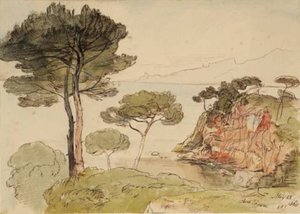
Artist Biography
The Cartographer’s Eye: The Life and Legacy of Captain William Mein Smith
In the annals of colonial history, few figures possess a dual legacy as profound as Captain William Mein Smith. To some, he was the meticulous surveyor whose precise lines and measured plans laid the very foundations of Wellington, New Zealand; to others, he was a sensitive observer of the natural world, capturing the raw, untamed beauty of a burgeoning landscape through the delicate medium of watercolor. Born in 1798 in Cape Town, South Africa, Smith’s life was shaped by the disciplined rigor of the Royal Artillery and the expansive horizons of the British Empire. His early years, spent amidst the rugged landscapes of Devon and the Scottish Borders, instilled in him a profound appreciation for topographical detail—a trait that would later bridge the gap between scientific necessity and artistic expression.
Smith’s journey was one of constant movement and observation. His service in Ireland and Canada provided more than just military experience; it offered a canvas of diverse terrains that nurtured his burgeoning talent for sketching. It was during his time in Canada, where he met his wife Louisa Wallace, that the seeds of his artistic identity truly began to take root. The precision required of an artillery officer—the ability to render accurate topographical drawings and measured plans—became the technical backbone of his creative output. This unique intersection of skill sets meant that when he was appointed Surveyor General for Edward Wakefield’s New Zealand Company in 1839, he arrived not merely as a colonial administrator, but as a visual chronicler of a new era.
Mapping a Nation: The Intersection of Science and Art
Arriving at Port Nicholson in early 1840, Smith faced the monumental task of transforming an uncharted wilderness into a structured settlement. His work was fraught with logistical perils, from navigating treacherous coastal waters to contending with the unpredictable floods that hindered the laying out of the Wellington street plan. Yet, within this struggle for order, there existed a profound artistic opportunity. As he surveyed the coastline and charted the harbors, Smith’s sketches became more than mere navigational aids; they were evocative windows into a landscape on the precipice of change. His ability to capture the essence of the New Zealand terrain—the lushness of the riverbanks and the dramatic contours of the coast—lent a human soul to the cold mathematics of cartography.
His artistic development was deeply influenced by his role as Master of Line Drawing at the Royal Military Academy, Woolwich. This formal training in precision allowed him to execute works such as his Sketch from the South Bank of the Rangitiki with a remarkable clarity that balanced scientific accuracy with aesthetic grace. In these works, one can sense the tension between the surveyor’s need for truth and the artist’s desire for beauty. He did not merely record distances; he recorded the light, the atmosphere, and the spirit of the land. His sketches served as a vital bridge, translating the complex, often intimidating reality of the New Zealand wilderness into a visual language that could be understood and admired by those far across the seas.
A Lasting Impression on the Colonial Landscape
The historical significance of Captain William Mein Smith extends far beyond the boundaries of his maps. While his administrative contributions—such as the reservation of land for Māori owners and the establishment of the Wellington town belt—were instrumental in the socio-political formation of New Zealand, his visual legacy remains an irreplaceable cultural treasure. His works offer a rare, unmediated glimpse into the pre-industrial landscape of the mid-19th century, capturing a moment in time before the heavy hand of colonization had irrevocably altered the topography he so lovingly documented.
Ultimately, Smith’s life represents a harmonious union of two seemingly disparate worlds: the rigid, structured world of military surveying and the fluid, emotive world of landscape art. He remains a pivotal figure whose meticulous observations helped define the geographical identity of a nation while his artistic sensibilities preserved its ephemeral beauty. Through his eyes, we see not just the birth of a colony, but the enduring majesty of a land that continues to inspire awe long after the surveyor’s ink has dried.

captain william mein smith
1799 - 1883 , United Kingdom
Quick Facts
- Artistic Movement Or Style: Sketch Artist
- Date Of Birth: 1798
- Date Of Death: 1883
- Full Name: William Mein Smith
- Nationality: British
- Notable Artworks: ['Sketch from the South Bank of the Rangitiki']
- Place Of Birth: London, United Kingdom
Related Articles

John Constable's Masterpieces: Explore 25 Iconic Landscapes for Your Home
Journey through John Constable's 25 most celebrated landscapes. Explore Romanticism, Dedham Vale & his masterful use of light in iconic paintings like 'Hay Wain'. Find museum-quality art reproductions and elevate your home decor on ArtsDot.com.

Romantic Landscapes: 10 Masterpieces for Your Home | ArtsDot
Journey through 10 Romantic landscape masterpieces by Friedrich, Turner & Cole. Explore emotional art, sublime nature scenes & iconic 19th-century paintings. Find museum-quality reproductions for your home at ArtsDot.com – discover the full collection online!

Evocations of Place: A Historical Journey Through Landscape Art
Explore the rich history of landscape art with ArtsDot. Discover renowned artists, movements like Impressionism & Romanticism, and expert guidance for collecting timeless pieces. Find your perfect serene escape today!

Evocations of Place: A Historical Journey Through Landscape Art
Explore the rich history of landscape art with ArtsDot. Discover renowned artists, movements like Impressionism & tonalism, and expert guidance for collecting timeless pieces. Find your perfect serene escape today!

Evoking Nature's Sublime: A Comprehensive Exploration of 19th-Century Landscape Painting
Explore the captivating world of 19th-century landscape painting! Discover renowned artists like Friedrich & Monet, key movements, and find the perfect artwork to bring nature's serenity into your home. Expert insights at ArtsDot.