 Preview
 Send
Send Share
Share
 Details

 Download
 Similars
 X-Ray
X-Ray Diaporama
Untitled (AQR5MQ)
 Oil
Oil- WallArt
- Impressionism
 1872
1872- 19th Century
 54.0 x 41.0 cm
 Austrian Gallery Belvedere
 Read More
Hand Made Oil Reproduction
Hand-painted oil on canvas in your size and frame, made to order by our artists. ( Buy Print Buy Image)




P118B $10

P118H $10

P118W $10

P438Z $10

P508JH $12

P508YH $12

P805H $10

P805Z $10

P919BZ $10

P919G $10

P919XJ $10

P959ZH $10

P968JZ $12

W106C $8

W218G $10

W218JH $8

W218Y $10

W307PJ $10

W316G $10

W316PJ $8

W316Y $10

W398PJ $8

W4111J $10

W500HY $15

W500JH $15

W692G $12

W849H $8

W940BG $15

W953PJ $8




Pick from our preset sizes that match the artwork's original proportions.

You may enter your own dimensions to fit a specific frame or space. If your selected size does not match the original image's proportions, we will either crop the artwork or extend the painting with additional hand-painted elements. A digital mockup will be sent for your approval before production begins.
Please note that the on-screen preview does not reflect the actual cropping or extension. Only the mockup will accurately show the final composition.
While custom sizes are available, we recommend selecting a dimension from the predefined list to preserve the original proportions.
After order, ArtsDot.com team will email client for instructions and provide a mockup preview
Worldwide Delivery () in 3/4 weeks instead of standard 5 weeks. (16 August). No compromise on quality.

Free Worldwide Express Shipping

High-Quality Linen Canvas

Full Shipping Insurance

Customs Tax Refund Guarantee

True Color Matching Guarantee

60-Day Return Policy (Defects Only)

100% Money-Back Guarantee

Bulk Discount Offer
 Glass option is only available in size under 110 CM

Untitled (AQR5MQ)
Reproduction Medium
Reproduction Size
-


Total Price
$ 263
Artwork Description
A Symphony of Light and Leaf: The Impressionistic Vision of Carl Eduard Schuch
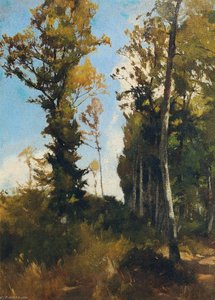
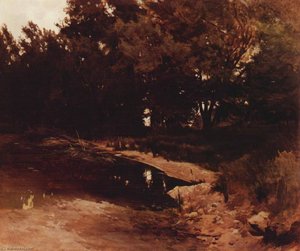
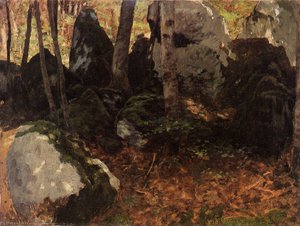
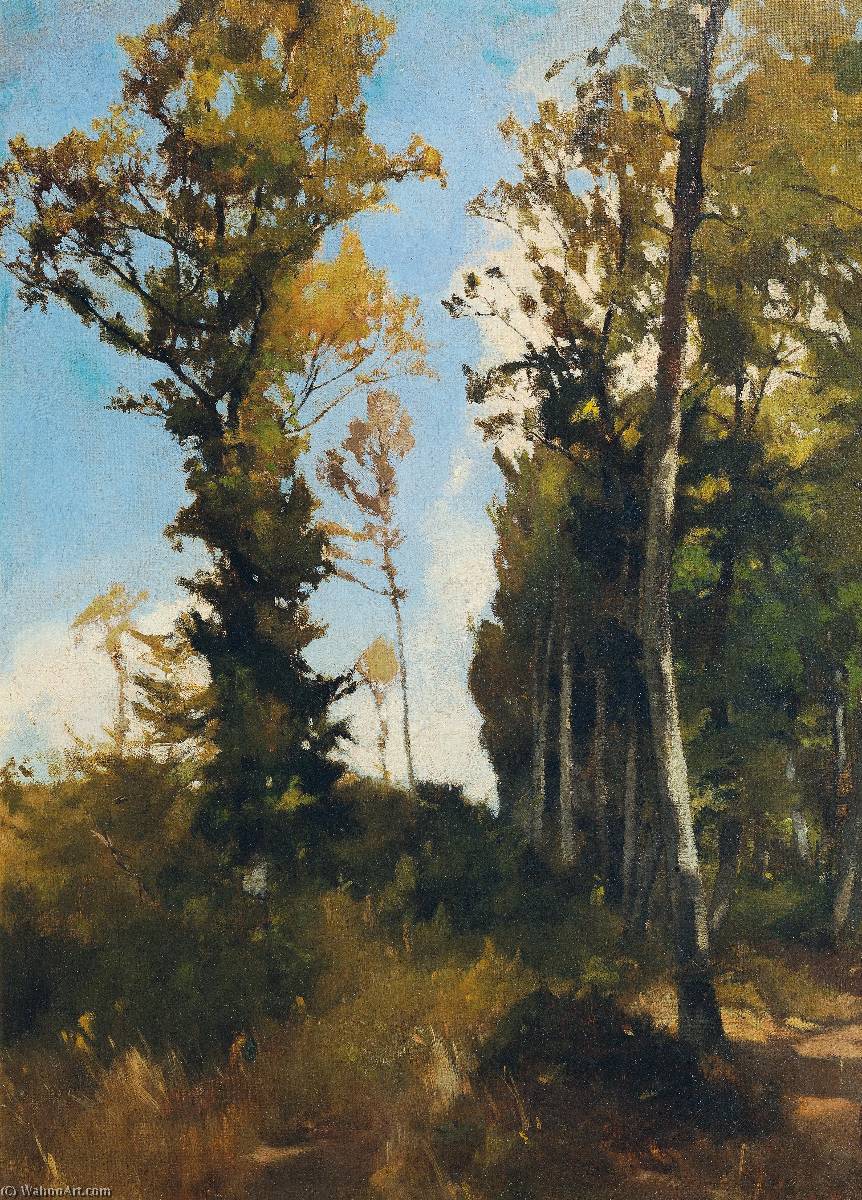
In the quietude of 1872, Carl Eduard Schuch captured a moment of profound natural serenity in his untitled landscape, a work that serves as a breathtaking window into a verdant, breathing forest. This oil on canvas is not merely a depiction of trees and foliage; it is an evocative exploration of atmosphere and the ephemeral dance of light. Through an impressionistic lens, Schuch moves away from the rigid constraints of academic precision to embrace the loose, spontaneous brushstrokes that define the movement. The composition draws the viewer’s eye upward through a rhythmic arrangement of vertical trunks, creating a sense of soaring height and immersive depth. As one gazes into this woodland scene, the slightly elevated perspective offers an intimate invitation to wander through the undergrowth, feeling the soft, diffused light of an overcast morning or the golden hush of late afternoon.
The technical mastery of Schuch is evident in his sophisticated use of color and texture. Eschewing sharp outlines, the artist employs organic shapes and expressive lines to define the boundaries of leaves and branches, allowing the elements to bleed into one another with a painterly grace. The palette is a warm, harmonious blend of earthy tones—deep ochres, mossy greens, and rich umbers—interrupted by delicate touches of sky blue and sun-drenched yellow. This careful application of oil paint creates a tactile surface where visible brushwork conveys a sense of movement and vitality. Through the use of atmospheric perspective, Schuch masterfully renders distance; the far reaches of the forest appear paler and more ethereal, pulling the viewer deeper into the heart of the landscape and creating a palpable sense of three-dimensional space.
A Bridge Between Realism and Modernism
To understand this masterpiece, one must consider Schuch’s unique position in the late nineteenth-century art world. As an Austrian painter whose journey took him through the cultural epicenters of Germany, Italy, and France, Schuch stood at a pivotal crossroads between the grounded traditions of realism and the burgeoning innovations of modernism. While his early training under Ludwig Halauska provided him with a robust foundation in composition, his mature style reflects the profound influence of masters like Monet and Rembrandt. In this particular work, we see the spirit of Impressionism in the focus on light, yet there remains a structural integrity and a tonal depth reminiscent of the Old Masters. This duality makes the piece particularly compelling for collectors who appreciate art that honors classical technique while embracing modern emotional expression.
Beyond its technical brilliance, the painting possesses an enduring emotional resonance. There is no overt symbolism or complex narrative to decode; instead, the work speaks directly to the soul through its pure naturalism. It evokes a profound sense of tranquility, peace, and a primal connection to the earth. For the discerning interior designer or art enthusiast, this piece offers more than just decoration; it provides an atmospheric anchor for a room. Whether placed in a sunlit gallery or a quiet study, the painting’s ability to evoke the stillness of the forest makes it a timeless addition to any collection. It is a celebration of the quiet dignity found in nature, captured forever in a moment of luminous transition.
Related Artworks
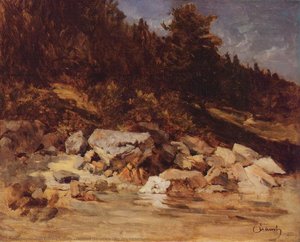
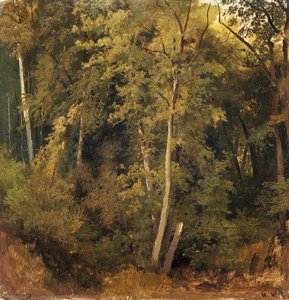
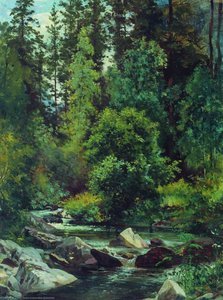
Artist Biography
The Luminous Transition: Carl Eduard Schuch's Artistic Journey
Carl Eduard Schuch, an Austrian painter whose life spanned the vibrant and tumultuous late nineteenth century, remains a fascinating figure at the crossroads of artistic movements. Born in Vienna in 1846, his creative spirit, however, found its most fertile ground far from his birthplace. His travels took him through the cultural melting pots of Germany, Italy, and France, geographies that profoundly shaped the palette and philosophy of his art. Schuch’s primary focus settled upon the quiet dignity of still lifes and the expansive breath of landscapes. Early in his formal training, between 1865 and 1867, he studied landscape painting under the esteemed academician Ludwig Halauska, an apprenticeship that laid a foundational understanding of composition and light.
Yet, even in these early studies, Schuch harbored a unique intellectual curiosity. He once described his initial attempts at studying heads as if they were still lifes—a desire to capture tone by painstaking tone, stripping away the ephemeral veil of overt emotion. This very approach—the meticulous observation underlying seemingly simple subjects—would become a hallmark of his mature style.
Echoes of Masters: Influences and Development
Schuch’s artistic development was marked by an intense absorption of history's great masters, particularly during his time in Paris between 1882 and 1894. It was here that the revolutionary spirit of Impressionism began to resonate deeply within him. He found himself profoundly impressed by Claude Monet, whom he admired enough to compare him favorably to Rembrandt in the realm of plein-air painting. However, his gaze often drifted back through time, finding a deeper kinship with the profound chiaroscuro and psychological depth inherent in the work of Rembrandt himself, alongside the earthy realism championed by the Barbizon School artists.
His dedication to color was perhaps most evident during summers spent in the Netherlands. In 1884 and 1885, he immersed himself in the legacy of the Dutch Old Masters, meticulously filling his notebooks with detailed chromatic observations gleaned from admired canvases. This deep study of pigment and light connected him closely with the circle surrounding Wilhelm Leibl, a group to which Schuch proved himself most devotedly attuned regarding the sheer power of color.
A Life Shared: Friendship and Artistic Partnership
Among the many relationships that colored his life, perhaps none was as formative or dramatic as his bond with the artist Karl Hagemeister. The two men met in Bavaria and embarked on a shared journey across Central Europe, eventually settling for three years in the small village of Ferch, south of Berlin. In this intimate setting, they shared not only a meager dwelling but an entire artistic existence. While the robust Hagemeister tended to the more sensitive Schuch through acts of daily care—cooking, hunting, and fishing—their connection deepened into something speculated by biographers to be far more than mere friendship.
This idyllic period eventually fractured when Schuch returned to Paris. The final meeting between them was fraught with tension, culminating in a disagreement over the merits of Hagemeister’s recently completed work, "Teller mit Austern." This falling out led to a dramatic severance: Hagemeister reportedly disposed of six of his own works into the Seine, marking an abrupt and painful end to their shared chapter.
Bridging Eras: Schuch's Historical Significance
Carl Eduard Schuch’s oeuvre is not merely a collection of beautiful paintings; it represents a crucial moment in art history. His work stands as a tangible bridge, charting the passage from the established conventions of academic realism toward the burgeoning freedoms of modern artistic expression in Vienna and beyond. He absorbed the structured observation of the Old Masters while embracing the immediacy of the plein-air movement. Whether capturing the quiet dignity of a still life or the shifting light across a landscape, Schuch’s touch speaks to an artist deeply engaged with both tradition and inevitable change.
His legacy invites us to view art not as a destination, but as a continuous conversation between what has been and what is yet to come.
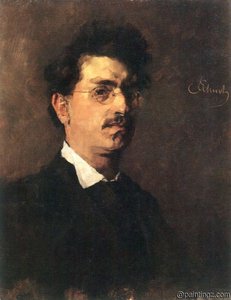
carl eduard schuch
1846 - 1903 , Austria
Quick Facts
- Artistic Movement Or Style: Realism to Modernism
- Artists Who Influenced This Artist:
- Claude Monet
- Rembrandt
- Date Of Birth: 1846
- Date Of Death: 1903
- Full Name: Carl Eduard Schuch
- Nationality: Austrian
- Place Of Birth: Vienna, Austria
Related Articles
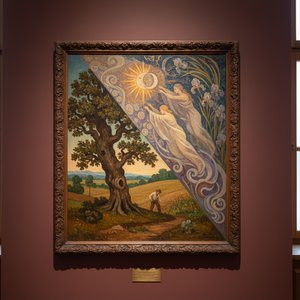
Carl Eduard Schuch: Bridging Realism & Symbolism in Late 19th-Century Austrian Painting
Explore the captivating landscapes & still lifes of Carl Eduard Schuch (1846-1903), a pivotal Austrian painter bridging realism and modernism. Discover his influences, unique style, and lasting legacy with ArtsDot.
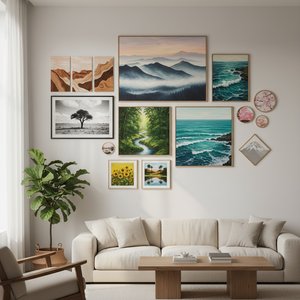
Beyond the Horizon: 10 Landscape Masterpieces for Your Home Decor
Journey through 10 breathtaking landscape paintings by Monet, Van Gogh & more! Explore iconic artworks, artistic techniques & find inspiration for your home decor. Museum-quality reproductions at ArtsDot.com. Discover all masterpieces on ArtsDot.com

Impressionistic Landscapes: 10 Masterpieces That Changed Art & Decor
Journey into the heart of Impressionism! Explore 10 masterpieces by Monet, Renoir & Degas that revolutionized landscape art. Discover their stories, techniques & find museum-quality reproductions to elevate your home decor on ArtsDot.com.
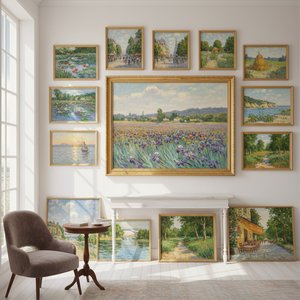
Impressionist Landscapes: 10 Masterpieces for Your Home | ArtsDot
Journey through 10 iconic Impressionist landscapes by Monet, Renoir & Degas. Explore the history, techniques & emotions behind these masterpieces. Find museum-quality reproductions for your home at ArtsDot.com – where art comes to life! Discover all masterpieces on ArtsDot.com

Evocations of Place: A Historical Journey Through Landscape Art
Explore the rich history of landscape art with ArtsDot. Discover renowned artists, movements like Impressionism & Romanticism, and expert guidance for collecting timeless pieces. Find your perfect serene escape today!