

 Preview
 Send
Send Share
Share
 Details

 Download
 Similars
 X-Ray
X-Ray Diaporama
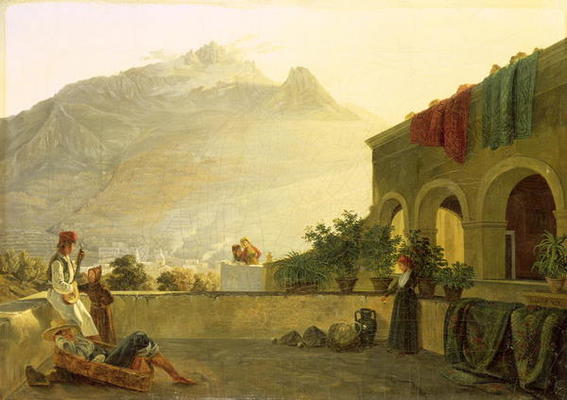
The Sentry On Ischia
 Read More
Purchase a high-resolution, enhanced digital image, far superior to the online preview.
Each file is meticulously prepared by our in-house specialists using advanced tools and expert manual retouching. We ensure every image has exceptional clarity, precise color accuracy, and fine detail.
The final file is delivered via email within 72 hours, optimized for immediate use in professional, editorial, and print environments. This is the same quality trusted by top-tier design studios, publishers, and galleries.
Digital Image
Download a high-resolution file for personal display, printing, and creative projects. ( Buy Print Buy Hand Made Painting)
Included in Every Digital Image Order
Expert Digital Delivery, Guaranteed
When you choose ArtsDot.com, you're not just getting an image - you're receiving a professionally enhanced digital artwork, crafted with precision and backed by a satisfaction guarantee. Here's everything that comes with your order, automatically:

Fast Email Delivery
Your high-resolution digital image file will be emailed to you within 72 hours of ordering - ready for immediate use.

AI-Enhanced Digital File
Your artwork is professionally optimized using advanced AI tools and manual editing, ensuring maximum detail, clarity, and color accuracy.

Free Lifetime Re-Delivery
Accidentally deleted or lost your file? No worries - we'll resend it to you anytime, free of charge.

No Import Fees - Ever
Enjoy your artwork instantly with zero customs, duties, or delivery fees - digital downloads are always tax-free.

Color Accuracy Guarantee
We ensure your digital image reflects the original colors as closely as possible using professional tools and color management.

60-Day Satisfaction Guarantee
If you're not satisfied with your digital image, we'll revise it or refund 100% within 60 days - no questions asked.

100% Money-Back Guarantee
Not satisfied? Get a full refund within 60 days of receiving your digital file - no questions asked.

Bulk Order Discounts
Buy 3 images, save 10% - Buy 5, save 15% - Buy 10+, save 20%. Great for creative projects, galleries, and agencies.
Related Artworks
Artist Biography
Early Life and Artistic Foundations
Carl Wilhelm Götzloff, born in Dresden on September 27th, 1799, emerged from a modest background – his father was a town constable. From an early age, the allure of artistic expression beckoned him, leading to enrollment at the prestigious Dresden Academy of Fine Arts in 1814. This formative period, lasting until 1821, proved pivotal as he absorbed the teachings of luminaries like Caspar David Friedrich and Johan Christian Dahl. These masters instilled within him a deep reverence for landscape painting, a genre that would define his career trajectory. Even during his academic years, Götzloff demonstrated exceptional talent, earning recognition with awards for his landscapes at Academy exhibitions in 1820. This early success fueled his ambition and paved the way for further artistic exploration. A scholarship provided him with the invaluable opportunity to embark on a study trip across Germany and Switzerland, broadening his horizons and refining his skills before a transformative journey to Rome alongside fellow artist Anton Josef Dräger.The Italian Sojourn and Rise to Prominence
The years 1822-1824 marked a period of intense artistic immersion in Italy. Götzloff, accompanied by Dräger, delved into the rich cultural heritage of the region, absorbing its light, color, and atmosphere. This experience profoundly shaped his style, moving him towards a Romantic realism characterized by vibrant hues and meticulous detail. A crucial turning point arrived with his association with Baron Karl Friedrich Emich von Uexküll-Gyllenband, who became his patron and ultimately led to Götzloff’s relocation to Naples in 1825. This move proved decisive; Naples would become his adopted home and the primary source of inspiration for much of his celebrated work. He quickly integrated into the artistic community, sharing a studio with Antonie Sminck Pitloo, Giacinto Gigante, and Teodoro Duclère. Recognition followed swiftly – in 1825, he was named an honorary member of the Dresden Academy, solidifying his standing within the art world. His talent extended beyond painting; by 1827, he served as an art teacher to Prince Leopold I, demonstrating his pedagogical skills and refined aesthetic sensibility.Court Painter and Artistic Maturity
Götzloff’s artistic prowess culminated in his appointment as Court Painter to Ferdinand II, King of the Two Sicilies, in 1835. This prestigious position afforded him both financial security and access to a discerning clientele. While briefly returning to Dresden that same year to gain full membership within the Academy and marry Louisa Chentrens, Naples remained his artistic center. His paintings from this period showcase a masterful command of light and shadow, capturing the beauty and vibrancy of the Neapolitan landscape with remarkable precision. He became known for scenes depicting coastal life, bustling harbors, and picturesque Italian towns – works that resonated with both local patrons and international collectors. In 1846, he received another honor—appointment as “Agent for Antiquities” for the museums of Berlin, a testament to his scholarly knowledge and discerning eye. Commissions from the Royal Family in Russia further cemented his reputation as an artist of considerable stature.Later Life, Challenges, and Legacy
The latter part of Götzloff’s life was marked by increasing political unrest and financial hardship. The tumultuous events of 1848 prompted a move to Sorrento with his family in an attempt to escape the turmoil. However, this proved insufficient, leading him to seek employment in Berlin with the assistance of friend August Kestner. A brief period of military service followed in 1849, accompanying the 4th Bernese regiment during their conquest of Catania. He returned to Naples in 1850 and achieved knighthood in the Order of Leopold in 1852. Tragically, his wife Louisa passed away in 1855, adding to his personal struggles. His hopes for a triumphant return to Germany were dashed in 1864 when paintings submitted to an exhibition in Dresden failed to find buyers, leaving him financially strained and deeply disappointed. Carl Wilhelm Götzloff died in poverty in Naples on January 18th, 1866. Despite the hardships he faced in his final years, his legacy endures through his captivating landscapes, which offer a poignant glimpse into the beauty of 19th-century Italy and demonstrate a remarkable blend of Romantic sensibility and meticulous realism. His works are held in esteemed collections such as the Grohmann Museum in Milwaukee and the Metropolitan Museum of Art, ensuring that his artistic vision continues to inspire generations of art enthusiasts.Influences and Artistic Style
Götzloff’s artistic development was profoundly shaped by the influences of Caspar David Friedrich and Johan Christian Dahl during his time at the Dresden Academy. From Friedrich, he absorbed a deep appreciation for the sublime power of nature and a penchant for evocative landscapes imbued with spiritual resonance. Dahl's influence instilled within him a meticulous attention to detail and a mastery of atmospheric perspective. However, Götzloff’s Italian sojourn proved transformative, leading him to embrace a more vibrant palette and a Romantic realism that distinguished his work from his early influences. He skillfully blended the emotional intensity of German Romanticism with the luminosity and warmth of the Mediterranean light. His paintings are characterized by detailed depictions of coastal scenes, bustling harbors, and picturesque Italian towns. He possessed an exceptional ability to capture the nuances of light and shadow, creating a sense of depth and atmosphere that draws the viewer into his idyllic landscapes. While often categorized as a Romantic painter, Götzloff’s work also anticipates elements of Realism, particularly in its meticulous observation of everyday life and its commitment to portraying scenes with accuracy and authenticity. His paintings offer a unique window into 19th-century Italy, capturing not only the beauty of the landscape but also the vibrancy of its culture and people.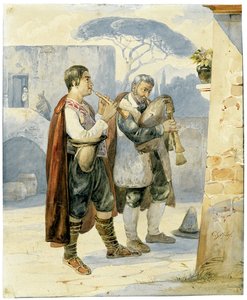
carl wilhelm goetzloff
1799 - 1866 , Germany
Quick Facts
- Artistic Movement Or Style: Romantic realism
- Artists Who Influenced This Artist:
- Caspar David Friedrich
- Johan Christian Dahl
- Date Of Birth: 1799
- Date Of Death: 1866
- Full Name: Carl Wilhelm Goetzloff
- Nationality: German
- Notable Artworks:
- Naples
- Pozzuoli
- Palermo Di Belmonte
- Place Of Birth: Dresden, Germany

