 Preview
 Send
Send Share
Share
 Details

 Download
 Similars
 X-Ray
X-Ray Diaporama
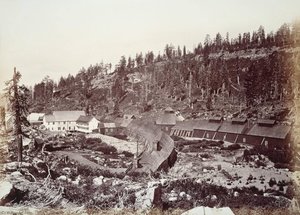
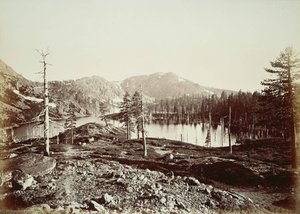
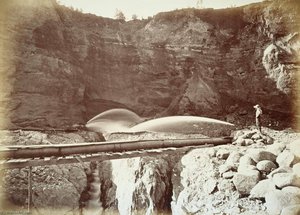
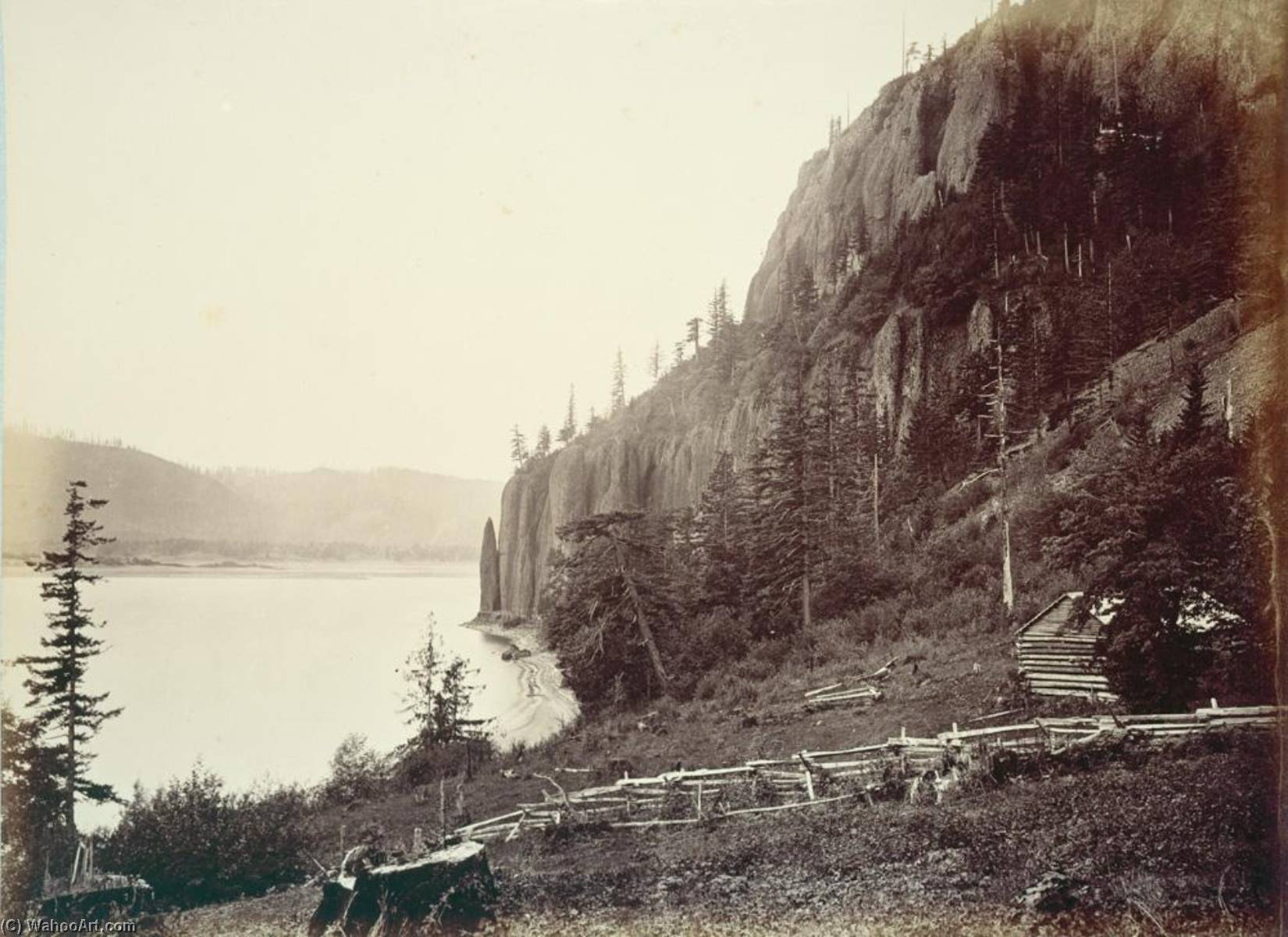
Untitled (AQTDLR)


 Read More
Hand Made Oil Reproduction
Hand-painted oil on canvas in your size and frame, made to order by our artists. ( Buy Print Buy Image)




P118B $10

P118H $10

P118W $10

P438Z $10

P508JH $12

P508YH $12

P805H $10

P805Z $10

P919BZ $10

P919G $10

P919XJ $10

P959ZH $10

P968JZ $12

W106C $8

W218G $10

W218JH $8

W218Y $10

W307PJ $10

W316G $10

W316PJ $8

W316Y $10

W398PJ $8

W4111J $10

W500HY $15

W500JH $15

W692G $12

W849H $8

W940BG $15

W953PJ $8




Pick from our preset sizes that match the artwork's original proportions.

You may enter your own dimensions to fit a specific frame or space. If your selected size does not match the original image's proportions, we will either crop the artwork or extend the painting with additional hand-painted elements. A digital mockup will be sent for your approval before production begins.
Please note that the on-screen preview does not reflect the actual cropping or extension. Only the mockup will accurately show the final composition.
While custom sizes are available, we recommend selecting a dimension from the predefined list to preserve the original proportions.
After order, ArtsDot.com team will email client for instructions and provide a mockup preview
Worldwide Delivery () in 3/4 weeks instead of standard 5 weeks. (17 August). No compromise on quality.

Free Worldwide Express Shipping

High-Quality Linen Canvas

Full Shipping Insurance

Customs Tax Refund Guarantee

True Color Matching Guarantee

60-Day Return Policy (Defects Only)

100% Money-Back Guarantee

Bulk Discount Offer
 Glass option is only available in size under 110 CM

Untitled (AQTDLR)
Reproduction Medium
Reproduction Size
-


Total Price
$ 263
Related Artworks
Artist Biography
Carleton Watkins: Pioneer of Landscape Photography
Early Life and Origins (1829-1851)
- Born: November 11, 1829, in Oneonta, New York.
- Carleton E. Watkins was the eldest of eight children born to John and Julia Watkins, a carpenter and an innkeeper respectively.
- He enjoyed a rural upbringing, developing skills as a hunter and fisherman, and participating in local activities like the glee club and Presbyterian church choir.
- In 1851, driven by the allure of fortune, Watkins journeyed to San Francisco with his childhood friend, Collis Huntington.
Early Career & Photographic Beginnings (1851-1861)
- Though initially unsuccessful in finding gold, both Watkins and Huntington found success in their respective fields.
- Watkins began working as a supply deliverer for mining operations before becoming a store clerk at George Murray’s bookstore.
- A pivotal moment: An unexpected vacancy at the studio of daguerreotypist Robert H. Vance led Watkins to an apprenticeship, despite having no prior photographic experience.
- He quickly mastered the art form, surpassing his instructor and establishing a reputation for quality work.
- By 1858, Watkins established his own photography business, undertaking commissions like illustrating California for James Mason Hutchings and documenting mining estates.
Yosemite & the Mammoth Plate Era (1861-1867)
- The turning point: In July 1861, Watkins traveled to Yosemite Valley, equipped with his mammoth-plate camera (using 18x22 inch glass plates) and a stereoscopic camera.
- He captured some of the first detailed photographs of Yosemite, showcasing its grandeur to an eastern audience.
- These images were instrumental in convincing Congress to preserve Yosemite Valley as a national park – a testament to the power of visual documentation.
- In 1864, he was commissioned by the California State Geological Survey to photograph Yosemite.
- He opened his first public gallery in 1867 and exhibited at the Universal Exposition in Paris, earning a medal for his work.
Success, Setbacks & Later Life (1867-1916)
- Watkins’ “Yosemite Art Gallery” displayed over a hundred large Pacific Coast views and thousands of stereoscopic images.
- Business Challenges: Despite artistic success, Watkins struggled with business management and lost his gallery to creditor J.J. Cook, who then reproduced his work without credit due to the lack of copyright laws for photographs at the time.
- He responded by creating a “New Series” of images, attempting to reclaim his artistic vision.
- Watkins married Frances Sneed in 1879 and had two children: Julia (born 1881) and Collis (born 1883).
- Progressive eyesight loss hampered his work in the 1890s, culminating in an inability to complete a commission from Phoebe Hearst.
Final Years & Legacy
- Financial hardship led the Watkins family to live in a railroad car for eighteen months.
- The 1906 San Francisco earthquake and fire destroyed his studio, along with countless photographs and negatives.
- Watkins retired to Capay Ranch and was declared incompetent in 1910, entering the Napa State Hospital for the Insane.
- Death: He died in 1916 and was buried in an unmarked grave on hospital grounds.
- Watkins’ legacy endures as a pioneer of landscape photography, whose images not only captured the beauty of the American West but also played a crucial role in its preservation.
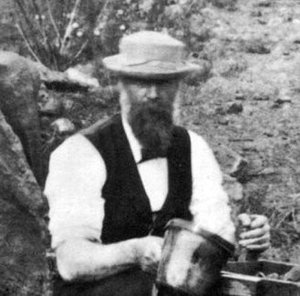
Carleton Watkins
1829 - 1916
Quick Facts
- Birth Date: November 11, 1829
- Birth Place: Oneonta, New York
- Death Date: 1916
- Influenced: United States conservation efforts
- Influenced By: Robert H. Vance
- Movement: American Landscape Photography
- Name: Carleton Watkins
- Nationality: American
- Notable Works:
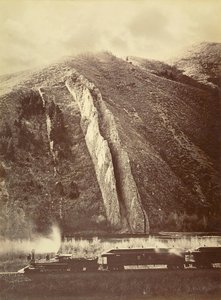
- The Devil
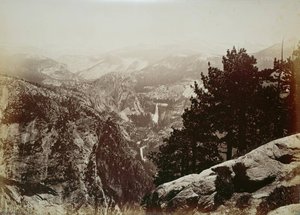
- Pohono, Bridal Veil, 900 Feet, Yosemite
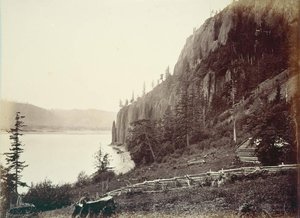
- Castle Rock, Columbia River
Related Articles

Beyond the Horizon: 10 Landscape Masterpieces for Your Home Decor
Journey through 10 breathtaking landscape paintings by Monet, Van Gogh & more! Explore iconic artworks, artistic techniques & find inspiration for your home decor. Museum-quality reproductions at ArtsDot.com. Discover all masterpieces on ArtsDot.com

Evocations of Place: A Historical Journey Through Landscape Art
Explore the rich history of landscape art with ArtsDot. Discover renowned artists, movements like Impressionism & Romanticism, and expert guidance for collecting timeless pieces. Find your perfect serene escape today!
Grant Wood & American Regionalism: Identity, Myth & the Rural Landscape
Explore the world of Grant Wood & American Regionalism with ArtsDot. Discover the symbolism behind 'American Gothic', recurring themes, and the movement's lasting impact on art history. High-quality reproductions available.
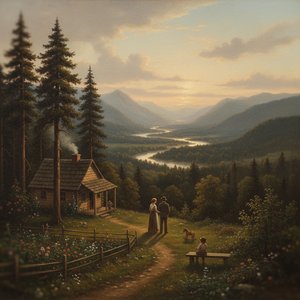
Herman Herzog: Capturing American Landscapes & the Pursuit of Domestic Idealism
Explore the captivating landscapes of Herman Herzog, a pivotal American artist known for his realistic depictions of Yosemite & Florida scenes. Discover his legacy, artistic journey, and market value with ArtsDot.
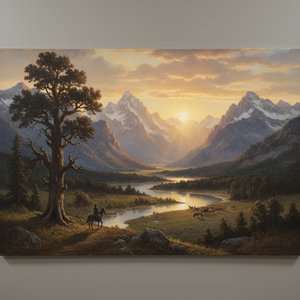
Albert Bierstadt: Luminosity, Landscape & the American Ideal
Explore the breathtaking landscapes of Albert Bierstadt, master of the American West & a leading figure in the Hudson River School. Discover his luminous style and iconic paintings – a timeless investment for art lovers.