 Preview
 Send
Send Share
Share
 Details

 Download
 Similars
 X-Ray
X-Ray Diaporama
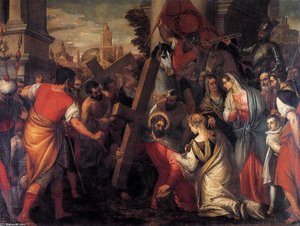
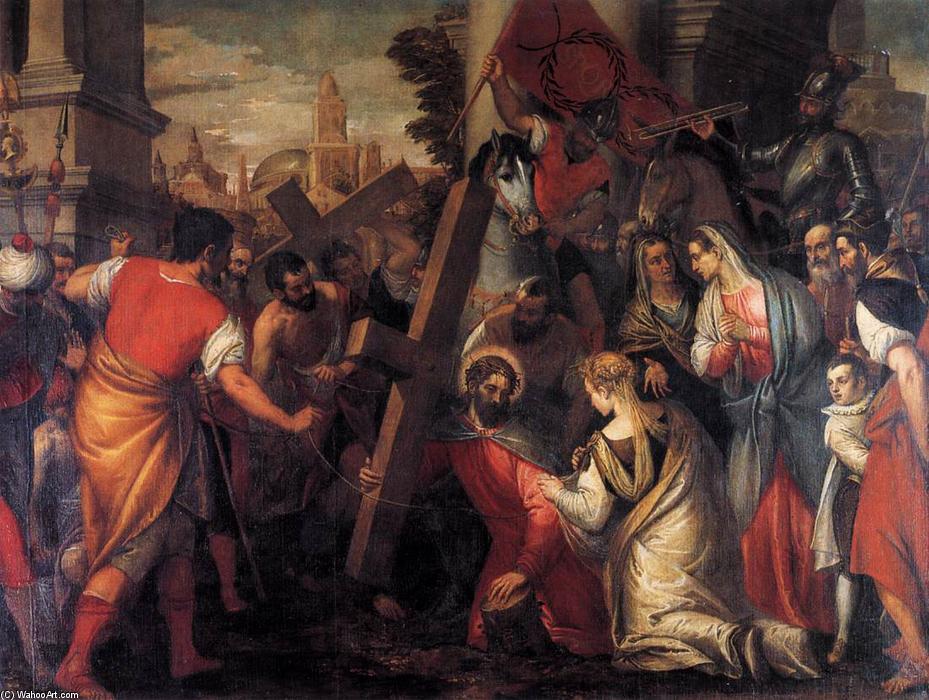
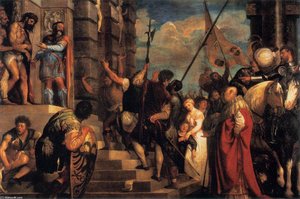
Jesus Meeting Veronica

 Read More
Hand Made Oil Reproduction
Hand-painted oil on canvas in your size and frame, made to order by our artists. ( Buy Print Buy Image)




































Pick from our preset sizes that match the artwork's original proportions.

You may enter your own dimensions to fit a specific frame or space. If your selected size does not match the original image's proportions, we will either crop the artwork or extend the painting with additional hand-painted elements. A digital mockup will be sent for your approval before production begins.
Please note that the on-screen preview does not reflect the actual cropping or extension. Only the mockup will accurately show the final composition.
While custom sizes are available, we recommend selecting a dimension from the predefined list to preserve the original proportions.
After order, ArtsDot.com team will email client for instructions and provide a mockup preview
Worldwide Delivery () in 3/4 weeks instead of standard 5 weeks. (17 August). No compromise on quality.

Free Worldwide Express Shipping

High-Quality Linen Canvas

Full Shipping Insurance

Customs Tax Refund Guarantee

True Color Matching Guarantee

60-Day Return Policy (Defects Only)

100% Money-Back Guarantee

Bulk Discount Offer
 Glass option is only available in size under 110 CM

Jesus Meeting Veronica
Reproduction Medium
Reproduction Size
-


Total Price
$ 263
Related Artworks
Artist Biography
Carlo Caliari (1570-1596): A Venetian Echo of Veronese
The name Carlo Caliari, though relatively obscure compared to his renowned father Paolo Veronese, represents a fascinating and crucial chapter in the artistic evolution of 16th-century Venice. Born in 1570 within a family steeped in painting tradition – his grandfather a stonecutter, his uncle Benedetto a respected artist in his own right – Carlo’s life was inextricably linked to the legacy of Veronese, yet he forged a distinct path, demonstrating both inherited skill and burgeoning individuality. His tragically short career, ending at just 26 years old, left behind a body of work that offers a poignant glimpse into the workshop dynamics of Venice's most celebrated painter and reveals an artist grappling with his father’s immense shadow while simultaneously establishing his own unique voice.
Carlo’s early artistic development was profoundly shaped by his apprenticeship within Veronese’s studio. He wasn’t merely a servant or assistant; he was, according to contemporary accounts, the most talented of Veronese's sons and a key figure in maintaining the workshop’s operations after Paolo’s death in 1588. This period witnessed Carlo absorbing not just technical skills – the mastery of color, composition, and perspective – but also the stylistic nuances that defined his father’s oeuvre: the opulent settings, the dramatic lighting, and the meticulous detail characteristic of Veronese's grand narratives. Crucially, he also benefited from the influence of his uncle Benedetto Caliari, a skilled artist in his own right, further broadening Carlo’s artistic horizons.
However, to label Carlo simply as a mere copyist or follower would be a grave misjudgment. While undeniably influenced by Veronese and his uncle, Carlo's work gradually developed its own distinctive qualities. His early signed paintings – including “Angelica and Medoro” (circa 1584) and the “Nativity” (circa 1588) from Brescia – demonstrate a delicate precision and an attention to detail that sets them apart from his father’s more robust style. These works showcase a refined sensibility, a subtle use of color, and a focus on intricate details—particularly in the depiction of landscapes and costumes—that suggest a growing artistic independence.
The Bassano Connection and Shared Techniques
Carlo's training extended beyond Veronese’s studio to encompass the teachings of Francesco Bassano, another prominent Venetian painter. This connection is evident in several works attributed to Carlo, particularly frescoes at the Villa Loredan in Padua and Sant’Urbano, where he shared a stylistic kinship with the Bassano family – known for their elegant compositions and refined techniques. The influence of Bassano manifests itself in Carlo's approach to rendering figures, his use of light and shadow, and his ability to create a sense of atmosphere and depth.
Despite these influences, Carlo’s style remained distinctly his own. He retained Veronese’s penchant for elaborate settings and dramatic narratives while injecting a greater degree of intimacy and emotional resonance into his paintings. His “Saint Augustine dictates his ‘Rules’ to the Irregular Canons Lateran” (circa 1602) exemplifies this shift, showcasing a more restrained palette, a softer touch, and a focus on conveying spiritual contemplation rather than mere spectacle.
Key Works and Artistic Style
Among Carlo's most notable works are “Bearded Man Wearing a Ruff” (circa 1590), currently housed in the Musée d’Art Moderne de la Ville de Paris, and the signed “Saint Mathieu et l'Ange,” which sold at Christie’s in Paris in 2005. These paintings reveal a remarkable command of technique and a growing artistic maturity. Carlo’s compositions are often characterized by their clarity, balance, and harmonious color schemes. He skillfully employed perspective to create a sense of depth and space, and his figures possess a graceful elegance and expressive quality.
Carlo's work is frequently categorized as belonging to the Venetian Baroque style, yet it also exhibits elements of Mannerism and early Renaissance influence. His paintings are imbued with a sense of lyricism and spirituality that distinguishes them from the more overtly dramatic works of his father. He skillfully blended these influences, creating a unique artistic voice that reflects both his family’s legacy and his own individual sensibilities.
A Tragic Legacy and Historical Significance
Carlo Caliari's life was tragically cut short at the age of 26, likely due to illness. His untimely death deprived the art world of a promising talent who could have potentially developed into a major figure in Venetian painting. Despite his brief career, Carlo’s work holds significant historical value as it provides valuable insights into the dynamics of Veronese's workshop and the evolution of Venetian art during the late 16th century.
His paintings serve as a bridge between the artistic styles of his father and uncle, demonstrating how Carlo absorbed their techniques while simultaneously forging his own distinctive path. Studying Carlo Caliari’s oeuvre allows us to appreciate not only Veronese's genius but also the contributions of lesser-known artists who played a vital role in shaping Venice’s rich artistic heritage. He remains a testament to the enduring legacy of family tradition and the creative spirit that flourished within the vibrant art scene of Renaissance Venice.
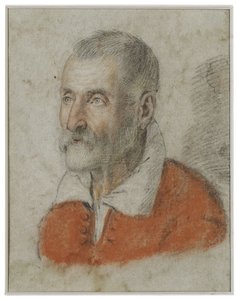
carlo caliari
1570 - 1596 , Italy
Quick Facts
- Artistic Movement Or Style: Venetian Renaissance
- Artists Or Movements Influenced By This Artist: ['Veronese School']
- Artists Who Influenced This Artist:
- Paolo Veronese
- Benedetto Caliari
- Date Of Birth: 1570
- Date Of Death: 1596
- Full Name: Carlo Cannovaro Caliari
- Nationality: Italian
- Notable Artworks:
- Shah Abbas Embassy
- Jesus Meeting Veronica
- Place Of Birth: Venice, Italy