 Preview
 Send
Send Share
Share
 Details

 Download
 Similars
 X-Ray
X-Ray Diaporama
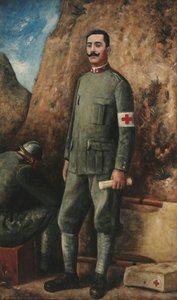
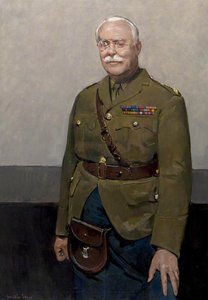
Portrait of Giovanni Ballerio
 Oil On Canvas
- WallArt
 1928
1928 200.0 x 120.0 cm
 Ca’ Granda – Ospedale Maggiore Policlinico
 Read More
Giclée / Art Print
Museum-quality giclée or canvas print with fast production and flexible finish options. ( Buy Hand Made Painting Buy Image)




P118B $10

P118H $10

P118W $10

P438Z $10

P508JH $12

P508YH $12

P805H $10

P805Z $10

P919BZ $10

P919G $10

P919XJ $10

P959ZH $10

P968JZ $12

W106C $8

W218G $10

W218JH $8

W218Y $10

W307PJ $10

W316G $10

W316PJ $8

W316Y $10

W398PJ $8

W4111J $10

W500HY $15

W500JH $15

W692G $12

W849H $8

W940BG $15

W953PJ $8




Pick from our preset sizes that match the artwork's original proportions.

You may enter your own dimensions to fit a specific frame or space. If your selected size does not match the original image's proportions, we will either crop the artwork or extend the image with a mirrored or solid-fill edge. A digital mockup will be sent for your approval before production begins.
Please note that the on-screen preview does not reflect the actual cropping or extension. Only the mockup will accurately show the final composition.
While custom sizes are available, we recommend selecting a dimension from the predefined list to preserve the original proportions.
Worldwide Delivery () in 2 weeks instead of standard 4/5 weeks. (4 September)

Free Worldwide Express Shipping

High-Quality Linen Canvas

Full Shipping Insurance

Customs Tax Refund Guarantee

True Color Matching Guarantee

60-Day Return Policy (Defects Only)

100% Money-Back Guarantee

Bulk Discount Offer
 Glass option is only available in size under 110 CM

Portrait of Giovanni Ballerio
Giclée / Art Print
Reproduction Size
-


Total Price
$ 63
A Glimpse into Early 20th Century Italian Life
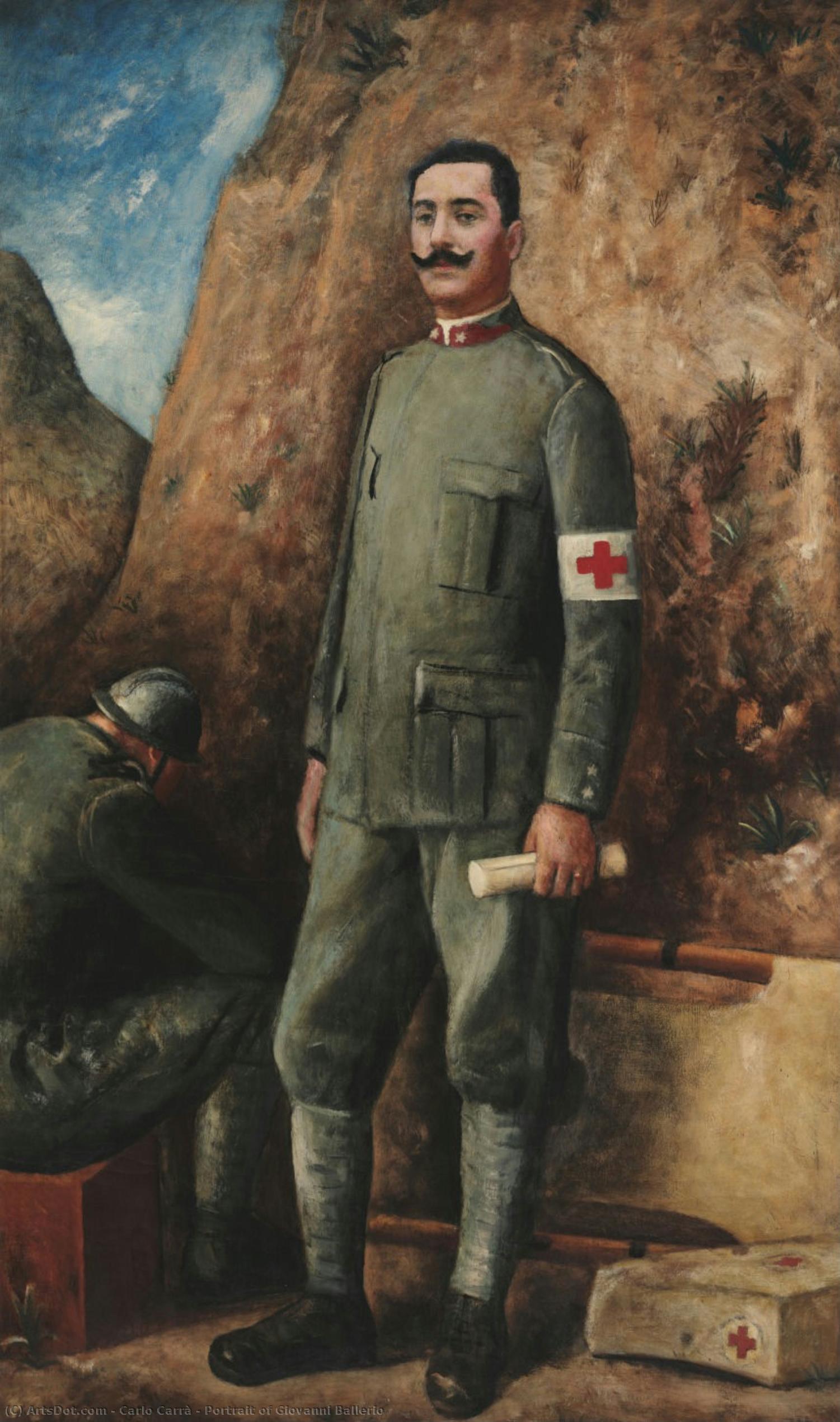
This striking portrait of Giovanni Ballerio transports us directly into the vibrant, yet perhaps tumultuous, atmosphere of early 20th-century Italy. The subject himself commands attention; depicted as a military figure in his uniform, he stands with an air of undeniable confidence, meeting the viewer's gaze head-on. Yet, the narrative depth of the piece extends far beyond this central figure. Flanking him are two other individuals, caught in moments of their own—perhaps engaged in quiet conversation or simply observing the scene unfolding around them. This composition is not merely a record of faces; it is a carefully constructed tableau vivant, suggesting a moment suspended between action and reflection.
Mastery of Form and Background Depth
Carlo Carrà’s technique here speaks to his profound training in mural decoration, lending the work a monumental quality even within a relatively intimate portrait setting. The inclusion of a detailed mountainous background is particularly noteworthy. Rather than serving as mere backdrop filler, these rugged peaks imbue the scene with immense depth and a sense of enduring permanence against the fleeting nature of human interaction. Carrà masterfully balances the sharp focus on the figures with the atmospheric recession suggested by the landscape, creating an optical illusion that draws the eye deep into the canvas. The handling of light across the uniforms and skin tones suggests a skilled understanding of *chiaroscuro*, giving the entire scene a rich, tangible dimensionality.
Historical Echoes and Artistic Context
Painted in 1928, this work sits at an intriguing crossroads for Carrà’s career. Having absorbed influences from Parisian modernism while remaining rooted in Italian tradition, the painting reflects an artist navigating the currents of a rapidly changing world. The presence of military attire hints at the lingering social and political undercurrents that permeated Italy during this era. While the confidence radiating from Ballerio suggests order, the surrounding figures hint at the complex tapestry of private lives unfolding against a grand, immutable backdrop—a subtle commentary on individual experience within a larger historical sweep.
Emotional Resonance for the Modern Collector
For the collector or designer seeking art that speaks volumes without shouting, this piece offers profound emotional resonance. It captures not just likenesses, but *moments*. The viewer is invited to participate in the scene, to wonder about the conversations held between the peripheral figures and to contemplate the weight of expectation embodied by the central subject. Reproducing such a work allows one to bring home a piece that feels both historically significant and immediately relatable—a sophisticated anchor for any grand hall or thoughtfully curated study. It is an invitation to pause, observe, and feel the rich texture of life itself.
Related Artworks

Artist Biography
Early Life and the Seeds of Artistic Rebellion
Carlo Carrà, born in Quargnento near Alessandria, Italy, on February 11, 1881, embarked on a path diverging sharply from academic tradition. His youth was marked by necessity; at twelve years old, he left his family to apprentice as a mural decorator. This formative experience, steeped in the physicality of art-making and craftsmanship, indelibly shaped his artistic sensibilities. It wasn't merely applying paint—it was immersion into color, form, and visual communication. A sojourn to Paris at the turn of the century, decorating pavilions for the Exposition Universelle, exposed him to burgeoning currents of contemporary French art, a crucial awakening that broadened his horizons beyond Italian provincialism. This exposure was followed by a brief period in London, where he encountered exiled Italian anarchists—a political undercurrent subtly informing his early work with themes of social unrest and rebellion. Returning to Milan in 1901, Carrà honed his skills, eventually enrolling at the Brera Academy in 1906, studying under Cesare Tallone. Yet, even within the academy’s structure, a restless spirit persisted, yearning for artistic innovation.Embracing Dynamism: The Futurist Years
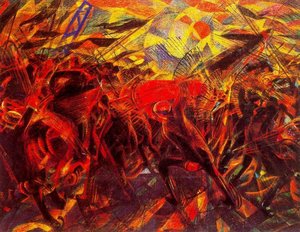
The year 1910 proved pivotal. Carrà joined Umberto Boccioni, Luigi Russolo, and Giacomo Balla, signing the manifesto of the Futurist painters—a declaration irrevocably altering Italian art’s course. Futurism was a radical ideology, an explosive celebration of modernity, speed, technology, youth, and the machine age's relentless energy. It rejected the past, embracing dynamism and anticipating a future defined by progress. Carrà’s early Futurist works, such as The Funeral of the Anarchist Galli (1911) and Rhythms of Objects (1911), vividly embody these principles. The Funeral of the Anarchist Galli, a chaotic yet compelling depiction of grief and protest, isn’t merely representation but a visceral experience of movement and emotion. The fractured forms and jarring colors convey the raw energy of the crowd and disruptive political force. Rhythms of Objects further demonstrates his exploration of dynamism, breaking down everyday objects into fragmented shapes suggesting motion and transformation. These paintings weren't about *what* was depicted but *how* it was perceived—a revolutionary approach to representation. Carrà wasn’t just painting scenes; he attempted to capture the very essence of modern life in all its frenetic glory.From Futurism to Metaphysics and Beyond
The fervor of Futurism waned for Carrà as World War I loomed, his artistic trajectory taking an unexpected turn. Around 1917, a profound shift occurred, influenced by his encounter with Giorgio de Chirico in Ferrara. De Chirico’s “Metaphysical Painting”—characterized by unsettling juxtapositions, eerie perspectives, and a dreamlike atmosphere—resonated deeply with Carrà. He began incorporating mannequin imagery into his work, as seen in The Daughters of Lot (1919), creating scenes both familiar and disturbing. This period marked a move away from Futurism’s outward dynamism toward an inward exploration of psychological states and existential anxieties. The 1920s and 30s witnessed another evolution as Carrà turned to landscape painting. He developed a more atmospheric style, characterized by flattened perspectives and textured brushwork, exemplified in works like Morning by the Sea (1928). This wasn’t a rejection of earlier experimentation but an integration into a new visual language—a quieter, more contemplative approach to art.Legacy and Complexities: A Shifting Ideological Landscape
Carlo Carrà's artistic journey was complex. His later life was marked by increasingly nationalistic views, aligning him with the Fascist regime after 1918. This political stance remains a controversial aspect of his legacy, prompting debate about art and ideology. Despite this, Carrà’s contribution to modern Italian art is undeniable. He was pivotal in both Futurism and Metaphysical Painting, pushing boundaries and challenging norms. His willingness to experiment throughout his career demonstrates remarkable intellectual curiosity and artistic courage. His influence extends beyond painting, impacting sculpture, literature, and design through the Futurist movement’s interdisciplinary approach.Exploring Carrà's World Further
Discovering Carrà’s work reveals a restless spirit constantly seeking new forms of expression. His paintings are not merely visual representations but windows into the anxieties and aspirations of a rapidly changing world.- Delve deeper into his works at various online art databases.
- Explore the revolutionary spirit of Futurism and its key figures.
- Consult reputable sources like Wikipedia and Britannica for comprehensive biographical information.
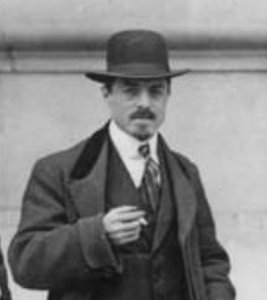
Carlo Carrà
1881 - 1966 , Italy
Quick Facts
- Artistic Movement Or Style: Futurism, Metaphysical art
- Artists Or Movements Influenced By This Artist:
- Surrealism
- Italian Futurists
- Artists Who Influenced This Artist:
- Giacomo Balla
- Giorgio de Chirico
- Date Of Birth: Feb 11, 1881
- Date Of Death: Apr 13, 1966
- Full Name: Carlo Carrà
- Nationality: Italian
- Notable Artworks:
- Funeral of Galli
- Rhythms of Objects
- Daughters of Lot
- Morning by the Sea
- Place Of Birth: Alessandria, Italy
Related Articles

Academic Realism's Finest: 10 Masterpieces for Art Lovers & Home Decor
Explore 10 defining Academic Realism masterpieces by Bouguereau, Gérôme & Cabanel. Discover the stories behind these iconic paintings and bring timeless art into your home with museum-quality reproductions from ArtsDot.com. Explore the full collection online!

Academic Realism: Technique, History & Enduring Influence on Art
Explore the captivating world of Academic Realism! Discover key artists, techniques & its lasting impact on art history. Expert insights & high-quality reproductions at ArtsDot.
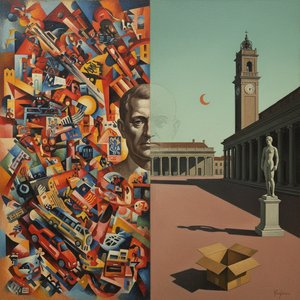
Carlo Carrà: Futurist Visions & Metaphysical Transformations in Early 20th-Century Italian Painting
Explore the artistic journey of Carlo Carrà, a pivotal figure in Italian Futurism & Metaphysical painting. Discover his dynamic compositions, collaborations with de Chirico, and lasting influence on modern art history.

Romantic Realism's Finest: 10 Masterpieces for Your Home | ArtsDot
Explore 10 defining masterpieces of Romantic Realism! Discover Courbet, Millet & Daumier's powerful paintings—capturing emotion and social realities. Find museum-quality reproductions for your home at ArtsDot.com.

The Enduring Legacy of Oil on Canvas: Technique, History & Aesthetic Impact
Explore the rich history & techniques of oil painting – from Renaissance masters to Impressionism. Discover pigments, layering methods, and why this timeless medium endures. Expert insights for artists & art enthusiasts.