

 Preview
 Send
Send Share
Share
 Details

 Download
 Similars
 X-Ray
X-Ray Diaporama
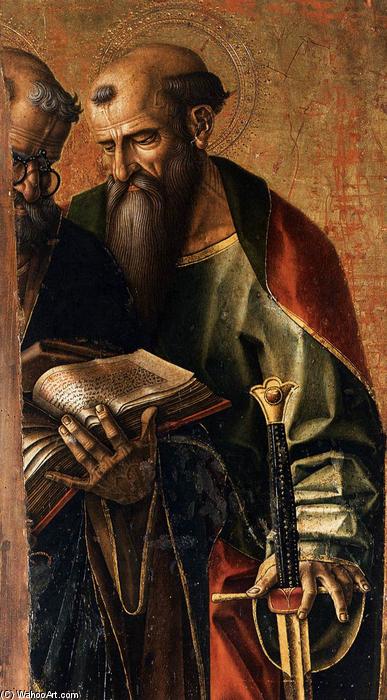
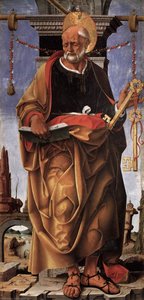
St Peter and St Paul (detail)


 Read More
Purchase a high-resolution, enhanced digital image, far superior to the online preview.
Each file is meticulously prepared by our in-house specialists using advanced tools and expert manual retouching. We ensure every image has exceptional clarity, precise color accuracy, and fine detail.
The final file is delivered via email within 72 hours, optimized for immediate use in professional, editorial, and print environments. This is the same quality trusted by top-tier design studios, publishers, and galleries.
Digital Image
Download a high-resolution file for personal display, printing, and creative projects. ( Buy Print Buy Hand Made Painting)
Included in Every Digital Image Order
Expert Digital Delivery, Guaranteed
When you choose ArtsDot.com, you're not just getting an image - you're receiving a professionally enhanced digital artwork, crafted with precision and backed by a satisfaction guarantee. Here's everything that comes with your order, automatically:

Fast Email Delivery
Your high-resolution digital image file will be emailed to you within 72 hours of ordering - ready for immediate use.

AI-Enhanced Digital File
Your artwork is professionally optimized using advanced AI tools and manual editing, ensuring maximum detail, clarity, and color accuracy.

Free Lifetime Re-Delivery
Accidentally deleted or lost your file? No worries - we'll resend it to you anytime, free of charge.

No Import Fees - Ever
Enjoy your artwork instantly with zero customs, duties, or delivery fees - digital downloads are always tax-free.

Color Accuracy Guarantee
We ensure your digital image reflects the original colors as closely as possible using professional tools and color management.

60-Day Satisfaction Guarantee
If you're not satisfied with your digital image, we'll revise it or refund 100% within 60 days - no questions asked.

100% Money-Back Guarantee
Not satisfied? Get a full refund within 60 days of receiving your digital file - no questions asked.

Bulk Order Discounts
Buy 3 images, save 10% - Buy 5, save 15% - Buy 10+, save 20%. Great for creative projects, galleries, and agencies.
Collectible Description
Carlo Crivelli’s “St Peter and St Paul”: A Window into Late Gothic Devotion
Carlo Crivelli's "St Peter and St Paul" (circa 1490) isn’t merely a depiction of two revered saints; it’s a meticulously crafted portal into the heart of late medieval piety, a testament to the enduring power of faith rendered in tempera on wood. Housed within the Gallerie dell'Accademia in Venice, this painting offers a rare glimpse into the artistic sensibilities of an era deeply invested in both spiritual contemplation and elaborate visual storytelling. Crivelli, emerging from the Venetian workshop tradition yet forging his own distinctive path, masterfully blends the formality of Gothic architecture with a burgeoning Renaissance awareness, creating a work that is simultaneously restrained and profoundly expressive.
The scene itself unfolds within a carefully constructed architectural setting—a space that feels both familiar and subtly otherworldly. The figures of St Peter and St Paul are engaged in what appears to be an exchange of knowledge, perhaps a dialogue facilitated by the book held open before them. This isn’t a dramatic confrontation but rather a quiet, contemplative interaction, suggesting a shared pursuit of truth and divine wisdom. The positioning of the figures—Peter gesturing towards the book, Paul attentively receiving it—creates a dynamic tension, hinting at the transmission of sacred teachings. The background figure, haloed and elevated, acts as a silent observer, perhaps representing God’s watchful presence overseeing this exchange between his earthly representatives.
A Symphony of Color and Detail: Crivelli's Technique
Crivelli’s mastery lies in his meticulous attention to detail and his skillful manipulation of color. The tempera medium lends itself beautifully to the creation of rich, luminous hues—deep blues, vibrant reds, and earthy greens—that imbue the painting with a remarkable sense of depth and realism. Notice how he employs *chiaroscuro*, the dramatic contrast between light and shadow, to sculpt the figures’ forms and create a palpable sense of volume. The drapery is rendered with astonishing precision, each fold and pleat meticulously depicted, adding to the overall impression of tactile reality. The use of gold leaf—particularly in the architectural elements and the haloed figure—further enhances the painting's splendor, drawing the viewer’s eye and symbolizing divine grace.
Furthermore, Crivelli demonstrates a keen understanding of *trompe-l'oeil* techniques, subtly incorporating realistic details into the painted space. The raised objects, such as the book and perhaps even the architectural elements themselves, create an illusion of three-dimensionality, blurring the boundaries between the real and the represented. This technique was not uncommon in late Gothic art, but Crivelli’s execution is particularly refined, adding to the painting's immersive quality.
Symbolism Woven into the Fabric of Faith
“St Peter and St Paul” is rich with symbolic meaning, reflecting the theological concerns of its time. The book represents not just knowledge but also divine revelation—the word of God made accessible through scripture. The gesture of Peter, pointing towards the book, suggests a call to contemplation and obedience. The attentive posture of Paul indicates his willingness to learn and embrace faith. The haloed figure in the background serves as a reminder of God’s omnipresence and guidance. Beyond these immediate symbols, the painting also alludes to the broader narrative of Christian history—the apostles, representing the foundation of the Church, engaged in a dialogue with their spiritual leader.
The choice of St Peter and St Paul themselves is significant. Peter, as one of Jesus’s original twelve disciples, represents the authority and leadership of the early church. Paul, who famously converted to Christianity after experiencing a dramatic encounter on the road to Damascus, embodies the transformative power of faith and the spread of the Gospel throughout the Roman Empire. Together, they symbolize the continuity between the earthly ministry of Christ and the ongoing mission of his followers.
A Legacy of Devotion: Crivelli’s Enduring Appeal
Carlo Crivelli's “St Peter and St Paul” stands as a poignant example of late Gothic art—a synthesis of formal elegance, emotional intensity, and profound spiritual meaning. Its meticulous detail, luminous colors, and subtle symbolism continue to captivate viewers centuries after its creation. Reproductions of this masterpiece offer an opportunity to experience the beauty and depth of Crivelli’s vision, bringing a touch of timeless devotion into any space. It is a work that speaks not only to the eye but also to the heart, inviting contemplation on themes of faith, knowledge, and the enduring legacy of two pivotal figures in Christian history.
Related Artworks
Artist Biography
early life and training
carlo crivelli, an italian renaissance painter, was born in venice around 1430-35. he came from a family of painters and received his artistic formation in venice and padua. crivelli's early training is believed to have been under jacobello del fiore, who was still active in 1436. he also studied at the school of vivarini in venice.
career and style
crivelli spent his early years in the veneto, absorbing influences from vivarini, squarcione, and mantegna. by 1458, he left the veneto and spent most of his career in the march of ancona, developing a distinctive personal style that contrasts with that of his venetian contemporary giovanni bellini. crivelli's work is characterized by a conservative late gothic decorative sensibility, marked by a linear quality, attention to detail, and the use of "trompe l'oeil" techniques.
notable works and collaborations
* carlo crivelli's painting "madonna and child enthroned" (106 x 55 cm, museum of fine arts, budapest, hungary) is a prime example of his style. * he collaborated with his younger brother vittorio crivelli on several projects. * pietro alemanno, a painter who immigrated to the march of ancona from germany/austria, was his pupil and collaborator.
museums and collections
* the pinacoteca di brera in milan, italy, features several of crivelli's works, including "pietà" (128 x 241 cm). * the museum san giovanni in bragora in venice, italy, has a collection of artworks from various periods and styles, including some attributed to crivelli.
- view carlo crivelli's artworks on ArtsDot.com
- explore jacopo robusti's works on ArtsDot.com
- read more about carlo crivelli on wikipedia
crivelli's legacy continues to inspire art enthusiasts and scholars alike, with his work remaining a testament to the enduring power of conservative late gothic decorative sensibility.
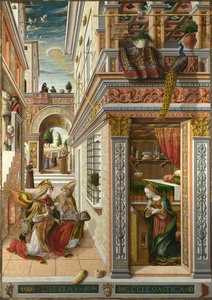
Carlo Crivelli
1435 - 1495 , Italy
Quick Facts
- Artistic Movement Or Style: Late Gothic/Renaissance
- Artists Or Movements Influenced By This Artist: ['Giovanni Bellini']
- Artists Who Influenced This Artist:
- Jacobello del Fiore
- Vivarini
- Squarcione
- Mantegna
- Date Of Birth: c. 1430-35 Venice
- Date Of Death: c. 1495 Italy
- Full Name: Carlo Crivelli
- Nationality: Italian
- Notable Artworks:
- Madonna and Child
- Saint Bartholomew
- Saint Roch
- Place Of Birth: Venice, Italy

