 Preview
 Send
Send Share
Share
 Details

 Download
 Similars
 X-Ray
X-Ray Diaporama
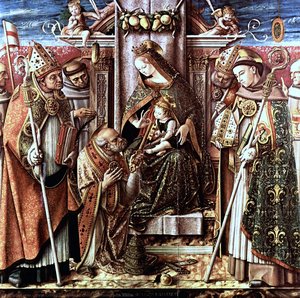
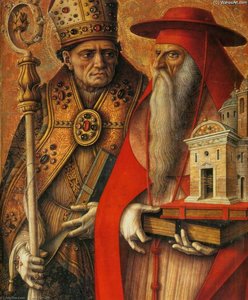
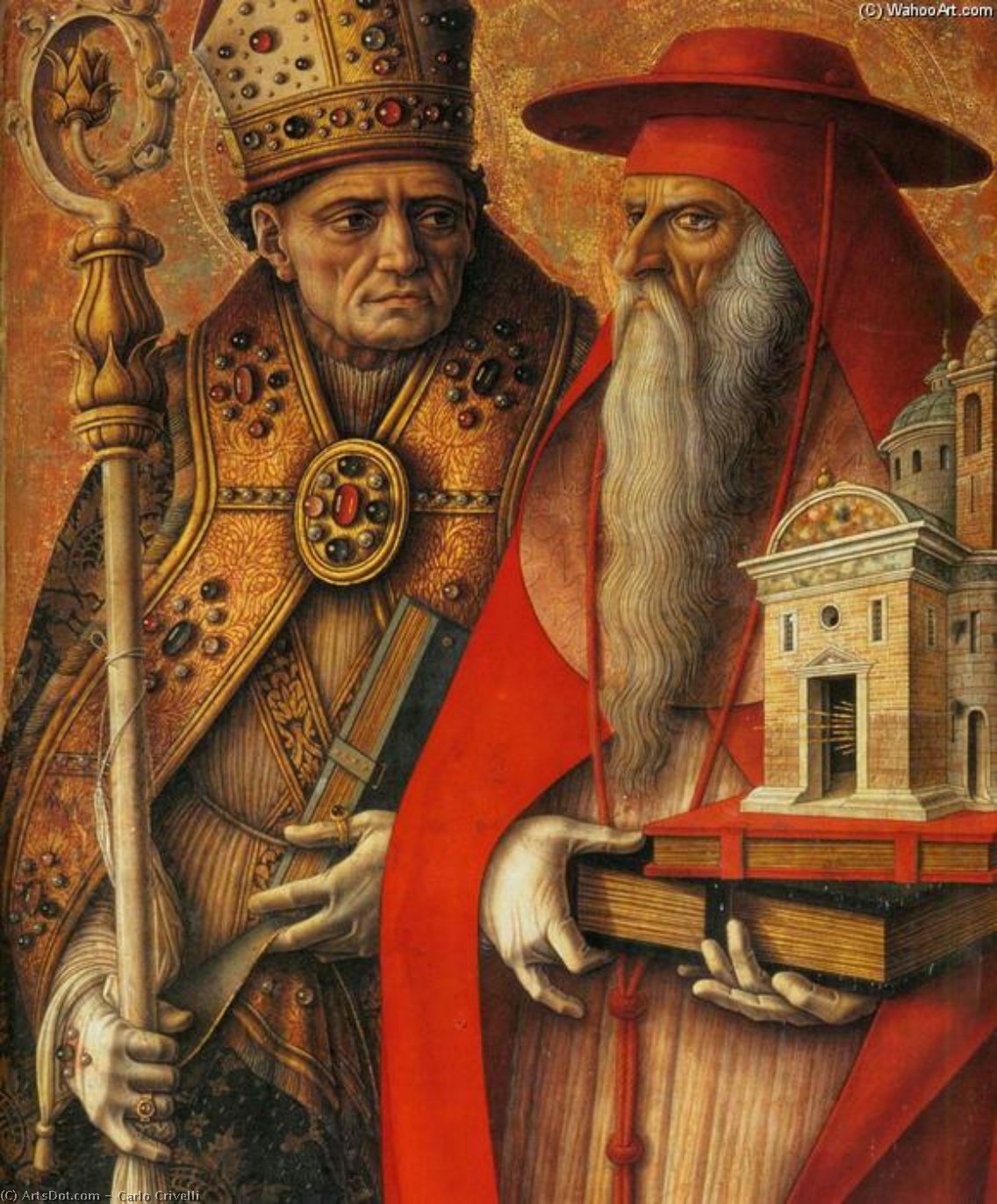
St Jerome and St Augustine (detail)


 Read More
Hand Made Oil Reproduction
Hand-painted oil on canvas in your size and frame, made to order by our artists. ( Buy Print Buy Image)




P118B $10

P118H $10

P118W $10

P438Z $10

P508JH $12

P508YH $12

P805H $10

P805Z $10

P919BZ $10

P919G $10

P919XJ $10

P959ZH $10

P968JZ $12

W106C $8

W218G $10

W218JH $8

W218Y $10

W307PJ $10

W316G $10

W316PJ $8

W316Y $10

W398PJ $8

W4111J $10

W500HY $15

W500JH $15

W692G $12

W849H $8

W940BG $15

W953PJ $8




Pick from our preset sizes that match the artwork's original proportions.

You may enter your own dimensions to fit a specific frame or space. If your selected size does not match the original image's proportions, we will either crop the artwork or extend the painting with additional hand-painted elements. A digital mockup will be sent for your approval before production begins.
Please note that the on-screen preview does not reflect the actual cropping or extension. Only the mockup will accurately show the final composition.
While custom sizes are available, we recommend selecting a dimension from the predefined list to preserve the original proportions.
After order, ArtsDot.com team will email client for instructions and provide a mockup preview
Worldwide Delivery () in 3/4 weeks instead of standard 5 weeks. (17 August). No compromise on quality.

Free Worldwide Express Shipping

High-Quality Linen Canvas

Full Shipping Insurance

Customs Tax Refund Guarantee

True Color Matching Guarantee

60-Day Return Policy (Defects Only)

100% Money-Back Guarantee

Bulk Discount Offer
 Glass option is only available in size under 110 CM

St Jerome and St Augustine (detail)
Reproduction Medium
Reproduction Size
-


Total Price
$ 288
Artwork Description
A Renaissance Dialogue of Faith and Wisdom
Carlo Crivelli’s “St. Jerome and St. Augustine,” painted around 1490, isn't merely a depiction of two revered figures; it’s a carefully constructed tableau of intellectual and spiritual contemplation, steeped in the late Gothic sensibilities of Renaissance Venice. The painting immediately draws the eye with its rich palette – deep reds and browns dominate, creating an atmosphere of solemnity and introspection, punctuated by the shimmering gold of the background and the vibrant hues of the garments. Crivelli masterfully employs a technique that balances meticulous detail with a sense of ethereal beauty, characteristic of his style which he developed after leaving Venice.
The composition is strikingly intimate, framing the two saints within a shallow space that invites close observation. Jerome, identifiable by his lion skin and quill pen, sits in deep thought, seemingly lost in prayer or contemplation. His posture exudes quiet intensity, while Augustine, clad in the robes of a bishop, gestures with an open book – a potent symbol of knowledge and divine revelation. The miniature architectural model at Augustine’s feet isn't simply decorative; it represents the power and authority of the papacy, subtly reinforcing the theme of earthly and spiritual governance. The inclusion of the lion, a recurring motif in Crivelli’s work, adds an element of primal instinct and strength to the scene, grounding the intellectual pursuits of the saints within the realm of human experience.
Craftsmanship and Venetian Influence
Crivelli's mastery lies not only in his subject matter but also in his technical execution. The painting is executed in tempera on wood, a medium favored by artists during this period for its luminosity and ability to achieve fine detail. Notice the layering of glazes – thin washes of color applied over dry layers – that create depth and richness in the fabrics and textures. The artist’s attention to detail is remarkable; from the intricate folds of the robes to the delicate rendering of Jerome's beard, every element contributes to a sense of realism and immediacy. The use of *trompe-l'oeil* techniques—the illusion of three-dimensionality—is particularly evident in the miniature building, which seems to leap out from the surface of the panel.
Crivelli’s Venetian training is undeniable, yet he forged a distinct style that set him apart from his contemporaries. While influenced by the meticulous realism of artists like Squarcione and the decorative elegance of Vivarini, Crivelli infused his work with a greater sense of emotional intensity and psychological depth. This painting exemplifies this shift – it’s not just a portrait of two saints; it's an exploration of their inner lives and the profound questions they grappled with.
Symbolism and Spiritual Resonance
Beyond the immediate depiction of Jerome and Augustine, the painting is laden with symbolic meaning. Jerome, traditionally associated with writing and contemplation, represents the pursuit of wisdom through scripture. Augustine, a pivotal figure in Christian theology, embodies faith, reason, and the struggle to reconcile divine revelation with human experience. The presence of the lion symbolizes strength and vigilance, while the open book signifies the importance of knowledge and learning. The overall composition suggests a dialogue between these two figures – a conversation between intellect and spirituality, earthly authority and divine grace.
Considered within the context of 1490s Venice, a city grappling with political upheaval and religious reform, “St. Jerome and St. Augustine” offers a poignant reflection on the challenges of navigating faith and reason in a turbulent world. It’s a testament to Crivelli's skill as an artist and his ability to capture the complexities of human experience within a framework of profound spiritual significance. Reproductions of this work continue to resonate with viewers today, offering a glimpse into the artistic and intellectual currents of the Renaissance.
Related Artworks
Artist Biography
early life and training
carlo crivelli, an italian renaissance painter, was born in venice around 1430-35. he came from a family of painters and received his artistic formation in venice and padua. crivelli's early training is believed to have been under jacobello del fiore, who was still active in 1436. he also studied at the school of vivarini in venice.
career and style
crivelli spent his early years in the veneto, absorbing influences from vivarini, squarcione, and mantegna. by 1458, he left the veneto and spent most of his career in the march of ancona, developing a distinctive personal style that contrasts with that of his venetian contemporary giovanni bellini. crivelli's work is characterized by a conservative late gothic decorative sensibility, marked by a linear quality, attention to detail, and the use of "trompe l'oeil" techniques.
notable works and collaborations
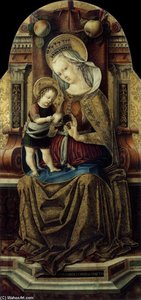
* carlo crivelli's painting "madonna and child enthroned" (106 x 55 cm, museum of fine arts, budapest, hungary) is a prime example of his style. * he collaborated with his younger brother vittorio crivelli on several projects. * pietro alemanno, a painter who immigrated to the march of ancona from germany/austria, was his pupil and collaborator.
museums and collections
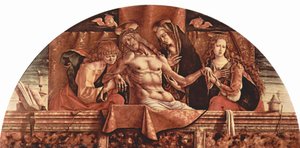
* the pinacoteca di brera in milan, italy, features several of crivelli's works, including "pietà" (128 x 241 cm). * the museum san giovanni in bragora in venice, italy, has a collection of artworks from various periods and styles, including some attributed to crivelli.
- view carlo crivelli's artworks on ArtsDot.com
- explore jacopo robusti's works on ArtsDot.com
- read more about carlo crivelli on wikipedia
crivelli's legacy continues to inspire art enthusiasts and scholars alike, with his work remaining a testament to the enduring power of conservative late gothic decorative sensibility.
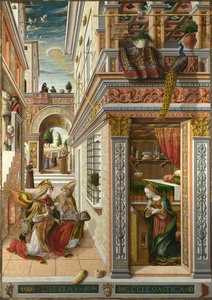
Carlo Crivelli
1435 - 1495 , Italy
Quick Facts
- Artistic Movement Or Style: Late Gothic/Renaissance
- Artists Or Movements Influenced By This Artist: ['Giovanni Bellini']
- Artists Who Influenced This Artist:
- Jacobello del Fiore
- Vivarini
- Squarcione
- Mantegna
- Date Of Birth: c. 1430-35 Venice
- Date Of Death: c. 1495 Italy
- Full Name: Carlo Crivelli
- Nationality: Italian
- Notable Artworks:
- Madonna and Child
- Saint Bartholomew
- Saint Roch
- Place Of Birth: Venice, Italy
Related Articles
Carlo Crivelli: Mysticism & Materiality in Renaissance Venice
Explore the captivating world of Carlo Crivelli, a Renaissance master blending Gothic detail with profound symbolism. Discover his unique style & lasting influence on Venetian art history.
El Greco's Masterpieces: Explore 25 Iconic Paintings & Spiritual Visions | ArtsDot
Journey through El Greco's 25 most iconic paintings! Explore the spiritual depth & dramatic beauty of this Spanish Renaissance master. Discover art history, techniques & find museum-quality reproductions for your home at ArtsDot.com.
Hieronymus Bosch's Masterpieces: 25 Visions of Art & Morality | ArtsDot
Delve into the enigmatic world of Hieronymus Bosch! Explore 25 iconic paintings – from 'The Garden of Earthly Delusions' to his haunting triptychs. Discover the symbolism, history & artistry behind these Renaissance masterpieces. Find museum-quality art reproductions at ArtsDot.com.
Albrecht Dürer's Masterpieces: 25 Iconic Artworks for Your Home | ArtsDot
Explore 25 iconic artworks by Albrecht Dürer, a master of the German Renaissance. Discover the stories behind Melencolia I, Knight Death and Devil & more. Find museum-quality art reproductions for your home at ArtsDot.com.
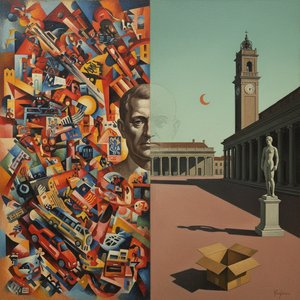
Carlo Carrà: Futurist Visions & Metaphysical Transformations in Early 20th-Century Italian Painting
Explore the artistic journey of Carlo Carrà, a pivotal figure in Italian Futurism & Metaphysical painting. Discover his dynamic compositions, collaborations with de Chirico, and lasting influence on modern art history.