 Preview
 Send
Send Share
Share
 Details

 Download
 Similars
 X-Ray
X-Ray Diaporama
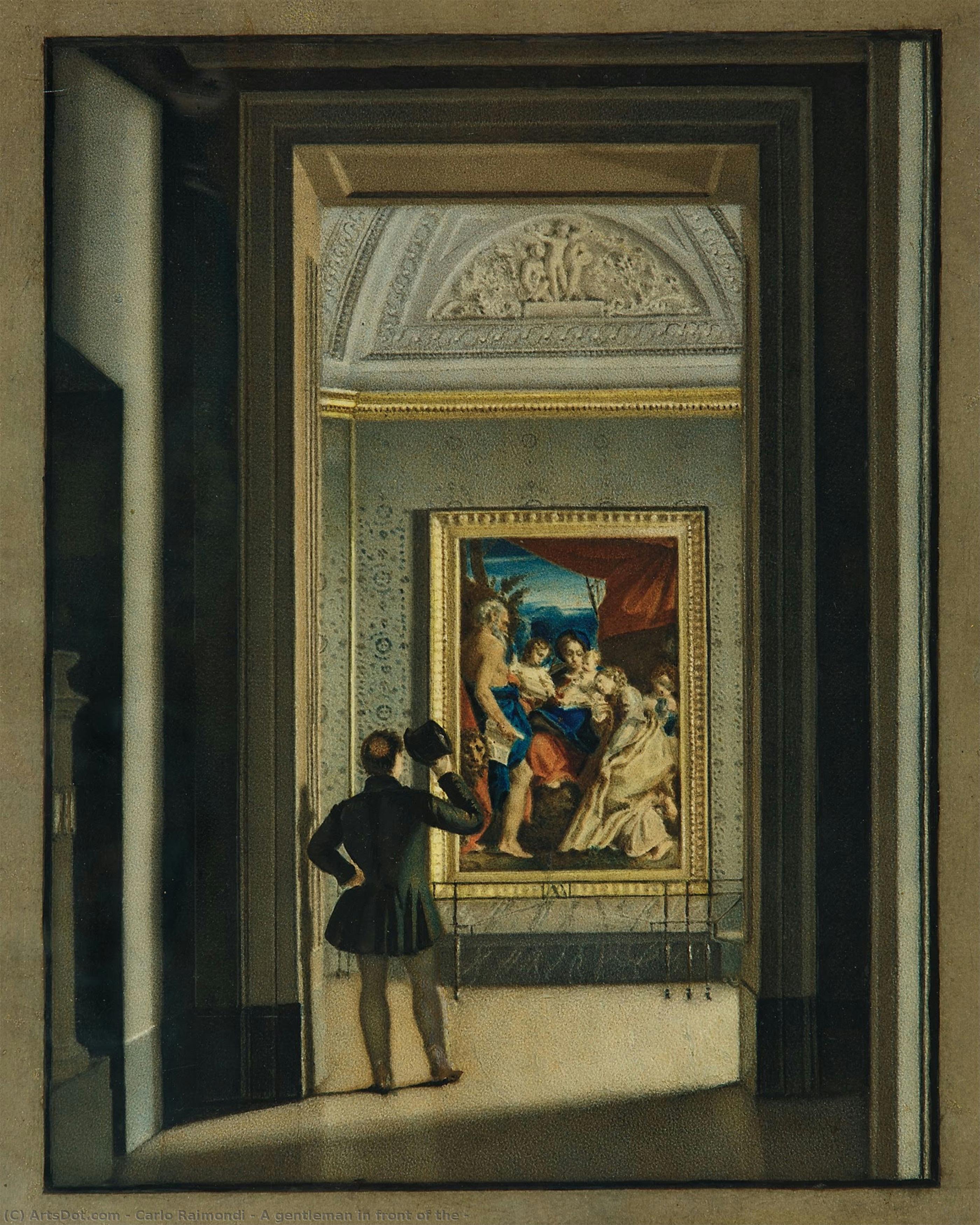
A gentleman in front of the


 Read More
Hand Made Oil Reproduction
Hand-painted oil on canvas in your size and frame, made to order by our artists. ( Buy Print Buy Image)




P118B $10

P118H $10

P118W $10

P438Z $10

P508JH $12

P508YH $12

P805H $10

P805Z $10

P919BZ $10

P919G $10

P919XJ $10

P959ZH $10

P968JZ $12

W106C $8

W218G $10

W218JH $8

W218Y $10

W307PJ $10

W316G $10

W316PJ $8

W316Y $10

W398PJ $8

W4111J $10

W500HY $15

W500JH $15

W692G $12

W849H $8

W940BG $15

W953PJ $8




Pick from our preset sizes that match the artwork's original proportions.

You may enter your own dimensions to fit a specific frame or space. If your selected size does not match the original image's proportions, we will either crop the artwork or extend the painting with additional hand-painted elements. A digital mockup will be sent for your approval before production begins.
Please note that the on-screen preview does not reflect the actual cropping or extension. Only the mockup will accurately show the final composition.
While custom sizes are available, we recommend selecting a dimension from the predefined list to preserve the original proportions.
After order, ArtsDot.com team will email client for instructions and provide a mockup preview
Worldwide Delivery () in 3/4 weeks instead of standard 5 weeks. (22 August). No compromise on quality.

Free Worldwide Express Shipping

High-Quality Linen Canvas

Full Shipping Insurance

Customs Tax Refund Guarantee

True Color Matching Guarantee

60-Day Return Policy (Defects Only)

100% Money-Back Guarantee

Bulk Discount Offer
 Glass option is only available in size under 110 CM

A gentleman in front of the
Reproduction Medium
Reproduction Size
-


Total Price
$ 263
Artwork Description
The Silent Dialogue of Art Appreciation
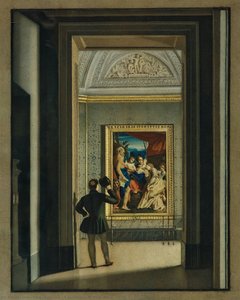
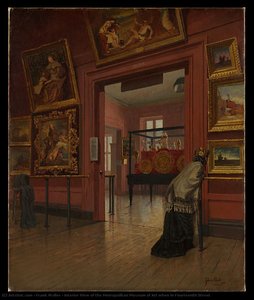
In the quiet, hallowed halls of a mid-nineteenth-century gallery, Carlo Raimondi captures a moment of profound stillness and intellectual engagement. A Gentleman in Front of the is not merely a depiction of an interior space; it is a window into the very soul of art appreciation. The composition draws the viewer’s eye through a grand, arched doorway, creating a powerful sense of linear perspective that pulls us into the room alongside the solitary observer. As we gaze upon this gentleman, we find ourselves sharing in his contemplative trance, caught in the delicate tension between the spectator and the spectacle. The painting serves as a masterful study of how we interact with history, inviting anyone who stands before it to reflect on their own relationship with beauty and the enduring legacy of the masters.
The technical execution of this 1847 masterpiece speaks to the height of academic realism and Neoclassical precision. Raimondi employs a sophisticated technique, likely oil on canvas, characterized by smooth, seamless blending and an almost photographic attention to detail. Every element of the environment is rendered with tactile clarity—from the subtle roughness of the plaster walls to the polished sheen of the wooden frames that encase the gallery's treasures. The lighting is particularly evocative; a subdued, soft glow permeates the scene, casting gentle shadows that lend weight and volume to the architectural elements. This controlled use of light does more than define shapes; it creates an atmosphere of reverence and solemnity, as if the very air within the gallery is heavy with the importance of the art on display.
Color and texture play a vital role in establishing the painting's sophisticated emotional landscape. Raimondi utilizes a muted, predominantly cool palette, leaning into shades of grey, beige, and deep brown to evoke a sense of timelessness and dignity. This restrained color scheme ensures that the focus remains on the interplay of light and the structural geometry of the room. The straight, decisive lines of the doorways and frames provide a formal, orderly structure that contrasts beautifully with the soft, organic textures of the gentleman’s clothing. Symbolically, the work celebrates the tradition of the connoisseur—the dedicated observer who finds meaning in the silent language of paint and canvas. For collectors and interior designers alike, this piece offers more than mere decoration; it provides a sophisticated focal point that brings an air of intellectual depth and classical elegance to any curated space.
Related Artworks






Artist Biography
The Soul of the Burin: The Life and Legacy of Carlo Raimondi
Carlo Raimondi stands as a luminous figure in the nineteenth-century Italian art scene, a master whose hands bridged the gap between the grandeur of the Renaissance and the delicate sensibilities of the Romantic era. Born on December 24, 1809, in the scenic coastal enclave of Bocche di Cattaro—now known as Kotor, Montenegro—Raimondi’s early life was marked by a journey through the cultural heartlands of Italy. Though his origins lay within the Austro-Hungarian sphere, his artistic spirit was forged in the prestigious academies of Parma and Milan. As an infant, he moved to Reggio Emilia, where his initial training began under Prospero Minghetii, setting the stage for a career defined by technical precision and an almost spiritual devotion to the reproduction of beauty. The trajectory of Raimondi’s development was profoundly shaped by his mentorship under the legendary Paolo Toschi. Studying at the Brera Academy in Milan and later at the Academy of Fine Arts in Parma, Raimondi did not merely learn a craft; he inherited a lineage of excellence. His relationship with Toschi was both professional and deeply personal, evolving from that of a favored pupil to a collaborator of immense skill. This period of intense study allowed Raimondi to master the intricate language of wood engraving and watercolor, techniques that required an unwavering eye for detail and a profound understanding of light and shadow.A Master of Reproduction and Light
Raimondi’s artistic output was characterized by a dual mastery of the engraver's burin and the painter's brush. He possessed a rare, almost miraculous ability to translate the monumental scale of Renaissance masterpieces into intimate, breathtaking prints. His engravings were not mere copies but soulful reinterpretations; he sought to capture the very essence of works by masters such as Raphael, Correggio, and Parmigianino. Through his meticulous lines, the frescoes of the Vatican and the portraits of the great European galleries were made accessible to a wider audience, preserving the grandeur of the past through the medium of printmaking. Beyond the rigid precision of engraving, Raimondi’s watercolor paintings revealed a more lyrical, emotive side of his temperament. In these works, he embraced a luminous palette, using delicate brushstrokes to evoke the atmospheric softness of landscapes and the quiet dignity of genre scenes. His compositions often breathed with a sense of humanist tranquility, reflecting the Romantic era's fascination with nature and contemplation. Whether he was rendering the sharp clarity of an anatomical detail or the hazy glow of a sunset over the Italian countryside, his work remained anchored in a profound respect for the subject's inherent grace.Academic Influence and Historical Significance
The historical significance of Carlo Raimondi extends far beyond his individual canvases and plates; he was a cornerstone of the Italian academic tradition. In 1848, his talent earned him a position as a docent teaching engraving at the Brera Academy in Milan, a role that solidified his reputation among the European intelligentsia. However, it was in Parma where his influence truly flourished. In 1854, he was recruited to direct the School of Engraving at the Parmesan Academy, eventually succeeding his mentor, Toschi. In this capacity, Raimondi became a vital educator, shaping the next generation of Italian artists, including notable pupils such as Antonio Costa and Tommaso Aloysio Juvara. Raimondi’s legacy is one of continuity and preservation. By dedicating much of his life to the faithful reproduction of European masterpieces, he acted as a cultural custodian, ensuring that the aesthetic triumphs of previous centuries continued to inspire and educate. His work represents a unique intersection of technical virtuosity and artistic reverence, making him a pivotal figure in the transition from Neoclassical rigor to Romantic expression. Today, his contributions remain a testament to the power of art to transcend time, connecting the hands of the nineteenth-century engraver to the eternal beauty of the Renaissance masters.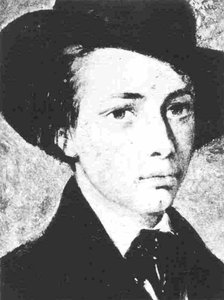
Carlo Raimondi
1809 - 1883 , Italy
Quick Facts
- Artistic Movement Or Style: Neoclassical
- Artists Or Movements Influenced By This Artist: ['Brera Academy']
- Artists Who Influenced This Artist: ['Paolo Toschi']
- Date Of Birth: December 24, 1809
- Date Of Death: January 5, 1883
- Full Name: Carlo Raimondi
- Nationality: Italian
- Notable Artworks:
- La Baccante
- Canzone d’amore
- Place Of Birth: Bocca di Cattaro, Italy
Related Articles
Harmonizing Contrasts: Integrating Abstract Art into Classic Interiors for Timeless Modernity
Elevate your classic home with abstract art! Discover expert tips for seamlessly blending modern pieces into timeless interiors. Find the perfect artwork & design advice at ArtsDot.
Neo-Classicism's Greatest Hits: 10 Masterpieces for Your Home |
Journey through Neo-Classicism's finest! Explore 10 iconic masterpieces by David, Ingres & Canova. Discover art history, techniques & timeless beauty – perfect for inspiring your home decor. Find museum-quality reproductions at
National Gallery London's Masterpieces: 25 Iconic Paintings for Your Home Decor
Journey through the National Gallery London's 25 most iconic paintings! Explore Van Gogh, Monet, Rembrandt & more. Discover art history, techniques & find museum-quality reproductions for your home decor on ArtsDot.com.
The Enduring Legacy of Classicism: Principles, Evolution & Influence in Western Art
Explore the enduring legacy of Classicism in Western art! Discover its historical context, key principles, iconic masterpieces & lasting influence. Learn about Renaissance and Neoclassical movements with ArtsDot.
Harmonizing Eras: Classical & Modern Art for Timeless Interiors
Explore the art of blending classical & modern aesthetics for timeless interiors. Discover key artists, design tips, and expert guidance from .