 Preview
 Send
Send Share
Share
 Details

 Download
 Similars
 X-Ray
X-Ray Diaporama
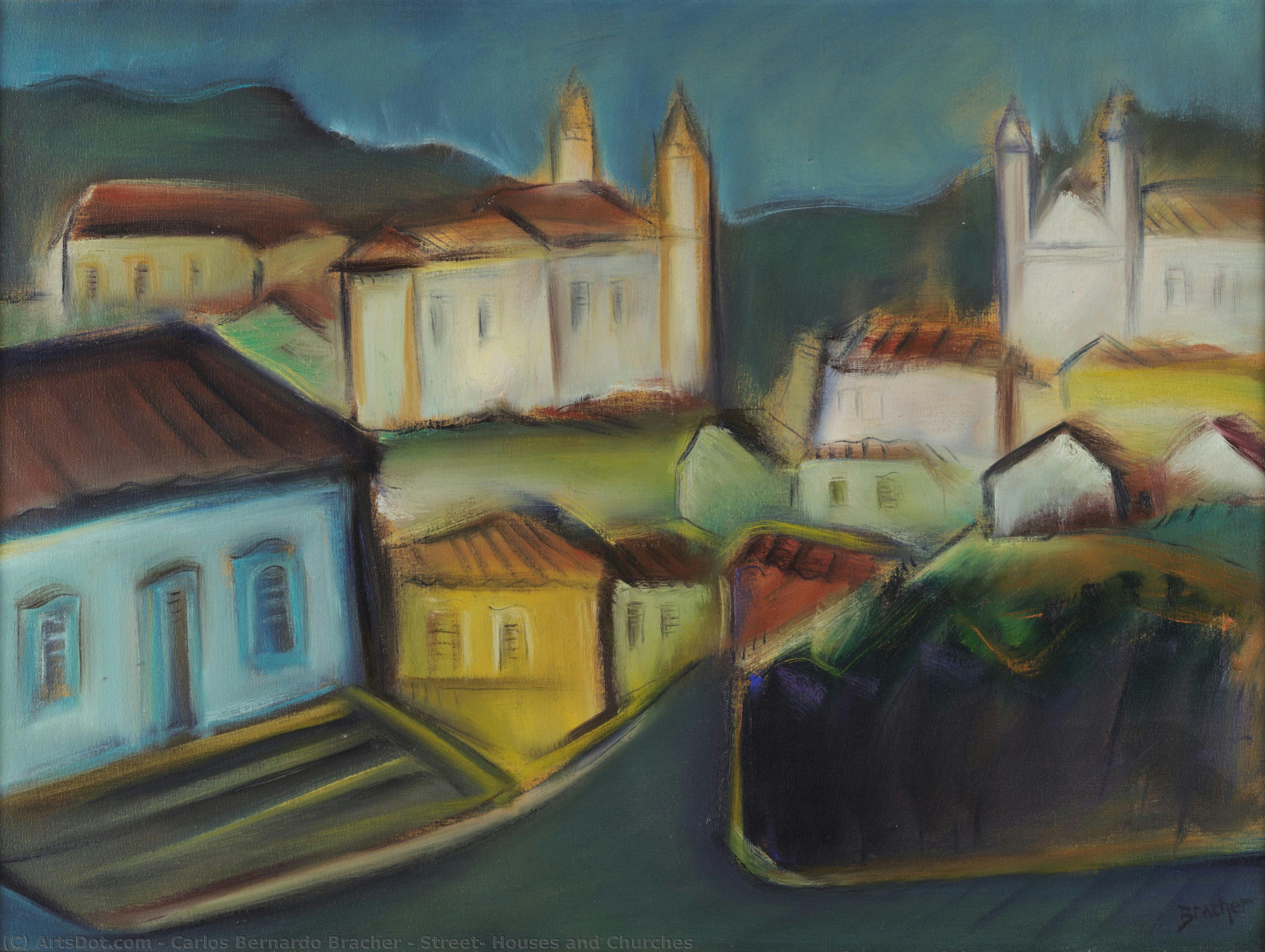
Street, Houses and Churches
 Cubism
 1981
1981- Contemporary
 59.0 x 80.0 cm
 Centro Cultural Banco do Brasil - Brasília
 Read More
Hand Made Oil Reproduction
Hand-painted oil on canvas in your size and frame, made to order by our artists. ( Buy Print Buy Image)




P118B $10

P118H $10

P118W $10

P438Z $10

P508JH $12

P508YH $12

P805H $10

P805Z $10

P919BZ $10

P919G $10

P919XJ $10

P959ZH $10

P968JZ $12

W106C $8

W218G $10

W218JH $8

W218Y $10

W307PJ $10

W316G $10

W316PJ $8

W316Y $10

W398PJ $8

W4111J $10

W500HY $15

W500JH $15

W692G $12

W849H $8

W940BG $15

W953PJ $8




Pick from our preset sizes that match the artwork's original proportions.

You may enter your own dimensions to fit a specific frame or space. If your selected size does not match the original image's proportions, we will either crop the artwork or extend the painting with additional hand-painted elements. A digital mockup will be sent for your approval before production begins.
Please note that the on-screen preview does not reflect the actual cropping or extension. Only the mockup will accurately show the final composition.
While custom sizes are available, we recommend selecting a dimension from the predefined list to preserve the original proportions.
After order, ArtsDot.com team will email client for instructions and provide a mockup preview
Worldwide Delivery () in 3/4 weeks instead of standard 5 weeks. (25 August). No compromise on quality.

Free Worldwide Express Shipping

High-Quality Linen Canvas

Full Shipping Insurance

Customs Tax Refund Guarantee

True Color Matching Guarantee

60-Day Return Policy (Defects Only)

100% Money-Back Guarantee

Bulk Discount Offer
 Glass option is only available in size under 110 CM

Street, Houses and Churches
Reproduction Medium
Reproduction Size
-


Total Price
$ 263
Artwork Description
A Serene Vision of Architectural Harmony
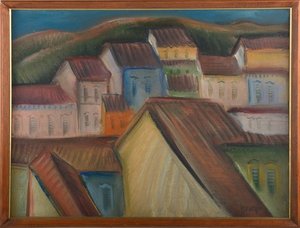
In the evocative masterpiece Street, Houses and Churches, the Brazilian painter Carlos Bernardo Bracher invites viewers into a tranquil, meticulously composed world where time seems to slow to a rhythmic crawl. The painting presents a captivating hillside vista, a tapestry of architecture that rises toward a spiritual summit. At the heart of this composition lies a profound sense of order and peace, as houses and churches are nestled together in a way that suggests a deep-rooted connection between the domestic and the divine. Bracher’s ability to capture the essence of small-town life is not merely through the depiction of structures, but through the atmospheric stillness that permeates every brushstroke, making the scene feel like a cherished memory frozen in light.
The artist’s technique serves as a bridge between modern abstraction and representational charm. Drawing from his mastery of cubist influences and contemporary Brazilian techniques, Bracher utilizes a structured approach to form. The buildings are not merely shapes; they are rhythmic elements that guide the eye upward through the landscape. Notice how the presence of two distinct clocks—one central and one toward the periphery—acts as a subtle symbolic layer, reminding the observer of the passage of time within this seemingly eternal setting. This interplay between the permanence of stone and the fleeting nature of moments creates a sophisticated tension that is both intellectually stimulating and visually soothing.
For the discerning collector or interior designer, this work offers an unparalleled opportunity to introduce a sense of grounded elegance into a living space. The painting’s palette and composition provide a focal point that is both commanding and unobtrusive, making it an ideal centerpiece for rooms designed for contemplation or sophisticated social gatherings. Because the piece balances the geometric precision of modernism with the warmth of a pastoral landscape, it complements a wide variety of decor styles—from contemporary minimalist galleries to classic, richly textured studies. To possess a reproduction of this work is to bring a fragment of Brazilian tranquility and architectural grace into one's own sanctuary.
Related Artworks

Artist Biography
Paul Klee: A Life Painted in Light and Shadow – 1940 and Beyond
The year 1940 marked a pivotal, yet tragically brief, chapter in the life and work of Paul Klee, a Swiss-born German artist whose singular vision continues to resonate across generations. Born in Bern in 1879, Klee’s artistic journey was one of relentless experimentation, fueled by an insatiable curiosity and a profound engagement with color theory, music, and the human condition. While his career spanned decades, the events of 1940 – marked by exile, war, and ultimately, his untimely death – profoundly shaped both his oeuvre and his legacy, imbuing his later works with a poignant intensity.
Klee’s early artistic development was deeply influenced by his father, Felix Klee, a financially successful art dealer who exposed him to a diverse range of artworks. Initially drawn to realism and academic training at the Kunstlerausschule in Bern, Paul quickly outgrew these constraints, seeking inspiration from artists like Vincent van Gogh and Edvard Munch. He spent formative years studying in Munich and Düsseldorf, absorbing the burgeoning currents of Expressionism. However, it was his time at the Bauhaus school in Weimar, alongside Wassily Kandinsky, that truly ignited his artistic spirit. The Bauhaus’s emphasis on functional design, geometric abstraction, and a holistic approach to art profoundly impacted Klee's thinking, leading him to explore new ways of representing form and color.
The decade of the 1940s witnessed a dramatic shift in Klee’s life. Forced to flee Nazi Germany in 1933 due to his Jewish heritage and politically charged art, he settled in Switzerland, eventually relocating to Muralia, Italy, in 1940. This period was characterized by increasing isolation and hardship, exacerbated by the onset of World War II. The war brought with it a sense of urgency and a heightened awareness of mortality, themes that would increasingly permeate his work. Despite these challenges, Klee continued to paint prolifically, producing some of his most emotionally charged and intensely personal works during this time.
The Palette of War: 1940 and the Shaping of His Late Style
1940 proved to be a year of profound transformation for Klee’s artistic style. The anxieties of wartime, coupled with his exile and deteriorating health, manifested in a shift towards darker, more introspective imagery. His palette became dominated by muted blues, grays, and browns, reflecting the somber mood of the era. Yet, even amidst this darkness, flashes of vibrant color – particularly yellows and greens – emerged, suggesting an enduring hopefulness. This period saw the development of his signature “ships in the dark” motif, a recurring image representing the precariousness of existence and the search for meaning in a chaotic world. These works are not merely depictions of ships; they are metaphors for human journeys, fraught with uncertainty but ultimately driven by an unseen force.
Klee’s exploration of color theory intensified during this time. He meticulously documented his experiments with pigments and their interactions on paper, creating detailed notebooks filled with observations and diagrams. These notebooks, now considered invaluable primary sources, reveal a deep understanding of color psychology and its ability to evoke specific emotions. His approach to color was not simply decorative; it was fundamentally expressive, used to convey complex ideas and feelings.
Influences and Artistic Connections
Klee’s artistic development was shaped by a diverse range of influences, extending far beyond the traditional boundaries of Western art. He drew inspiration from folk art, children's drawings, musical scores, and even the patterns found in nature. His work is infused with a playful sensibility, reminiscent of the naive art movement, yet it possesses a sophisticated intellectual depth. The influence of Wassily Kandinsky, his mentor at the Bauhaus, is particularly evident in Klee’s exploration of abstraction and color relationships. However, Klee's style diverged significantly from Kandinsky’s purely spiritual approach, incorporating elements of Surrealism and Expressionism to create a uniquely personal vision.
Furthermore, Klee maintained close correspondence with numerous artists throughout his career, including Max Ernst, Diego Rivera, and Henri Matisse. These exchanges of ideas and artistic practices enriched his own work and contributed to the broader development of modern art. His collaborations on murals in Mexico City, for example, provided him with a valuable opportunity to experiment with large-scale painting and explore new approaches to composition.
A Legacy of Innovation and Emotional Depth
Paul Klee’s untimely death in Muralia in 1940 cut short a brilliant career, but his artistic legacy endures. His work continues to fascinate and inspire artists and viewers alike with its innovative use of color, its playful sensibility, and its profound emotional depth. The paintings created during the tumultuous years of 1940 – particularly those produced in exile – stand as a testament to Klee’s resilience, his unwavering commitment to art, and his ability to transform personal hardship into works of enduring beauty. His exploration of themes such as isolation, uncertainty, and the search for meaning resonates powerfully with contemporary audiences, solidifying his place as one of the most important artists of the 20th century.
carlos bernardo bracher
1940 - , Brazil
Quick Facts
- Artistic Movement Or Style: Expressionism, Cubism, Surrealism
- Artists Or Movements Influenced By This Artist:
- Bauhaus
- Abstract Expressionism
- Artists Who Influenced This Artist:
- Paul Cézanne
- Henri Matisse
- Wassily Kandinsky
- Date Of Birth: 1879-12-18
- Date Of Death: 1940-06-29
- Full Name: Paul Klee
- Nationality: Swiss, German
- Notable Artworks:
- Ships in the Dark
- Twittering Machine
- The Great Cry
- Place Of Birth: Bern, Switzerland
Related Articles

John Constable's Masterpieces: Explore 25 Iconic Landscapes for Your Home
Journey through John Constable's 25 most celebrated landscapes. Explore Romanticism, Dedham Vale & his masterful use of light in iconic paintings like 'Hay Wain'. Find museum-quality art reproductions and elevate your home decor on ArtsDot.com.

Romantic Landscapes: 10 Masterpieces for Your Home | ArtsDot
Journey through 10 Romantic landscape masterpieces by Friedrich, Turner & Cole. Explore emotional art, sublime nature scenes & iconic 19th-century paintings. Find museum-quality reproductions for your home at ArtsDot.com – discover the full collection online!

Evocations of Place: A Historical Journey Through Landscape Art
Explore the rich history of landscape art with ArtsDot. Discover renowned artists, movements like Impressionism & Romanticism, and expert guidance for collecting timeless pieces. Find your perfect serene escape today!
Serene Visions: Exploring Themes of Tranquility in Art History & Contemporary Practice
Explore the history of serene landscape art & discover artists who evoke tranquility. Find the perfect calming artwork for your home with expert guidance from ArtsDot.
Evoking Tranquility: A Comprehensive Exploration of Serene Landscapes in Art History
Explore the history of serene landscapes in art! Discover renowned artists like Monet & Munch, movements from Impressionism to Tonalism, and find the perfect piece to bring tranquility to your home. Expert insights at ArtsDot.