

 Preview
 Send
Send Share
Share
 Details

 Download
 Similars
 X-Ray
X-Ray Diaporama
 Stats
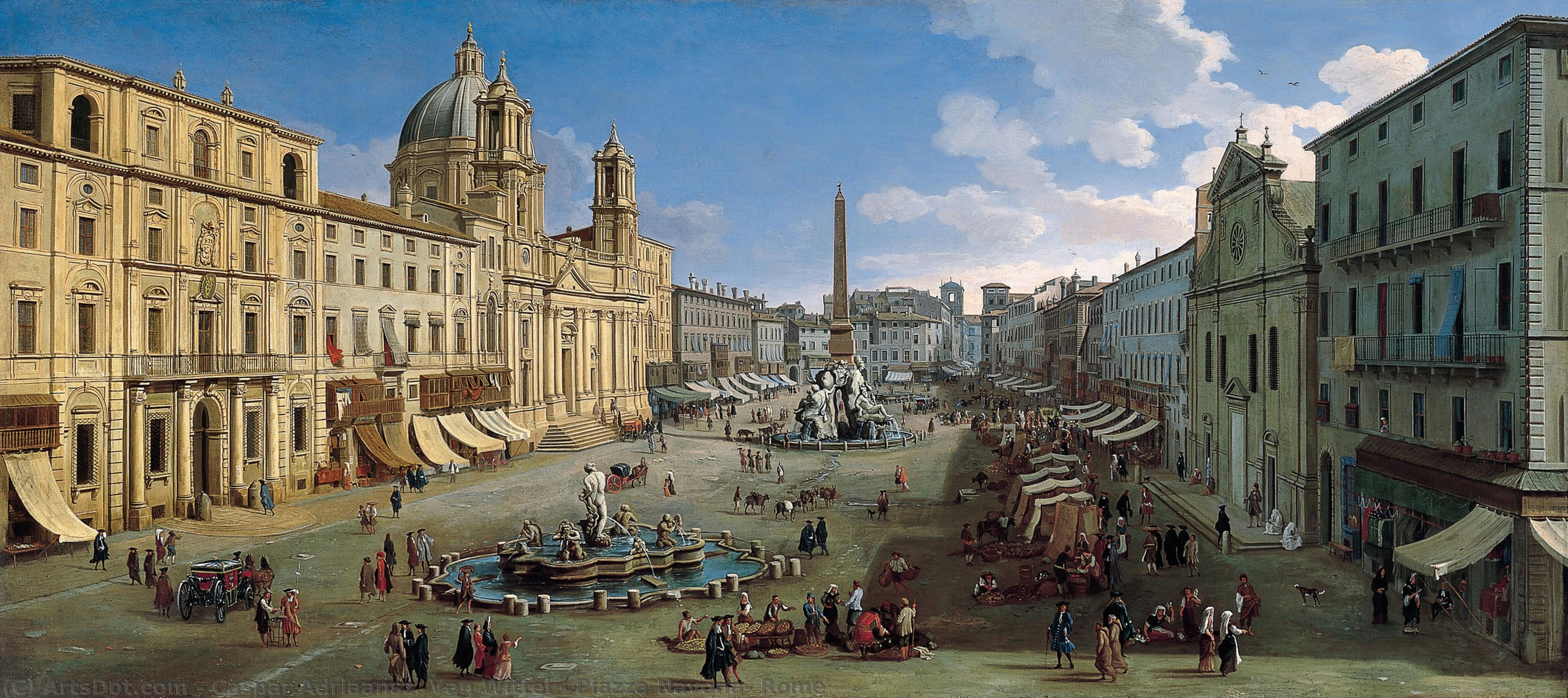
StatsPiazza Navona, Rome
 1699
1699 16.0 x 96.0 cm
 Read More
Purchase a high-resolution, enhanced digital image, far superior to the online preview.
Each file is meticulously prepared by our in-house specialists using advanced tools and expert manual retouching. We ensure every image has exceptional clarity, precise color accuracy, and fine detail.
The final file is delivered via email within 72 hours, optimized for immediate use in professional, editorial, and print environments. This is the same quality trusted by top-tier design studios, publishers, and galleries.
Digital Image
Download a high-resolution file for personal display, printing, and creative projects. ( Switch to Print Buy Hand Made Painting)
Included in Every Digital Image Order
Expert Digital Delivery, Guaranteed
When you choose ArtsDot.com, you're not just getting an image - you're receiving a professionally enhanced digital artwork, crafted with precision and backed by a satisfaction guarantee. Here's everything that comes with your order, automatically:

Fast Email Delivery
Your high-resolution digital image file will be emailed to you within 72 hours of ordering - ready for immediate use.

AI-Enhanced Digital File
Your artwork is professionally optimized using advanced AI tools and manual editing, ensuring maximum detail, clarity, and color accuracy.

Free Lifetime Re-Delivery
Accidentally deleted or lost your file? No worries - we'll resend it to you anytime, free of charge.

No Import Fees - Ever
Enjoy your artwork instantly with zero customs, duties, or delivery fees - digital downloads are always tax-free.

Color Accuracy Guarantee
We ensure your digital image reflects the original colors as closely as possible using professional tools and color management.

100-Day Satisfaction Guarantee
If you're not satisfied with your digital image, we'll revise it or refund 100% within 100 days - no questions asked.

100% Money-Back Guarantee
Not satisfied? Get a full refund within 100 days of receiving your digital file - no questions asked.

Bulk Order Discounts
Buy 3 images, save 10% - Buy 5, save 15% - Buy 10+, save 20%. Great for creative projects, galleries, and agencies.
Related Artworks








Artist Biography
Caspar van Wittel: The Architect of Roman Visions
Born Jasper Adriaensz van Wittel in Amersfoort, Netherlands, in 1653, Caspar – later known as Gaspare Vanvitelli in Italy – wasn’t merely a painter; he was an architect of perception. His legacy rests not just on the canvases he created, but on his pioneering role in establishing *veduta* painting—the detailed depiction of urban landscapes—as a distinct and highly valued genre within Italian art. For decades, his work remained largely obscure outside Italy, a poignant testament to the biases of patronage and the slow recognition afforded to artistic genius. This article seeks to illuminate the life, artistry, and profound influence of this often-overlooked master, revealing him as a pivotal figure in shaping our understanding of the Renaissance and Baroque cities.
Van Wittel’s early years were steeped in the traditions of Dutch landscape painting, yet his trajectory shifted dramatically upon relocating to Rome in 1675. This move proved transformative, exposing him to the vibrant artistic milieu of the Italian capital and igniting a passion for capturing its intricate beauty. Crucially, he found himself immersed in the work of Gaspar van Wittel – no relation, though sharing a similar name and a dedication to topographical accuracy – whose earlier paintings had already begun to establish the *veduta* as a respected art form. This encounter profoundly influenced Van Wittel’s style, solidifying his commitment to meticulously rendered cityscapes that prioritized architectural precision and atmospheric depth.
The Art of *Veduta*: Technique and Vision
Van Wittel's paintings are characterized by an almost obsessive attention to detail. He wasn’t simply recording a scene; he was dissecting it, analyzing its geometry, and translating that understanding onto the canvas with remarkable skill. His technique involved extensive preparatory work – numerous sketches and studies were created before embarking on the final painting. These preliminary drawings reveal his methodical approach, documenting not just the facades of buildings but also their proportions, angles, and relationships to one another.
Light and color played a crucial role in Van Wittel’s compositions. He masterfully employed chiaroscuro – the dramatic contrast between light and shadow – to create a sense of depth and atmosphere. His use of atmospheric perspective—making distant objects appear paler and less distinct—was particularly effective, lending his cityscapes an illusionistic realism that captivated viewers. He wasn't afraid to experiment with unusual viewpoints, often elevating himself above the streets to capture sweeping vistas, techniques he likely honed through careful observation and perhaps even utilizing rudimentary optical aids like a camera obscura – though this remains a subject of scholarly debate.
Notable Works and Patronage
Several of Van Wittel’s most celebrated works are housed in prestigious institutions worldwide. The Mauritshuis Museum in The Hague boasts “Rome, Piazza della Bocca della Verità, with Santa Maria in Cosmedin and the Temple of Hercules Victorious,” a masterpiece that exemplifies his ability to capture the essence of Roman urban life. His paintings have also found their way into the Biennale Internazionale dell’Antiquariato di Firenze (Florence, Italy) and the Maxxi National Museum of 21st Century Arts (Rome, Italy), demonstrating the enduring appeal of his work across centuries.
Van Wittel's success was largely due to his ability to cater to the tastes of wealthy Roman patrons. He secured commissions from prominent figures, including the Duke of Medinaceli, who served as godfather to his son, and later benefited from the patronage of Lord Burlington and Thomas Coke, Earl of Leicester, influential figures in the burgeoning English art scene. These connections not only provided him with financial support but also exposed his work to a wider European audience.
Influence and Legacy
Caspar van Wittel’s impact on the development of landscape painting in Europe was profound. He is widely considered one of the first artists to systematically document Italian cities through *veduta* paintings, elevating the genre from mere decorative subject matter to a respected form of artistic expression. His meticulous attention to detail and his innovative use of perspective influenced generations of artists, including Canaletto, Bellotto, and Guardi.
Beyond his technical skill, Van Wittel’s work offered a unique window into the social and cultural life of Renaissance and Baroque Italy. His paintings capture not just the physical appearance of cities but also their bustling streets, vibrant markets, and grand public spaces—providing invaluable insights for historians and art enthusiasts alike. While initially overlooked in his homeland, Caspar van Wittel’s legacy as a master of *veduta* painting is now firmly established, securing his place among the most important artists of the Roman School.

caspar adriaansz. van wittel
1653 - 1736 , Netherlands
Quick Facts
- Artistic Movement Or Style: Veduta painting
- Artists Or Movements Influenced By This Artist:
- Canaletto
- Bellotto
- Artists Who Influenced This Artist:
- Gaspar van Wittel
- Matthias Withoos
- Date Of Birth: 1653-08-24 (Amersfoort)
- Date Of Death: 1736-09-13 (Rome)
- Full Name: Caspar Adriaansz. van Wittel
- Nationality: Dutch
- Notable Artworks:
- Rome, piazza della bocca verità
- View of Amersfoort
- Place Of Birth: Amersfoort, Netherlands