

 Preview
 Send
Send Share
Share
 Details

 Download
 Similars
 X-Ray
X-Ray Diaporama
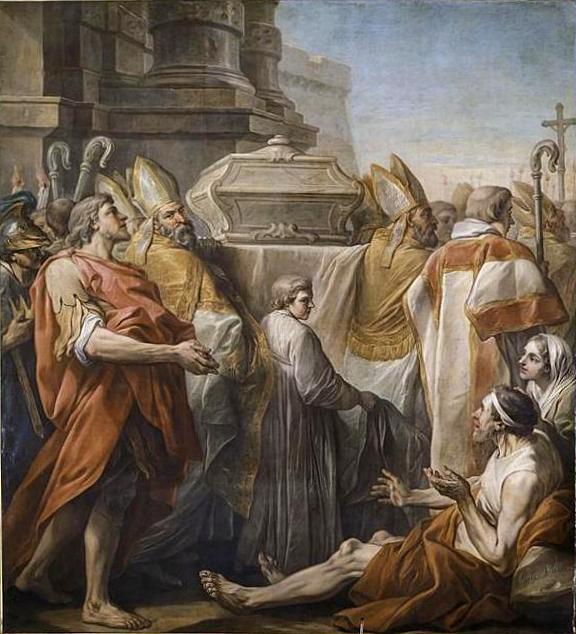
Life of St Augustine Procession of the Relics of St Augustine


 Read More
Purchase a high-resolution, enhanced digital image, far superior to the online preview.
Each file is meticulously prepared by our in-house specialists using advanced tools and expert manual retouching. We ensure every image has exceptional clarity, precise color accuracy, and fine detail.
The final file is delivered via email within 72 hours, optimized for immediate use in professional, editorial, and print environments. This is the same quality trusted by top-tier design studios, publishers, and galleries.
Digital Image
Download a high-resolution file for personal display, printing, and creative projects. ( Buy Print Buy Hand Made Painting)
Included in Every Digital Image Order
Expert Digital Delivery, Guaranteed
When you choose ArtsDot.com, you're not just getting an image - you're receiving a professionally enhanced digital artwork, crafted with precision and backed by a satisfaction guarantee. Here's everything that comes with your order, automatically:

Fast Email Delivery
Your high-resolution digital image file will be emailed to you within 72 hours of ordering - ready for immediate use.

AI-Enhanced Digital File
Your artwork is professionally optimized using advanced AI tools and manual editing, ensuring maximum detail, clarity, and color accuracy.

Free Lifetime Re-Delivery
Accidentally deleted or lost your file? No worries - we'll resend it to you anytime, free of charge.

No Import Fees - Ever
Enjoy your artwork instantly with zero customs, duties, or delivery fees - digital downloads are always tax-free.

Color Accuracy Guarantee
We ensure your digital image reflects the original colors as closely as possible using professional tools and color management.

60-Day Satisfaction Guarantee
If you're not satisfied with your digital image, we'll revise it or refund 100% within 60 days - no questions asked.

100% Money-Back Guarantee
Not satisfied? Get a full refund within 60 days of receiving your digital file - no questions asked.

Bulk Order Discounts
Buy 3 images, save 10% - Buy 5, save 15% - Buy 10+, save 20%. Great for creative projects, galleries, and agencies.
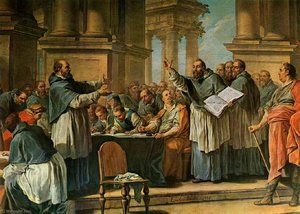
A Solemn Pilgrimage: Exploring Charles-André van Loo’s “Life of St Augustine Procession of the Relics of St Augustine”
The painting "Life of St Augustine Procession of the Relics of St Augustine," executed in 1748 by Charles-André van Loo, stands as a testament to the grandeur and piety characteristic of Rococo art during its zenith. More than just a depiction of religious devotion, it’s an immersive experience into the artistic sensibilities of Louis XV's court—a realm obsessed with ritualistic splendor and imbued with profound symbolic meaning. Examining this monumental canvas reveals layers of artistry that continue to resonate with viewers today.Subject Matter and Narrative Composition
At its core, the artwork portrays a procession honoring St Augustine’s relics – a pilgrimage undertaken by numerous figures representing various strata of society. The central figure, kneeling before a casket containing the saint's bones, embodies humility and reverence. Surrounding him are attendants—noblemen, clergymen, and perhaps members of Augustine’s monastic order—each rendered with meticulous detail, conveying an air of solemn dignity. The composition isn’t merely observational; it’s deliberately staged to evoke contemplation and inspire piety. Van Loo skillfully guides the viewer's gaze across the scene, emphasizing the importance of the saint’s veneration and reinforcing the narrative’s spiritual core.Rococo Style: Elegance Defined
Van Loo’s signature Rococo style is immediately apparent in every aspect of “Life of St Augustine.” The palette leans heavily on pastel hues—pale blues, creams, and rosy pinks—creating an ethereal atmosphere that diffuses light and softens contours. Ornamentation dominates the canvas; gilded frames, draped fabrics, and delicately sculpted draperies contribute to a sense of opulent richness without overwhelming the viewer’s eye. Unlike the more austere Baroque tradition, Rococo prioritizes grace and fluidity, mirroring the aristocratic tastes of the time. The artist employs curvilinear lines and asymmetrical arrangements—a hallmark of the style—to achieve an illusionistic effect that enhances depth and realism.Technique and Artistic Skill
The painting’s execution demonstrates Van Loo's mastery of oil paint on canvas. He utilizes glazing techniques to build up layers of color, achieving luminous surfaces and subtle tonal variations. Careful attention is paid to anatomical accuracy—particularly evident in the depiction of the kneeling figure—yet this realism is tempered by idealized forms that convey nobility and spiritual purity. The artist’s meticulous brushwork captures textures with remarkable precision, from the folds of fabric to the polished surface of the casket. Furthermore, Van Loo skillfully employs chiaroscuro – dramatic contrasts between light and shadow – to heighten emotional impact and guide the viewer's eye toward key elements within the composition.Historical Context and Symbolic Significance
“Life of St Augustine Procession of the Relics of St Augustine” emerged during a period marked by fervent religious piety and royal patronage. The Habsburg monarchy’s influence extended across Europe, fostering artistic endeavors dedicated to commemorating saints and reinforcing Catholic dogma. The depiction of St Augustine's relics served as a powerful reminder of faith and spiritual authority—themes central to Louis XV’s reign. Beyond its immediate devotional purpose, the painting embodies broader cultural values: respect for tradition, aristocratic grandeur, and the pursuit of beauty as expressions of moral virtue. The casket itself symbolizes sanctity and remembrance, while the procession represents the collective effort to honor a revered figure and reaffirm religious beliefs.Emotional Impact and Legacy
Looking at “Life of St Augustine Procession of the Relics of St Augustine” transcends mere visual appreciation; it invites contemplation on themes of faith, humility, and devotion. The painting’s serene atmosphere and masterful execution evoke feelings of reverence and solemnity—qualities that continue to captivate audiences centuries later. Its influence can be seen in subsequent religious paintings and decorative arts, cementing Van Loo's place as one of the foremost artists of his era. Today, reproductions of this magnificent artwork offer a glimpse into the artistic spirit of Louis XV’s court and serve as an enduring symbol of Rococo elegance and spiritual aspiration.Related Artworks
Artist Biography
Early Life and Training
- Born: February 15, 1705, in Nice, France
- Family Background: Son of Louis-Abraham van Loo and younger brother of Jean-Baptiste van Loo. Member of a successful dynasty of Dutch painters.
- Early Education: Initial training in Turin, followed by studies in Rome (1712) under Benedetto Luti and Pierre Legros.
- Parisian Studies: Attended the Académie royale, winning first prize for drawing in 1723 and historical painting in 1727.
Artistic Career and Notable Works
- Style: Primarily known as a Rococo painter, characterized by elegance, grace, and ornate detail.
- Subject Matter: Diverse range including portraits, mythological scenes, historical paintings, allegories, and genre scenes.
- Significant Works:
- Venus and Amor (Kunsthalle Bremen) - Demonstrates mastery of the Rococo style.
- Halt of the Hunt (The Metropolitan Museum of Art) – Captures aristocratic activities.
- Portrait of Marie Leszczynska, Queen of France – A notable royal portrait.
- Jupiter and Antiope - Showcases mythological themes.
- Self Portrait – Provides insight into the artist's self-perception.
- Perseus and Andromeda (multiple versions) – Illustrates skill in depicting classical mythology.
- Mademoiselle Clairon as Medea (small version) - A captivating Rococo portrait of 1760.
Patronage and Royal Recognition
- Royal Patronage: Enjoyed the patronage of Madame de Pompadour and the French court.
- Appointment to the Court: Became First Painter to King Louis XV in 1762, a prestigious position.
- Order of Saint Michael: Decorated with the Order of Saint Michael, signifying royal favor.
Influences and Legacy
- Family Influence: Heavily influenced by his father and brother, both accomplished painters.
- Rivalry: Competed with François Boucher, another prominent Rococo artist.
- Modern French School: His "simplicity of style and correctness of design" significantly influenced the modern French school of painting.
- Critical Fortune: While his critical standing fluctuated over time, his skill and the breadth of his work command respect.
Museum Collections & Further Exploration
- Museum Presence: Works are featured in prominent museums including the Louvre (The Marriage of the Virgin), Kunsthalle Bremen, and The Metropolitan Museum of Art.
- Further Resources:
- ArtsDot's Charles-André van Loo page: https://www.ArtsDot.com/artists/charles-andre-van-loo/
- ArtsDot's Greatest Artists of All Time page: https://www.ArtsDot.com/greatest-artists
- ArtsDot Virtual Museum: https://www.ArtsDot.com/
- Wikipedia Article: https://en.wikipedia.org/wiki/Charles-Andr%C3%A9_van_Loo
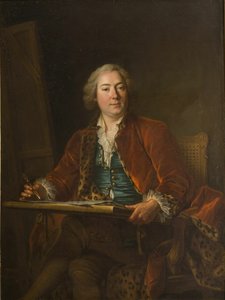
Charles-André van Loo
1705 - 1765 , France
Quick Facts
- Artistic Movement Or Style: Rococo painting
- Artists Or Movements Influenced By This Artist: ['Modern French school']
- Artists Who Influenced This Artist:
- Benedetto Luti
- Pierre Le Gros
- Date Of Birth: February 15, 1705
- Date Of Death: July 15, 1765
- Full Name: Charles-André van Loo
- Nationality: French
- Notable Artworks:
- Venus and Amor
- Halt of the Hunt
- Portrait of Marie Leszczynska
- Jupiter and Antiope
- Self Portrait
- Perseus and Andromeda
- Place Of Birth: Nice, France

