 Preview
 Send
Send Share
Share
 Details

 Download
 Similars
 X-Ray
X-Ray Diaporama
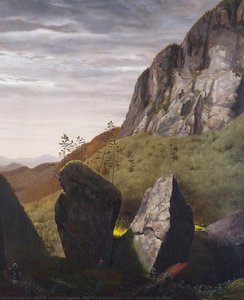
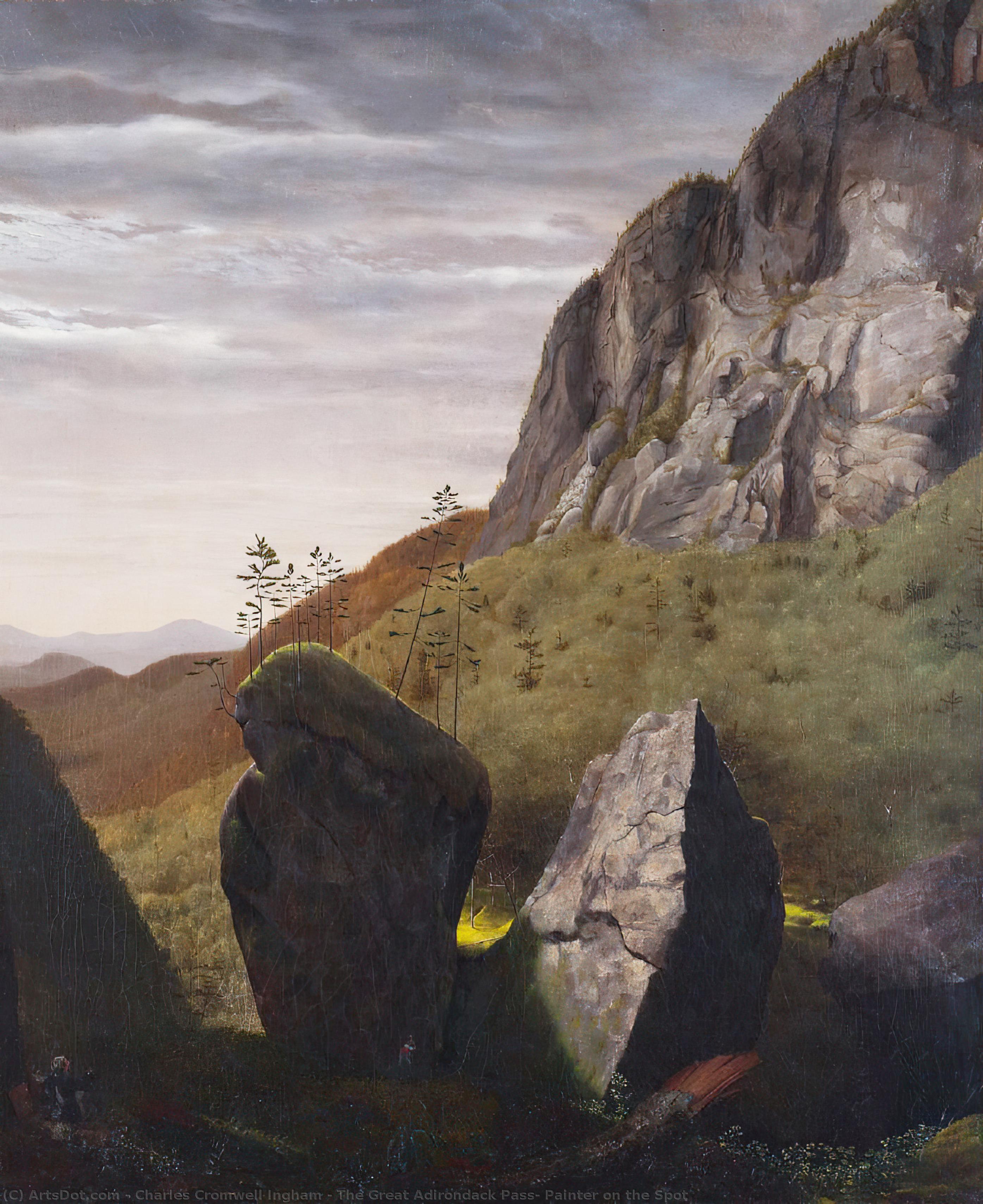
The Great Adirondack Pass, Painter on the Spot
 Hudson River School
 1837
1837 122.0 x 102.0 cm
 Read More
Giclée / Art Print
Museum-quality giclée or canvas print with fast production and flexible finish options. ( Buy Hand Made Painting Buy Image)




P118B $10

P118H $10

P118W $10

P438Z $10

P508JH $12

P508YH $12

P805H $10

P805Z $10

P919BZ $10

P919G $10

P919XJ $10

P959ZH $10

P968JZ $12

W106C $8

W218G $10

W218JH $8

W218Y $10

W307PJ $10

W316G $10

W316PJ $8

W316Y $10

W398PJ $8

W4111J $10

W500HY $15

W500JH $15

W692G $12

W849H $8

W940BG $15

W953PJ $8




Pick from our preset sizes that match the artwork's original proportions.

You may enter your own dimensions to fit a specific frame or space. If your selected size does not match the original image's proportions, we will either crop the artwork or extend the image with a mirrored or solid-fill edge. A digital mockup will be sent for your approval before production begins.
Please note that the on-screen preview does not reflect the actual cropping or extension. Only the mockup will accurately show the final composition.
While custom sizes are available, we recommend selecting a dimension from the predefined list to preserve the original proportions.
Worldwide Delivery () in 2 weeks instead of standard 4/5 weeks. (21 August)

Free Worldwide Express Shipping

High-Quality Linen Canvas

Full Shipping Insurance

Customs Tax Refund Guarantee

True Color Matching Guarantee

60-Day Return Policy (Defects Only)

100% Money-Back Guarantee

Bulk Discount Offer
 Glass option is only available in size under 110 CM

The Great Adirondack Pass, Painter on the Spot
Giclée / Art Print
Reproduction Size
-


Total Price
$ 63
Collectible Description
Historical Context and Significance
Ingham's painting was first exhibited at the National Academy of Design in 1839, where it garnered significant attention from travelers and artists alike. The Adirondack Pass, also known as Indian Pass, is a breathtaking natural feature that divides the precipitous cliff of Wallface Mountain from Mount McIntyre, located some five miles southwest of Mount Marcy. Ingham's journey to create this painting was not without its challenges. He joined New York State Geologist Ebenezer Emmons in August 1837 as part of the state's Natural History Survey. The arduous trek to the location was so demanding that Ingham reportedly fainted during the expedition. Despite these difficulties, he persevered and executed the painting "on the spot," capturing the essence of this majestic landscape.Artistic and Cultural Impact
The John H. Bufford lithograph of The Great Adirondack Pass, Painter on the Spot was published in Ebenezer Emmons' widely read New York State Natural History Survey Report of 1838. This publication further amplified the painting's influence, making it a celebrated representation of American wilderness. Thirty years later, Alfred Billings Street referenced the painting and print in his travelogue The Indian Pass, praising its graphic accuracy: "I wish to bear testimony to the graphic accuracy of the engraving of the loftiest point of the Indian Pass. . . . It is a perfect photograph of the magnificent sight."Visual Elements and Composition
The painting features a landscape dominated by mountains with a rocky terrain. A large mountain looms in the background, accompanied by a smaller one to its left. Scattered rocks are visible throughout the scene, both near the foreground and further back. Trees add depth to the natural scenery of the mountainside, creating a serene atmosphere that captures the beauty of nature.Conclusion
The Great Adirondack Pass, Painter on the Spot by Charles Cromwell Ingham is a masterpiece that not only introduced the Adirondacks to the national consciousness but also stands as a testament to the artist's dedication and skill. This painting continues to inspire awe and appreciation for the natural beauty of America's wilderness. For those interested in exploring more artworks, The Great Adirondack Pass, Painter on the Spot by Charles Cromwell Ingham is available for viewing at ArtsDot. Additionally, Naval Ships setting Sail With A Revenue Cutter Off Berry Head by Thomas Luny and self portrait by Ivan Nikolaevich Kramskoy are also noteworthy pieces in the ArtsDot collection.- Artist: Charles Cromwell Ingham
- Painting Title: The Great Adirondack Pass, Painter on the Spot
- Museum: Adirondack Museum
- Year: 1837
- Medium: Oil On Canvas
- Dimensions: 122 x 102 cm
This article provides a comprehensive overview of the painting's historical context, artistic significance, and visual elements. It also highlights the importance of ArtsDot in preserving and showcasing such masterpieces for art enthusiasts worldwide.
Related Artworks


Artist Biography
Charles Cromwell Ingham: A Portraitist of New York Society
Charles Cromwell Ingham (1796 or 1797 – December 10, 1863) remains a captivating figure in 19th-century American art, an artist whose life and career unfolded with a quiet grace that belies the significant impact he had on portraiture and the burgeoning artistic landscape of New York City. Born in Dublin, Ireland, Ingham’s journey took him across the Atlantic to America, where he established himself as a prominent painter specializing in capturing the elegance and social intricacies of his time. While shrouded in some mystery regarding his personal life, his artistic legacy—particularly his exquisite portraits—continues to illuminate the world of painting, offering a glimpse into the refined society of mid-19th century New York.
Ingham’s early training laid the foundation for his distinctive style. He began studying art at The Dublin Institution in 1809, under the tutelage of William Cuming, an artist known for his influence on a generation of Irish painters. Cuming's approach, emphasizing delicate detail and luminous color, profoundly shaped Ingham’s technique. Further influences included Martin Archer Shee, whose work showcased a refined elegance and attention to naturalism. These formative experiences instilled in him a meticulousness and a sensitivity to light that would become hallmarks of his later paintings.
A Master of the Miniature and the Grand Portrait
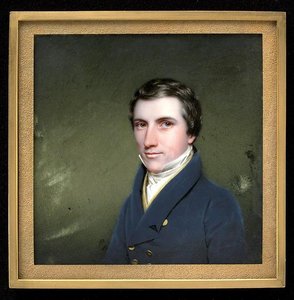
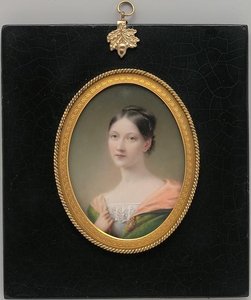
Upon arriving in New York City in 1816, Ingham quickly established himself as a skilled painter, initially exhibiting “The Death of Cleopatra” at the opening of the American Academy of Fine Arts. However, it was his work in watercolor on ivory—a favored medium for miniature portraits—that truly gained him recognition. This technique allowed him to capture the subtle nuances of expression and texture with remarkable precision, particularly when depicting young women from New York’s upper echelons.
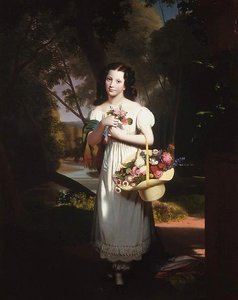
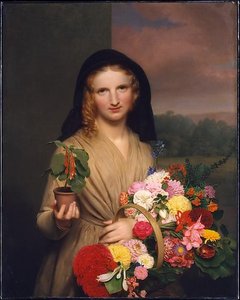
Ingham's style evolved over time, incorporating elements of French Neoclassicism, notably influenced by Jean Auguste Dominique Ingres. He was renowned for his “high finish,” achieved through multiple layers of glazing, creating a rich and luminous surface. His portraits were not merely likenesses; they were carefully constructed narratives, revealing the personalities and social standing of his subjects. He painted over 200 portraits between 1826 and 1845, including iconic works like “Flower Girl” (1846) and “Benjamin Moore McVickar,” showcasing his ability to capture both physical beauty and inner character.
Notable Works and Locations
Several of Ingham’s paintings are now housed in prominent collections, offering valuable insights into his artistic development. “Portrait of a Young Woman” (available via ArtsDot.com) exemplifies his skill in conveying depth through subtle expressions and delicate details. “Landscape with Figures,” currently residing in the Milton Keynes Civic Offices, demonstrates his versatility in capturing both the beauty of nature and the human experience.
A particularly striking example of Ingham’s work is “The Great Adirondack Pass” (1837), now part of the Adirondack Experience collection. This landscape painting reveals a keen interest in the American wilderness, showcasing his ability to render the rugged beauty of the region with remarkable detail and sensitivity. “Benjamin Moore McVickar,” acquired by the Metropolitan Museum of Art, is another significant portrait that exemplifies his mastery of technique and his talent for capturing the essence of his subjects.
Legacy and Influence
Though details about Ingham’s personal life remain elusive, his artistic legacy is undeniable. He was a founding member of the National Academy of Design in 1825, serving as its vice president until his death. His influence can be seen throughout the English heritage museum in Launceston, Australia, where his style has inspired numerous artists. Ingham’s contributions extended beyond painting; he also designed the grand staircase of the Browere stables for the National Academy, a testament to his architectural sensibilities.
Charles Cromwell Ingham's life may be shrouded in mystery, but his art continues to resonate with viewers today. His paintings offer a captivating glimpse into the social and artistic world of 19th-century New York, showcasing his exceptional talent, meticulous technique, and profound understanding of human character. Exploring his work is like stepping back in time, encountering a master portraitist who quietly shaped the visual landscape of an era.
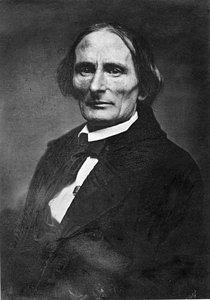
Charles Cromwell Ingham
1796 - 1863
Quick Facts
- Artistic Movement Or Style: Neoclassical, Portraiture
- Artists Or Movements Influenced By This Artist: ['English Heritage Museum']
- Artists Who Influenced This Artist:
- William Cuming
- Martin Archer Shee
- Jean Auguste Dominique Ingres
- Date Of Birth: 1796/1797
- Date Of Death: 1863
- Full Name: Charles Cromwell Ingham
- Nationality: Irish-American
- Notable Artworks:
- The Death of Cleopatra
- Benjamin Moore McVickar
- Flower Girl (1846)
- The Great Adirondack Pass
- Place Of Birth: Dublin, Ireland
Related Articles

Grant Wood & American Regionalism: Identity, Myth & the Rural Landscape
Explore the world of Grant Wood & American Regionalism with ArtsDot. Discover the symbolism behind 'American Gothic', recurring themes, and the movement's lasting impact on art history. High-quality reproductions available.
American Realism's Defining Works: 10 Masterpieces for Your Home
Explore 10 defining American Realism masterpieces – Hopper, Homer & more. Discover the stories behind these iconic paintings and bring timeless art to your home with ArtsDot's museum-quality reproductions. Explore the full collection online.
Charles Bird King: Capturing Native American Dignity Through Portraiture & Cultural Exchange
Explore the captivating portraits of Charles Bird King, renowned for his depictions of Native American leaders. Discover the historical context, artistic techniques, and collecting value of these significant 19th-century artworks.

The Enduring Legacy of Oil on Canvas: Technique, History & Aesthetic Impact
Explore the rich history & techniques of oil painting – from Renaissance masters to Impressionism. Discover pigments, layering methods, and why this timeless medium endures. Expert insights for artists & art enthusiasts.

Oil on Canvas: A Historical & Technical Exploration of a Timeless Artistic Medium
Explore the rich history & enduring techniques of oil painting on canvas. Discover the science behind its longevity, conservation practices, and contemporary relevance. Expert insights for art enthusiasts.