 Preview
 Send
Send Share
Share
 Details

 Download
 Similars
 X-Ray
X-Ray Diaporama
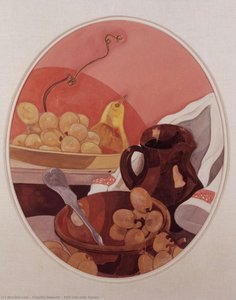
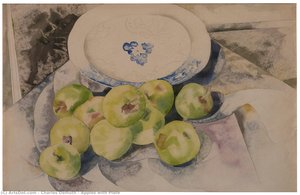
Still Life with Spoon


 Read More
Hand Made Oil Reproduction
Hand-painted oil on canvas in your size and frame, made to order by our artists. ( Buy Print Buy Image)




P118B $10

P118H $10

P118W $10

P438Z $10

P508JH $12

P508YH $12

P805H $10

P805Z $10

P919BZ $10

P919G $10

P919XJ $10

P959ZH $10

P968JZ $12

W106C $8

W218G $10

W218JH $8

W218Y $10

W307PJ $10

W316G $10

W316PJ $8

W316Y $10

W398PJ $8

W4111J $10

W500HY $15

W500JH $15

W692G $12

W849H $8

W940BG $15

W953PJ $8




Pick from our preset sizes that match the artwork's original proportions.

You may enter your own dimensions to fit a specific frame or space. If your selected size does not match the original image's proportions, we will either crop the artwork or extend the painting with additional hand-painted elements. A digital mockup will be sent for your approval before production begins.
Please note that the on-screen preview does not reflect the actual cropping or extension. Only the mockup will accurately show the final composition.
While custom sizes are available, we recommend selecting a dimension from the predefined list to preserve the original proportions.
After order, ArtsDot.com team will email client for instructions and provide a mockup preview
Worldwide Delivery () in 3/4 weeks instead of standard 5 weeks. (16 August). No compromise on quality.

Free Worldwide Express Shipping

High-Quality Linen Canvas

Full Shipping Insurance

Customs Tax Refund Guarantee

True Color Matching Guarantee

60-Day Return Policy (Defects Only)

100% Money-Back Guarantee

Bulk Discount Offer
 Glass option is only available in size under 110 CM

Still Life with Spoon
Reproduction Medium
Reproduction Size
-


Total Price
$ 263
Artwork Description
Still Life with Spoon – A Precisionist Reflection on Domestic Abundance
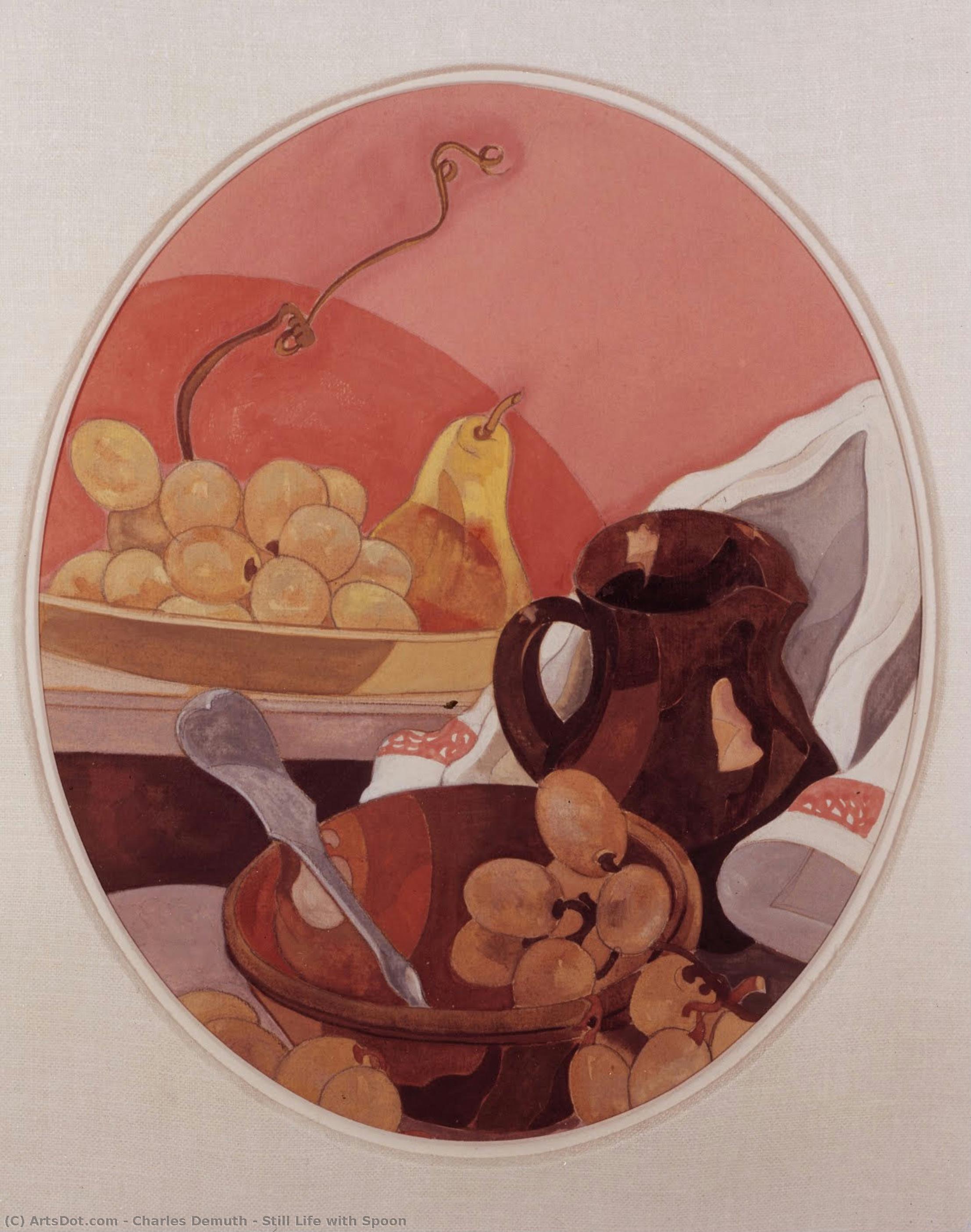
Charles Demuth’s “Still Life with Spoon,” painted in 1927, stands as a quintessential example of American Precisionism—a movement that sought to capture the essence of industrial life and everyday objects with meticulous detail and unwavering clarity. This oval canvas depicts a deceptively simple arrangement: a bowl brimming with grapes alongside a pear and plums, resting upon a dark red cup and draped white cloth.
- Composition & Form: The painting’s dense composition immediately draws the eye, emphasizing the abundance of fruit—a visual metaphor for prosperity—and highlighting the tactile qualities of domesticity. Soft, blended brushstrokes contribute to a smooth surface texture, prioritizing form over elaborate ornamentation. Geometric shapes dominate – rounded fruits and curved edges of the cup – reflecting the influence of Cubism while maintaining a grounded realism.
- Color Palette & Lighting: Warm reds and pinks permeate the color scheme, creating an atmosphere that is both rich and subtly muted. Diffused lighting casts gentle shadows, defining shapes without resorting to dramatic contrasts, furthering the painting’s contemplative mood.
- Technique & Materials: Primarily executed in oil paints on canvas, Demuth employed a technique characterized by meticulous brushwork—a hallmark of Precisionism—to achieve subtle tonal variations and seamless blending. This careful layering ensures that every element contributes to the overall visual harmony.
Historical Context – The Rise of Industrial Modernity
Painted during the Jazz Age, “Still Life with Spoon” reflects the broader cultural shift towards embracing industrial progress and simplifying aesthetic sensibilities. Precisionism emerged as a reaction against Impressionism’s focus on fleeting impressions of light and color, advocating instead for an objective depiction of reality—often capturing scenes from factories or urban landscapes—albeit imbued with artistic vision.
Symbolism – Beyond the Fruits
While seemingly straightforward, “Still Life with Spoon” carries symbolic weight. The fruit itself represents abundance and indulgence, yet its careful arrangement suggests a deliberate consideration of form and balance. The dark red cup symbolizes warmth and comfort, while the draped white cloth evokes purity and stillness—elements that coalesce to convey a sense of serene contemplation.
Emotional Impact – Quiet Elegance
Demuth’s masterful handling of color and texture creates an emotionally resonant experience for the viewer. The painting's understated beauty speaks to a deeper appreciation for craftsmanship and observation, inviting contemplation on themes of domestic tranquility and artistic precision. It exemplifies the enduring power of still life as a genre—a testament to its ability to capture both visual splendor and profound psychological nuance.
Related Artworks
Artist Biography
early life and education
charles henry buckius demuth, an american watercolorist, was born on november 8, 1883, in lancaster, pennsylvania. he developed a unique style of painting known as precisionism, which would later become a significant contribution to the american art scene. demuth's early education took place at franklin & marshall academy, followed by studies at drexel university and the prestigious pennsylvania academy of fine arts in philadelphia. it was during his time at pafa that he met william carlos williams, with whom he formed a lasting friendship.career and influences
demuth's artistic career began to take shape after his studies in the united states. he later attended académie colarossi and académie julian in paris, where he became an integral part of the avant-garde art scene. the city's acceptance of his homosexuality also had a profound impact on his work. upon returning to america, demuth retained aspects of cubism in many of his works, reflecting the influence of his time in paris. his fondness for lancaster is evident in the subject matter of numerous works, showcasing industrial features like bridges, smoke stacks, and skyscrapers.notable works and precisionism
demuth's most famous painting, the figure five in gold, was inspired by william carlos williams's poem "the great figure." this work is a prime example of demuth's unique style, which he termed "precisionism." other notable works include his "poster portraits," dedicated to artists and writers like georgia o'keeffe, arthur dove, and eugene o'neill. key characteristics of precisionism:- quasi-cubist, sharply defined manner
- urban and rural landscapes with industrial features
- highly structured scenes lacking figures
- depiction of an industrial setting with sharp linearity
legacy and museum quality replicas at ArtsDot
demuth's contributions to the precisionist art movement have left a lasting impact on american modernism. at ArtsDot.com, you can find museum-quality replicas of his works, including the figure five in gold and other notable pieces. explore the world of precisionism with ArtsDot's extensive collection: /en/art/show/art-d3cl2x-en/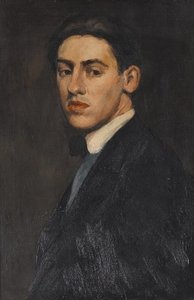
Charles Demuth
1883 - 1935 , United States of America
Quick Facts
- Artistic Movement Or Style: Precisionism
- Artists Or Movements Influenced By This Artist: ['Marsden Hartley']
- Artists Who Influenced This Artist:
- William Carlos Williams
- Cubism
- Date Of Birth: November 8, 1883
- Date Of Death: October 23, 1935
- Full Name: Charles Henry Buckius Demuth
- Nationality: American
- Notable Artworks:
- The Figure Five in Gold
- Tree Forms 1916
- Poster Portraits
- Place Of Birth: Lancaster, Pennsylvania, USA
Related Articles
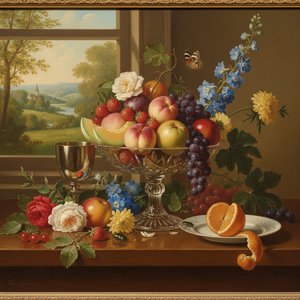
Severin Roesen: Evoking National Identity Through American Still Life Painting
Explore the captivating world of Severin Roesen, a major American still life painter influenced by Dutch masters. Discover his lush compositions and the symbolism within his art – a window into 19th-century America.
Precision of Vision: Charles Demuth & the Modernist Reframing of American Industry
Explore the groundbreaking art of Charles Demuth & the Precisionism movement. Discover iconic paintings like 'The Figure Five in Gold,' his unique style, and lasting impact on American Modernism. Learn more at ArtsDot.
The Bountiful Still Life: Symbolism & Artistic Representation of Fruit Across Art History
Explore the rich history of still life painting & the symbolism of fruit across art movements. Discover masterpieces from Caravaggio to Cézanne with ArtsDot – expert guidance & museum-quality reproductions.
Grant Wood & American Regionalism: Identity, Myth & the Rural Landscape
Explore the world of Grant Wood & American Regionalism with ArtsDot. Discover the symbolism behind 'American Gothic', recurring themes, and the movement's lasting impact on art history. High-quality reproductions available.

Charles Willson Peale: Portraiture, Enlightenment Ideals & Shaping American Identity
Explore the life & art of Charles Willson Peale – Revolutionary portraitist, scientist, and founder of America’s first museum. Discover his iconic paintings of Washington & the Enlightenment ideals that shaped a nation.