 Preview
 Send
Send Share
Share
 Details

 Download
 Similars
 X-Ray
X-Ray Diaporama
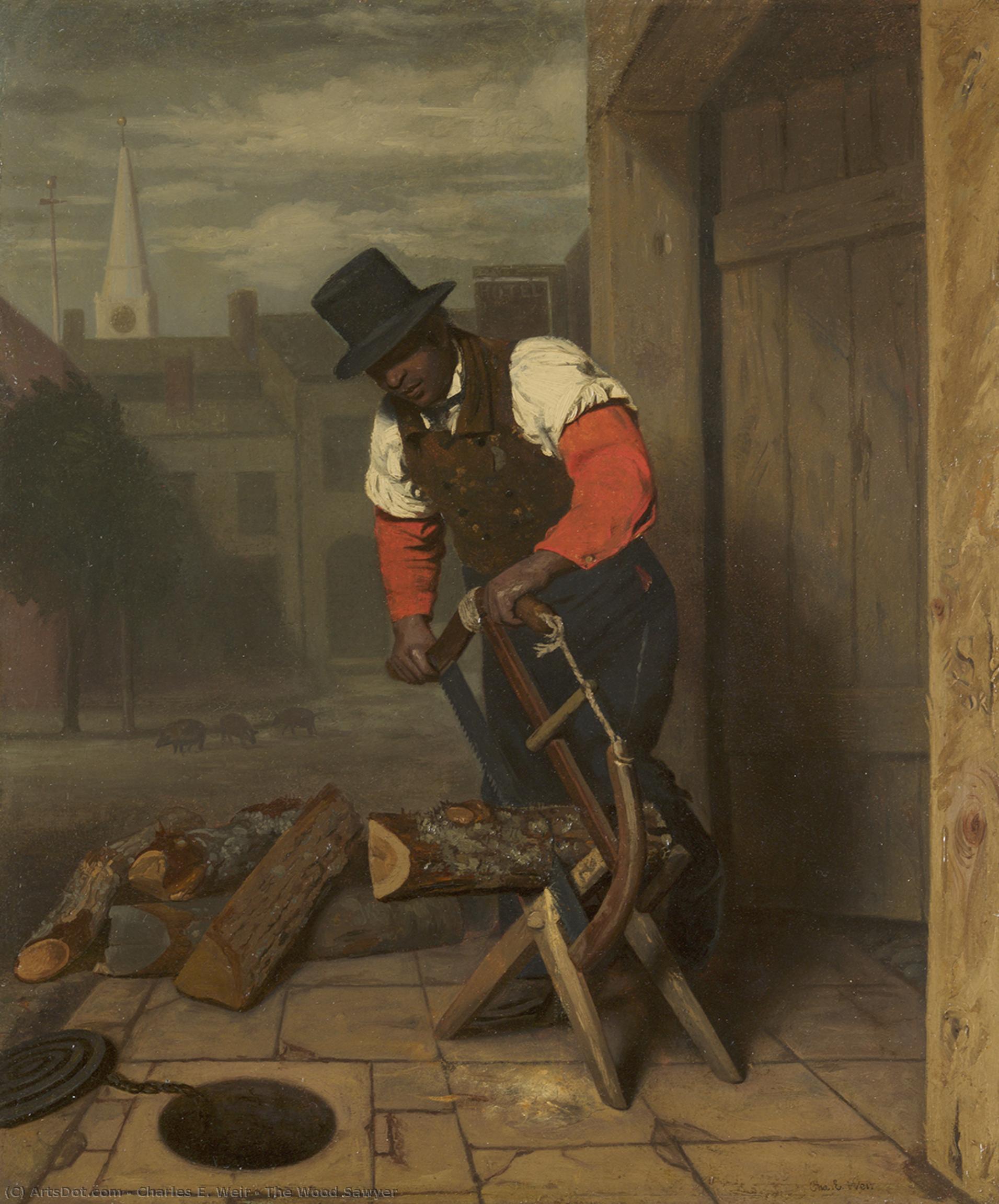
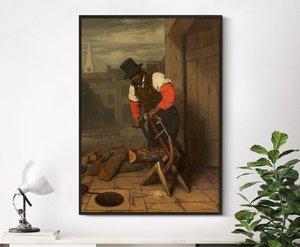
The Wood Sawyer
 Oil On Board
- Genre Painting
 1842
1842 57.0 x 46.0 cm
 Metropolitan Museum of Art
 Read More
Hand Made Oil Reproduction
Hand-painted oil on canvas in your size and frame, made to order by our artists. ( Buy Print Buy Image)




P118B $10

P118H $10

P118W $10

P438Z $10

P508JH $12

P508YH $12

P805H $10

P805Z $10

P919BZ $10

P919G $10

P919XJ $10

P959ZH $10

P968JZ $12

W106C $8

W218G $10

W218JH $8

W218Y $10

W307PJ $10

W316G $10

W316PJ $8

W316Y $10

W398PJ $8

W4111J $10

W500HY $15

W500JH $15

W692G $12

W849H $8

W940BG $15

W953PJ $8




Pick from our preset sizes that match the artwork's original proportions.

You may enter your own dimensions to fit a specific frame or space. If your selected size does not match the original image's proportions, we will either crop the artwork or extend the painting with additional hand-painted elements. A digital mockup will be sent for your approval before production begins.
Please note that the on-screen preview does not reflect the actual cropping or extension. Only the mockup will accurately show the final composition.
While custom sizes are available, we recommend selecting a dimension from the predefined list to preserve the original proportions.
After order, ArtsDot.com team will email client for instructions and provide a mockup preview
Worldwide Delivery () in 3/4 weeks instead of standard 5 weeks. (17 August). No compromise on quality.

Free Worldwide Express Shipping

High-Quality Linen Canvas

Full Shipping Insurance

Customs Tax Refund Guarantee

True Color Matching Guarantee

60-Day Return Policy (Defects Only)

100% Money-Back Guarantee

Bulk Discount Offer
 Glass option is only available in size under 110 CM

The Wood Sawyer
Reproduction Medium
Reproduction Size
-


Total Price
$ 263
Artwork Description
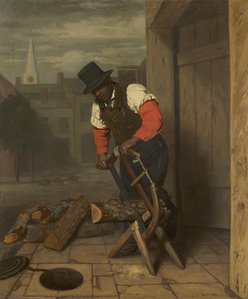
A Glimpse of Urban Life: Charles Edward Weir’s “The Wood Sawyer”
Charles Edward Weir's "The Wood Sawyer," painted in 1842, is more than just a depiction of a New York City scene; it’s a poignant window into the social fabric and burgeoning complexities of early 19th-century America. This remarkable genre painting, now residing within the Metropolitan Museum of Art, stands as one of Weir's most celebrated works – and arguably, one of the earliest significant portrayals of an African American subject in a positive and dignified manner within American art history. Weir, a talented artist tragically cut short at just 22 years old, created a work that simultaneously captures the grit and industry of a rapidly transforming city while subtly challenging prevailing societal norms.The Scene Unfolds: A Snapshot of Lower Manhattan
The painting immediately transports us to a bustling corner of Lower Manhattan – a vibrant yet undeniably rough-and-tumble area undergoing dramatic change during this period. The composition is meticulously detailed, revealing a scene brimming with everyday life. A man, identified as a “sawyer” – one who cuts wood for use in construction and heating – stands proudly beside a substantial pile of freshly cut timber. His attire, though modest, suggests a degree of respectability; he’s not presented as a laborer reduced to mere utility, but rather as an individual with a certain dignity. The backdrop is equally rich in detail: the partially visible stone sidewalk, hinting at the city's infrastructure and the presence of the Croton Aqueduct – a vital source of fresh water for the growing metropolis – and a distant white steeple likely belonging to St. Mark’s Church in-the-Bowery. The inclusion of two clocks adds a layer of realism, grounding the scene in time and place. Notably, the painting also features three simple chairs scattered about, suggesting a brief respite amidst the demanding labor.Symbolism and Social Commentary
Beyond its realistic depiction, “The Wood Sawyer” carries significant symbolic weight. The presence of rooting hogs in the middle distance is a deliberate detail, reflecting the sanitation challenges prevalent in working-class neighborhoods during this era – areas often neglected by city authorities. These animals, simultaneously a source of food and a symbol of urban decay, underscore the social inequalities that characterized rapidly industrializing New York. However, the most striking element is undoubtedly the subject himself: a free person of color engaged in honest labor. In an age dominated by racial prejudice and limited opportunities for African Americans, Weir’s decision to portray this individual with such respect and dignity was profoundly subversive. It's a testament to his artistic vision and perhaps a reflection of his own progressive sensibilities. The detail of the man’s dress – suggesting he might be a porter or even a coachman – subtly elevates his status beyond mere manual labor, hinting at a role within the city’s social hierarchy.An Artist's Legacy: Weir and His Context
Charles Edward Weir was a rising star in the American art scene when he tragically died in 1845, leaving behind a remarkably small but powerfully evocative body of work. His brother, Robert Weir, is perhaps more widely known for his contributions to American landscape painting, yet Charles’s “The Wood Sawyer” stands as a crucial counterpoint – a rare example of an artist actively challenging racial stereotypes and offering a nuanced portrayal of urban life. The painting's creation coincides with the visit of English writer and social critic Charles Dickens to New York City in 1842, who was reportedly astonished by the resilience and resourcefulness of African Americans navigating the challenges of city life. Weir’s work can be seen as a direct response to this observation, capturing a moment of quiet dignity amidst the chaos of an evolving metropolis.A Timeless Masterpiece: Reproduction and Appreciation
“The Wood Sawyer” remains a powerful and relevant artwork today, offering valuable insights into American history and social dynamics. High-quality reproductions capture the painting’s rich detail and evocative atmosphere, making it a compelling addition to any art collection or interior space. Its enduring appeal lies not only in its artistic merit but also in its poignant message of dignity, resilience, and the importance of challenging societal prejudices – themes that continue to resonate deeply with audiences today. Consider commissioning a hand-painted reproduction from ArtsDot.com to bring this remarkable piece into your home or office, ensuring its legacy continues for generations to come.Related Artworks




Artist Biography
early life and background
charles edward weir, a name that resonates with the promise of unfulfilled potential, was born in 1823 in new york, united states. his life, though brief, left an indelible mark on the american art scene, particularly in the realm of genre-figure and portrait painting.artistic journey
weir's artistic journey, though short-lived, is a testament to his innate talent. at the age of 22, he had already established himself as a notable figure in american art, with the wood sawyer, now part of the collection at the metropolitan museum of art, being one of his most celebrated works.notable works and their significance
- the wood sawyer stands out not only for its technical brilliance but also for its positive portrayal of a black figure, a rarity in early american art. this piece is a window into the societal dynamics of the time and weir's attempt to challenge prevailing norms.
- other works, such as june - connecticut, showcase weir's versatility and his ability to capture the essence of american landscapes with ease.
legacy and influence
despite his short life, weir's influence on subsequent generations of artists is undeniable. his approach to genre-figure painting has been a subject of study for many art historians and enthusiasts alike. key points in understanding charles edward weir's art:- genre-figure painting: weir's work in this area is notable for its nuanced portrayal of figures, often challenging the societal norms of his time.
- portraiture: his portraits are characterized by a depth and intimacy that sets them apart from other works of the era.
- influence on american art: weir's brief but impactful career has influenced many in the american art scene, with his works being studied for their technical merit and historical significance.
exploring more at ArtsDot
for a deeper dive into charles edward weir's life and works, including the wood sawyer, visit [https://ArtsDot.com/@/charles-edward-weir](https://ArtsDot.com/@/charles-edward-weir). this platform offers not just his biography but also a comprehensive collection of his artworks, providing art aficionados with a unique opportunity to engage with his legacy.further reading
- [https://en.wikipedia.org/wiki/list_of_national_treasures_of_japan_(paintings)] for insights into how cultural properties are designated and preserved in japan. - /en/art/show/art-8xy5w5-en/ to explore other american artworks and their significance in the context of art history.
charles edward weir
1823 - 1845 , United States of America
Quick Facts
- Artistic Movement Or Style: Genre-figure painting
- Artists Or Movements Influenced By This Artist: ['American art']
- Artists Who Influenced This Artist: ['Robert Weir']
- Date Of Birth: 1823-09-27
- Date Of Death: 1845-06-18
- Full Name: Charles Edward Weir
- Nationality: American
- Notable Artworks:
- The Wood Sawyer
- June - Connecticut
- Place Of Birth: New York City, USA
Related Articles

Grant Wood & American Regionalism: Identity, Myth & the Rural Landscape
Explore the world of Grant Wood & American Regionalism with ArtsDot. Discover the symbolism behind 'American Gothic', recurring themes, and the movement's lasting impact on art history. High-quality reproductions available.
Julian Alden Weir: A Quiet Master of American Impressionism & Rural Life
Discover Julian Alden Weir, a leading American Impressionist painter celebrated for his serene landscapes & depictions of rural life. Explore his artistic evolution, influence on 'The Ten', and legacy at Weir Farm.

American Regionalism: A Crucible of Identity – Exploring Themes of Place, Labor & Social Commentary
Explore American Regionalism's powerful depiction of the American heartland during the Great Depression. Discover Grant Wood, Thomas Hart Benton & more. Expert analysis & high-quality art reproductions at ArtsDot.
Echoes of Place: Regionalism & American Identity in Interwar Art
Explore the rise of American Regionalism in interwar art! Discover Grant Wood, Thomas Hart Benton & the movement's impact on American identity. Expert analysis & historical context.

American Realism's Defining Works: 10 Masterpieces for Your Home
Explore 10 defining American Realism masterpieces – Hopper, Homer & more. Discover the stories behind these iconic paintings and bring timeless art to your home with ArtsDot's museum-quality reproductions. Explore the full collection online.