 Preview
 Send
Send Share
Share
 Details

 Download
 Similars
 X-Ray
X-Ray Diaporama
 Stats
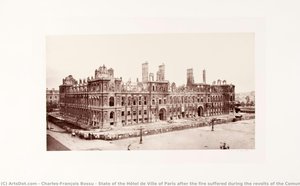
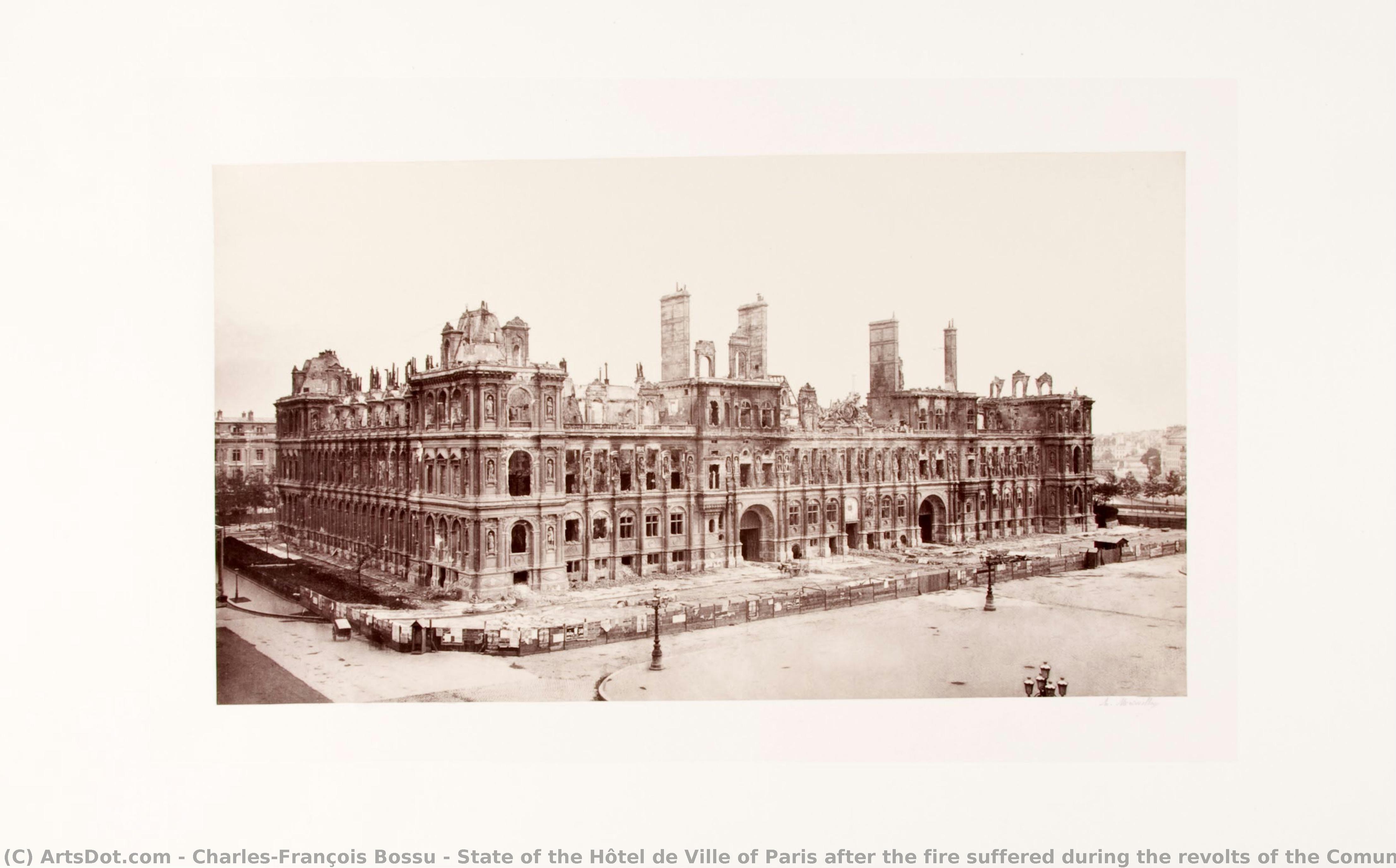
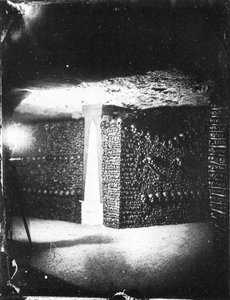
StatsState of the Hôtel de Ville of Paris after the fire suffered during the revolts of the Comuna


 Read More
Giclée / Art Print
Museum-quality giclée or canvas print with fast production and flexible finish options. ( Buy Hand Made Painting Switch to Digital Image)




































Pick from our preset sizes that match the artwork's original proportions.

You may enter your own dimensions to fit a specific frame or space. If your selected size does not match the original image's proportions, we will either crop the artwork or extend the image with a mirrored or solid-fill edge. A digital mockup will be sent for your approval before production begins.
Please note that the on-screen preview does not reflect the actual cropping or extension. Only the mockup will accurately show the final composition.
While custom sizes are available, we recommend selecting a dimension from the predefined list to preserve the original proportions.
Worldwide Delivery () in 2 weeks instead of standard 4/5 weeks. (9 September)

Free Worldwide Express Shipping

High-Quality Linen Canvas

Full Shipping Insurance

Customs Tax Refund Guarantee

True Color Matching Guarantee

100-Day Return Policy (Defects Only)

100% Money-Back Guarantee

Bulk Discount Offer
 Glass option is only available in size under 110 CM

State of the Hôtel de Ville of Paris after the fire suffered during the revolts of the Comuna
Giclée / Art Print
Reproduction Size
-


Total Price
$ 63
Related Artworks

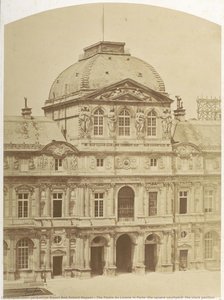
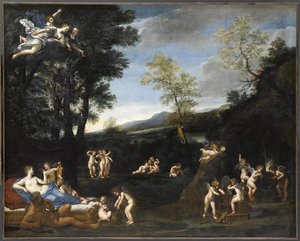
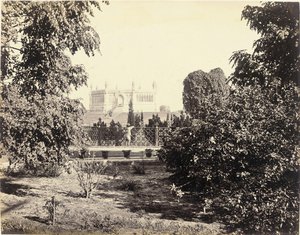
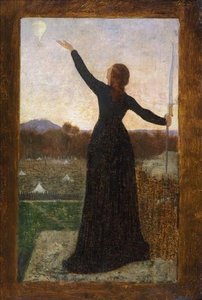
![[the Cour Napoléon Looking Towards The Tuileries, Louvre, Paris] — Édouard-denis Baldus, Academic Realism](/media/artworks/images-thumb/9f/ab/9fab8474e3a2a9ec8f7fb1ba65878363.jpg)

Artist Biography
William Marlow: A Pioneer of English Landscape and Marine Painting
William Marlow (1740–1813) stands as a pivotal figure in the development of English landscape and marine painting, bridging the gap between topographical illustration and the burgeoning Romantic movement. Born in London in 1740 and tragically dying in Twickenham in 1813, his life was marked by both rigorous study and a profound connection to the natural world, reflected powerfully in his evocative works. Marlow’s artistic journey began under the tutelage of Samuel Scott, a respected artist known for his detailed depictions of English scenery, providing a solid foundation in observation and technique. However, it was his subsequent travels to the Continent, particularly France and Italy between 1765 and 1766, that fundamentally shaped his artistic vision, introducing him to the ideals of classical landscape painting and inspiring a shift towards capturing atmospheric effects and emotional resonance within his scenes. Marlow’s early career focused primarily on topographical views – meticulously rendered depictions of country houses and estates. These works, often commissioned by wealthy landowners, were characterized by their accuracy and attention to detail, showcasing the grandeur of English architecture and estate landscapes. Yet, these commissions provided a means to an end; Marlow yearned for something more than mere documentation. His Continental sojourn proved transformative. He began to prioritize capturing the *feeling* of a place – the light, the mood, the subtle shifts in color – rather than simply replicating its physical form. This shift is evident in his later works, which moved away from strict realism and embraced looser brushwork and a greater emphasis on atmospheric perspective. He was particularly influenced by the Italian masters, absorbing their techniques for rendering light and shadow and their ability to convey a sense of drama and beauty within the landscape.A Shift Towards Romanticism: Genre Scenes and Marine Paintings
As the 19th century progressed, Marlow’s artistic focus broadened beyond purely topographical subjects. He began to incorporate elements of genre painting – scenes depicting everyday life – into his oeuvre, often set within the landscapes he so expertly rendered. These works offered a glimpse into rural English society, portraying farmers, laborers, and villagers with a sensitivity that belied their subject matter. Simultaneously, Marlow developed a deep fascination with the sea, culminating in a significant body of marine paintings. These weren’t heroic naval battles or dramatic storms; instead, he captured quieter moments – the gentle sway of ships at anchor, the play of light on the water, and the solitude of coastal scenes. His marine works are notable for their atmospheric quality and subtle color palettes, conveying a sense of peace and contemplation.Influences and Artistic Style
Marlow’s artistic style can be characterized as a synthesis of observation, classical influence, and burgeoning Romantic sensibilities. He was deeply influenced by the work of Samuel Scott, Richard Wilson, and the Italian landscape masters – artists who emphasized light, color, and atmospheric perspective. However, unlike his predecessors, Marlow wasn't simply imitating these influences; he adapted them to create a distinctly English style. His paintings are marked by a delicate balance between realism and abstraction, with carefully observed details combined with expressive brushwork and a sensitivity to the emotional qualities of the landscape. He employed a muted color palette, favoring subtle gradations of tone and light to create a sense of depth and atmosphere. His compositions often feature strong diagonals and asymmetrical arrangements, adding dynamism and visual interest to his scenes.Legacy and Historical Significance
William Marlow’s contribution to English art is significant for several reasons. He was one of the first artists to successfully bridge the gap between topographical illustration and landscape painting, paving the way for later Romantic painters like Turner and Constable. His meticulous observation skills and his ability to capture atmospheric effects were highly valued by his patrons, and his works are still admired today for their beauty and emotional resonance. Furthermore, Marlow’s exploration of genre scenes offered a valuable record of rural English life during a period of significant social change. While he may not be as widely celebrated as some of his contemporaries, William Marlow remains a vital figure in the history of British art – a quiet but influential voice in the development of landscape and marine painting. His work serves as a testament to the power of observation, artistic adaptation, and the enduring appeal of the natural world.
charles-françois bossu
1813 - 1879 , France
Quick Facts
- Artistic Movement Or Style: Landscape & Marine
- Artists Or Movements Influenced By This Artist: ['Capriccio']
- Artists Who Influenced This Artist:
- Samuel Scott
- Richard Wilson
- Date Of Birth: 1740
- Date Of Death: 1813
- Full Name: William Marlow
- Nationality: English
- Notable Artworks:
- Boys Fishing
- Departure Militiaman
- Place Of Birth: London, England
Related Articles

About Us
Discover our story! We bring world-class art into your life through expert curation, personalized creations, and free previews. Trusted by individuals and businesses since 2000.

Monochrome Visions: Exploring the Aesthetic & Historical Significance of Black & White Photography
Explore the rich history & artistic power of black and white photography. From early techniques to iconic masters like Ansel Adams, discover why monochrome continues to captivate art lovers today. Expert insights for collectors.

Pictorialism: A Search for Artistic Photography's Soul – Aesthetics, Techniques & Legacy
Explore the captivating world of Pictorialism – a pivotal movement that transformed photography into fine art. Discover key artists like Stieglitz & Käsebier, techniques, and collecting tips from experts.

Goya's Masterpieces: Explore 25 Iconic Paintings & Art Prints | ArtsDot
Delve into the world of Francisco Goya with ArtsDot. Explore 25 iconic paintings – from 'The Third of May' to his haunting Black Paintings. Discover the stories, techniques & emotions behind these Spanish masterpieces. Find museum-quality art reproductions for your home at ArtsDot.com!

Beyond the Lens: Photography's Enduring Influence on Modern & Contemporary Art
Explore photography's pivotal role in shaping modern & contemporary art. Discover key movements, influential artists like Stieglitz, and expert collecting advice from ArtsDot.