 Preview
 Send
Send Share
Share
 Details

 Download
 Similars
 X-Ray
X-Ray Diaporama
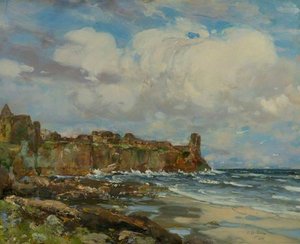
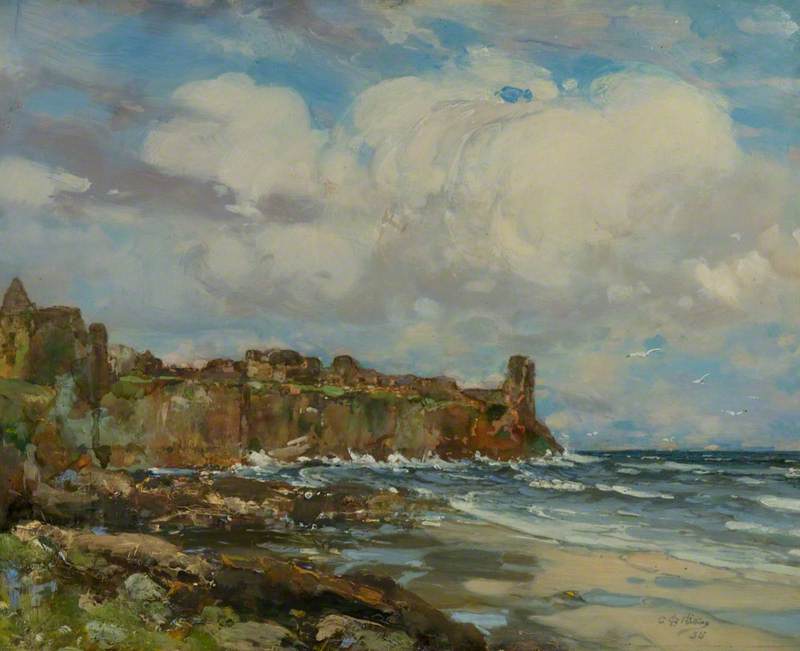
St Andrews Castle, Fife
 Romanticism
 1935
1935 46.0 x 57.0 cm
 Read More
Giclée / Art Print
Museum-quality giclée or canvas print with fast production and flexible finish options. ( Buy Hand Made Painting Buy Image)




P118B $10

P118H $10

P118W $10

P438Z $10

P508JH $12

P508YH $12

P805H $10

P805Z $10

P919BZ $10

P919G $10

P919XJ $10

P959ZH $10

P968JZ $12

W106C $8

W218G $10

W218JH $8

W218Y $10

W307PJ $10

W316G $10

W316PJ $8

W316Y $10

W398PJ $8

W4111J $10

W500HY $15

W500JH $15

W692G $12

W849H $8

W940BG $15

W953PJ $8




Pick from our preset sizes that match the artwork's original proportions.

You may enter your own dimensions to fit a specific frame or space. If your selected size does not match the original image's proportions, we will either crop the artwork or extend the image with a mirrored or solid-fill edge. A digital mockup will be sent for your approval before production begins.
Please note that the on-screen preview does not reflect the actual cropping or extension. Only the mockup will accurately show the final composition.
While custom sizes are available, we recommend selecting a dimension from the predefined list to preserve the original proportions.
Worldwide Delivery () in 2 weeks instead of standard 4/5 weeks. (26 August)

Free Worldwide Express Shipping

High-Quality Linen Canvas

Full Shipping Insurance

Customs Tax Refund Guarantee

True Color Matching Guarantee

60-Day Return Policy (Defects Only)

100% Money-Back Guarantee

Bulk Discount Offer
 Glass option is only available in size under 110 CM

St Andrews Castle, Fife
Giclée / Art Print
Reproduction Size
-


Total Price
$ 63
Related Artworks
Artist Biography
The Enigmatic Soul of the Scottish Landscape
Charles Gustav Louis Phillips remains an artist shrouded in mystery, a figure whose artistic output speaks volumes despite the scarcity of biographical details. Born around 1863, his life’s narrative is largely absent from historical records, leaving scholars to reconstruct his story through the prism of his paintings—primarily landscapes imbued with an understated elegance and a profound connection to the Scottish countryside. Originally hailing from Aberdeenshire, Phillips moved to Dundee in 1879 to pursue formal art studies. This transition marked the beginning of a lifelong devotion to capturing the atmospheric nuances of the region. Before establishing himself as a master of the landscape, he navigated the practicalities of an artistic life by working as a teacher and undertaking commercial commissions for notable institutions such as Valentines and The Courier.
The evolution of his technique reveals an artist deeply attuned to the shifting light of the North. While much of his early biographical data is elusive, examining the broader artistic landscape of his era—particularly Impressionism and Post-Impressionism—offers valuable insights into his potential influences. It is plausible that Phillips absorbed the principles championed by masters like Claude Monet, prioritizing the subjective experience of color and light over strict representational accuracy. His style eventually matured into a deliberate restraint, characterized by muted palettes and loose brushstrokes that prioritize atmosphere over meticulous detail. This aesthetic aligns closely with the sensibilities of Scottish landscape painters who sought to convey not merely what they saw, but how the land felt.
A Legacy Written in Light and Earth
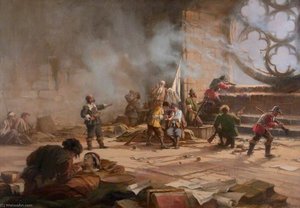
Phillips' body of work serves as a visual diary of the Scottish terrain, ranging from serene river scenes to dramatic historical reconstructions. His most celebrated pieces often capture the quiet, contemplative moments of nature. In works such as “View from Strathmartine Road, Downfield,” he demonstrates a masterful ability to evoke emotion through texture and the soft glow of dusk. This same sensitivity is found in “Strathardle,” where a tranquil river landscape emerges through delicate oil applications, and in “Moulin Moor (recto),” which utilizes warm hues and romantic solitude to transport the viewer to a different era. Even when departing from pure landscape to explore historical realism, as seen in the dynamic and chaotic “The Siege of Dundee, September 1651,” his ability to command composition and movement remains strikingly evident.
Throughout his career, Phillips achieved significant recognition within the Scottish art community. His work was regularly exhibited at prestigious venues, including the Graphic Arts Association exhibitions and the Royal Scottish Academy, cementing his status as a successful and respected painter of his time. His ability to balance commercial viability with fine art excellence allowed him to leave a lasting imprint on the visual heritage of Dundee and beyond. Though he passed away in 1944 at the age of eighty, his legacy persists through the enduring beauty of his canvases, which continue to offer a window into the soul of the Scottish landscape:
- Atmospheric Mastery: A unique ability to capture the fleeting qualities of light and weather.
- Regional Connection: Deeply rooted depictions of Aberdeenshire and Dundee landscapes.
- Technical Versatility: Ranging from Impressionistic landscapes to detailed historical realism.
- Historical Significance: A key figure in the late 19th and early 20th-century Scottish art scene.
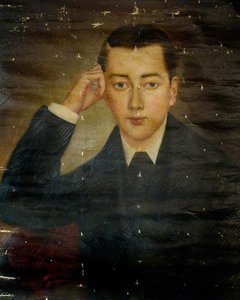
charles gustav louis phillips
1863 - 1944
Quick Facts
- Artistic Movement Or Style: Impressionism
- Artists Or Movements Influenced By This Artist: ['Van Gogh']
- Artists Who Influenced This Artist: ['Gustav Kruell']
- Date Of Death: 1944
- Full Name: Charles Gustav Louis Phillips
- Nationality: Scottish
- Notable Artworks:
- Landscape at Dusk
- Still Life with Apples
Related Articles

Romantic Landscapes: 10 Masterpieces for Your Home | ArtsDot
Journey through 10 Romantic landscape masterpieces by Friedrich, Turner & Cole. Explore emotional art, sublime nature scenes & iconic 19th-century paintings. Find museum-quality reproductions for your home at ArtsDot.com – discover the full collection online!

John Constable's Masterpieces: Explore 25 Iconic Landscapes for Your Home
Journey through John Constable's 25 most celebrated landscapes. Explore Romanticism, Dedham Vale & his masterful use of light in iconic paintings like 'Hay Wain'. Find museum-quality art reproductions and elevate your home decor on ArtsDot.com.

Evocations of Place: A Historical Journey Through Landscape Art
Explore the rich history of landscape art with ArtsDot. Discover renowned artists, movements like Impressionism & Romanticism, and expert guidance for collecting timeless pieces. Find your perfect serene escape today!
Charles Fraser: A Life Immersed in Light and Landscape – Exploring the Scottish Colourist's Vision
Discover the captivating world of Charles Fraser (1782-1860), a leading American artist renowned for his serene landscapes and detailed portraits of Southern life. Explore his legacy & find museum-quality reproductions at ArtsDot.
Alexander Nasmyth: Picturing Scotland's Romantic Landscape – Innovation & Identity
Explore the life & art of Alexander Nasmyth, a pivotal figure in Scottish Romantic landscape painting. Discover his iconic works, including portraits of Robert Burns, and learn about his lasting influence on national identity. Fine art reproductions available.