Early Life and Legal Beginnings: A Foundation in Charleston Society
Charles Fraser (August 20, 1782 – October 5, 1860), was an American artist best known for his miniatures of prominent American figures. == Early life == Charles Fraser was born at Charleston, South Carolina in 1782. His parents died when he was ni...
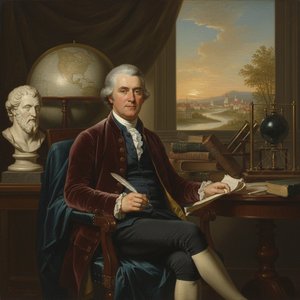
Charles Fraser’s story is one of fascinating duality, a life initially steeped in the pragmatic world of law before blossoming into a celebrated artistic career. Born in 1782 in Charleston, South Carolina, to a prominent family, young Charles experienced early loss with the passing of both parents by the age of nine. Raised by his elder brother Frederick, he was steered towards a respectable profession – the law – and diligently pursued studies that would equip him for a life within the established societal structures of the burgeoning American republic. He attended Bishop Robert Smith’s classical academy alongside future portraitist Thomas Sully, receiving a rigorous education intended to prepare him for the bar. For nearly two decades, Fraser practiced law with increasing success, becoming a respected member of Charleston's legal community. However, beneath the surface of this conventional path lay a burgeoning passion – a deep-seated inclination towards visual expression that would ultimately redefine his life’s trajectory.
From Law to Landscape: The Artistic Awakening of Charles Fraser
Charles Fraser practiced law from 1808 until 1817, before taking up painting. He was the leading miniaturist in Charleston before the Civil War, ...
The transition from courtroom to canvas wasn’t abrupt but rather a gradual unfolding. Even during his legal years, Fraser dedicated himself to amateur artistic pursuits, sketching portraits of family and friends and meticulously rendering the landscapes surrounding Charleston. This early work reveals an innate talent for observation and a keen eye for detail. A pivotal moment arrived in 1806 with a journey to Newport, Rhode Island, where he encountered established artists like John Trumbull and Gilbert Stuart. These encounters undoubtedly fueled his artistic ambitions and provided invaluable exposure to different techniques and perspectives. While Fraser continued to balance law and art for several years, the pull towards painting grew increasingly strong. By 1817, at the age of thirty-five, he made the decisive shift, abandoning legal practice to fully embrace his vocation as a professional artist. This courageous decision marked not merely a change in profession but a profound reorientation of his life’s purpose.
Capturing the Southern Aesthetic: Fraser’s Unique Pictorial Style
Fraser quickly established himself as a leading figure in the artistic landscape of Charleston, and indeed, the broader American South. His style was uniquely suited to capturing the region's distinctive character – a blend of refined elegance and natural beauty. Heavily influenced by the British picturesque tradition, Fraser’s paintings often depict idyllic scenes of stately homes nestled within lush gardens, serene meeting houses framed by towering trees, and expansive vistas that evoke a sense of tranquility and harmony. He possessed an exceptional ability to convey atmosphere and light, imbuing his works with a palpable sense of place. Unlike the dramatic grandeur favored by some contemporaries, Fraser’s aesthetic prioritized subtlety and nuance, focusing on the quiet beauty of everyday life and the harmonious relationship between humanity and nature. His watercolors, in particular, demonstrate a remarkable mastery of delicate washes and precise detail.
Portraits and Place: Exploring Key Works and Recurring Themes
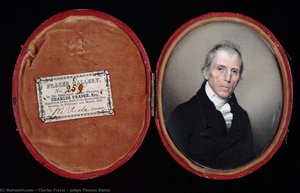 Judge Thomas Waties
Admire Charles Fraser’s 1820 portrait of Judge Waties – a detailed watercolor masterpiece showcasing classical elegance & American history. Explore art history!
While celebrated for his landscapes, Fraser’s portraiture is equally compelling, offering intimate glimpses into the lives of Charleston's elite. Works like “Judge Thomas Waties” (1820) exemplify his skill in capturing not only physical likeness but also the character and dignity of his subjects. The portraits are characterized by a classical elegance and meticulous attention to detail, reflecting the refined sensibilities of the era. However, Fraser’s landscapes often transcend mere topographical representation. “Wigton on Saint James, Goose Creek” is a prime example – a serene depiction of a stately home and its idyllic surroundings that speaks volumes about the Southern ideal of gracious living and connection to the land. Recurring themes in his work include the importance of family, the beauty of nature, and the enduring legacy of plantation life. “The View of a Meeting House Near Jacksonboro” beautifully illustrates this latter point, showcasing not only the architectural structure but also the surrounding rural landscape that defined the community’s identity.
Fraser's Legacy and Influence on American Art
Charles Fraser’s contribution to early American art is significant. He was among the first artists to adapt the British picturesque tradition to the unique topography of the South, creating a distinctly American aesthetic that resonated with audiences for generations. His influence can be seen in the work of later landscape painters who sought to capture the beauty and tranquility of the Southern countryside. Though not as widely recognized nationally during his lifetime as some contemporaries, Fraser held an esteemed position within Charleston’s artistic circles and left behind a substantial body of work – over 130 miniatures and nearly 140 landscapes – that continues to captivate viewers today. His paintings offer invaluable insights into the social, cultural, and aesthetic values of early 19th-century America.
Collecting Charles Fraser Today: A Guide for Enthusiasts
For collectors seeking to acquire works by Charles Fraser, a discerning eye and careful research are essential. His watercolors and miniatures command considerable attention in the art market, prized for their delicate detail, historical significance, and evocative depictions of Southern life. While larger landscapes are less common, they represent particularly valuable acquisitions. Authenticity is paramount; provenance – the documented history of ownership – is crucial when evaluating a potential purchase. ArtsDot offers high-quality reproductions of Fraser’s most celebrated works, allowing enthusiasts to experience his artistry firsthand. Exploring auction records and consulting with reputable art dealers are also recommended steps. Whether seeking an original masterpiece or a meticulously crafted reproduction, Charles Fraser's paintings offer a timeless glimpse into a bygone era – a testament to the enduring power of light, landscape, and artistic vision.