 Send
Send Share
Share
 Details

 Download
 Similars
 Diaporama
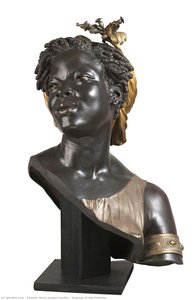
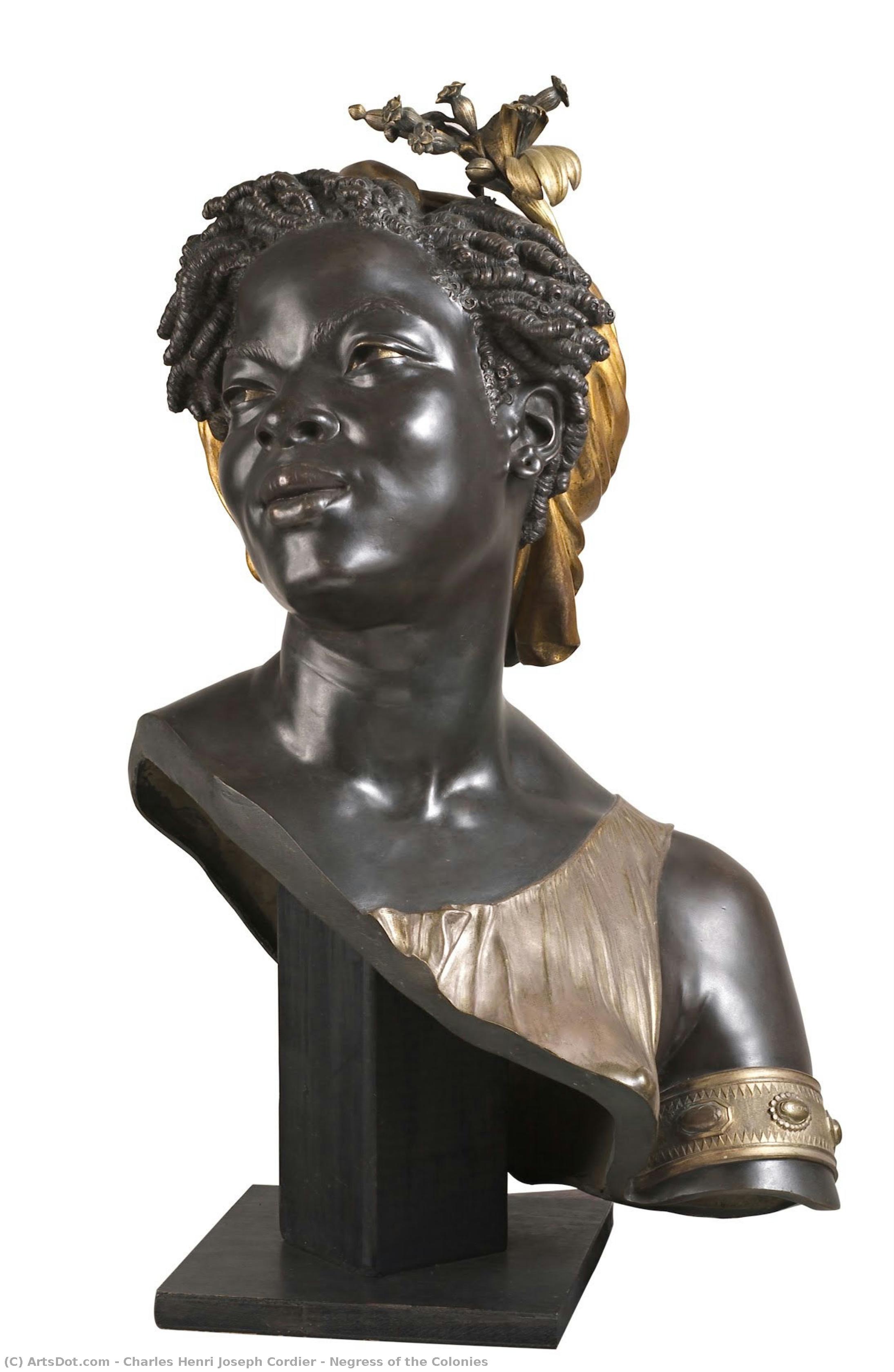
Negress of the Colonies
 Bronze
- Sculpture
 1861
1861- 19th Century
 65.0 x 35.0 cm
 Museo de Arte de Ponce
 Read More
Hand Made Oil Reproduction
Hand-painted oil on canvas in your size and frame, made to order by our artists. ( Buy Print Buy Image)




































Pick from our preset sizes that match the artwork's original proportions.

You may enter your own dimensions to fit a specific frame or space. If your selected size does not match the original image's proportions, we will either crop the artwork or extend the painting with additional hand-painted elements. A digital mockup will be sent for your approval before production begins.
Please note that the on-screen preview does not reflect the actual cropping or extension. Only the mockup will accurately show the final composition.
While custom sizes are available, we recommend selecting a dimension from the predefined list to preserve the original proportions.
After order, ArtsDot.com team will email client for instructions and provide a mockup preview
Worldwide Delivery () in 3/4 weeks instead of standard 5 weeks. (30 August). No compromise on quality.

Free Worldwide Express Shipping

High-Quality Linen Canvas

Full Shipping Insurance

Customs Tax Refund Guarantee

True Color Matching Guarantee

60-Day Return Policy (Defects Only)

100% Money-Back Guarantee

Bulk Discount Offer
 Glass option is only available in size under 110 CM

Negress of the Colonies
Reproduction Medium
Reproduction Size
-


Total Price
$ 263
A Vision in Bronze: The Dignity of the Negress of the Colonies
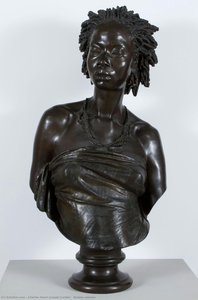
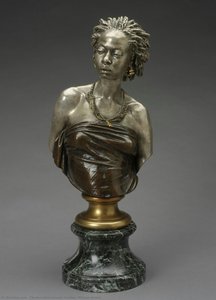
In the quiet, contemplative space of an art collector's gallery, few pieces command attention with such profound grace as Charles Henri Joseph Cordier’s "Negress of the Colonies." Created in 1861, this masterful bronze bust transcends mere portraiture to become a timeless study of human dignity and cultural identity. The sculpture presents a woman of striking presence, her features rendered with a realism that breathes life into the cold metal. As one gazes upon her serene expression, there is an immediate sense of encountering a soul captured in a moment of eternal composure. For the discerning interior designer, this piece serves as a powerful focal point, offering a sophisticated weight and historical depth that anchors any room with elegance.
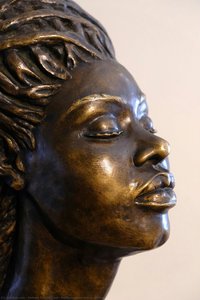
The artistry of Cordier is most evident in the meticulous interplay of texture and light. The bronze medium allows for a rich, dark patina that mimics the warmth of skin, while the highlights catch the subtle undulations of her sculpted form. Cordier’s technique shines through the intricate details of her adornments; the smooth, polished surfaces of her golden jewelry provide a brilliant contrast to the complex, tactile arrangement of her hair. Every curl and braid is captured with remarkable fidelity, creating a rhythmic flow of lines that draws the eye across the composition. This mastery of detail ensures that whether viewed in person or through a high-quality reproduction, the sculpture retains its luminous, three-dimensional vitality.
Beyond its aesthetic brilliance, the work carries a heavy historical resonance. As an official sculptor for the Ethnographic Gallery in Paris, Cordier was deeply invested in documenting the diverse human tapestry of his era. The "Negress of the Colonies" is not merely a decorative object but a window into the mid-nineteenth-century fascination with ethnographic truth and the complexities of colonial identity. The gold jewelry, while beautiful, serves as a symbolic layer, perhaps hinting at status or the wealth of distant lands. This duality—the beauty of the form paired with the gravity of its historical context—makes the piece an intellectually stimulating addition to any collection.
For those seeking to infuse their living spaces with art that tells a story, this reproduction offers more than just visual appeal; it offers an emotional journey. The sculpture’s symmetrical composition and balanced proportions evoke a sense of peace and stability, making it an ideal companion for classical or contemporary decor alike. To possess such a piece is to hold a fragment of art history, inviting guests to linger, to observe, and to reflect on the enduring power of the human spirit captured in bronze.
Related Artworks


Artist Biography
The Sculptor of Human Diversity: The Life and Legacy of Charles Cordier
In the mid-nineteenth century, as the world began to grapple with the profound shifts of colonialism, abolition, and the birth of modern anthropology, a singular voice emerged from the studios of Paris. Charles Henri Joseph Cordier (1827–1905) did not merely sculpt stone and bronze; he sculpted the very essence of human identity. Born in Cambrai, France, Cordier’s artistic journey was ignited by a transformative encounter in 1847 with Seïd Enkess, a former Black slave who became his model. This meeting did more than provide a subject for a portrait; it fundamentally altered Cordier's worldview, instilling in him a lifelong mission to capture the dignity and nuance of diverse ethnicities through a lens of profound realism.
Cordier’s formal training under the legendary François Rude at the Petite École provided him with the technical mastery required for his ambitious visions. His debut at the Paris Salon in 1848 was nothing short of a sensation. The unveiling of his plaster bust, Saïd Abdullah, arrived at a pivotal historical moment—the very year slavery was abolished in France and its colonies. This work, which later found a home in The Walters Art Museum, served as a powerful testament to the birth of a new era in anthropology. It was not merely an ethnographic study but a soulful reclamation of humanity that caught the attention of the highest echelons of society, including Queen Victoria, who purchased a bronze version of the bust.
A Master of Polychromy and Ethnographic Realism
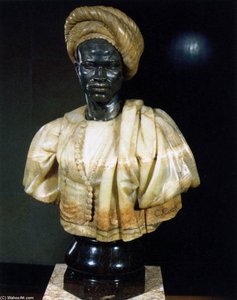
What truly set Cordier apart from his contemporaries was his revolutionary use of color. While much of the academic sculpture of his time adhered to the monochromatic traditions of white marble, Cordier looked backward to antiquity and forward to a more vibrant reality. He embraced polychromy—the use of different colored marbles, silvering, enameling, and even gold jewelry—to breathe life into his subjects. This technique was not merely decorative; it was an attempt to mirror the true, multifaceted nature of the people he depicted. Though his use of color sparked controversy among traditionalists who viewed it as a departure from classical purity, Cordier defended his method by citing historical precedents in ancient Greek and Roman art.
His appointment as the official ethnographic sculptor for the Musée National d'Histoire Naturelle between 1851 and 1866 allowed him to embark on extensive travels that would define his career. His expeditions through Algeria, Greece, and Egypt provided a wealth of sketches and models that fueled his most celebrated works. In pieces such as "Negress of the Colonies" and "La Capresse des Colonies," one can witness the breathtaking intersection of scientific observation and artistic grace. He possessed an uncanny ability to balance the meticulous detail required for ethnographic documentation with a dramatic, almost theatrical, sense of composition.
The Enduring Impact of a Visionary
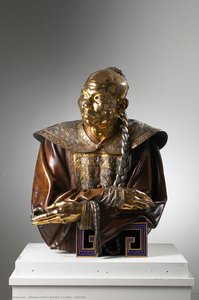
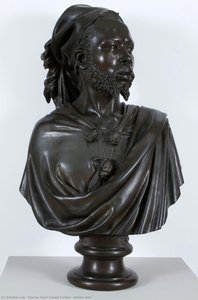
As his career progressed, Cordier’s work moved beyond the "exotic" to encompass a broader spectrum of the human experience. While he is most renowned for his portraits of African and Middle Eastern subjects—such as the Nubian man or the Chinois—his repertoire also included profound depictions of European provincial life. This breadth of vision ensured that his work was never reduced to mere Orientalism; instead, it stood as a monumental study of the human form across all latitudes.
The historical significance of Charles Cordier lies in his ability to use the medium of sculpture to challenge Eurocentric beauty standards. Through his hands, the features, textures, and adornments of non-European peoples were elevated to the status of high art. His legacy is found in:
- The integration of science and art: Bridging the gap between the emerging field of ethnography and the fine arts.
- Technical innovation: Pioneering the use of polychrome materials to achieve unprecedented realism.
- Humanistic representation: Providing a dignified, sympathetic portrayal of diverse cultures during an era of intense colonial upheaval.
Today, Cordier’s masterpieces reside in the world's most prestigious institutions, including the Metropolitan Museum of Art and the Musée de l'Homme, serving as enduring reminders of a sculptor who saw the beauty in the diversity of the human race.
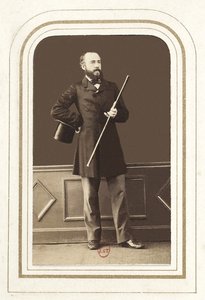
charles henri joseph cordier
1827 - 1905 , France
Quick Facts
- Artistic Movement Or Style: Ethnographic Sculpture
- Artists Or Movements Influenced By This Artist: ['Orientalism']
- Artists Who Influenced This Artist: ['Said Enkess']
- Date Of Birth: 1827
- Date Of Death: 1905
- Full Name: Charles Henri Joseph Cordier
- Nationality: French
- Notable Artworks:
- La Capresse des Colonies
- Negress of the Colonies
- Place Of Birth: Cambrai, France
Related Articles

The Enduring Legacy of Bronze: A Historical & Artistic Exploration for the Collector
Explore the rich history & enduring appeal of bronze sculpture with expert insights for collectors at ArtsDot. Learn about casting techniques, iconic artists, collecting tips & contemporary interpretations.

Bronze Age to Modern Masters: 10 Sculptures That Redefined Art | ArtsDot
Journey through art history with 10 legendary bronze sculptures – from Michelangelo's David to Rodin’s Thinker. Explore the stories, techniques & timeless beauty of these masterpieces. Find museum-quality reproductions & elevate your home decor on ArtsDot.com.

The Enduring Legacy of Bronze: History, Technique & Artistic Expression for the Collector
Explore the rich history & enduring appeal of bronze sculpture with expert insights for collectors at ArtsDot. Learn about casting techniques, iconic artists, and collecting tips.

Romantic Realism's Finest: 10 Masterpieces for Your Home | ArtsDot
Explore 10 defining masterpieces of Romantic Realism! Discover Courbet, Millet & Daumier's powerful paintings—capturing emotion and social realities. Find museum-quality reproductions for your home at ArtsDot.com.

Golden Glow: How to Use Metallic Gold Artworks to Elevate Your Home Decor with Timeless Luxury
Discover how to elevate your home with the timeless elegance of metallic gold artworks. From sculptural metal pieces to gilded oil paintings, learn expert interior design tips for integrating luxurious gold accents into your space with sophistication and grace.