 Send
Send Share
Share
 Details

 Download
 Similars
 Diaporama
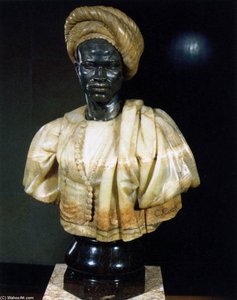
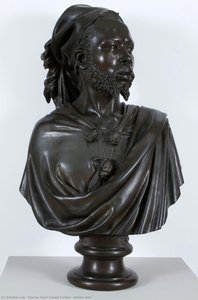
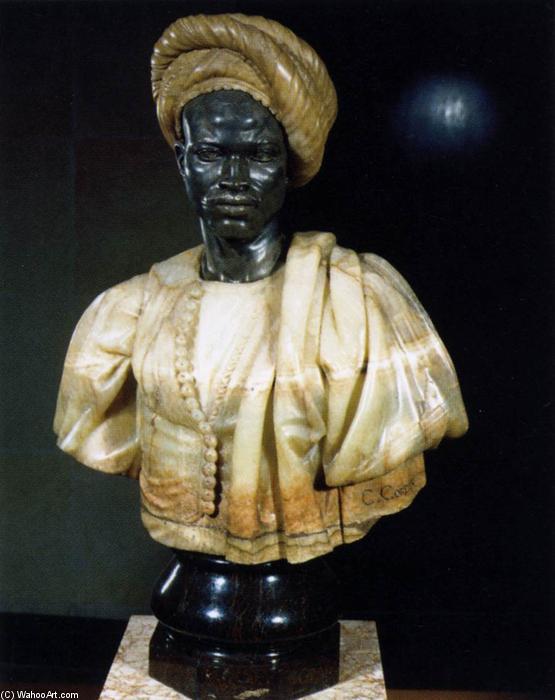
Negro of the Sudan


 Read More
Hand Made Oil Reproduction
Hand-painted oil on canvas in your size and frame, made to order by our artists. ( Buy Print Buy Image)




































Pick from our preset sizes that match the artwork's original proportions.

You may enter your own dimensions to fit a specific frame or space. If your selected size does not match the original image's proportions, we will either crop the artwork or extend the painting with additional hand-painted elements. A digital mockup will be sent for your approval before production begins.
Please note that the on-screen preview does not reflect the actual cropping or extension. Only the mockup will accurately show the final composition.
While custom sizes are available, we recommend selecting a dimension from the predefined list to preserve the original proportions.
After order, ArtsDot.com team will email client for instructions and provide a mockup preview
Worldwide Delivery () in 3/4 weeks instead of standard 5 weeks. (31 August). No compromise on quality.

Free Worldwide Express Shipping

High-Quality Linen Canvas

Full Shipping Insurance

Customs Tax Refund Guarantee

True Color Matching Guarantee

60-Day Return Policy (Defects Only)

100% Money-Back Guarantee

Bulk Discount Offer
 Glass option is only available in size under 110 CM

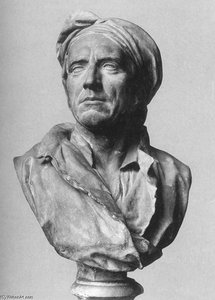
Negro of the Sudan
Reproduction Medium
Reproduction Size
-


Total Price
$ 263
Charles Henri Joseph Cordier: Bridging Ethnographic Observation with Artistic Expression
Charles Henri Joseph Cordier (1827–1905) stands as an extraordinary figure in the annals of nineteenth-century sculpture, marking a pivotal moment in the burgeoning field of ethnographic art. His artistic journey began with a transformative encounter—a profound connection forged during his collaboration with Seïd Enkess, a former Black slave who served as his model for “Homme du Soudan en costume algérien” (Man of Sudan in Algerian Costume), created in 1847.
This monumental bust transcends mere representation; it embodies Cordier’s unwavering commitment to capturing the essence of human diversity and challenging prevailing Eurocentric aesthetic biases. Unlike many sculptors of his time who prioritized idealized beauty standards, Cordier sought to portray individuals authentically, reflecting their cultural heritage and psychological depth.
The Bust's Significance: A Pioneering Vision
Cordier’s decision to dedicate his artistic career to ethnographic sculpture wasn’t simply a stylistic choice—it stemmed from a deeply felt moral imperative. Witnessing Enkess’s plight ignited within him a fervent desire to honor the dignity and complexity of marginalized communities, translating social observation into tangible artistic form.
Technical Mastery: Plaster Casting and Anatomical Accuracy
The “Homme du Soudan” exemplifies Cordier's exceptional technical skill. Employing plaster casting—a technique favored during the era—he meticulously sculpted Enkess’s likeness, achieving remarkable anatomical precision while simultaneously conveying subtle nuances of expression. The artist skillfully utilized modeling tools to sculpt the bust with great care.
Symbolism and Emotional Resonance: Beyond Appearance
More than just a portrait, Cordier's sculpture speaks volumes about human experience. The pose—seated in profile—suggests contemplation and resilience, mirroring Enkess’s dignified demeanor. The artist’s attention to detail extends beyond the physical form; he captures the spirit of his subject, conveying empathy and respect for cultural identity.
A Legacy Enduring Through Reproduction
Today, “Homme du Soudan” resides at The Walters Art Museum in Baltimore, Maryland. Its enduring appeal lies not only in its artistic merit but also in its historical importance—a testament to Cordier’s pioneering vision and his unwavering belief that art could illuminate the human condition across cultures.
The Musée d'Orsay houses a remarkable reproduction of this masterpiece, allowing visitors worldwide to appreciate Cordier’s groundbreaking contribution to ethnographic sculpture.
Related Artworks

Artist Biography
The Sculptor of Human Diversity: The Life and Legacy of Charles Cordier
In the mid-nineteenth century, as the world began to grapple with the profound shifts of colonialism, abolition, and the birth of modern anthropology, a singular voice emerged from the studios of Paris. Charles Henri Joseph Cordier (1827–1905) did not merely sculpt stone and bronze; he sculpted the very essence of human identity. Born in Cambrai, France, Cordier’s artistic journey was ignited by a transformative encounter in 1847 with Seïd Enkess, a former Black slave who became his model. This meeting did more than provide a subject for a portrait; it fundamentally altered Cordier's worldview, instilling in him a lifelong mission to capture the dignity and nuance of diverse ethnicities through a lens of profound realism.
Cordier’s formal training under the legendary François Rude at the Petite École provided him with the technical mastery required for his ambitious visions. His debut at the Paris Salon in 1848 was nothing short of a sensation. The unveiling of his plaster bust, Saïd Abdullah, arrived at a pivotal historical moment—the very year slavery was abolished in France and its colonies. This work, which later found a home in The Walters Art Museum, served as a powerful testament to the birth of a new era in anthropology. It was not merely an ethnographic study but a soulful reclamation of humanity that caught the attention of the highest echelons of society, including Queen Victoria, who purchased a bronze version of the bust.
A Master of Polychromy and Ethnographic Realism
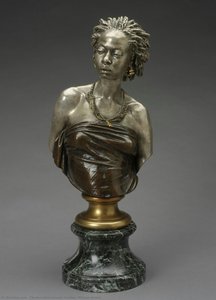
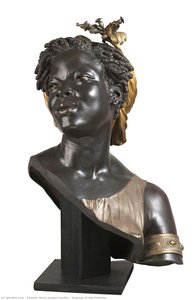
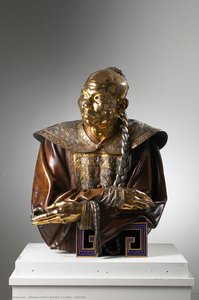
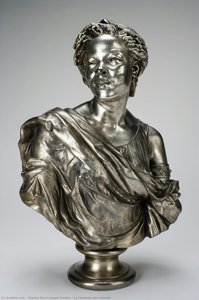
What truly set Cordier apart from his contemporaries was his revolutionary use of color. While much of the academic sculpture of his time adhered to the monochromatic traditions of white marble, Cordier looked backward to antiquity and forward to a more vibrant reality. He embraced polychromy—the use of different colored marbles, silvering, enameling, and even gold jewelry—to breathe life into his subjects. This technique was not merely decorative; it was an attempt to mirror the true, multifaceted nature of the people he depicted. Though his use of color sparked controversy among traditionalists who viewed it as a departure from classical purity, Cordier defended his method by citing historical precedents in ancient Greek and Roman art.
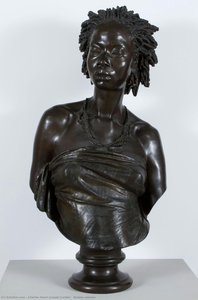
His appointment as the official ethnographic sculptor for the Musée National d'Histoire Naturelle between 1851 and 1866 allowed him to embark on extensive travels that would define his career. His expeditions through Algeria, Greece, and Egypt provided a wealth of sketches and models that fueled his most celebrated works. In pieces such as "Negress of the Colonies" and "La Capresse des Colonies," one can witness the breathtaking intersection of scientific observation and artistic grace. He possessed an uncanny ability to balance the meticulous detail required for ethnographic documentation with a dramatic, almost theatrical, sense of composition.
The Enduring Impact of a Visionary
As his career progressed, Cordier’s work moved beyond the "exotic" to encompass a broader spectrum of the human experience. While he is most renowned for his portraits of African and Middle Eastern subjects—such as the Nubian man or the Chinois—his repertoire also included profound depictions of European provincial life. This breadth of vision ensured that his work was never reduced to mere Orientalism; instead, it stood as a monumental study of the human form across all latitudes.
The historical significance of Charles Cordier lies in his ability to use the medium of sculpture to challenge Eurocentric beauty standards. Through his hands, the features, textures, and adornments of non-European peoples were elevated to the status of high art. His legacy is found in:
- The integration of science and art: Bridging the gap between the emerging field of ethnography and the fine arts.
- Technical innovation: Pioneering the use of polychrome materials to achieve unprecedented realism.
- Humanistic representation: Providing a dignified, sympathetic portrayal of diverse cultures during an era of intense colonial upheaval.
Today, Cordier’s masterpieces reside in the world's most prestigious institutions, including the Metropolitan Museum of Art and the Musée de l'Homme, serving as enduring reminders of a sculptor who saw the beauty in the diversity of the human race.
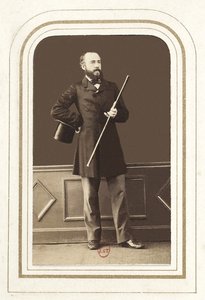
charles henri joseph cordier
1827 - 1905 , France
Quick Facts
- Artistic Movement Or Style: Ethnographic Sculpture
- Artists Or Movements Influenced By This Artist: ['Orientalism']
- Artists Who Influenced This Artist: ['Said Enkess']
- Date Of Birth: 1827
- Date Of Death: 1905
- Full Name: Charles Henri Joseph Cordier
- Nationality: French
- Notable Artworks:
- La Capresse des Colonies
- Negress of the Colonies
- Place Of Birth: Cambrai, France
Related Articles

Bronze Sculptures That Defined Art History | ArtsDot
Journey through art history with our Top 10 bronze sculptures! Explore masterpieces by Rodin, Michelangelo & more. Discover stories behind iconic statues and find museum-quality reproductions for your home decor at ArtsDot.com.

The Enduring Form: Exploring Themes & Techniques in Sculpture Across Historical Periods
Explore the rich history of sculpture from ancient masterpieces to contemporary innovations. Discover key techniques, influential artists & investment potential for discerning art collectors.

The Enduring Form: Sculpture Across History, Technique & Emotional Resonance
Explore the rich history of sculpture with ArtsDot. Discover key techniques, influential artists & investment potential for discerning collectors. Expert insights into valuing and collecting timeless masterpieces.

Bronze Age to Modern Masters: 10 Sculptures That Redefined Art | ArtsDot
Journey through art history with 10 legendary bronze sculptures – from Michelangelo's David to Rodin’s Thinker. Explore the stories, techniques & timeless beauty of these masterpieces. Find museum-quality reproductions & elevate your home decor on ArtsDot.com.
The Enduring Legacy of Bronze Sculpture: History, Techniques & Contemporary Interpretations
Explore the rich history & enduring appeal of bronze sculpture. Learn about casting techniques, iconic artists, collecting tips, & contemporary interpretations. Expert insights for discerning art collectors.