 Preview
 Send
Send Share
Share
 Details

 Download
 Similars
 X-Ray
X-Ray Diaporama
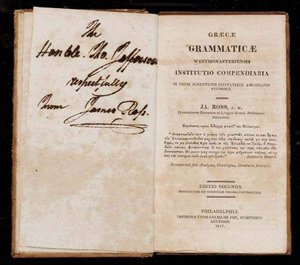
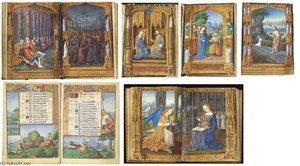
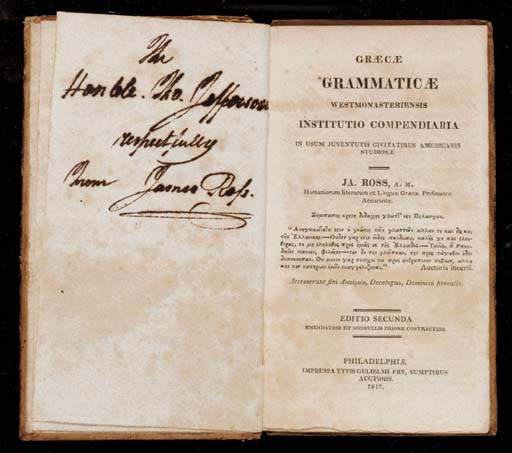
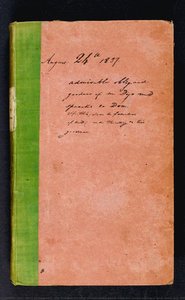
Graecae Grammaticae Westmonasteriensis Instituto Compendiaria In Usum Juventutis Civitatibus Americanis Studiosae. Editio Secunda. Philadelphia William Fry, For The Author,

 Read More
Hand Made Oil Reproduction
Hand-painted oil on canvas in your size and frame, made to order by our artists. ( Buy Print Buy Image)




































Pick from our preset sizes that match the artwork's original proportions.

You may enter your own dimensions to fit a specific frame or space. If your selected size does not match the original image's proportions, we will either crop the artwork or extend the painting with additional hand-painted elements. A digital mockup will be sent for your approval before production begins.
Please note that the on-screen preview does not reflect the actual cropping or extension. Only the mockup will accurately show the final composition.
While custom sizes are available, we recommend selecting a dimension from the predefined list to preserve the original proportions.
After order, ArtsDot.com team will email client for instructions and provide a mockup preview
Worldwide Delivery () in 3/4 weeks instead of standard 5 weeks. (17 August). No compromise on quality.

Free Worldwide Express Shipping

High-Quality Linen Canvas

Full Shipping Insurance

Customs Tax Refund Guarantee

True Color Matching Guarantee

60-Day Return Policy (Defects Only)

100% Money-Back Guarantee

Bulk Discount Offer
 Glass option is only available in size under 110 CM

Graecae Grammaticae Westmonasteriensis Instituto Compendiaria In Usum Juventutis Civitatibus Americanis Studiosae. Editio Secunda. Philadelphia William Fry, For The Author,
Reproduction Medium
Reproduction Size
-


Total Price
$ 263
Related Artworks

Artist Biography
Georges Seurat: A Pioneer of Light and Color
Georges Seurat, a name synonymous with innovation and a brief but brilliant artistic career, stands as one of the most significant figures in late 19th-century art. Born in Paris on December 2nd, 1859, into a family steeped in property ownership and finance, his path to becoming an artist was anything but conventional. Initially drawn to classical traditions under the tutelage of sculptor Justin Lequien and later at the prestigious École des Beaux-Arts, Seurat’s early studies were rooted in meticulous observation and academic technique. However, it wasn't until he encountered the writings of Humbert de Superville, advocating for a scientific approach to art – one that sought to distill the essence of visual experience – that his artistic trajectory fundamentally shifted. This encounter ignited a lifelong fascination with color theory, optics, and the very nature of perception, ultimately leading him to develop his revolutionary technique: Pointillism.The Birth of Pointillism and Influences
Seurat’s artistic journey wasn't solitary; he was deeply influenced by a confluence of intellectual currents and artistic precedents. The burgeoning field of color theory, championed by figures like Charles Blanc and O.N. Rood, provided him with the scientific framework to understand how colors interact and create visual effects. He meticulously studied the work of Eugène Delacroix, admiring his dynamic brushwork and expressive use of color, while simultaneously drawing inspiration from the precise draughtsmanship of Holbein. Crucially, he was captivated by Chevreul’s theories on simultaneous contrast, which demonstrated that adjacent colors can influence each other's perception. This scientific understanding, combined with a deep appreciation for Impressionism’s focus on capturing fleeting moments and natural light, fueled his desire to move beyond mere representation and delve into the very mechanisms of sight. His early experiments with conté crayon – a dry wax-based drawing medium – allowed him to explore color relationships in a controlled environment before applying them to canvas.A Sunday on La Grande Jatte: A Masterpiece of Modernity
Seurat’s most celebrated work, *A Sunday Afternoon on the Island of La Grande Jatte* (1884–86), perfectly encapsulates his artistic vision and cemented his place in art history. This monumental canvas, depicting a Parisian leisure scene, is not simply a depiction of a specific moment; it's an exploration of light, color, and human interaction rendered through the innovative Pointillist technique. Instead of blending colors directly on the canvas, Seurat applied thousands of tiny, distinct dots of pure color – meticulously chosen to create optical mixtures when viewed from a distance. The result is a shimmering surface that seems to vibrate with life, capturing not just the appearance but also the *feeling* of the scene. The painting’s scale and ambition were unprecedented for its time, signaling a shift towards monumental works in modern art and profoundly influencing subsequent generations of artists.Late Works and a Tragic Premature End
Following the success of *A Sunday Afternoon on the Island of La Grande Jatte*, Seurat continued to refine his technique and explore new subjects, including portraits and landscapes. His later works, such as *Bathers at Asnières* (1884) and *Le Regard Distrait* (1888), demonstrate a growing interest in stylization and a more dynamic approach to composition, hinting at influences from Art Nouveau. However, Seurat’s artistic career was tragically cut short. He succumbed to an illness – likely septicemia – on March 29th, 1891, at the young age of 31, leaving behind a remarkably small but profoundly influential body of work. Despite his brief life, Seurat's legacy as a pioneer of modern art endures, and his innovative techniques continue to inspire artists today.Historical Significance and Lasting Impact
Georges Seurat’s contribution to the history of art is undeniable. He didn’t simply invent Pointillism; he elevated it into a sophisticated artistic language, demonstrating its potential for creating complex visual effects and conveying profound emotional experiences. His work challenged conventional notions of representation and paved the way for later movements such as Fauvism and Cubism. Furthermore, Seurat's rigorous scientific approach to art – his belief that color could be understood and manipulated through a systematic study of optics – anticipated developments in fields like psychology and neuroscience. He remains an icon of artistic innovation, a testament to the power of observation, experimentation, and a relentless pursuit of visual truth.
charles james adams
1859 - 1931 , United Kingdom
Quick Facts
- Artistic Movement Or Style: Neo-Impressionism, Pointillism
- Artists Or Movements Influenced By This Artist:
- Van Gogh
- Futurists
- Artists Who Influenced This Artist:
- J.-A. D. Ingres
- Delacroix
- Date Of Birth: December 2, 1859
- Date Of Death: March 29, 1891
- Full Name: Georges Seurat
- Nationality: French
- Notable Artworks:
- A Sunday on La Grande Jatte
- Bathers at Asnières
- Place Of Birth: Paris, France