 Preview
 Send
Send Share
Share
 Details

 Download
 Similars
 X-Ray
X-Ray Diaporama
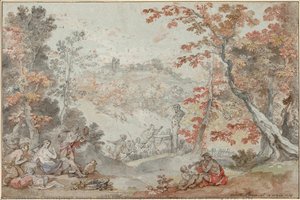
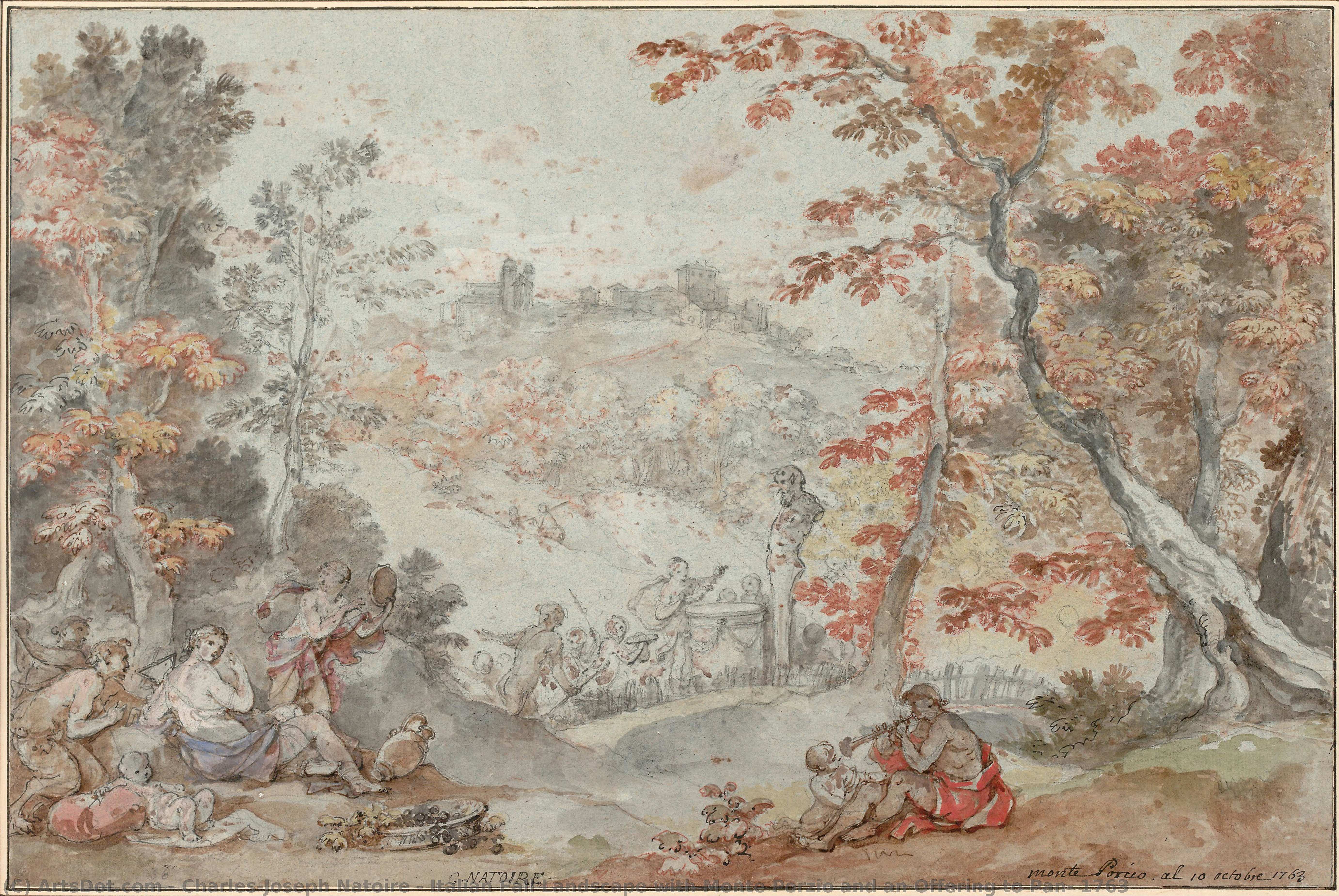
Italian Fall Landscape with Monte Porzio and an Offering to Pan, 1763


 Read More
Giclée / Art Print
Museum-quality giclée or canvas print with fast production and flexible finish options. ( Buy Hand Made Painting Buy Image)




P118B $10

P118H $10

P118W $10

P438Z $10

P508JH $12

P508YH $12

P805H $10

P805Z $10

P919BZ $10

P919G $10

P919XJ $10

P959ZH $10

P968JZ $12

W106C $8

W218G $10

W218JH $8

W218Y $10

W307PJ $10

W316G $10

W316PJ $8

W316Y $10

W398PJ $8

W4111J $10

W500HY $15

W500JH $15

W692G $12

W849H $8

W940BG $15

W953PJ $8




Pick from our preset sizes that match the artwork's original proportions.

You may enter your own dimensions to fit a specific frame or space. If your selected size does not match the original image's proportions, we will either crop the artwork or extend the image with a mirrored or solid-fill edge. A digital mockup will be sent for your approval before production begins.
Please note that the on-screen preview does not reflect the actual cropping or extension. Only the mockup will accurately show the final composition.
While custom sizes are available, we recommend selecting a dimension from the predefined list to preserve the original proportions.
Worldwide Delivery () in 2 weeks instead of standard 4/5 weeks. (4 September)

Free Worldwide Express Shipping

High-Quality Linen Canvas

Full Shipping Insurance

Customs Tax Refund Guarantee

True Color Matching Guarantee

60-Day Return Policy (Defects Only)

100% Money-Back Guarantee

Bulk Discount Offer
 Glass option is only available in size under 110 CM

Italian Fall Landscape with Monte Porzio and an Offering to Pan, 1763
Giclée / Art Print
Reproduction Size
-


Total Price
$ 63
A Pastoral Symphony in Light and Shadow
In the gentle embrace of 1763, Charles-Joseph Natoire captured a moment of profound tranquility that transcends the boundaries of time. Italian Fall Landscape with Monte Porzio and an Offering to Pan is not merely a depiction of a forest; it is a poetic meditation on the harmony between humanity, divinity, and the natural world. As the eye wanders through this lush, autumnal setting, one is immediately struck by the soft, rhythmic interplay of light filtering through the canopy. The scene unfolds with a delicate grace, where the golden hues of late autumn mingle with the verdant remnants of summer, creating a palette that feels both warm and nostalgically fleeting.
The composition invites the viewer to step into a living tableau. A group of figures rests near the base of ancient trees, their relaxed postures suggesting a deep-seated connection to the earth beneath them. Amidst this human gathering, the presence of horses and cows adds a layer of rustic authenticity, grounding the mythological undertones in the reality of pastoral life. Even the smallest details—the silent flight of a bird above the assembly and another perched quietly upon a branch—contribute to an atmosphere of breathless stillness. It is a world where the boundaries between the mundane and the mythic are blurred, inviting us to find the sacred within the everyday.
The Rococo Mastery of Natoire
As a master of the late Baroque and early Rococo traditions, Natoire employs a technique characterized by fluid brushwork and an exquisite sensitivity to atmosphere. His training under François Lemoyne is evident in the way he handles form and light; there is a sculptural quality to the trees and figures that provides structure to the otherwise ethereal landscape. The artist utilizes subtle gradations of color to create depth, leading the viewer's gaze from the intimate foreground gathering toward the distant, hazy silhouette of Monte Porzio. This use of atmospheric perspective creates an illusionistic window into another era, making the painting feel less like a flat surface and more like a breathable space.
For the discerning collector or interior designer, this piece offers a sophisticated focal point that radiates elegance. The soft, pastel-inflected tones are perfectly suited for creating a sense of calm and refinement in a curated space. Whether placed in a sunlit gallery or a stately study, the painting serves as an emotional anchor, evoking the peacefulness of a Mediterranean afternoon. It is a work that does not demand attention through jarring contrasts, but rather earns it through a persistent, quiet beauty that rewards long, contemplative gazes.
Symbolism and the Eternal Pastoral
Beyond its aesthetic splendor, the painting carries deep symbolic weight. The "Offering to Pan" suggests a ritualistic reverence for nature, a nod to the classical traditions that fueled much of 18th-century French art. By placing this offering within a landscape that feels so tangible and lived-in, Natoire bridges the gap between the classical past and his contemporary reality. The autumn setting itself serves as a metaphor for the cycle of life—a season of harvest and reflection that mirrors the maturity of the artistic style he helped define.
To possess a reproduction of such a masterpiece is to bring a piece of history's most graceful era into the modern home. It is an invitation to slow down, to breathe in the imagined scent of autumn leaves, and to reconnect with the serene rhythms of the natural world. This artwork remains a testament to Natoire’s ability to capture not just a landscape, but a feeling of eternal peace.
Related Artworks
Artist Biography
The Elegance of Rococo: The Life and Legacy of Charles-Joseph Natoire
Charles-Joseph Natoire (1700–1777) stands as a pivotal figure in the artistic landscape of late Baroque and early Rococo France, embodying the refined sensibilities of his era. Born in Nîmes, Provence, he possessed an innate talent nurtured by his father’s sculptural training—a formative influence that instilled in him a meticulous attention to detail and a profound understanding of form. This foundation was further polished through instruction from François Lemoyne, arguably the foremost painter of Louis XV's court. This dual mentorship cemented Natoire’s stylistic trajectory toward the opulent aesthetic championed by Rococo, characterized by asymmetrical compositions, delicate pastel hues, and an obsession with illusionistic effects designed to captivate the viewer’s gaze.
Natoire’s formative years were marked by a dedication to mastering drawing techniques—a cornerstone of artistic training during his time—under Lemoyne's tutelage at the Académie royale de peinture et de sculpture in Paris. This rigorous discipline instilled within him an unwavering commitment to accuracy and observation, skills that would prove invaluable throughout his prolific career. Beyond formal instruction, Natoire’s exposure to humanist scholarship fostered a deep appreciation for classical ideals, informing his artistic vision and contributing to his masterful rendering of mythological subjects—a genre particularly favored by the Rococo movement.
Mastery of Myth and Tapestry
Natoire achieved considerable renown during his lifetime thanks to commissions from influential patrons and institutions. His most celebrated achievement remains the series of paintings depicting Psyche for Germain Boffrand’s oval salon in the Hôtel de Soubise, Paris—a monumental undertaking that showcased Natoire's unparalleled ability to synthesize classical grandeur with Rococo dynamism. In these works, the boundaries between reality and myth blur, as light and color dance across the canvas to create a dreamlike atmosphere of ethereal beauty.
Beyond the confines of oil on canvas, Natoire left an indelible mark on the decorative arts through his extraordinary contributions to tapestry design. His ability to translate complex narratives into intricate textile patterns allowed his vision to permeate the very fabric of French aristocratic life. Notable achievements in this medium include:
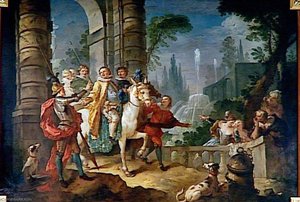
- The Don Quixote Series: A masterful translation of literary drama into woven splendor, showcasing his narrative prowess.
- Allegorical Compositions: Works such as Allegorie demonstrate his skill in utilizing classical figures to convey profound symbolic themes through delicate textures and intricate details.
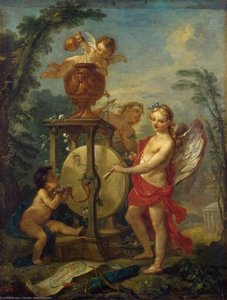
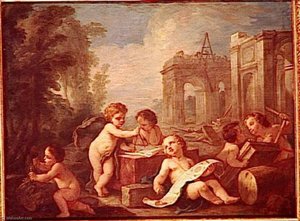
- La Peinture: A stunning depiction of cherubic artists that reflects the influence of the French Academy, blending innocence with technical sophistication.
Historical Significance and the Roman Legacy
The trajectory of Natoire's career was not merely confined to the salons of Paris; his influence extended across Europe through his prestigious appointment as the Director of the French Academy in Rome. This role allowed him to bridge the gap between the classical heritage of Italy and the burgeoning Rococo spirit of France, ensuring that the principles of classical antiquity continued to inform contemporary French art. His time in Rome solidified his reputation as a scholar-painter, capable of interpreting the weight of history through a lens of modern elegance.
As the 18th century progressed, Natoire’s work served as a bridge between the heavy, dramatic shadows of the Baroque and the light, airy whimsy of the Rococo. His legacy is found in the way he utilized soft palettes and fluid lines to evoke emotion, leaving behind a body of work that remains a testament to the grace and sophistication of the French Enlightenment. Through his paintings, tapestries, and leadership, Charles-Joseph Natoire ensured that the delicate beauty of the Rococo era would be etched permanently into the annals of art history.
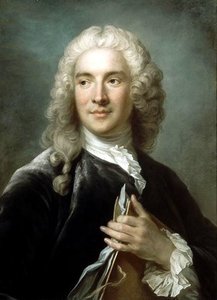
Charles-Joseph Natoire
1700 - 1777 , France
Quick Facts
- Artistic Movement Or Style: Rococo
- Artists Or Movements Influenced By This Artist: ['Baroque']
- Artists Who Influenced This Artist: ['François Lemoyne']
- Date Of Birth: 1700
- Full Name: Charles-Joseph Natoire
- Nationality: French
- Notable Artworks:
- Italian Fall Landscape with Monte Porzio
- Offering to Pan
- Place Of Birth: Nimes, France
Related Articles

Romantic Landscapes: 10 Masterpieces for Your Home | ArtsDot
Journey through 10 Romantic landscape masterpieces by Friedrich, Turner & Cole. Explore emotional art, sublime nature scenes & iconic 19th-century paintings. Find museum-quality reproductions for your home at ArtsDot.com – discover the full collection online!

Evocations of Place: A Historical Journey Through Landscape Art
Explore the rich history of landscape art with ArtsDot. Discover renowned artists, movements like Impressionism & Romanticism, and expert guidance for collecting timeless pieces. Find your perfect serene escape today!

John Constable's Masterpieces: Explore 25 Iconic Landscapes for Your Home
Journey through John Constable's 25 most celebrated landscapes. Explore Romanticism, Dedham Vale & his masterful use of light in iconic paintings like 'Hay Wain'. Find museum-quality art reproductions and elevate your home decor on ArtsDot.com.

Rococo's Radiant Legacy: 10 Masterpieces for Your Home |
Indulge in the elegance of Rococo! Explore 10 masterpieces by Fragonard, Boucher & Watteau. Discover the stories behind these iconic paintings and bring timeless art to your home with museum-quality reproductions from .
Evoking Atmosphere & Identity: A Journey Through Landscape Painting's History
Explore the rich history of landscape painting! Discover renowned artists, movements like Romanticism, & techniques such as atmospheric perspective. Find inspiration and quality reproductions at ArtsDot.