

 Preview
 Send
Send Share
Share
 Details

 Download
 Similars
 X-Ray
X-Ray Diaporama
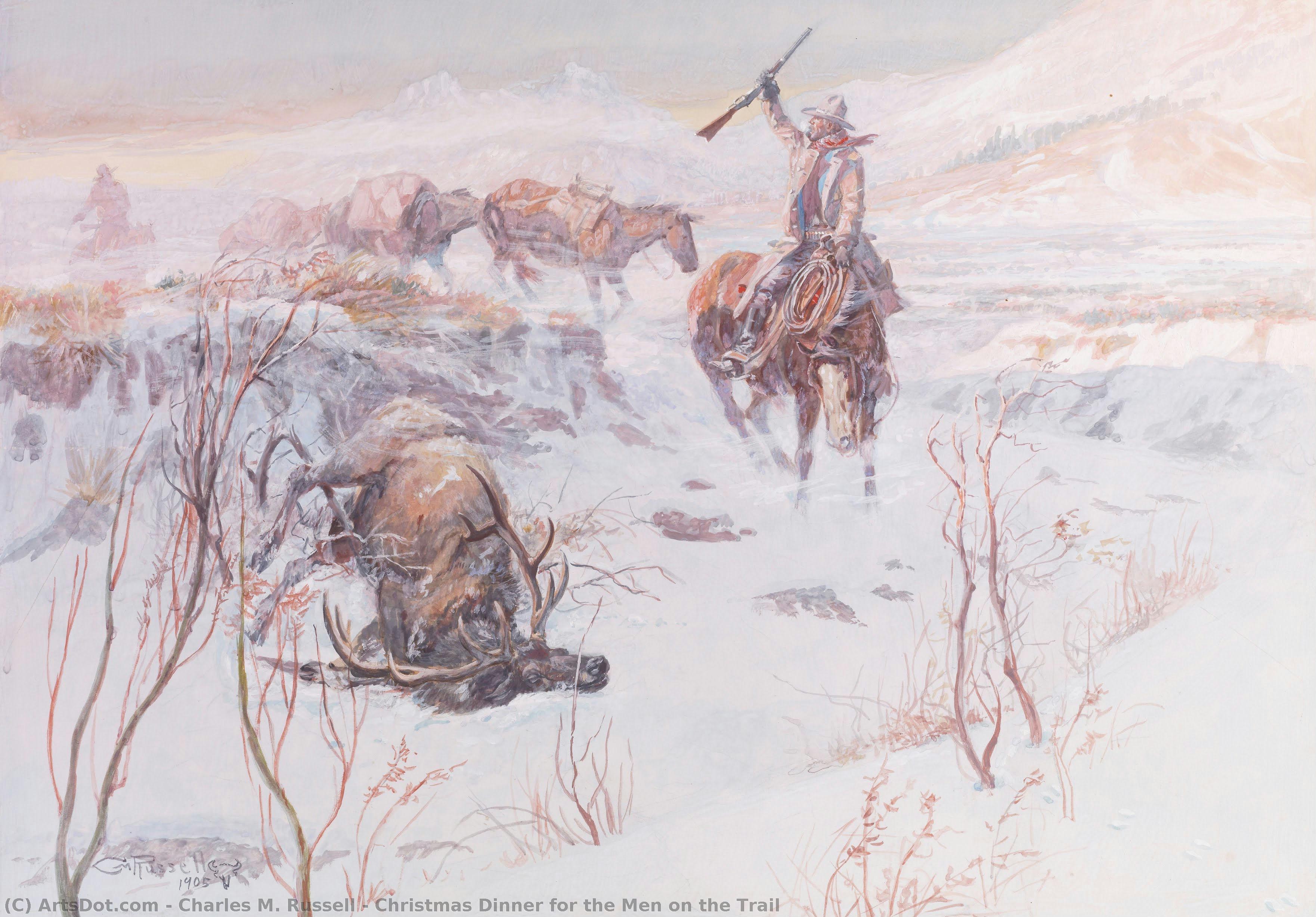
Christmas Dinner for the Men on the Trail
 Oil On Canvas
- WallArt
- Romantic Western
 1905
1905 57.0 x 40.0 cm
 Amon Carter Museum of American Art
 Read More
Purchase a high-resolution, enhanced digital image, far superior to the online preview.
Each file is meticulously prepared by our in-house specialists using advanced tools and expert manual retouching. We ensure every image has exceptional clarity, precise color accuracy, and fine detail.
The final file is delivered via email within 72 hours, optimized for immediate use in professional, editorial, and print environments. This is the same quality trusted by top-tier design studios, publishers, and galleries.
Digital Image
Download a high-resolution file for personal display, printing, and creative projects. ( Buy Print Buy Hand Made Painting)
Included in Every Digital Image Order
Expert Digital Delivery, Guaranteed
When you choose ArtsDot.com, you're not just getting an image - you're receiving a professionally enhanced digital artwork, crafted with precision and backed by a satisfaction guarantee. Here's everything that comes with your order, automatically:

Fast Email Delivery
Your high-resolution digital image file will be emailed to you within 72 hours of ordering - ready for immediate use.

AI-Enhanced Digital File
Your artwork is professionally optimized using advanced AI tools and manual editing, ensuring maximum detail, clarity, and color accuracy.

Free Lifetime Re-Delivery
Accidentally deleted or lost your file? No worries - we'll resend it to you anytime, free of charge.

No Import Fees - Ever
Enjoy your artwork instantly with zero customs, duties, or delivery fees - digital downloads are always tax-free.

Color Accuracy Guarantee
We ensure your digital image reflects the original colors as closely as possible using professional tools and color management.

60-Day Satisfaction Guarantee
If you're not satisfied with your digital image, we'll revise it or refund 100% within 60 days - no questions asked.

100% Money-Back Guarantee
Not satisfied? Get a full refund within 60 days of receiving your digital file - no questions asked.

Bulk Order Discounts
Buy 3 images, save 10% - Buy 5, save 15% - Buy 10+, save 20%. Great for creative projects, galleries, and agencies.
Collectible Description
A Frozen Feast: Unpacking Charles Marion Russell's "Christmas Dinner for the Men on the Trail"
Charles Marion Russell’s 1905 painting, “Christmas Dinner for the Men on the Trail,” isn’t merely a depiction of cowboys celebrating a holiday; it’s a meticulously crafted tableau of rugged resilience and the enduring spirit of the American West. More than just a snapshot of a snowy scene, it's a narrative brimming with symbolism, reflecting Russell’s profound connection to the frontier life he so passionately portrayed. The painting immediately draws the eye into a dynamic composition centered around a recently slain bison, its massive form anchoring the lower left corner and serving as both a source of sustenance and a stark reminder of the harsh realities of survival in this unforgiving landscape.
Russell’s artistic style is distinctly Romantic Realism. He eschews idealized portrayals, opting instead for an honest, almost brutal depiction of the West's challenges. The loose brushstrokes, visible layering of paint, and a deliberate lack of smooth transitions contribute to a sense of immediacy – as if we are witnessing this moment unfold before us. The artist’s masterful use of atmospheric perspective—the subtle fading of distant mountains and the heightened detail in the foreground—creates an astonishingly convincing illusion of depth, pulling the viewer directly into the heart of the snowy expanse. The color palette is dominated by cool blues, grays, and browns, mirroring the bleakness of the winter environment, yet punctuated with warmer tones in the cowboys’ clothing and the setting sun, offering a glimmer of hope amidst the cold.
The Story Told: Cowboys, Bison, and the Spirit of the Trail
At the center of the composition stands a cowboy, his posture suggesting both weariness and determination. He gestures upwards with his rifle, seemingly directing attention to the bison carcass – a potent symbol of survival in this desolate environment. The two mules, laden with supplies, represent the arduous journey undertaken by these men, highlighting their reliance on each other and the necessities of their trade. Russell’s inclusion of Native American elements—a subtle hint of figures in the distance—underscores the complex relationship between settlers and indigenous peoples in the West, a theme frequently explored throughout his oeuvre. The painting isn't simply about a Christmas meal; it’s about the shared experience of hardship, camaraderie, and the constant struggle for existence against the elements.
Symbolism Woven into the Canvas
The bison itself carries significant symbolic weight. Beyond its practical value as a source of food and materials, it represents the untamed wilderness—a force to be respected and overcome. The act of hunting, depicted with stark realism, speaks to the settlers’ determination to tame the West, but also acknowledges the inherent violence involved in this process. The Christmas celebration, taking place within this harsh landscape, symbolizes a brief respite from hardship, a moment of connection and shared joy amidst adversity. It's a poignant reminder that even in the most challenging circumstances, humanity seeks solace and community.
A Legacy of the West: Reproduction and Artistic Impact
“Christmas Dinner for the Men on the Trail” remains one of Charles Marion Russell’s most iconic works, capturing the essence of the American West with remarkable power. Reproductions offer a beautiful way to bring this evocative scene into any home or office space, serving as a reminder of the pioneering spirit and the enduring allure of the frontier. Russell's ability to blend historical accuracy with emotional resonance continues to resonate with audiences today, solidifying his place as one of America’s greatest Western artists. The painting’s rich detail and evocative atmosphere make it a compelling addition to any art collection or a thoughtful choice for interior design, transporting viewers to the rugged beauty of the American West.
Related Artworks
Artist Biography
A Life Etched in the West
Charles Marion Russell, affectionately known as “C.M.” or “Kid” Russell, wasn’t born into the world he would so vividly immortalize on canvas and in bronze. Born in St. Louis, Missouri, in 1864, his early life was steeped not in formal artistic training but in a consuming fascination with the American West—a realm initially experienced through stories and sketches, fueled by an almost romantic yearning for open spaces and untamed freedom. This nascent passion would eventually propel him westward, abandoning traditional schooling at sixteen to become a working cowboy in Montana’s Judith Basin. It was a bold move, a deliberate immersion into the life he so vividly imagined, and it proved pivotal in shaping his artistic vision. Russell didn't merely *depict* the West; he lived it, breathed its dust, and absorbed its rhythms. This firsthand experience would become the bedrock of his enduring legacy. For eleven years, he embraced the rugged existence of a cowboy, ranch hand, and hunter, experiences that provided an intimate understanding of the landscape, the animals, and, most importantly, the people who inhabited it—the cowboys, Native Americans, and trappers whose lives he would so powerfully portray.From Wrangler to Chronicler
Russell’s artistic journey wasn't one of deliberate academic progression but rather an organic unfolding born from necessity and observation. While working as a cowboy, he began sketching scenes from his daily life—branding cattle, rounding up horses, encounters with wildlife—capturing moments that resonated with the raw beauty and inherent drama of the West. These weren’t polished works intended for galleries; they were personal records, visual diaries documenting a way of life rapidly disappearing. His early work was characterized by a remarkable naturalism, a keen eye for detail honed by years spent observing the nuances of his surroundings. He wasn't interested in romanticizing or idealizing the West; he sought to portray it as it *was*, with all its hardships and glories. A breakthrough came after illustrating a postcard depicting cattle struggling through a harsh winter—a scene so evocative that it sparked demand for his work, allowing him to transition from ranch hand to full-time artist in 1893. This marked the beginning of a prolific career spanning painting, sculpture, and writing, all unified by his unwavering commitment to portraying the authentic spirit of the American West. He wasn’t simply an artist; he was a visual historian, meticulously documenting a vanishing world before it faded into memory.Capturing a Vanishing World: Themes and Techniques
Russell’s art is profoundly imbued with narrative—each canvas tells a story, often steeped in the mythology and realities of frontier life. His subjects are diverse yet consistently focused on the interactions between cowboys, Native Americans, and the untamed landscape. He didn't shy away from depicting conflict, but his portrayals were rarely sensationalized; instead, they conveyed a sense of respect for all involved, acknowledging the complexities of a changing world. A Bad Hoss, painted in 1904, exemplifies this—a dynamic scene capturing the struggle between cowboy and bucking bronco, embodying both the skill and danger inherent in the cowboy lifestyle. Similarly, Battle of Belly River (1905) showcases his ability to depict dramatic historical events with precision and emotional depth. His technique evolved over time, moving from a more illustrative style towards looser brushwork and bolder color palettes. He was a master storyteller, using composition, light, and shadow to create compelling narratives that resonated deeply with audiences eager to connect with the romance and ruggedness of the West. His later works often featured a heightened sense of drama and emotional intensity, reflecting his growing maturity as an artist and his deepening understanding of the human condition. He understood that the true beauty of the West lay not just in its landscapes but also in the resilience and spirit of those who inhabited it.Legacy and Enduring Influence
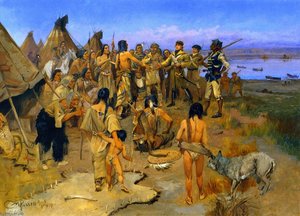
Charles Marion Russell’s impact on American art is undeniable. He wasn't simply a painter of Western scenes; he defined them for generations. His work helped to shape the popular image of the cowboy, the Native American, and the vast landscapes of the West, influencing countless artists who followed in his footsteps. He became known as “the cowboy artist” not just for his subject matter but also for his authentic portrayal of Western life—a portrayal rooted in personal experience rather than romanticized fantasy. Today, his paintings and sculptures are highly sought after by collectors and museums worldwide. The C.M. Russell Museum Complex in Great Falls, Montana, stands as a testament to his enduring legacy, housing an extensive collection of his work and preserving the spirit of the West he so passionately captured. His murals, like Lewis and Clark Meeting Indians at Ross' Hole, continue to inspire awe and admiration, serving as powerful reminders of a pivotal moment in American history. Russell’s art transcends mere representation; it is a celebration of courage, resilience, and the enduring power of the human spirit—a legacy that continues to captivate audiences more than a century after his death.Beyond the Canvas: A Voice for Change
Russell wasn't just an artist; he was also an advocate. He developed a deep respect for Native American cultures during his time in Montana and Canada, and he used his art to challenge prevailing stereotypes and promote understanding. He actively supported the Chippewa tribe’s efforts to secure a reservation in Montana, even lobbying Congress on their behalf. This commitment to social justice is often overlooked but represents an important dimension of his character and artistic vision. He believed that it was crucial to document and preserve Native American traditions before they were lost forever—a belief reflected in many of his paintings and sculptures. His art wasn’t simply about depicting the West; it was about bearing witness to a changing world and advocating for those whose voices were often marginalized. This dedication to authenticity, coupled with his artistic talent, cemented his place as one of America's most important and beloved artists—a chronicler of a vanishing way of life and a champion of cultural understanding.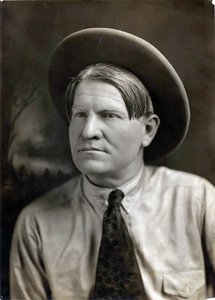
Charles Marion Russell
1864 - 1926 , United States of America
Quick Facts
- Artistic Movement Or Style: Western art
- Artists Or Movements Influenced By This Artist: ['Western artists']
- Date Of Birth: March 19, 1864
- Date Of Death: October 24, 1926
- Full Name: Charles Marion Russell
- Nationality: American
- Notable Artworks:
- Big Nose George...
- When the Plains...
- Peace Talk
- A Bad Hoss
- Battle of Belly...
- Place Of Birth: St. Louis, USA

