 Preview
 Send
Send Share
Share
 Details

 Download
 Similars
 X-Ray
X-Ray Diaporama
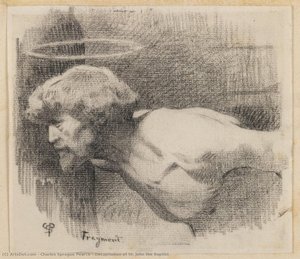
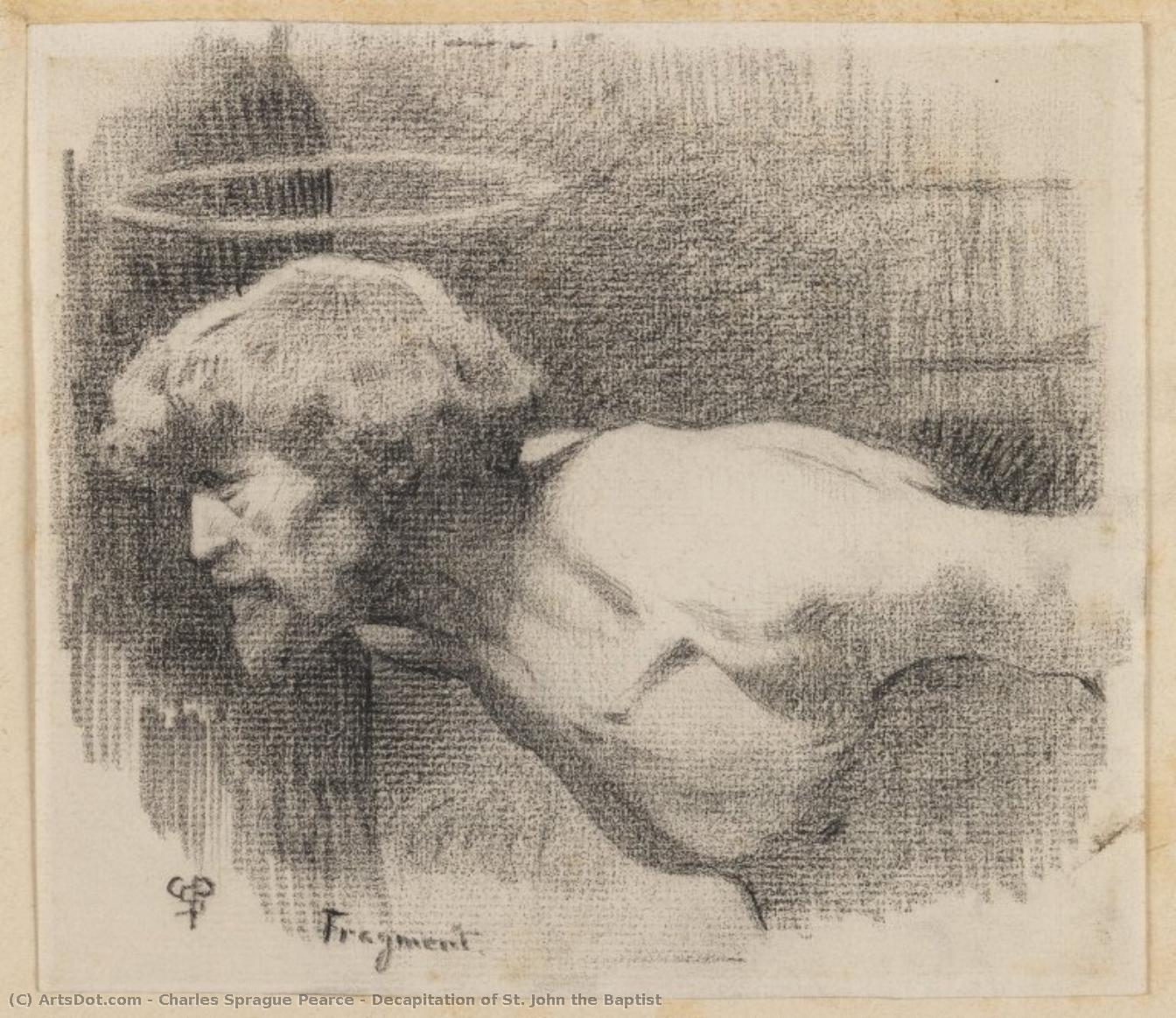
Decapitation of St. John the Baptist
 Acrylic On Canvas
- WallArt
- Realism
 1883
1883 18.0 x 16.0 cm
 Brooklyn Museum
 Read More
Hand Made Oil Reproduction
Hand-painted oil on canvas in your size and frame, made to order by our artists. ( Buy Print Buy Image)




P118B $10

P118H $10

P118W $10

P438Z $10

P508JH $12

P508YH $12

P805H $10

P805Z $10

P919BZ $10

P919G $10

P919XJ $10

P959ZH $10

P968JZ $12

W106C $8

W218G $10

W218JH $8

W218Y $10

W307PJ $10

W316G $10

W316PJ $8

W316Y $10

W398PJ $8

W4111J $10

W500HY $15

W500JH $15

W692G $12

W849H $8

W940BG $15

W953PJ $8




Pick from our preset sizes that match the artwork's original proportions.

You may enter your own dimensions to fit a specific frame or space. If your selected size does not match the original image's proportions, we will either crop the artwork or extend the painting with additional hand-painted elements. A digital mockup will be sent for your approval before production begins.
Please note that the on-screen preview does not reflect the actual cropping or extension. Only the mockup will accurately show the final composition.
While custom sizes are available, we recommend selecting a dimension from the predefined list to preserve the original proportions.
After order, ArtsDot.com team will email client for instructions and provide a mockup preview
Worldwide Delivery () in 3/4 weeks instead of standard 5 weeks. (24 August). No compromise on quality.

Free Worldwide Express Shipping

High-Quality Linen Canvas

Full Shipping Insurance

Customs Tax Refund Guarantee

True Color Matching Guarantee

60-Day Return Policy (Defects Only)

100% Money-Back Guarantee

Bulk Discount Offer
 Glass option is only available in size under 110 CM

Decapitation of St. John the Baptist
Reproduction Medium
Reproduction Size
-


Total Price
$ 263
Artwork Description
A Moment Frozen in Line: Exploring Pearce’s “Decapitation of St. John the Baptist”
Charles Sprague Pearce's 1883 pencil drawing, "Decapitation of St. John the Baptist," isn’t merely a depiction of a biblical event; it’s a visceral exploration of suffering, faith, and the raw intensity of human experience. Born in Boston during a period when American artists were increasingly drawn to European artistic traditions, Pearce masterfully blended academic precision with an emerging interest in Symbolism, creating a work that resonates powerfully even today. The piece immediately commands attention not through vibrant color – it’s rendered entirely in monochrome – but through its remarkable textural complexity and the palpable sense of drama it conveys.
The subject itself, the beheading of St. John the Baptist, is steeped in religious significance. The event, recounted in both the New Testament Gospels and Jewish historical accounts, represents a profound sacrifice and a testament to unwavering faith. Pearce doesn’t shy away from the brutality of the scene; instead, he focuses on capturing the immediate aftermath – the stunned horror, the lingering pain, and the quiet dignity of the saint's final moments. The composition is deliberately dynamic, with John’s head and torso angled diagonally across the frame, pulling the viewer directly into the heart of the tragedy. This isn’t a sanitized illustration; it’s an intensely personal encounter with a pivotal moment in Christian history.
The Language of Line: Technique and Style
Pearce's technique is utterly captivating. He employs a masterful use of hatching, cross-hatching, and stippling to build up form and create a remarkable range of tonal values within the monochrome palette. The lines aren’t simply outlines; they are imbued with movement and texture, suggesting the weight of flesh, the flow of blood, and the desperate struggle for survival. The artist's hand is clearly visible in every stroke, lending the work an intimate and immediate quality. There’s a deliberate roughness to the execution – a sense that this isn’t a carefully polished academic study but rather a deeply felt expression of emotion.
- Dry Pencil Drawing: The primary medium is dry pencil, emphasizing line as the defining element.
- Hatching and Cross-Hatching: These techniques create depth, texture, and tonal variation.
- Expressive Line Work: The lines themselves convey emotion – tension, pain, and a quiet acceptance of fate.
A Window into the 1880s: Context and Symbolism
“Decapitation of St. John the Baptist” was created in 1883, a time when European artistic movements like Impressionism and Symbolism were profoundly influencing American artists. Pearce’s work reflects this influence, particularly in its focus on emotional intensity and its willingness to explore darker themes. The image itself is rich with symbolism. John's head, presented with stark realism, represents not just physical death but also the loss of innocence and the triumph of evil. The act of decapitation symbolizes sacrifice and martyrdom – a potent reminder of the cost of faith. Furthermore, the composition’s diagonal thrust creates a sense of instability and unease, mirroring the emotional turmoil of the scene.
Beyond the Canvas: Reproduction and Legacy
Reproductions of “Decapitation of St. John the Baptist” offer a remarkable opportunity to experience Pearce's artistic vision firsthand. The intricate detail and expressive power of the original are faithfully captured in high-quality reproductions, making it an ideal addition to any art collection or interior space. The work’s enduring appeal lies not only in its historical significance but also in its timeless exploration of human suffering and resilience. It serves as a poignant reminder of the complexities of faith, sacrifice, and the enduring power of artistic expression.
Related Artworks

Artist Biography
A Life Immersed in Light and Shadow: The World of Charles Sprague Pearce
Charles Sprague Pearce, born in Boston on October 13, 1851, emerged as a significant figure during a pivotal era for American art. A time when artists increasingly sought inspiration beyond national borders, particularly in the vibrant artistic landscape of France. Unlike some contemporaries who embraced radical departures from tradition, Pearce forged a path that skillfully blended academic precision with an evolving sensibility towards Impressionism and Symbolism. His early life was steeped in culture; his father’s profession as a dealer in Chinese porcelain instilled within him an appreciation for exotic aesthetics and meticulous detail – qualities that would profoundly shape his artistic vision. Though initially expected to follow in his father's footsteps, Pearce felt the undeniable pull of painting, embarking on a journey that led him to Paris in 1873, a decision that irrevocably altered the course of his life.Parisian Training and Eastern Influences
Pearce’s arrival in Paris marked a crucial turning point. He enrolled at the prestigious atelier of Léon Bonnat, a renowned academic painter who emphasized rigorous technique and classical subject matter. This formal training provided Pearce with a solid foundation in draftsmanship, composition, and the mastery of oil paint. However, his artistic curiosity extended beyond the confines of the studio. A bout of illness prompted a journey to Egypt in 1874, followed by a winter spent in Algeria. These travels proved transformative, exposing him to vibrant cultures, exotic landscapes, and a dazzling array of light and color. The influence of these experiences is readily apparent in his early works, which often depict scenes from North Africa with remarkable detail and atmospheric depth. He wasn’t merely documenting what he saw; he was translating the *feeling* of those places onto canvas, capturing the essence of their unique character. This period also saw him engaging with Japonisme – the European fascination with Japanese art – subtly incorporating elements of its aesthetic into his compositions.From Historical Scenes to Rural Life
While initially drawn to historical and biblical subjects—evident in works like *The Decapitation of St John the Baptist* (1881)—Pearce’s artistic focus gradually shifted towards genre scenes depicting rural life, particularly after settling in Auvers-sur-Oise in the 1880s. This village, a haven for artists including Vincent van Gogh, offered Pearce an opportunity to connect with the rhythms of peasant life and capture the dignity and hardship inherent in their daily routines. Paintings like *Porteuse d’eau* (The Water Carrier) and *Peines de Coeur* (Heartbreak) exemplify this period, showcasing his ability to imbue ordinary moments with profound emotional resonance. These weren't simply depictions of rural existence; they were empathetic portraits of individuals grappling with universal themes of labor, loss, and resilience. He received recognition for these works, earning a third-class medal at the Salon in 1883 for *Porteuse d’eau*.A Synthesis of Styles and Lasting Legacy
Pearce's artistic journey was characterized by a remarkable willingness to experiment and synthesize diverse influences. He deftly navigated between academic realism, Impressionistic techniques, and the burgeoning Symbolist movement, creating a unique style that defied easy categorization. His later works demonstrate an increasing interest in symbolic imagery and allegorical themes, often drawing from Christian mythology and folklore. This synthesis is particularly evident in his mural commissions for the Thomas Jefferson Building at the Library of Congress, where he skillfully integrated decorative elements with narrative scenes. Charles Sprague Pearce died in Auvers-sur-Oise on May 18, 1914, leaving behind a body of work that reflects both his technical mastery and his deep sensitivity to the human condition. Though perhaps not as widely celebrated as some of his contemporaries, his paintings continue to captivate viewers with their evocative power, meticulous detail, and enduring emotional depth. His legacy lies in his ability to bridge artistic traditions, embrace new influences, and create works that resonate with a timeless quality.Selected Works & Recognition
- Le Retour du Troupeau, housed in the Auvers-sur-Oise museum.
- Solitude, featured in the Smithsonian American Art Museum.
- Paul Wayland Bartlett, displayed in the Smithsonian American Art Museum.
- Heartbreak (also known as Peines de Coeur), a poignant depiction of rural life.
- Home From the Fields, showcasing his Impressionistic style.
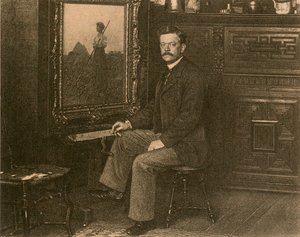
Charles Sprague Pearce
1851 - 1914 , United States of America
Quick Facts
- Artistic Movement Or Style: Academic painting
- Artists Who Influenced This Artist: ['Léon Bonnat']
- Date Of Birth: October 13, 1851
- Date Of Death: May 18, 1914
- Full Name: Charles Sprague Pearce
- Nationality: American
- Notable Artworks:
- Le Retour du Troupeau
- Solitude
- Paul Wayland Bartlett
- Heartbreak
- Home From the Fields
- Place Of Birth: Boston, USA
Related Articles

John Constable's Masterpieces: Explore 25 Iconic Landscapes for Your Home
Journey through John Constable's 25 most celebrated landscapes. Explore Romanticism, Dedham Vale & his masterful use of light in iconic paintings like 'Hay Wain'. Find museum-quality art reproductions and elevate your home decor on ArtsDot.com.

John Singer Sargent's 25 Masterpieces: Portraits & Beyond | ArtsDot
Explore 25 iconic John Singer Sargent paintings – from dazzling portraits to Impressionist landscapes. Discover the stories behind Madame X, El Jaleo & more! Find museum-quality art reproductions and elevate your home decor with ArtsDot.com.
El Greco's Masterpieces: Explore 25 Iconic Paintings & Spiritual Visions | ArtsDot
Journey through El Greco's 25 most iconic paintings! Explore the spiritual depth & dramatic beauty of this Spanish Renaissance master. Discover art history, techniques & find museum-quality reproductions for your home at ArtsDot.com.
Gwen John: Intimacy, Modernity & the Quiet Power of Welsh Portraiture
Explore the captivating world of Gwen John, a pioneering Welsh artist renowned for her intimate portraits & subtle style. Discover her life, legacy, and how to bring her timeless beauty into your home with ArtsDot.
John Frederick Lewis: Orientalism, Detail & Genre Painting in 19th-Century British Art
Explore the captivating Orientalist paintings of John Frederick Lewis! Discover his mastery of detail, genre scenes & influence on 19th-century British art. Learn about his life, techniques & legacy at ArtsDot.