

 Preview
 Send
Send Share
Share
 Details

 Download
 Similars
 X-Ray
X-Ray Diaporama
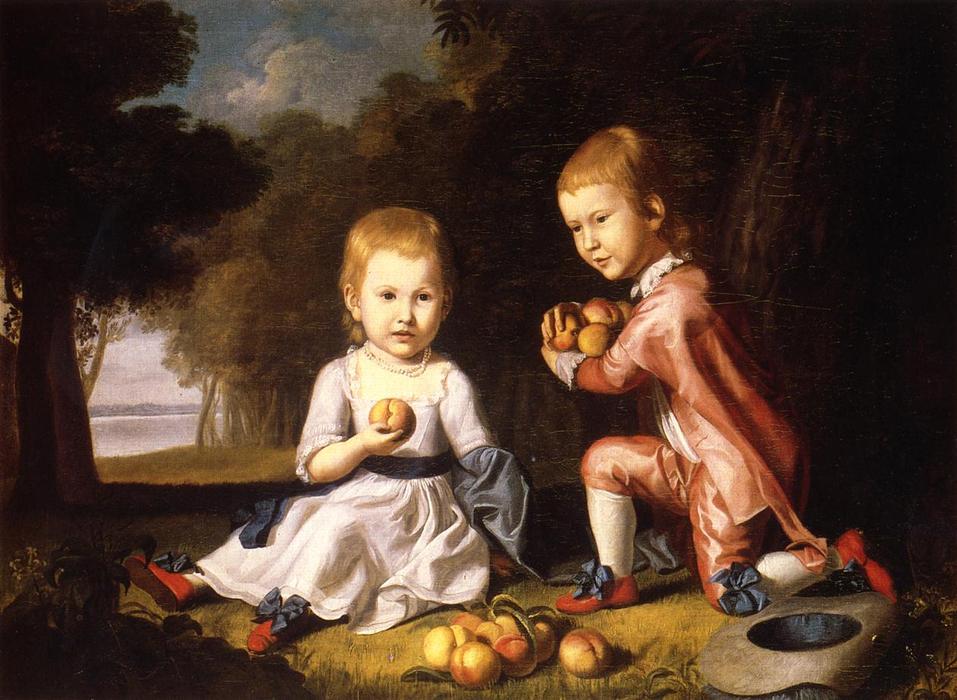
The Stewart Children (also known as Isabella and John Stewart)


 Read More
Purchase a high-resolution, enhanced digital image, far superior to the online preview.
Each file is meticulously prepared by our in-house specialists using advanced tools and expert manual retouching. We ensure every image has exceptional clarity, precise color accuracy, and fine detail.
The final file is delivered via email within 72 hours, optimized for immediate use in professional, editorial, and print environments. This is the same quality trusted by top-tier design studios, publishers, and galleries.
Digital Image
Download a high-resolution file for personal display, printing, and creative projects. ( Buy Print Buy Hand Made Painting)
Included in Every Digital Image Order
Expert Digital Delivery, Guaranteed
When you choose ArtsDot.com, you're not just getting an image - you're receiving a professionally enhanced digital artwork, crafted with precision and backed by a satisfaction guarantee. Here's everything that comes with your order, automatically:

Fast Email Delivery
Your high-resolution digital image file will be emailed to you within 72 hours of ordering - ready for immediate use.

AI-Enhanced Digital File
Your artwork is professionally optimized using advanced AI tools and manual editing, ensuring maximum detail, clarity, and color accuracy.

Free Lifetime Re-Delivery
Accidentally deleted or lost your file? No worries - we'll resend it to you anytime, free of charge.

No Import Fees - Ever
Enjoy your artwork instantly with zero customs, duties, or delivery fees - digital downloads are always tax-free.

Color Accuracy Guarantee
We ensure your digital image reflects the original colors as closely as possible using professional tools and color management.

60-Day Satisfaction Guarantee
If you're not satisfied with your digital image, we'll revise it or refund 100% within 60 days - no questions asked.

100% Money-Back Guarantee
Not satisfied? Get a full refund within 60 days of receiving your digital file - no questions asked.

Bulk Order Discounts
Buy 3 images, save 10% - Buy 5, save 15% - Buy 10+, save 20%. Great for creative projects, galleries, and agencies.
Collectible Description
The Stewart Children: A Portrait of Innocence and Inheritance
Charles Willson Peale’s “The Stewart Children,” painted in 1773, is more than just a charming depiction of two young children; it's a meticulously crafted tableau brimming with symbolism and reflecting the burgeoning ideals of the American Enlightenment. This oil-on-panel masterpiece, currently residing within the hallowed halls of the Thyssen-Bornemisza Museum in Madrid, offers a captivating glimpse into a pivotal moment in early American history – a time of revolution, nascent nationhood, and the complex interplay between tradition and progress.
Peale’s composition immediately draws the eye. The children, identified as Isabella and John Stewart, are seated on the ground amidst an abundance of nature's bounty: apples and oranges scattered playfully around them. Their postures – Isabella with a gentle hand extended towards a fallen apple, John reaching for another – convey a sense of innocent curiosity and burgeoning awareness. The background is dominated by a grand oak tree, its branches reaching upwards like grasping hands, symbolizing both the strength and longevity of the Stewart lineage, a family deeply intertwined with Scottish history and power.
Technically, Peale demonstrates remarkable skill in capturing the textures and nuances of light and shadow. The delicate folds of the children’s dresses, rendered in soft pink and white respectively, are exquisitely detailed. The artist masterfully employs chiaroscuro – the dramatic contrast between light and dark – to create a sense of depth and volume, lending a three-dimensional quality to the scene. Notice how the sunlight illuminates the children's faces, highlighting their youthful features and suggesting an aura of purity and virtue.
A Portrait of Family and Legacy
The Stewart family held significant influence in Scotland, tracing its roots back to Robert Stewart, 1st Earl of Orkney, a key figure in the Scottish Wars of Independence. The painting’s subject matter—a portrait of two young heirs—resonates with this lineage of power and responsibility. However, Peale subtly shifts the focus from mere dynastic representation. He presents not just noble children, but individuals imbued with an inherent goodness and connection to the natural world.
The inclusion of apples and oranges is laden with symbolic meaning. Apples have long been associated with knowledge, temptation, and the Garden of Eden – representing the potential for both good and evil within humanity. Oranges, introduced to Europe from the East, symbolize wealth, abundance, and exoticism—elements increasingly valued during the Enlightenment era. Their presence suggests a prosperous future for the Stewart children, but also hints at the challenges that lie ahead.
The Artist and His Time
Charles Willson Peale was a pivotal figure in American art history. Born in Maryland in 1741, he initially pursued a career as a saddle maker before discovering his passion for painting. He received training from prominent artists like John Hesselius and, crucially, Benjamin West in London, exposing him to the latest European artistic trends. Peale’s work reflects this diverse influence – blending classical restraint with a distinctly American sensibility.
Peale was not merely a portrait painter; he was also a dedicated scientist and naturalist. He established the Philadelphia Museum of Natural History (later renamed the Academy of Natural Sciences) in 1792, one of the first museums of its kind in America. This commitment to both art and science underscores Peale’s belief in the interconnectedness of knowledge and observation – a core tenet of the Enlightenment.
A Timeless Masterpiece: Reproduction and Beyond
“The Stewart Children” stands as a testament to Peale's artistic skill and his ability to capture the essence of human experience. Its enduring appeal lies in its portrayal of innocence, family, and the promise of a new nation. Today, reproductions of this iconic painting are available through reputable sources like ArtsDot.com, offering art enthusiasts the opportunity to bring this timeless masterpiece into their homes or offices.
Consider how the painting’s composition—the balanced arrangement of figures, the evocative use of light and shadow, and the rich symbolism—can enhance any interior space. Whether displayed in a formal study or a cozy living room, “The Stewart Children” will undoubtedly serve as a captivating focal point, sparking conversation and inspiring contemplation.
Related Artworks
Artist Biography
Charles Willson Peale: A Life of Art, Science, and Patriotism
- Born: April 15, 1741, Chester, Queen Anne's County, Maryland
- Died: February 22, 1827, Philadelphia, Pennsylvania
Early Life and Artistic Training
- Peale’s early life was marked by financial hardship following his father’s death. He apprenticed as a saddler before discovering his passion for art.
- He received initial training from John Hesselius and briefly studied with John Singleton Copley, demonstrating an early aptitude for portraiture.
- A crucial period in his development was his time studying under Benjamin West in London (1767-1770). This exposure to European artistic trends significantly influenced his style.
Artistic Career and Major Works
- Portraiture: Peale is best known for his portraits of prominent figures from the American Revolution, including numerous depictions of George Washington (nearly sixty in total). These portraits are valuable historical documents as well as artistic achievements.
- Style: His style evolved over time, initially influenced by West’s Neoclassical approach but later incorporating elements of realism and a desire to capture likeness accurately.
- Notable Works:
- George Washington (1772): Marked the beginning of his long association with Washington.
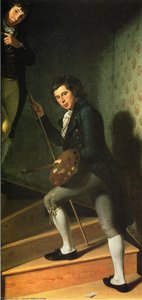
- The Staircase Group (c. 1795): A striking example of trompe l'oeil, depicting his sons Raphael and Titian as if they were part of the architectural setting.
Scientific Pursuits and Peale’s American Museum
- Peale was a passionate naturalist and scientist, organizing expeditions to study natural history.
- He founded Peale's American Museum in Philadelphia (1784), one of the first museums in the United States. It housed botanical, biological, and archaeological specimens.
- The museum played a significant role in popularizing science and education in America. He was particularly known for his displays of mastodon bones, acquired through an expedition in 1801.
- He taught himself taxidermy to preserve specimens for the museum, demonstrating his diverse skills.
Legacy and Historical Significance
- Peale’s work bridges the gap between art and science, reflecting the Enlightenment ideals of his time.
- His portraits provide invaluable visual records of key figures in American history.
- The founding of Peale's American Museum was a pioneering effort that helped establish the museum as an important institution for education and scientific exploration.
- He influenced subsequent generations of artists and scientists, contributing significantly to the development of American culture.
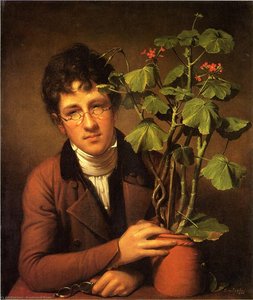
- His family legacy continued through his sons, including James Peale and Rubens Peale, who also became accomplished artists and contributed to the museum's collection.
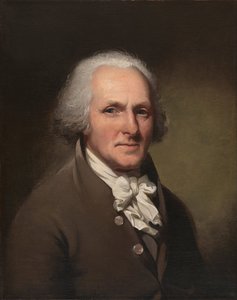
Charles Willson Peale
1741 - 1827 , United Kingdom
Quick Facts
- Artistic Movement Or Style: Neoclassical painting
- Artists Who Influenced This Artist:
- John Hesselius
- John Singleton Copley
- Benjamin West
- Date Of Birth: April 15, 1741
- Date Of Death: February 22, 1827
- Full Name: Charles Willson Peale
- Nationality: American
- Notable Artworks:
- Staircase Group
- George Washington portraits
- Place Of Birth: Chester, United Kingdom

