 Preview
 Send
Send Share
Share
 Details

 Download
 Similars
 X-Ray
X-Ray Diaporama
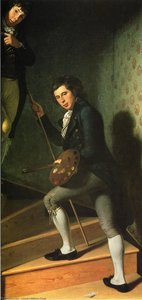
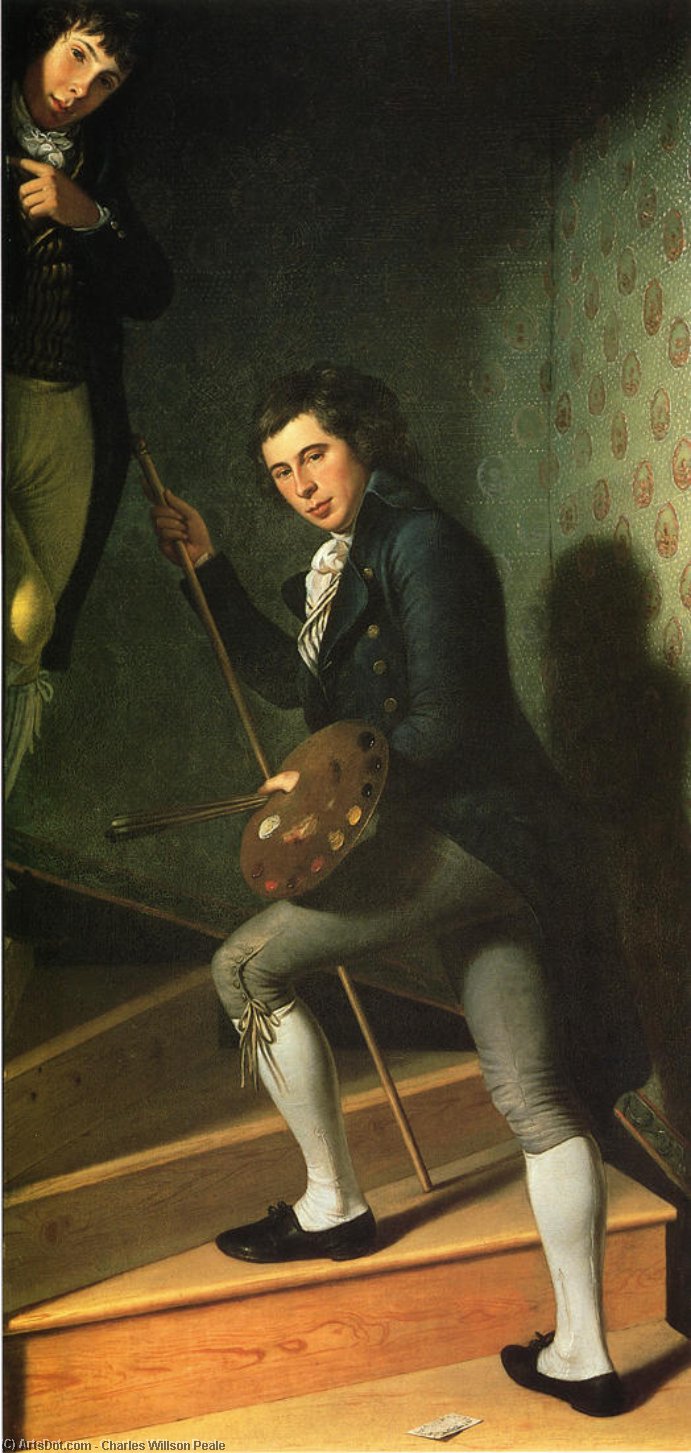
The Staircase Group (also known as Raphael and Titian Ramsey Peale)


 Read More
Hand Made Oil Reproduction
Hand-painted oil on canvas in your size and frame, made to order by our artists. ( Buy Print Buy Image)




P118B $10

P118H $10

P118W $10

P438Z $10

P508JH $12

P508YH $12

P805H $10

P805Z $10

P919BZ $10

P919G $10

P919XJ $10

P959ZH $10

P968JZ $12

W106C $8

W218G $10

W218JH $8

W218Y $10

W307PJ $10

W316G $10

W316PJ $8

W316Y $10

W398PJ $8

W4111J $10

W500HY $15

W500JH $15

W692G $12

W849H $8

W940BG $15

W953PJ $8




Pick from our preset sizes that match the artwork's original proportions.

You may enter your own dimensions to fit a specific frame or space. If your selected size does not match the original image's proportions, we will either crop the artwork or extend the painting with additional hand-painted elements. A digital mockup will be sent for your approval before production begins.
Please note that the on-screen preview does not reflect the actual cropping or extension. Only the mockup will accurately show the final composition.
While custom sizes are available, we recommend selecting a dimension from the predefined list to preserve the original proportions.
After order, ArtsDot.com team will email client for instructions and provide a mockup preview
Worldwide Delivery () in 3/4 weeks instead of standard 5 weeks. (17 August). No compromise on quality.

Free Worldwide Express Shipping

High-Quality Linen Canvas

Full Shipping Insurance

Customs Tax Refund Guarantee

True Color Matching Guarantee

60-Day Return Policy (Defects Only)

100% Money-Back Guarantee

Bulk Discount Offer
 Glass option is only available in size under 110 CM

The Staircase Group (also known as Raphael and Titian Ramsey Peale)
Reproduction Medium
Reproduction Size
-


Total Price
$ 263
Artwork Description
A Window Into Revolutionary America: Charles Willson Peale’s “The Staircase Group”
Charles Willson Peale's "The Staircase Group," painted in 1795, isn’t merely a portrait; it’s a meticulously crafted illusion—a theatrical invitation to step into a world brimming with ambition, scientific curiosity, and the nascent spirit of America. Housed within the Philadelphia Museum of Art, this remarkable work transcends the traditional confines of portraiture, becoming a captivating tableau that speaks volumes about its creator's innovative vision and the cultural landscape of early 19th-century America.
At first glance, the painting presents two young men—Raphaelle Peale, Charles’s eldest son, and Titian Ramsay Peale, his younger brother—standing on a grand staircase. However, a closer examination reveals an astonishing feat of artistry: the staircase itself isn't painted; it’s constructed from actual wood, seamlessly integrated into the canvas to create a startlingly realistic trompe l'oeil effect. This masterful illusion was central to Peale’s ambition – he sought to elevate portraiture beyond simple likenesses and transform it into an immersive experience for the viewer.
The Museum as a Canvas: Peale’s Vision
Peale wasn’t simply a painter; he was a pioneering museum curator, driven by a fervent belief in the power of education and accessible knowledge. He founded Philadelphia's first public museum, the American Museum, in 1792 – a revolutionary concept at the time. This institution aimed to combine art, science, and natural history, offering visitors a comprehensive exploration of the world around them. “The Staircase Group” was conceived as a centerpiece for this ambitious project, designed to draw people into the museum’s space and demonstrate Peale's artistic prowess.
The inclusion of the ticket on the first step is particularly significant. It subtly reinforces the painting’s purpose – it’s not just a portrait; it’s an advertisement for the museum itself, inviting viewers to ascend into a world of discovery. The positioning of the brothers, Raphaelle and Titian, reflects their roles within the museum: Raphaelle was a talented artist in his own right, while Titian pursued scientific studies, contributing to the museum's collection of specimens and artifacts.
Neoclassical Style & Illusionistic Technique
“The Staircase Group” is firmly rooted in the Neoclassical style, which was gaining prominence across Europe during this period. Influenced by the art and architecture of ancient Greece and Rome, the painting emphasizes clarity, order, and idealized forms. Peale’s masterful use of light and shadow creates a sense of depth and volume, while his meticulous attention to detail—from the texture of the fabric to the subtle expressions on the boys' faces—further enhances the illusionistic effect.
The painting’s success hinges on Peale’s technical skill in creating *trompe l'oeil* – a French term meaning “to deceive the eye.” He employed techniques such as foreshortening, atmospheric perspective, and meticulous rendering of three-dimensional forms to create the impression that the staircase is actually present within the painted space. This technique was not entirely new, but Peale’s execution is considered particularly sophisticated for its time.
Symbolism & The American Ideal
Beyond its technical brilliance, “The Staircase Group” carries significant symbolic weight. It represents the burgeoning spirit of America – a nation striving to build itself on the foundations of knowledge, innovation, and artistic expression. The brothers’ ascent up the staircase can be interpreted as a metaphor for progress and ambition, reflecting the optimism and aspirations of the early republic.
Furthermore, the painting subtly celebrates the role of education and intellectual curiosity. By presenting his sons in this grand setting, Peale was not only showcasing their individual talents but also promoting the value of learning and scientific inquiry – values that he championed throughout his life. “The Staircase Group” remains a powerful testament to Charles Willson Peale’s legacy as a visionary artist, museum founder, and ardent advocate for American progress.
Related Artworks
Artist Biography
Charles Willson Peale: A Life of Art, Science, and Patriotism
- Born: April 15, 1741, Chester, Queen Anne's County, Maryland
- Died: February 22, 1827, Philadelphia, Pennsylvania
Early Life and Artistic Training
- Peale’s early life was marked by financial hardship following his father’s death. He apprenticed as a saddler before discovering his passion for art.
- He received initial training from John Hesselius and briefly studied with John Singleton Copley, demonstrating an early aptitude for portraiture.
- A crucial period in his development was his time studying under Benjamin West in London (1767-1770). This exposure to European artistic trends significantly influenced his style.
Artistic Career and Major Works
- Portraiture: Peale is best known for his portraits of prominent figures from the American Revolution, including numerous depictions of George Washington (nearly sixty in total). These portraits are valuable historical documents as well as artistic achievements.
- Style: His style evolved over time, initially influenced by West’s Neoclassical approach but later incorporating elements of realism and a desire to capture likeness accurately.
- Notable Works:
- George Washington (1772): Marked the beginning of his long association with Washington.
- The Staircase Group (c. 1795): A striking example of trompe l'oeil, depicting his sons Raphael and Titian as if they were part of the architectural setting.
Scientific Pursuits and Peale’s American Museum
- Peale was a passionate naturalist and scientist, organizing expeditions to study natural history.
- He founded Peale's American Museum in Philadelphia (1784), one of the first museums in the United States. It housed botanical, biological, and archaeological specimens.
- The museum played a significant role in popularizing science and education in America. He was particularly known for his displays of mastodon bones, acquired through an expedition in 1801.
- He taught himself taxidermy to preserve specimens for the museum, demonstrating his diverse skills.
Legacy and Historical Significance
- Peale’s work bridges the gap between art and science, reflecting the Enlightenment ideals of his time.
- His portraits provide invaluable visual records of key figures in American history.
- The founding of Peale's American Museum was a pioneering effort that helped establish the museum as an important institution for education and scientific exploration.
- He influenced subsequent generations of artists and scientists, contributing significantly to the development of American culture.
- His family legacy continued through his sons, including James Peale and Rubens Peale, who also became accomplished artists and contributed to the museum's collection.
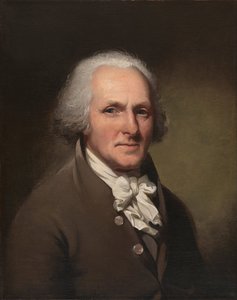
Charles Willson Peale
1741 - 1827 , United Kingdom
Quick Facts
- Artistic Movement Or Style: Neoclassical painting
- Artists Who Influenced This Artist:
- John Hesselius
- John Singleton Copley
- Benjamin West
- Date Of Birth: April 15, 1741
- Date Of Death: February 22, 1827
- Full Name: Charles Willson Peale
- Nationality: American
- Notable Artworks:
- Staircase Group
- George Washington portraits
- Place Of Birth: Chester, United Kingdom
Related Articles
Charles Willson Peale: Portraiture, Enlightenment Ideals & Shaping American Identity
Explore the life & art of Charles Willson Peale – Revolutionary portraitist, scientist, and founder of America’s first museum. Discover his iconic paintings of Washington & the Enlightenment ideals that shaped a nation.
Titian Ramsay Peale II: A Legacy of Botanical Precision & Artistic Innovation
Explore the life & art of Titian Ramsay Peale II, a master of botanical precision and wildlife painting. Discover his legacy bridging art & natural history at ArtsDot.
Charles-André van Loo: A Study in Rococo Portraiture & the French Court's Artistic Dynamics
Explore the elegant world of Charles-André van Loo, a master of Rococo portraiture at the French court. Discover his life, techniques, and enduring influence on 18th-century art. Hand-painted reproductions available.

Charles Fraser: A Life Immersed in Light and Landscape – Exploring the Scottish Colourist's Vision
Discover the captivating world of Charles Fraser (1782-1860), a leading American artist renowned for his serene landscapes and detailed portraits of Southern life. Explore his legacy & find museum-quality reproductions at ArtsDot.

Capturing Collective Memories: Commissioned Group Portraits for Enduring Legacies
Commission a breathtaking group portrait with ArtsDot’s master artists. Preserve your family's legacy with museum-quality paintings, crafted to cherish for generations. Expert guidance & personalized service – start creating your timeless heirloom today!