 Preview
 Send
Send Share
Share
 Details

 Download
 Similars
 X-Ray
X-Ray Diaporama
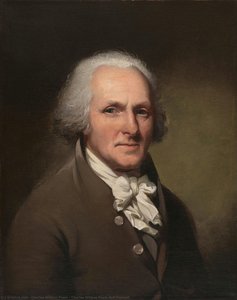
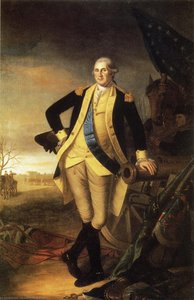
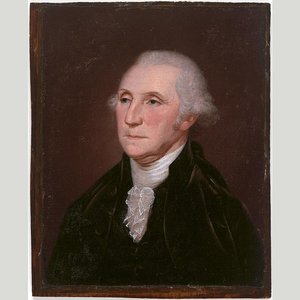
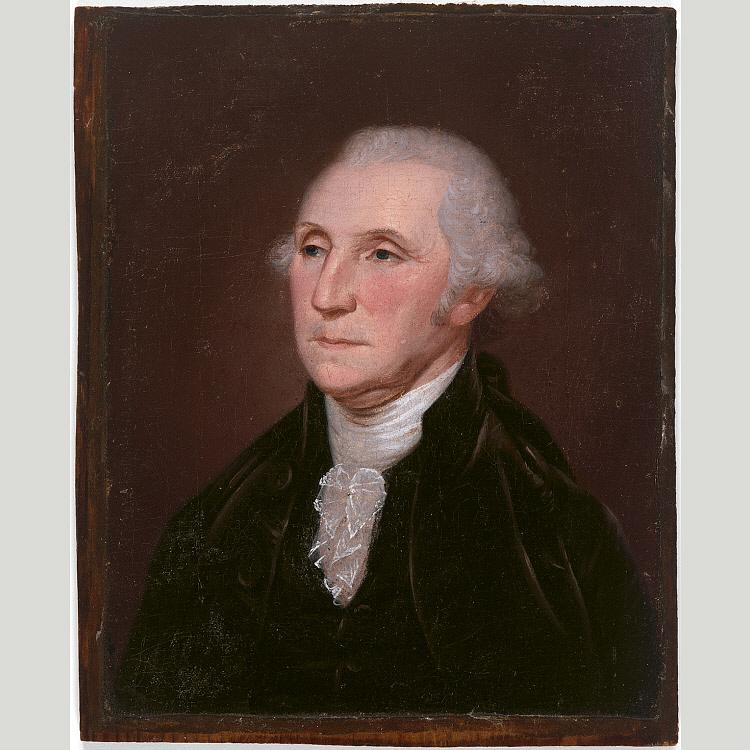
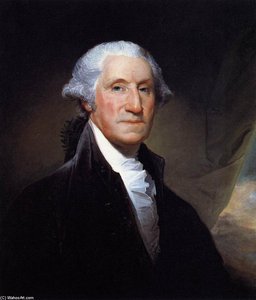
George Washington (Last Bust Portrait type)
 Oil On Canvas
- WallArt
- Neoclassicism
 1795
1795- Early Modern
 30.0 x 22.0 cm
 Read More
Hand Made Oil Reproduction
Hand-painted oil on canvas in your size and frame, made to order by our artists. ( Buy Print Buy Image)




































Pick from our preset sizes that match the artwork's original proportions.

You may enter your own dimensions to fit a specific frame or space. If your selected size does not match the original image's proportions, we will either crop the artwork or extend the painting with additional hand-painted elements. A digital mockup will be sent for your approval before production begins.
Please note that the on-screen preview does not reflect the actual cropping or extension. Only the mockup will accurately show the final composition.
While custom sizes are available, we recommend selecting a dimension from the predefined list to preserve the original proportions.
After order, ArtsDot.com team will email client for instructions and provide a mockup preview
Worldwide Delivery () in 3/4 weeks instead of standard 5 weeks. (17 August). No compromise on quality.

Free Worldwide Express Shipping

High-Quality Linen Canvas

Full Shipping Insurance

Customs Tax Refund Guarantee

True Color Matching Guarantee

60-Day Return Policy (Defects Only)

100% Money-Back Guarantee

Bulk Discount Offer
 Glass option is only available in size under 110 CM

George Washington (Last Bust Portrait type)
Reproduction Medium
Reproduction Size
-


Total Price
$ 263
Artwork Description
The Dignity of a Nation: A Portrait of George Washington
In the quiet, commanding presence of Charles Willson Peale’s 1795 portrait, George Washington, one finds more than just a likeness of a man; one encounters the very soul of a nascent republic. This particular rendition, belonging to the "Last Bust Portrait" type, captures the first President of the United States with a profound sense of Neoclassical grace. The composition is masterfully centered, focusing our gaze upon Washington’s head and shoulders, creating an intimate yet monumental encounter. Through soft, diffused lighting, Peale breathes life into the subtle contours of the face, allowing shadows to dance gently across the features, lending a weight of wisdom and gravity to the subject. It is a piece that does not merely depict a historical figure but invites the viewer into a moment of silent, dignified reflection.
The technical mastery displayed in this oil on canvas is nothing short of breathtaking, making it an exquisite choice for those who appreciate the meticulous traditions of classical painting. Peale utilizes a sophisticated layering of colors to achieve a lifelike texture, where the smoothness of skin contrasts beautifully with the structured folds of period clothing. The palette is intentionally restrained, dominated by deep, somber tones of brown and black that evoke a sense of timelessness and authority. These dark hues are punctuated by delicate highlights of grey and white, which catch the light to define the fine details of Washington’s hair and the resolute expression in his eyes. For the discerning collector or interior designer, the neutral, muted background serves as a perfect anchor, allowing this portrait to command attention in any sophisticated setting without overwhelming the surrounding decor.
Beyond its aesthetic brilliance, the painting serves as a vital historical document, capturing the essence of an era defined by revolution and the birth of American identity. Charles Willson Peale, a man whose life was inextricably linked to the pulse of the American Revolution, brings an unparalleled authenticity to this work. Having studied under masters like Benjamin West in London, Peale infused his American subjects with European refinement while maintaining a rugged, patriotic sincerity. This portrait stands as a testament to the order and balance sought by the founders of the United States. To possess a reproduction of such a piece is to hold a fragment of history—a symbol of leadership, resilience, and the enduring legacy of a statesman whose image continues to inspire awe across generations.
Related Artworks
![George Washington [the Gadsden-morris-clarke Portrait] — Rembrandt Peale, Neoclassicism](/media/artworks/images/thumbnails/d7/70/d770c73d729a4906962c2f1e129fc85e.jpg)
Artist Biography
Charles Willson Peale: A Life of Art, Science, and Patriotism
- Born: April 15, 1741, Chester, Queen Anne's County, Maryland
- Died: February 22, 1827, Philadelphia, Pennsylvania
Early Life and Artistic Training
- Peale’s early life was marked by financial hardship following his father’s death. He apprenticed as a saddler before discovering his passion for art.
- He received initial training from John Hesselius and briefly studied with John Singleton Copley, demonstrating an early aptitude for portraiture.
- A crucial period in his development was his time studying under Benjamin West in London (1767-1770). This exposure to European artistic trends significantly influenced his style.
Artistic Career and Major Works
- Portraiture: Peale is best known for his portraits of prominent figures from the American Revolution, including numerous depictions of George Washington (nearly sixty in total). These portraits are valuable historical documents as well as artistic achievements.
- Style: His style evolved over time, initially influenced by West’s Neoclassical approach but later incorporating elements of realism and a desire to capture likeness accurately.
- Notable Works:
- George Washington (1772): Marked the beginning of his long association with Washington.
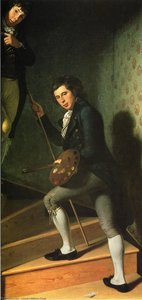
- The Staircase Group (c. 1795): A striking example of trompe l'oeil, depicting his sons Raphael and Titian as if they were part of the architectural setting.
Scientific Pursuits and Peale’s American Museum
- Peale was a passionate naturalist and scientist, organizing expeditions to study natural history.
- He founded Peale's American Museum in Philadelphia (1784), one of the first museums in the United States. It housed botanical, biological, and archaeological specimens.
- The museum played a significant role in popularizing science and education in America. He was particularly known for his displays of mastodon bones, acquired through an expedition in 1801.
- He taught himself taxidermy to preserve specimens for the museum, demonstrating his diverse skills.
Legacy and Historical Significance
- Peale’s work bridges the gap between art and science, reflecting the Enlightenment ideals of his time.
- His portraits provide invaluable visual records of key figures in American history.
- The founding of Peale's American Museum was a pioneering effort that helped establish the museum as an important institution for education and scientific exploration.
- He influenced subsequent generations of artists and scientists, contributing significantly to the development of American culture.
- His family legacy continued through his sons, including James Peale and Rubens Peale, who also became accomplished artists and contributed to the museum's collection.
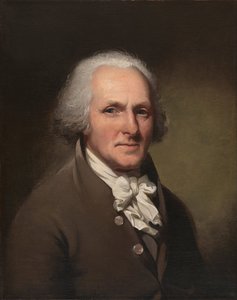
Charles Willson Peale
1741 - 1827 , United Kingdom
Quick Facts
- Artistic Movement Or Style: Neoclassical painting
- Artists Who Influenced This Artist:
- John Hesselius
- John Singleton Copley
- Benjamin West
- Date Of Birth: April 15, 1741
- Date Of Death: February 22, 1827
- Full Name: Charles Willson Peale
- Nationality: American
- Notable Artworks:
- Staircase Group
- George Washington portraits
- Place Of Birth: Chester, United Kingdom
Related Articles

Georges Braque's Masterpieces: 25 Paintings That Defined Cubism & Modern Art | ArtsDot
Explore 25 iconic Georges Braque paintings that revolutionized Cubism & modern art. Discover the stories behind his masterpieces, from Fauvism to Analytical Cubism. Find museum-quality reproductions & elevate your home decor with ArtsDot.com.
Charles Willson Peale: Portraiture, Enlightenment Ideals & Shaping American Identity
Explore the life & art of Charles Willson Peale – Revolutionary portraitist, scientist, and founder of America’s first museum. Discover his iconic paintings of Washington & the Enlightenment ideals that shaped a nation.

Georges Seurat's Masterpieces: 25 Paintings That Defined Pointillism | ArtsDot
Explore 25 iconic Georges Seurat paintings & discover the brilliance of Pointillism. From 'La Grande Jatte' to his harbor scenes, delve into art history with ArtsDot.com. Find museum-quality reproductions for your home decor. Explore the full collection online!
Titian Ramsay Peale II: A Legacy of Botanical Precision & Artistic Innovation
Explore the life & art of Titian Ramsay Peale II, a master of botanical precision and wildlife painting. Discover his legacy bridging art & natural history at ArtsDot.
National Gallery of Art's Masterpieces: 25 Iconic Paintings for Your Home Decor
Explore 25 iconic artworks from Washington DC's National Gallery of Art! Discover masterpieces by Cézanne, Matisse & Picasso. Find museum-quality art reproductions and elevate your home decor with timeless paintings. Explore the full collection online at ArtsDot.com.