The Peale Dynasty: A Foundation in American Portraiture
The name “Peale” resonates powerfully within the annals of early American art, synonymous with a pioneering spirit and an unwavering commitment to capturing the likenesses – and increasingly, the very essence – of a burgeoning nation. Charles Willson Peale, patriarch of this artistic dynasty, established a legacy that extended far beyond portraiture, founding one of America’s first museums and fostering a deep appreciation for both art and natural science. It was within this intellectually vibrant atmosphere that Titian Ramsay Peale II emerged, inheriting not merely a family name but a profound dedication to observation, detail, and the pursuit of artistic excellence. Charles Willson Peale's influence wasn’t simply stylistic; it was philosophical. He believed in painting “the man as he is,” eschewing idealization for honest representation – a principle that would deeply shape his sons’ approaches, though each would carve their own distinct path.
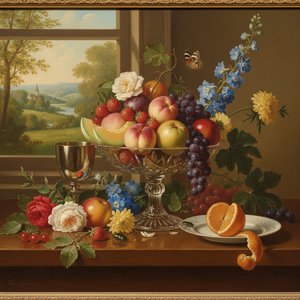
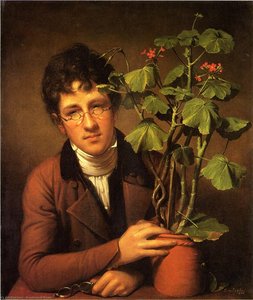
Rubens Peale, Titian's uncle, further solidified the family’s reputation with his celebrated still lifes, particularly “Still Life with Watermelon” (1864), a vibrant testament to American abundance and artistic skill. This early exposure to both portraiture and still life provided Titian Ramsay Peale II with a unique foundation, allowing him to seamlessly blend meticulous realism with an inherent understanding of composition and symbolism. The family’s commitment extended beyond the canvas; they were active participants in the intellectual currents of their time, documenting not just *what* things looked like but also *where* they came from and *how* they fit into the natural world.
From Scientific Observation to Artistic Mastery: Titian Ramsay Peale’s Unique Approach
Titian Ramsay Peale II wasn't content merely to replicate nature; he sought to understand it. His artistic journey was inextricably linked with his passion for natural history, a pursuit that informed every brushstroke and imbued his work with an unparalleled level of accuracy. Unlike many artists of the era who relied on secondhand descriptions or stylized conventions, Peale worked directly from life, meticulously studying his subjects in their natural habitats. This dedication to firsthand observation set him apart, elevating his paintings beyond mere aesthetic representations to become valuable scientific documents.
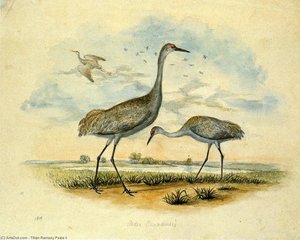
His training wasn’t confined to the studio; he actively participated in expeditions and explorations, sketching and documenting flora and fauna with a naturalist's eye. This commitment is evident in the remarkable detail of his wildlife paintings – the subtle nuances of plumage, the texture of fur, the precise anatomy of each creature. Peale possessed an exceptional ability to capture not just the physical form but also the very *character* of his subjects, imbuing them with a sense of vitality and presence. He wasn’t simply painting animals; he was portraying living beings in all their complexity.
Wildlife Paintings: Capturing the Majesty of North American Fauna
Peale's wildlife paintings stand as enduring testaments to the beauty and diversity of North American fauna. His depictions of birds, mammals, and reptiles are characterized by a remarkable level of realism, achieved through painstaking observation and masterful technique. Works like “Lepus Palustris” (Marsh Hare), showcase his ability to render texture and form with astonishing accuracy. The hare’s fur appears almost tangible, its eyes conveying a sense of alertness and vulnerability.
Beyond technical skill, Peale's wildlife paintings possess an inherent dignity and respect for the natural world. He wasn’t interested in portraying animals as trophies or symbols of conquest; rather, he sought to capture their intrinsic beauty and essential nature. His compositions often feature solitary subjects set against simple backgrounds, allowing the viewer to focus on the animal itself – its form, its texture, its very essence. This approach reflects a growing awareness of conservation and a desire to document species before they were potentially lost.
Still Life with a Purpose: Symbolism and Detail in Peale's Compositions
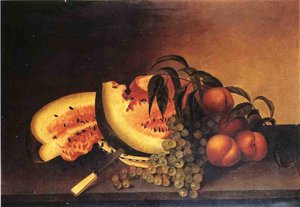 Still Life with Watermelon
Admire 'Still Life with Watermelon' by Rubens Peale (1864). A vibrant American painting featuring fruit & vegetables. Explore this classic still life and its historical significance.
While perhaps best known for his wildlife paintings, Titian Ramsay Peale II also excelled in the genre of still life. His compositions, though seemingly simple at first glance, are imbued with subtle symbolism and meticulous detail. He inherited from his uncle Rubens a keen eye for arrangement and color harmony, but he brought to the genre his own unique sensibility – a blend of scientific observation and artistic refinement.
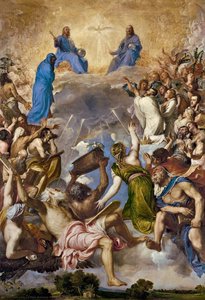
Peale’s still lifes often feature arrangements of fruits, vegetables, and other natural objects, rendered with astonishing realism. However, these are not merely decorative displays; they are carefully constructed compositions that convey deeper meanings. The inclusion of specific plants or animals could allude to religious themes, moral lessons, or the fleeting nature of life – a tradition rooted in Dutch vanitas painting. “St Gregory the Great,” for example, demonstrates his ability to blend Renaissance techniques with symbolic elements, creating a work that is both visually stunning and intellectually engaging.
The Rocky Mountain Expedition & Beyond: Expanding Horizons
Peale’s thirst for knowledge extended beyond the confines of his studio. In 1826, he embarked on an ambitious expedition to the Rocky Mountains, seeking to document the flora and fauna of this largely unexplored region. This journey proved transformative, exposing him to new landscapes, new species, and a deeper understanding of the interconnectedness of nature.
The expedition yielded a wealth of sketches, paintings, and scientific observations, which Peale meticulously recorded in his journals. These records provide invaluable insights into the natural history of the American West during this period. While the expedition was fraught with challenges – harsh weather conditions, logistical difficulties, and encounters with unfamiliar wildlife – it ultimately solidified Peale’s reputation as a pioneering naturalist and artist. His work from this period reflects a newfound sense of awe and wonder, capturing the majesty and untamed beauty of the American frontier.
Peale’s Enduring Legacy: A Pioneer Bridging Art and Natural History
Titian Ramsay Peale II stands as a remarkable figure in American art history – a pioneer who seamlessly blended artistic mastery with scientific observation. His legacy extends beyond his stunning paintings; he embodied a spirit of inquiry, a dedication to detail, and an unwavering commitment to capturing the essence of the natural world. His work continues to inspire artists and scientists alike, reminding us of the importance of both aesthetic appreciation and rigorous documentation.
Through ArtsDot, you can experience the beauty and precision of Peale’s art firsthand. Explore our collection of high-quality reproductions, meticulously crafted to capture the nuances of his original works. Whether you are a seasoned collector or simply an admirer of fine art, Titian Ramsay Peale II offers a captivating glimpse into a pivotal moment in American history – a time when art and science converged to illuminate the wonders of the natural world. Discover his stunning wildlife paintings and legacy today.