

 Preview
 Send
Send Share
Share
 Details

 Download
 Similars
 X-Ray
X-Ray Diaporama
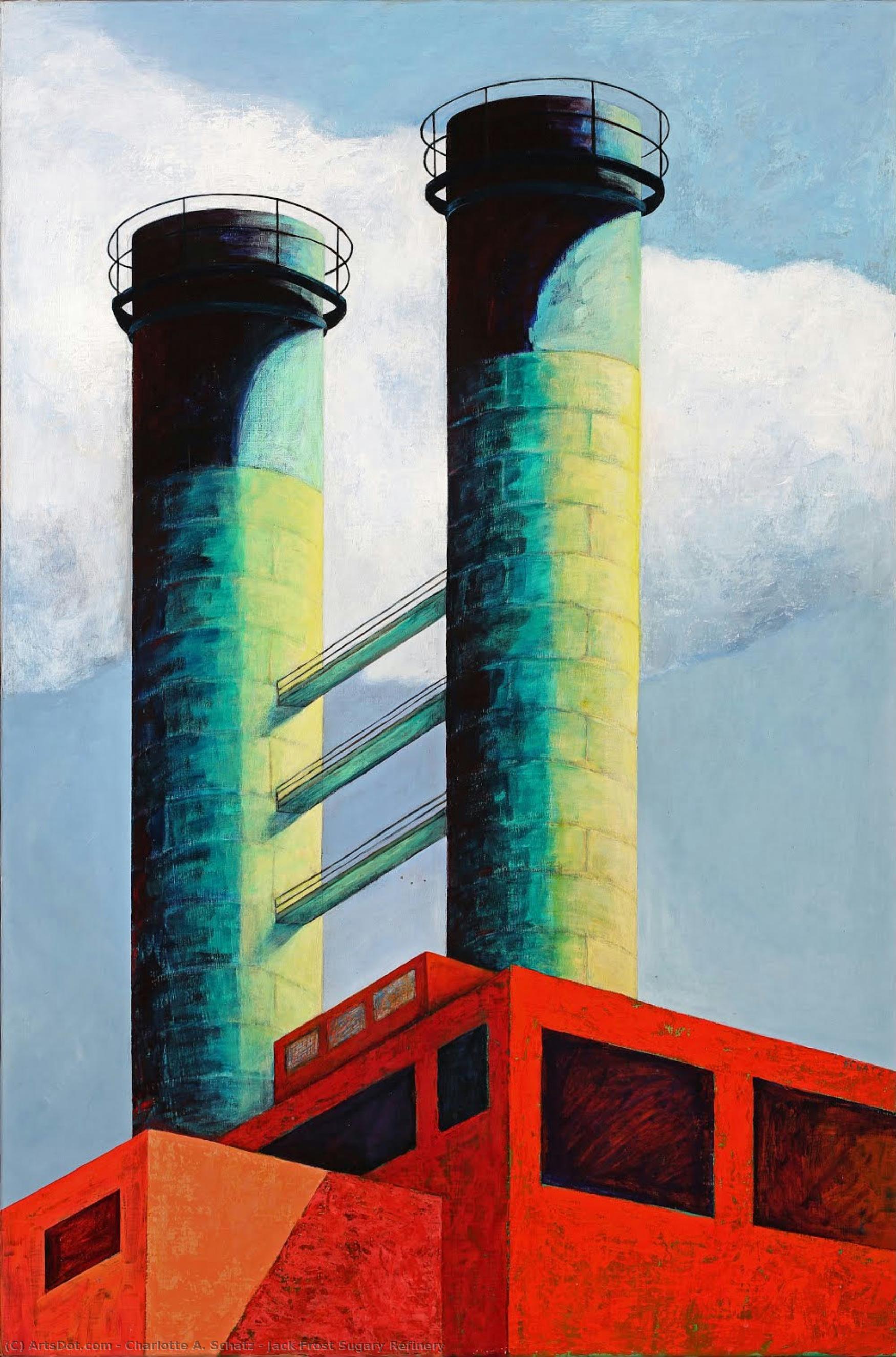
Jack Frost Sugary Refinery

 Read More
Purchase a high-resolution, enhanced digital image, far superior to the online preview.
Each file is meticulously prepared by our in-house specialists using advanced tools and expert manual retouching. We ensure every image has exceptional clarity, precise color accuracy, and fine detail.
The final file is delivered via email within 72 hours, optimized for immediate use in professional, editorial, and print environments. This is the same quality trusted by top-tier design studios, publishers, and galleries.
Digital Image
Download a high-resolution file for personal display, printing, and creative projects. ( Buy Print Buy Hand Made Painting)
Included in Every Digital Image Order
Expert Digital Delivery, Guaranteed
When you choose ArtsDot.com, you're not just getting an image - you're receiving a professionally enhanced digital artwork, crafted with precision and backed by a satisfaction guarantee. Here's everything that comes with your order, automatically:

Fast Email Delivery
Your high-resolution digital image file will be emailed to you within 72 hours of ordering - ready for immediate use.

AI-Enhanced Digital File
Your artwork is professionally optimized using advanced AI tools and manual editing, ensuring maximum detail, clarity, and color accuracy.

Free Lifetime Re-Delivery
Accidentally deleted or lost your file? No worries - we'll resend it to you anytime, free of charge.

No Import Fees - Ever
Enjoy your artwork instantly with zero customs, duties, or delivery fees - digital downloads are always tax-free.

Color Accuracy Guarantee
We ensure your digital image reflects the original colors as closely as possible using professional tools and color management.

60-Day Satisfaction Guarantee
If you're not satisfied with your digital image, we'll revise it or refund 100% within 60 days - no questions asked.

100% Money-Back Guarantee
Not satisfied? Get a full refund within 60 days of receiving your digital file - no questions asked.

Bulk Order Discounts
Buy 3 images, save 10% - Buy 5, save 15% - Buy 10+, save 20%. Great for creative projects, galleries, and agencies.
Collectible Description
Related Artworks








Artist Biography
Early Life and Artistic Beginnings
Yayoi Kusama, born on March 22, 1929, in Matsumoto, Japan, emerged from a childhood marked by both familial discord and burgeoning artistic inclinations. Her early years were shaped by a complex family dynamic – her father, a successful businessman, was reportedly emotionally distant, while her mother struggled with mental illness. This environment fostered within Kusama a profound sense of isolation and an intense preoccupation with patterns and repetition, themes that would become central to her lifelong work. She began drawing at the age of six, initially as a means of escape from her difficult home life, meticulously rendering flowers and insects – subjects she found both beautiful and unsettling. Despite a brief period of formal training at the Kyoto City Specialist School of Arts in 1948-49, focusing on traditional Nihonga painting techniques, Kusama quickly rejected these established methods, seeking instead to forge her own unique visual language. The seeds of her distinctive style were sown during this time, fueled by a growing awareness of her own internal world and a desire to externalize the anxieties and obsessions that plagued her.Migration to New York and the Rise of Pop Art
In 1958, Kusama embarked on a pivotal journey to New York City, driven by an ambition to establish herself as an artist in the burgeoning international art scene. Initially struggling to find recognition, she immersed herself in the vibrant avant-garde culture of Greenwich Village, becoming part of a collective of artists experimenting with new forms of expression. Her early work in New York was characterized by “infinity net” paintings – large canvases covered in thousands of meticulously repeated dots, creating an illusion of endless space and drawing heavily on her childhood hallucinations. These works anticipated the emerging Minimalist movement, yet they also possessed a distinctly personal and psychological dimension. During this period, Kusama’s artistic practice began to evolve, incorporating performance art and exploring themes of sexuality, identity, and the human condition. The influence of Pop Art was undeniable; she embraced bold colors and mass-produced imagery, reflecting the consumer culture that defined post-war America.The 1970s: A Period of Isolation and Rebirth
The 1970s proved to be a challenging period for Kusama. Following a breakdown in New York, she voluntarily entered a mental health facility in upstate New York, where she remained for several years. During this time, her work largely faded from public view, and she became increasingly reclusive. However, this period of isolation was not without its creative output; she continued to produce art within the confines of the facility, often using simple materials like paint and cardboard. It’s now understood that Kusama viewed her artistic practice as a vital coping mechanism for managing her mental health, a way to channel her anxieties and obsessions into tangible forms. Remarkably, this period of relative obscurity ultimately paved the way for a significant resurgence in the 1980s.The Contemporary Renaissance: Infinity Rooms and Global Recognition
Beginning in the early 1980s, Kusama experienced a remarkable revival, propelled by the renewed interest in her earlier work and the emergence of new installations that captivated audiences worldwide. Her “Infinity Mirror Rooms,” immersive environments filled with repeating patterns and mirrored surfaces, became particularly iconic, offering viewers a disorienting yet strangely comforting experience. These rooms, often featuring vibrant polka dots, created a sense of infinite space and invited contemplation on themes of self-perception and the nature of reality. Kusama’s work quickly gained international acclaim, establishing her as one of the most important living artists of our time. Her influence extends far beyond the art world, impacting fashion, design, and popular culture. She has been recognized for her pioneering use of repetition, her exploration of psychological themes, and her unwavering commitment to her unique artistic vision.Legacy and Artistic Significance
Yayoi Kusama’s legacy is one of profound originality and enduring influence. Her distinctive style—characterized by the ubiquitous polka dot, mirrored spaces, and obsessive patterns—has resonated deeply with audiences across generations. She has been lauded as a visionary artist who challenged conventional notions of art and explored complex psychological themes with honesty and vulnerability. Her work speaks to universal human experiences – anxiety, isolation, and the search for meaning – while simultaneously celebrating beauty and creativity. Kusama’s continued success demonstrates the power of art to heal, transform, and connect us to one another. Her influence on contemporary artists is undeniable, cementing her place as a pivotal figure in 20th and 21st-century art history.
charlotte a. schatz
1929 - 2023 , United States of America
Quick Facts
- Artistic Movement Or Style:
- Minimalism
- Pop art
- Artists Or Movements Influenced By This Artist: ['Conceptual art']
- Artists Who Influenced This Artist:
- Andy Warhol
- Claes Oldenburg
- Date Of Birth: March 22, 1929
- Full Name: Yayoi Kusama
- Nationality: Japanese
- Notable Artworks:
- Infinity Mirrored Room
- Pumpkin
- Place Of Birth: Matsumoto, Japan

