 Preview
 Send
Send Share
Share
 Details

 Download
 Similars
 X-Ray
X-Ray Diaporama
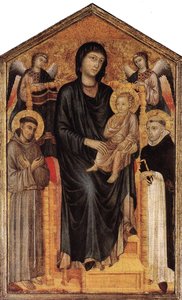
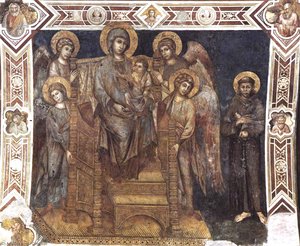
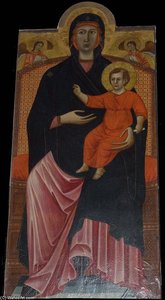
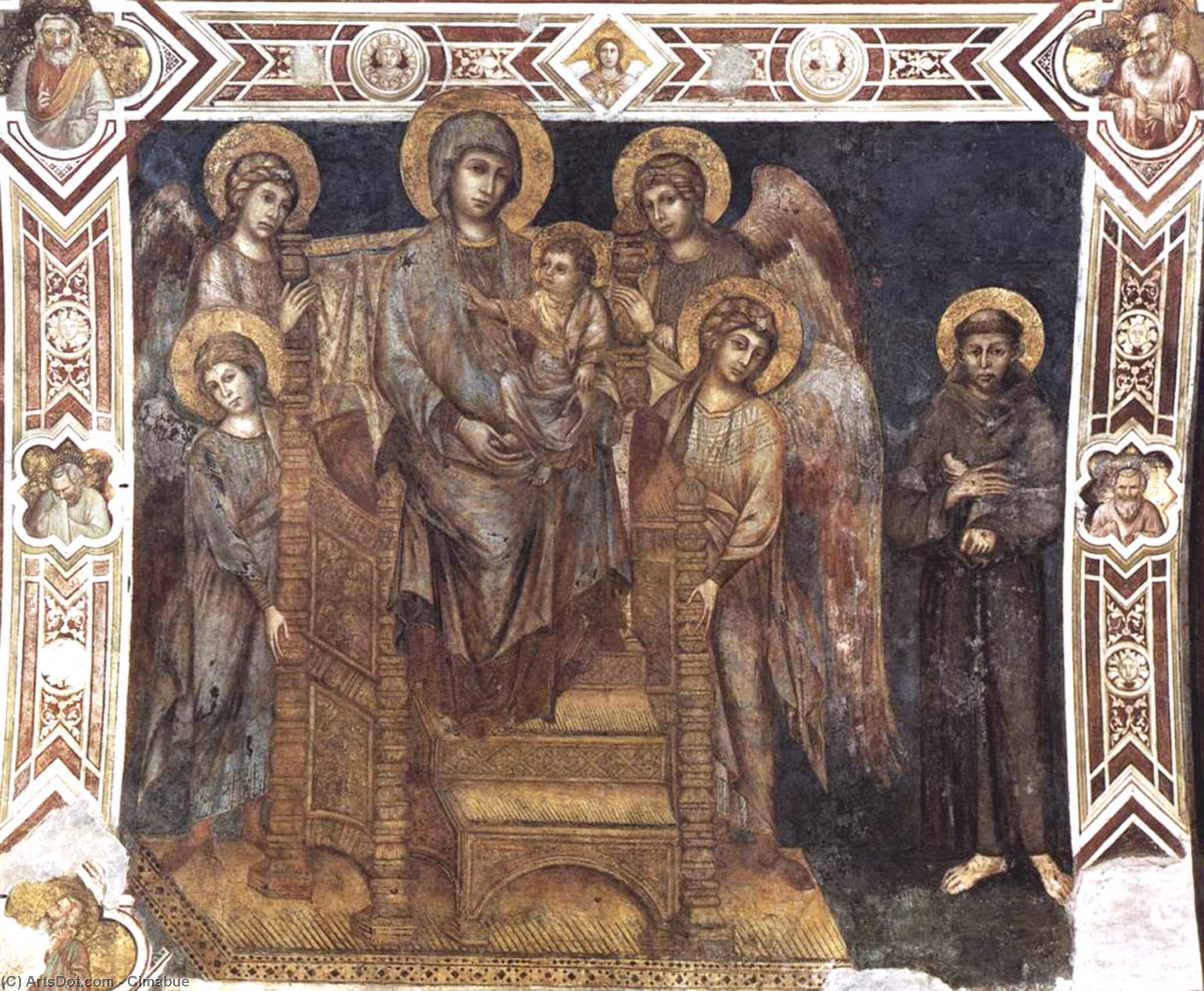
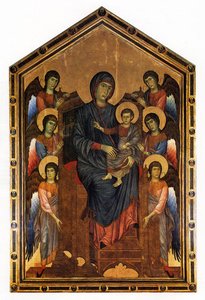
Madonna Enthroned with the Child, St Francis and Four Angels
 Acrylic On Canvas
- WallArt
- Italian Renaissance
 1278
1278 320.0 x 340.0 cm
 Read More
Hand Made Oil Reproduction
Hand-painted oil on canvas in your size and frame, made to order by our artists. ( Buy Print Buy Image)




































Pick from our preset sizes that match the artwork's original proportions.

You may enter your own dimensions to fit a specific frame or space. If your selected size does not match the original image's proportions, we will either crop the artwork or extend the painting with additional hand-painted elements. A digital mockup will be sent for your approval before production begins.
Please note that the on-screen preview does not reflect the actual cropping or extension. Only the mockup will accurately show the final composition.
While custom sizes are available, we recommend selecting a dimension from the predefined list to preserve the original proportions.
After order, ArtsDot.com team will email client for instructions and provide a mockup preview
Worldwide Delivery () in 3/4 weeks instead of standard 5 weeks. (16 August). No compromise on quality.

Free Worldwide Express Shipping

High-Quality Linen Canvas

Full Shipping Insurance

Customs Tax Refund Guarantee

True Color Matching Guarantee

60-Day Return Policy (Defects Only)

100% Money-Back Guarantee

Bulk Discount Offer
 Glass option is only available in size under 110 CM

Madonna Enthroned with the Child, St Francis and Four Angels
Reproduction Medium
Reproduction Size
-


Total Price
$ 263
Artwork Description
A Florentine Revelation: Cimabue’s Madonna Enthroned
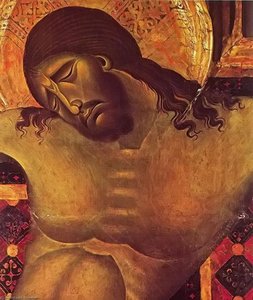
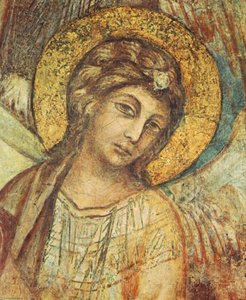
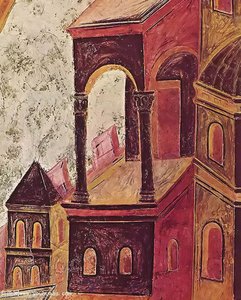
The year is 1278. Florence pulses with burgeoning artistic ambition, yet it remains firmly rooted in the spiritual legacy of Byzantium – a connection that Cimabue, Giovanni Cenni di Pepo, skillfully navigated and subtly transformed. Vasari's later accounts portray him as “bull-headed,” reflecting not merely stubbornness but an unwavering conviction to forge his own path amidst established dogma, a path that would ultimately illuminate the dawn of the Renaissance. Cimabue’s contribution wasn’t simply about replicating Byzantine iconography; it was about imbuing it with a distinctly Florentine sensibility—a nascent awareness of naturalism and perspective that would soon propel Italian art into uncharted territories.- Subject Matter & Style: The fresco depicts Mary enthroned, holding her infant Jesus surrounded by St Francis and four angels – a composition deeply resonant with Christian symbolism. Cimabue’s style leans heavily on Byzantine influences, characterized by flattened figures, luminous backgrounds achieved through encaustic painting (pigment mixed with beeswax), and an emphasis on decorative patterning. However, unlike the rigid formality of Byzantine art, Cimabue introduces subtle nuances in drapery folds and facial expressions, hinting at a burgeoning interest in representing human anatomy with greater accuracy.
- Technique: Encaustic painting—a technique perfected by Cimabue—was favored for its ability to create vibrant colors and durable surfaces. The beeswax binder provided exceptional luminosity and adhered firmly to the plaster wall, ensuring that the fresco retained its brilliance across centuries. Cimabue’s meticulous layering of pigments created depth and texture, demonstrating a mastery of artistic craftmanship.
Historical Context: Byzantium's Influence & Florentine Awakening
Florence at this time was experiencing an intellectual ferment fueled by renewed interest in classical learning. Scholars rediscovered Greek texts and debated philosophical ideas—a movement that profoundly impacted artistic sensibilities. Cimabue’s work exemplifies this shift, subtly incorporating elements of naturalism and humanist thought into a framework dominated by Byzantine tradition. The fresco stands as testament to the enduring power of religious imagery while simultaneously signaling the emergence of a new aesthetic horizon.
Symbolism & Narrative Depth
Each figure in the Madonna Enthroned carries significant symbolic weight. Mary embodies humility and divine grace, her throne representing majesty and spiritual authority. St Francis symbolizes compassion and pastoral care—a reflection of the Franciscan Order’s influence on Florentine piety. The angels serve as messengers of God, conveying divine benevolence and protecting the holy family. Cimabue skillfully weaves these symbols into a narrative that celebrates Christian faith and embodies the ideals of medieval spirituality.
Emotional Impact & Legacy
The Madonna Enthroned transcends mere visual representation; it evokes profound emotional responses—a sense of serenity, reverence, and awe. Cimabue’s masterful use of color and texture contributes to this emotive power, transporting viewers back to 13th-century Florence and immersing them in the spiritual atmosphere of his time. More importantly, Cimabue's work served as an inspiration for subsequent artists—particularly Giotto—who would revolutionize painting by introducing greater realism and expressive dynamism into their compositions. He remains a cornerstone of Florentine art history and a pivotal figure in the transition from Byzantine to Renaissance aesthetics.
Related Artworks
Artist Biography
The Florentine Dawn: Cimabue and the Transition from Byzantium
Giovanni Cimabue, born Cenni di Pepo around 1240 in Florence, stands as a monumental figure—a bridge between the established artistic traditions of the Byzantine world and the burgeoning innovations that would define the Italian Renaissance. His life, though partially obscured by time and romanticized accounts – most notably those penned by Giorgio Vasari centuries later – marks an undeniable turning point in Western art history. Cimabue wasn’t simply a painter; he was a courageous innovator who dared to subtly challenge artistic conventions, laying the groundwork for the revolutionary changes that would soon sweep across Italy. Even his nickname, believed to mean “bull-headed,” hints at a strong will and perhaps a rebellious spirit—qualities demonstrably present in his willingness to experiment with form and expression. He represents a crucial moment where art began to shift from being solely devotional imagery towards something more humanistic and emotionally resonant.Early Influences and Artistic Development
Initially immersed in the Italo-Byzantine style prevalent throughout Florence, Cimabue’s early work adhered closely to established aesthetic principles: flattened figures adorned with shimmering gold leaf, symbolic rather than realistic depictions of space, and a profound focus on religious iconography. However, even within these constraints, a nascent desire for naturalism began to emerge. He wasn't content merely replicating existing forms; he sought to imbue his paintings with a greater sense of life and emotional depth. While the precise nature of his early training remains debated, it’s likely he honed his skills within Florentine workshops, absorbing the techniques and influences of the time while simultaneously developing his own unique artistic voice. The Byzantine style, characterized by its formality and spiritual focus, provided him with a solid foundation, but Cimabue began to subtly introduce elements that would foreshadow the coming Renaissance—a greater attention to volume, more expressive facial features, and a nascent understanding of spatial relationships. This wasn’t a sudden break from tradition, but rather a gradual evolution, a delicate balancing act between honoring the past and embracing new possibilities.Masterpieces and Artistic Innovations
Cimabue's legacy is cemented through a series of breathtaking works that showcase his evolving style. The Maestà (Louvre), originally created for the Church of San Francesco in Pisa, stands as one of his most celebrated masterpieces. This monumental altarpiece exemplifies his mastery of composition and use of color, while simultaneously hinting at the shift away from rigid Byzantine conventions. The figures, though still possessing a degree of formality, exhibit a newfound sense of volume and presence. The Crucifixion (San Domenico, Arezzo), dating around 1270, is particularly significant as an early demonstration of his departure from strict Byzantine norms. Here, the proportions are more realistic, and the emotional weight of the scene is palpable—a stark contrast to the often-distant depictions found in earlier religious art. Further evidence of Cimabue’s innovative spirit can be seen in works like the Flagellation of Christ (Frick Collection), generally attributed to his workshop. This complex composition reveals an evolving understanding of perspective and spatial relationships, showcasing a growing interest in creating more immersive and believable scenes. His contributions weren't limited to panel paintings; Cimabue also excelled as a mosaicist, contributing significantly to the decoration of the Baptistery of Florence—though these mosaics have unfortunately suffered from deterioration over time.A Pivotal Teacher: Giotto and Beyond
Perhaps Cimabue’s most enduring legacy lies in his role as the teacher of Giotto di Bondone. While historical accounts vary regarding the exact nature of their relationship, it is widely accepted that Giotto received crucial training under Cimabue's guidance. However, Giotto would ultimately surpass his master, revolutionizing Italian painting with an even more radical embrace of naturalism and emotional realism. It’s a testament to Cimabue’s skill as a teacher that he fostered such talent, even knowing it might eclipse his own achievements. The story, often recounted by Vasari, of Giotto playfully painting a fly on Cimabue's face speaks volumes about the dynamic between master and pupil—a playful rivalry that ultimately pushed both artists to greater heights. Cimabue’s influence extended beyond Giotto, impacting numerous other artists of the period. He challenged the artistic norms of his time, demonstrating that art could be more than just religious symbolism; it could also reflect human emotion and experience. His willingness to experiment with form, proportion, and expression paved the way for the innovations of the Renaissance, establishing him as a crucial transitional figure in the history of Western art.Enduring Significance
Cimabue passed away in 1302 in Pisa, leaving behind a body of work that continues to captivate and inspire. Despite his significant contributions, details surrounding his later life remain scarce. However, his artistic legacy resonates powerfully through the works of his students and the evolution of Italian art. He represents a crucial step in the development of Western painting, moving away from the stylized conventions of the Byzantine era towards a more humanistic and naturalistic approach. His paintings are not merely historical artifacts; they are windows into a pivotal moment in artistic history—a time when artists began to question established norms and explore new possibilities. He was a pioneer, a visionary who dared to challenge the status quo and lay the foundations for the artistic brilliance that would define the Renaissance. Cimabue’s work reminds us that even within tradition, there is always room for innovation, and that true artistry lies in the courage to push boundaries and explore new horizons.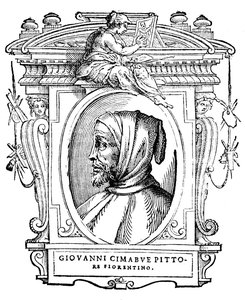
Cimabue
1240 - 1302 , Italy
Quick Facts
- Artistic Movement Or Style: Byzantine & Renaissance
- Artists Or Movements Influenced By This Artist:
- Giotto
- Duccio
- Artists Who Influenced This Artist:
- Giunta Pisano
- Coppo di Marcovaldo
- Date Of Birth: c. 1240
- Date Of Death: 1302
- Full Name: Giovanni Cimabue
- Nationality: Italian
- Notable Artworks:
- Maestà
- Crucifixion
- Flagellation of Christ
- Place Of Birth: Florence, Italy
Related Articles
Late Medieval Masterpieces: 10 Artworks That Defined an Era | ArtsDot
Journey through 10 defining Late Medieval masterpieces – from Giotto's frescoes to Jan van Eyck’s realism. Explore the stories, techniques & vibrant colors of Gothic art. Find museum-quality reproductions and elevate your home decor with ArtsDot.com! Discover all masterpieces on ArtsDot.com

The Fresco as Family Legacy: Preserving Heritage Through Wall Art
Explore the rich history & enduring legacy of fresco painting. Discover how to preserve family heritage through stunning wall art. Expert insights & restoration guidance.

Giotto's Masterpieces: 25 Renaissance Artworks for Your Home | ArtsDot
Explore 25 breathtaking artworks by Giotto di Bondone, a Renaissance master. Discover the stories behind iconic frescoes & paintings like the Scrovegni Chapel cycle. Find museum-quality Giotto reproductions and elevate your home decor with ArtsDot.com.
High Medieval Art: 10 Masterpieces That Shaped an Era | ArtsDot
Journey through High Medieval Art! Explore 10 iconic masterpieces – from Giotto's frescoes to stunning Gothic cathedrals. Discover the stories behind these timeless paintings, sculptures & illuminated manuscripts. Find museum-quality art reproductions at ArtsDot.com.
Fresco's Finest: 10 Masterpieces That Define Art History | ArtsDot
Journey through art history with our Top 10 Fresco Masterpieces! Explore Michelangelo, Raphael & Giotto's iconic works. Find museum-quality reproductions and elevate your home decor at ArtsDot.com.