

 Preview
 Send
Send Share
Share
 Details

 Download
 Similars
 X-Ray
X-Ray Diaporama
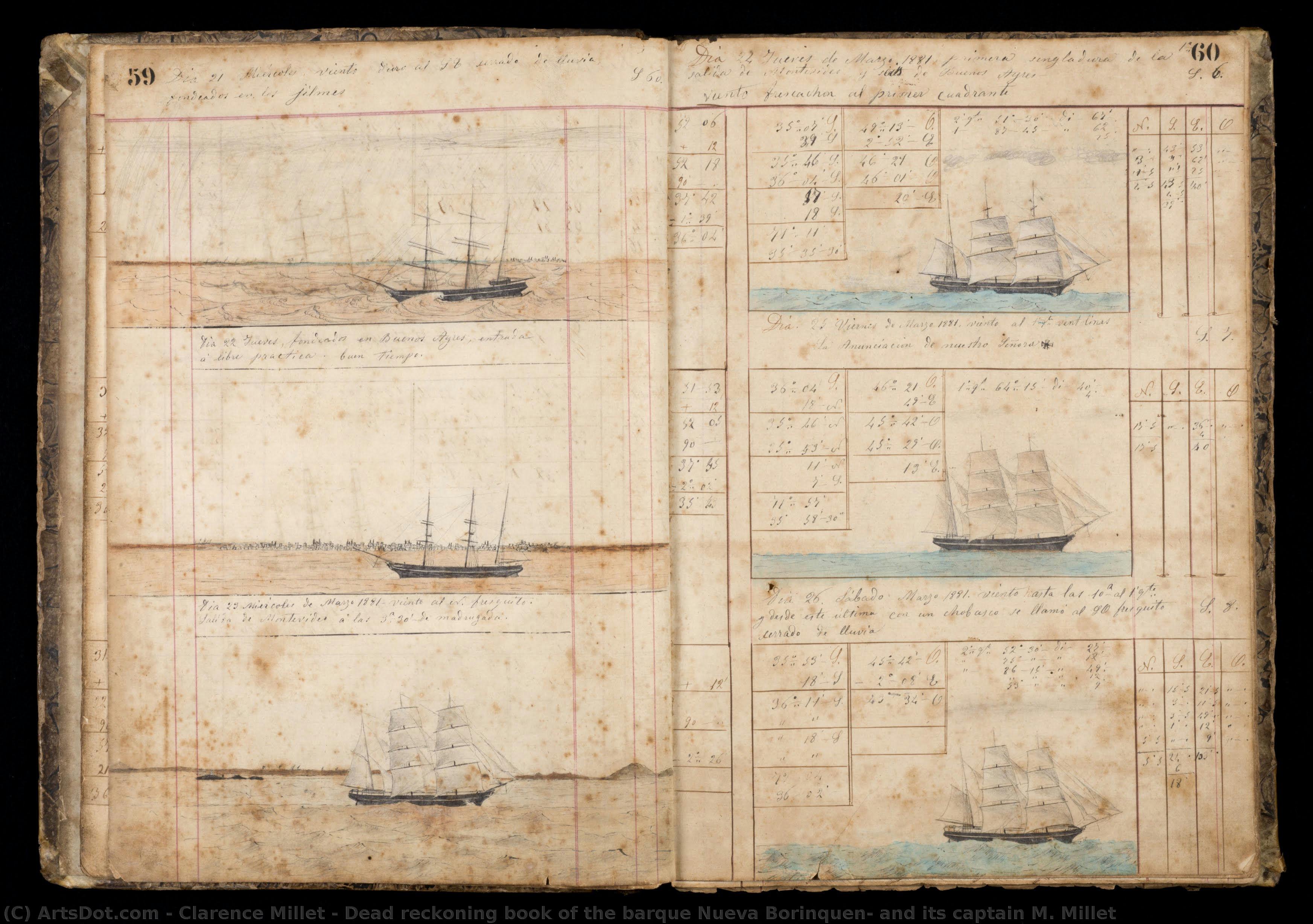
Dead reckoning book of the barque Nueva Borinquen, and its captain M. Millet
 Painting
- Contemporary Realism
 19th Century
 5.0 x 23.0 cm
 Maritime Museum of Barcelona
 Read More
Purchase a high-resolution, enhanced digital image, far superior to the online preview.
Each file is meticulously prepared by our in-house specialists using advanced tools and expert manual retouching. We ensure every image has exceptional clarity, precise color accuracy, and fine detail.
The final file is delivered via email within 72 hours, optimized for immediate use in professional, editorial, and print environments. This is the same quality trusted by top-tier design studios, publishers, and galleries.
Digital Image
Download a high-resolution file for personal display, printing, and creative projects. ( Buy Print Buy Hand Made Painting)
Included in Every Digital Image Order
Expert Digital Delivery, Guaranteed
When you choose ArtsDot.com, you're not just getting an image - you're receiving a professionally enhanced digital artwork, crafted with precision and backed by a satisfaction guarantee. Here's everything that comes with your order, automatically:

Fast Email Delivery
Your high-resolution digital image file will be emailed to you within 72 hours of ordering - ready for immediate use.

AI-Enhanced Digital File
Your artwork is professionally optimized using advanced AI tools and manual editing, ensuring maximum detail, clarity, and color accuracy.

Free Lifetime Re-Delivery
Accidentally deleted or lost your file? No worries - we'll resend it to you anytime, free of charge.

No Import Fees - Ever
Enjoy your artwork instantly with zero customs, duties, or delivery fees - digital downloads are always tax-free.

Color Accuracy Guarantee
We ensure your digital image reflects the original colors as closely as possible using professional tools and color management.

60-Day Satisfaction Guarantee
If you're not satisfied with your digital image, we'll revise it or refund 100% within 60 days - no questions asked.

100% Money-Back Guarantee
Not satisfied? Get a full refund within 60 days of receiving your digital file - no questions asked.

Bulk Order Discounts
Buy 3 images, save 10% - Buy 5, save 15% - Buy 10+, save 20%. Great for creative projects, galleries, and agencies.
A Maritime Chronicle in Paint
In the delicate, elongated format of this work, measuring a mere 5 x 23 cm, Clarence Millet invites us into a profound moment of maritime history. The painting, titled Dead reckoning book of the barque Nueva Borinquen, and its captain M. Millet, serves as more than just a visual representation; it is a window into the soul of a vessel that once traversed the vast Atlantic routes. Through his masterful brushwork, Millet captures the essence of the Nueva Borinquen, a barque built in 1863 that carried tales of Buenos Aires, Havana, and Spain within its wooden ribs. The composition presents a serene yet busy seascape where several sailboats drift across the water, their varying sizes and positions creating a sense of rhythmic movement and depth. This is not merely a depiction of boats, but a tribute to the era of sail and the meticulous logs that guided sailors through unknown waters.
The artist’s technique breathes life into the maritime atmosphere, utilizing a realism that honors the tradition of marine art. Each vessel is rendered with careful attention to form, from the larger ships commanding the foreground to the smaller, ghostly silhouettes receding into the distant horizon. The presence of a solitary figure near one of the boats adds a poignant human element, grounding the vastness of the ocean in the lived experience of those who worked upon it. This subtle inclusion of humanity evokes the quiet labor and constant vigilance required of captains like M. Millet, whose life was inextricably linked to the rhythms of the tides and the accuracy of his dead reckoning.
For the discerning collector or interior designer, this piece offers a unique opportunity to possess a fragment of nautical nostalgia. The painting’s elongated aspect ratio makes it an extraordinary choice for gallery walls or as a focal point in a curated collection of maritime studies. Its subject matter—the intersection of human endeavor and the untamed sea—carries a deep emotional resonance, evoking feelings of wanderlust, resilience, and the passage of time. As a high-quality reproduction, this work brings the evocative spirit of the 19th-century merchant marine into the modern home, providing a sophisticated touch of history and a contemplative atmosphere that celebrates the enduring legacy of the great sailing vessels.
Related Artworks








Artist Biography
John Berninger: A Late Bloom in the Shadow of Early Modernism
Born in Allentown, Pennsylvania, in 1897, John Berninger’s artistic journey was a remarkably late one, blossoming fully only in his late twenties. This delay, coupled with a deep immersion in the burgeoning art scene of the early 20th century, shaped a distinctive style characterized by meticulous detail and an unsettling exploration of decay and the passage of time – a sensibility that positioned him as a significant, though often overlooked, figure within the broader context of American Modernism. Berninger’s life was marked by a quiet determination to pursue his artistic passions, a dedication fueled by a keen observation of the world around him and a willingness to delve into the darker aspects of human experience. His early years were spent largely outside the established art circles of New York or Chicago, allowing him to develop a unique perspective unburdened by prevailing trends.Early Influences and Artistic Development
Berninger’s artistic education began in his teens, with an initial foray into oil painting. However, it wasn't until the late 1920s that he truly committed to a professional career. This period coincided with a significant shift in European art – the rise of Neue Sachlichkeit (New Objectivity) in Germany, characterized by its stark realism and unflinching portrayal of social realities. While Berninger’s work never fully aligned with the overtly political aspects of German Neue Sachlichkeit, he clearly absorbed its emphasis on precise observation and the rendering of complex textures and surfaces. He also found inspiration in the works of Ivan Albright, whose meticulously detailed portraits of aging figures resonated with Berninger's own fascination with the effects of time and mortality. His brief training at the Pennsylvania Academy of the Fine Arts and the Art Institute of Chicago provided him with foundational skills, but it was his independent study and relentless practice that truly honed his distinctive style.The Palette of Decay: Themes and Techniques
Berninger’s paintings are immediately recognizable for their unsettling beauty and their exploration of themes related to decay, corruption, and the fragility of human existence. He rarely depicted grand narratives or heroic figures; instead, he focused on intimate portraits – often of elderly individuals – rendered with an almost obsessive attention to detail. His use of color was particularly striking: a palette dominated by muted browns, grays, and sickly greens, punctuated by jarring bursts of vibrant red and purple, created a sense of unease and impending doom. This deliberate juxtaposition of beauty and decay is central to his artistic vision. Berninger’s technique involved layering thin glazes of paint to build up surfaces with incredible texture and luminosity – a method reminiscent of the Flemish masters but applied to contemporary subjects. He employed techniques like *sfumato* (smoky haziness) to soften edges and create an illusion of depth, further enhancing the sense of realism in his work.Notable Works and Recognition
Among Berninger’s most celebrated paintings is *Into the World There Came a Soul Called Ida* (1930), a portrait of an aging woman gazing into a mirror. This work, initially met with mixed reactions due to its unflinching depiction of wrinkles and imperfections, ultimately became recognized as a masterpiece of American realism. He also created *That Which I Should Have Done I Did Not Do (The Door)* (1931-1941), a haunting image of a scarred and decrepit door adorned with a funeral wreath – a potent symbol of missed opportunities and the inevitability of death. In 1942, this painting won both the Temple Gold medal at the Pennsylvania Academy of the Fine Arts and the medal for best picture in the “Artists for Victory” exhibition at the Metropolitan Museum of Art. His work was also featured in the film *The Picture of Dorian Gray* (1945), further cementing his place within the cultural landscape of mid-20th century America.Legacy and Historical Significance
John Berninger’s contribution to American art is often understated, overshadowed by more flamboyant figures of the era. However, his meticulous realism, coupled with his exploration of profound themes, establishes him as a significant voice within the broader context of early Modernism. He stands as a testament to the power of quiet observation and the ability of art to confront uncomfortable truths about human existence. While he never achieved widespread fame during his lifetime, Berninger’s work continues to resonate with viewers today, offering a poignant meditation on time, mortality, and the enduring beauty found within imperfection. His legacy lies not in grand pronouncements or revolutionary styles, but in the quiet intensity of his vision and the unsettling power of his images.
clarence millet
1897 - , United States of America
Quick Facts
- Artistic Movement Or Style: Realism
- Artists Or Movements Influenced By This Artist: ['']
- Artists Who Influenced This Artist: ['Ivan Albright']
- Date Of Birth: 1897
- Full Name: John Berninger
- Nationality: American
- Notable Artworks: ['']
- Place Of Birth: Allentown, Pennsylvania

