 Preview
 Send
Send Share
Share
 Details

 Download
 Similars
 X-Ray
X-Ray Diaporama
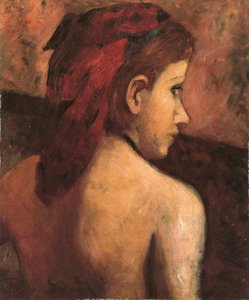
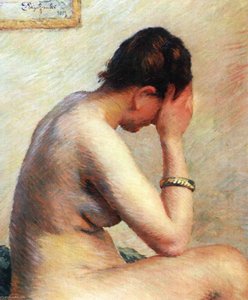
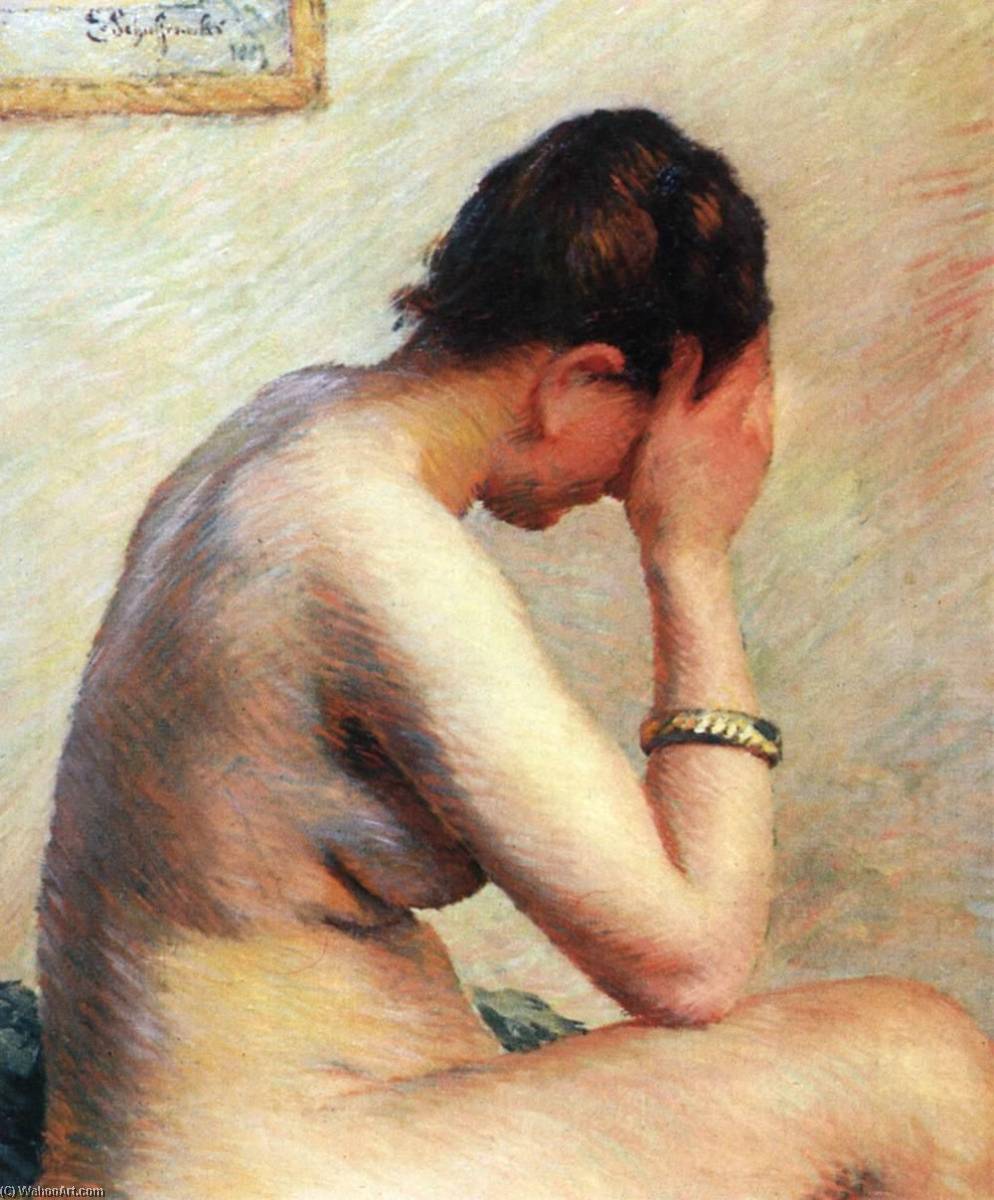
Female Nude Seated on a Bed
 1885
1885 65.0 x 45.0 cm
 Read More
Hand Made Oil Reproduction
Hand-painted oil on canvas in your size and frame, made to order by our artists. ( Buy Print Buy Image)




































Pick from our preset sizes that match the artwork's original proportions.

You may enter your own dimensions to fit a specific frame or space. If your selected size does not match the original image's proportions, we will either crop the artwork or extend the painting with additional hand-painted elements. A digital mockup will be sent for your approval before production begins.
Please note that the on-screen preview does not reflect the actual cropping or extension. Only the mockup will accurately show the final composition.
While custom sizes are available, we recommend selecting a dimension from the predefined list to preserve the original proportions.
After order, ArtsDot.com team will email client for instructions and provide a mockup preview
Worldwide Delivery () in 3/4 weeks instead of standard 5 weeks. (23 August). No compromise on quality.

Free Worldwide Express Shipping

High-Quality Linen Canvas

Full Shipping Insurance

Customs Tax Refund Guarantee

True Color Matching Guarantee

60-Day Return Policy (Defects Only)

100% Money-Back Guarantee

Bulk Discount Offer
 Glass option is only available in size under 110 CM

Female Nude Seated on a Bed
Reproduction Medium
Reproduction Size
-


Total Price
$ 263
Related Artworks


Artist Biography
The Quiet Pioneer: The Life and Legacy of Claude Émile Schuffenecker
In the vibrant, often tumultuous tapestry of the late nineteenth-century Parisian art scene, certain names shine with an almost blinding brilliance, while others linger in the soft, atmospheric shadows. Claude Émile Schuffenecker (1851–1934) belongs to that evocative second group—a figure whose brushstrokes helped define the edges of Post-Impressionism even as he remained somewhat obscured by the monumental shadows of his contemporaries. Born in Haute-Saône, France, Schuffenecker’s journey was one of profound resilience and artistic devotion. Following the early loss of his father, a tailor from Alsace, his path was shaped by economic necessity and a disciplined upbringing. Before fully committing to the easel, he worked within the practical world of commerce, assisting in his uncle’s coffee and chocolate roasting business. This grounded, industrious spirit would later manifest in his meticulous approach to color and composition, providing a stable foundation for his experimental explorations in light and form.
Schuffenecker’s artistic soul was forged in the crucible of Parisian bohemianism, where he found kindred spirits in the likes of Paul Gauguin and Odilon Redon. His education at the Académie Colarossi allowed him to refine his technical prowess, but it was his deep, intellectual connection with Gauguin that truly catalyzed his creative evolution. The two men shared more than just a studio space; they shared a reverence for the Old Masters and a mutual desire to push beyond the fleeting impressions of Monet toward something more structural and symbolic. This period of intense camaraderie saw Schuffenecker participating in pivotal moments of art history, most notably the Volpini Exhibition, an event that helped signal the emergence of new, bold perspectives in the French avant-garde.
A Vision Beyond the Shadow of Scandal
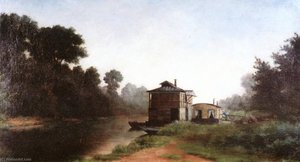
Despite his technical skill and significant role in the Parisian art circles, Schuffenecker’s legacy has often been viewed through a lens of controversy. He remains a curiously elusive figure, a Post-Impressionist painter whose talent was frequently overshadowed by accusations of forgery and imitation, particularly regarding his studies of Vincent van Gogh. Yet, to view him solely as an imitator is to miss the profound vision of an artist who sought to capture the very essence of light and atmosphere. His works, such as The Laundry Boat at Bas Meudon, demonstrate a masterful command of the Impressionist style, utilizing light and color to create a serene and idyllic atmosphere that invites the viewer into a peaceful moment by the water.
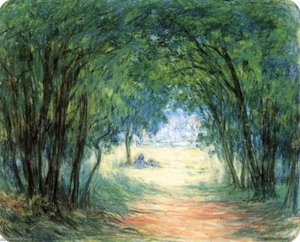
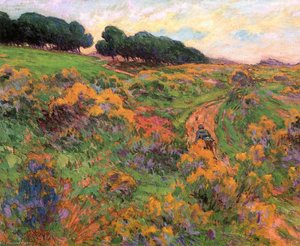
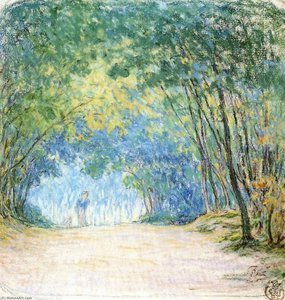
His repertoire was diverse, ranging from the dreamy and pastoral to the deeply atmospheric. In works like In the Woods, he utilized pastel landscapes and Impressionistic brushwork to evoke a sense of serenity, while Le retour des foins showcased his ability to capture the rugged beauty of rural France through loose brushstrokes and evocative light. His paintings often functioned as windows into a world that was both tangible and ethereal:
- Landscape Mastery: A profound ability to translate the hazy, atmospheric qualities of nature into structured compositions.
- Coloristic Experimentation: A transition from the fleeting observations of Impressionism toward the more symbolic and heavy use of color found in Post-Impressionism.
- Narrative Stillness: The capacity to imbue everyday scenes—be it a laundry boat or a forest path—with a sense of timeless, quiet dignity.
Historical Significance and Enduring Spirit
The historical significance of Claude Émile Schuffenecker lies not only in his individual canvases but in his role as a bridge between movements. As a patron and a peer to some of the most transformative figures of his era, he helped sustain the momentum of the Post-Impressionist movement during its most experimental phase. While the weight of scandal and the sheer magnitude of names like Gauguin and Van Gogh have often relegated him to the footnotes of art history, his work remains a vital testament to the era's creative ferment.
Today, as we re-examine the works of this forgotten pioneer, we find an artist who possessed a remarkable ability to navigate the tension between tradition and innovation. His life, marked by both the industriousness of his early commercial years and the bohemian passion of his Parisian years, reflects the very struggle of the late nineteenth-century artist: the attempt to find a unique voice in a world rapidly changing through light, color, and perspective. Schuffenecker’s legacy is a reminder that even within the shadows of giants, there exists a profound beauty worth illuminating.
claude emil schuffenecker
1851 - 1934
Quick Facts
- Artistic Movement Or Style: Post-Impressionism
- Artists Or Movements Influenced By This Artist: ['Vincent van Gogh']
- Artists Who Influenced This Artist: ['Paul Gauguin']
- Date Of Birth: December 8, 1851
- Date Of Death: July 31, 1934
- Full Name: Claude Emil Schuffenecker
- Nationality: French
- Notable Artworks:
- The Luxembourg Parc
- Paysage Landscape
- Place Of Birth: Fresne Saint-Mamès (Haute-Saône)