 Preview
 Send
Send Share
Share
 Details

 Download
 Similars
 X-Ray
X-Ray Diaporama
St. George and the Dragon (4)
 Oil
Oil- WallArt
- Romanticism
 1885
1885- 19th Century
 65.0 x 47.0 cm
 Cleveland Museum of Art
 Read More
Hand Made Oil Reproduction
Hand-painted oil on canvas in your size and frame, made to order by our artists. ( Buy Print Buy Image)




P118B $10

P118H $10

P118W $10

P438Z $10

P508JH $12

P508YH $12

P805H $10

P805Z $10

P919BZ $10

P919G $10

P919XJ $10

P959ZH $10

P968JZ $12

W106C $8

W218G $10

W218JH $8

W218Y $10

W307PJ $10

W316G $10

W316PJ $8

W316Y $10

W398PJ $8

W4111J $10

W500HY $15

W500JH $15

W692G $12

W849H $8

W940BG $15

W953PJ $8




Pick from our preset sizes that match the artwork's original proportions.

You may enter your own dimensions to fit a specific frame or space. If your selected size does not match the original image's proportions, we will either crop the artwork or extend the painting with additional hand-painted elements. A digital mockup will be sent for your approval before production begins.
Please note that the on-screen preview does not reflect the actual cropping or extension. Only the mockup will accurately show the final composition.
While custom sizes are available, we recommend selecting a dimension from the predefined list to preserve the original proportions.
After order, ArtsDot.com team will email client for instructions and provide a mockup preview
Worldwide Delivery () in 3/4 weeks instead of standard 5 weeks. (17 August). No compromise on quality.

Free Worldwide Express Shipping

High-Quality Linen Canvas

Full Shipping Insurance

Customs Tax Refund Guarantee

True Color Matching Guarantee

60-Day Return Policy (Defects Only)

100% Money-Back Guarantee

Bulk Discount Offer
 Glass option is only available in size under 110 CM

St. George and the Dragon (4)
Reproduction Medium
Reproduction Size
-


Total Price
$ 263
Artwork Description
A Heroic Encounter in Oil
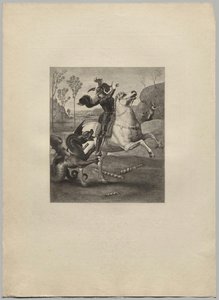
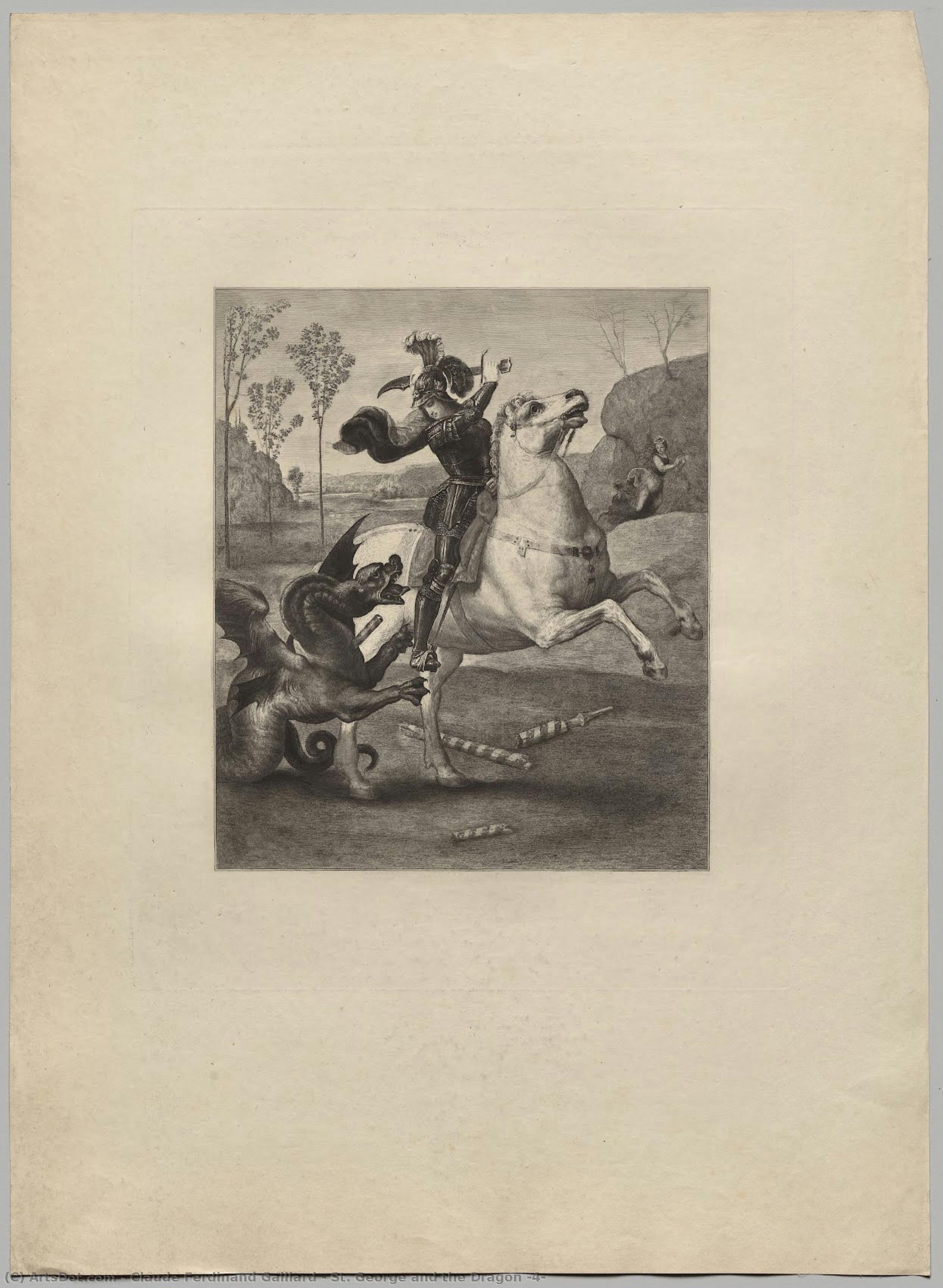
In the dramatic masterpiece St. George and the Dragon (4), Claude Ferdinand Gaillard invites the viewer into a moment of profound tension and legendary valor. Painted in 1885, this evocative work captures the climactic struggle between the virtuous knight and the primordial beast. The composition is anchored by the powerful movement of a horseman charging through a landscape thick with drama, his sword drawn and ready to strike. As the knight descends upon the dragon, which lurks near the bottom left corner of the frame, the scene pulsates with the kinetic energy of a battle that is as much about spiritual triumph as it is about physical combat. The presence of onlookers—figures positioned around the periphery of the central conflict—adds a layer of communal witness to the event, suggesting that this struggle is a pivotal moment for the entire community, not just a solitary feat of arms.
Gaillard, a master of his era, utilizes a technique that breathes life into the very atmosphere of the painting. The brushwork, while maintaining the precision required for such a narrative subject, possesses a certain fluidity that captures the dust and movement of the battlefield. Through a sophisticated use of light and shadow, the artist directs our gaze toward the central figure on horseback, creating a focal point that feels both monumental and immediate. The interplay of tones creates a sense of depth, pulling the viewer into the thicket of the scene where the dragon’s menacing form emerges from the shadows. For collectors and interior designers alike, this piece offers a commanding presence, capable of serving as a sophisticated centerpiece in any room that seeks to evoke themes of strength, courage, and classical storytelling.
Symbolism and the Romantic Spirit
Beyond its surface-level action, St. George and the Dragon serves as a profound allegory for the eternal struggle between good and evil. The knight, representing chivalry, faith, and the triumph of the human spirit, stands in stark opposition to the dragon, a symbol of chaos and untamed nature. This duality is a hallmark of the Romantic influence that permeated French art during the late 19th century. Gaillard’s ability to weave these heavy symbolic themes into a visually captivating narrative allows the painting to resonate on an emotional level that transcends time. The piece does not merely depict a myth; it captures the visceral feeling of facing one's greatest fears and emerging victorious.
For those looking to adorn a space with art that inspires contemplation, this reproduction offers more than just aesthetic beauty. It provides a window into a period of history where art was used to celebrate heroism and moral fortitude. Whether placed in a grand library, a formal dining room, or a curated gallery wall, the painting acts as a conversation starter, inviting guests to reflect on the timeless nature of legend and the enduring power of the heroic archetype. It is an investment in a piece of history that brings a sense of epic scale and narrative depth to any modern interior design scheme.
Related Artworks
Artist Biography
James McNeill Whistler: A Symphony of Light and Shadow
Born in Lowell, Massachusetts, in 1834, James Abbott McNeill Whistler’s artistic journey was a remarkable transatlantic odyssey, shaped by diverse influences and culminating in a uniquely evocative style. His early life, marked by a brief sojourn in Russia with his father, a civil engineer working on the construction of the railway to Moscow, instilled in him a deep appreciation for European culture and artistic traditions. Returning to America, Whistler’s initial attempts at military service at West Point proved unsuccessful, leading him to pursue his true passion: art. This decision propelled him towards Paris, the epicenter of artistic innovation during the mid-19th century, where he embarked on a period of intense study and experimentation.
Whistler's formative years in France were pivotal. He immersed himself in the vibrant Parisian art scene, studying under established masters like Gustave Courbet and Henri Fantin-Latour at the “petite école,” while simultaneously absorbing the revolutionary ideas circulating amongst avant-garde artists. Crucially, he developed a profound admiration for the works of Dutch Baroque painters such as Rembrandt and Vermeer, whose masterful use of light and shadow profoundly impacted his own approach to painting. Furthermore, Whistler’s encounters with Édouard Manet, a figure who championed artistic independence and challenged academic conventions, solidified his commitment to pursuing “art for art's sake”—a philosophy that prioritized aesthetic experience over moral or narrative content.
The Development of a Distinctive Style
Returning to America in 1859, Whistler initially worked as a draftsman for the United States Coast and Geodetic Survey. However, it was his return to Europe, specifically London, that truly cemented his artistic identity. He quickly established himself within the British art world, becoming associated with the Aesthetic movement—a cultural phenomenon characterized by its emphasis on beauty, sensuality, and rejection of Victorian moralism. Whistler’s style evolved dramatically during this period, moving away from the direct influence of French Realism and Impressionism towards a more subjective and atmospheric approach. He began to experiment with tonal harmony, meticulously layering colors to create subtle gradations of light and shadow—a technique he termed “tonalism.”
His most celebrated works, such as *Arrangement in Grey and Black No. 1* (1871), often referred to as *Whistler’s Mother*, exemplify this distinctive style. This iconic portrait is not merely a likeness of his mother but rather an exploration of form, color, and light—a carefully constructed composition designed to evoke a specific mood or feeling. Similarly, paintings like *Nocturne in Black and Gold, the Falling Rocket* (1872) demonstrate Whistler’s fascination with capturing the ephemeral qualities of twilight, translating atmospheric effects into evocative visual experiences. He frequently titled his works with musical terms—"Symphonies," "Harmonies," “Nocturnes,” and “Arrangements”—reflecting his belief that painting should be considered a form of artistic expression akin to music.
Major Works and Artistic Contributions
Whistler’s oeuvre encompasses a diverse range of subjects, including portraits, landscapes, interiors, and decorative panels. Beyond *Whistler's Mother* and *Nocturne in Black and Gold*, other notable works include *The Peacock Room* (1876-77), a lavishly decorated room designed for George Vanderbilt, which showcased Whistler’s innovative use of color and texture; *Symphony in White, No. 1: The White Girl* (1871-72), a haunting portrait of a young woman draped in white fabric; and numerous etchings and lithographs that further explored his aesthetic principles.
Whistler’s influence extended far beyond the realm of painting. He was a prolific writer and critic, articulating his theories on art and advocating for a radical shift away from traditional academic standards. He actively engaged in public debates about the nature of beauty and artistic expression, challenging established notions of taste and promoting a more subjective approach to aesthetic judgment. In 1884, he was elected an honorary member of the Royal Academy of Fine Arts in Munich, and in 1892, he became an officer of the Légion d’honneur, France's highest order of merit. Furthermore, Whistler served as the first president of the International Society of Sculptors, Painters and Gravers, demonstrating his commitment to fostering international artistic collaboration.
Legacy and Historical Significance
James McNeill Whistler died in London in 1903, leaving behind a legacy that continues to resonate within the art world. His pioneering approach to painting—his emphasis on tonal harmony, his rejection of narrative content, and his advocacy for “art for art’s sake”—challenged conventional artistic norms and paved the way for subsequent movements such as Symbolism and Art Nouveau. Whistler's work remains a testament to the power of visual experience and a reminder that beauty can be found in the simplest of forms—a sentiment that continues to inspire artists and viewers alike.
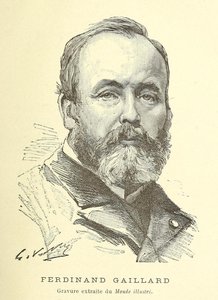
claude ferdinand gaillard
1834 - 1887 , France
Quick Facts
- Artistic Movement Or Style: Aestheticism, Tonalism
- Artists Or Movements Influenced By This Artist:
- Aesthetic Movement
- Impressionism
- Artists Who Influenced This Artist:
- Rembrandt
- Vermeer
- Velázquez
- Date Of Birth: July 10, 1834
- Date Of Death: July 17, 1903
- Full Name: James Abbott McNeill Whistler
- Nationality: American-British
- Notable Artworks:
- Arrangement in Grey and Black No. 1
- Whistler’s Mother
- Nocturne in Black and Gold
- Place Of Birth: Lowell, Massachusetts, USA
Related Articles

Georges Braque's Masterpieces: 25 Paintings That Defined Cubism & Modern Art | ArtsDot
Explore 25 iconic Georges Braque paintings that revolutionized Cubism & modern art. Discover the stories behind his masterpieces, from Fauvism to Analytical Cubism. Find museum-quality reproductions & elevate your home decor with ArtsDot.com.

Georges Seurat's Masterpieces: 25 Paintings That Defined Pointillism | ArtsDot
Explore 25 iconic Georges Seurat paintings & discover the brilliance of Pointillism. From 'La Grande Jatte' to his harbor scenes, delve into art history with ArtsDot.com. Find museum-quality reproductions for your home decor. Explore the full collection online!

El Greco's Masterpieces: Explore 25 Iconic Paintings & Spiritual Visions | ArtsDot
Journey through El Greco's 25 most iconic paintings! Explore the spiritual depth & dramatic beauty of this Spanish Renaissance master. Discover art history, techniques & find museum-quality reproductions for your home at ArtsDot.com.
Daniel Ridgway Knight: A Study in Victorian Genre Painting & Rural Idealism
Explore the captivating world of Daniel Ridgway Knight, a master of Victorian genre painting. Discover his serene rural scenes, realistic technique & lasting influence on American Impressionism. Learn about his life, art, and collectibility.
National Gallery London's Masterpieces: 25 Iconic Paintings for Your Home Decor
Journey through the National Gallery London's 25 most iconic paintings! Explore Van Gogh, Monet, Rembrandt & more. Discover art history, techniques & find museum-quality reproductions for your home decor on ArtsDot.com.