 Preview
 Send
Send Share
Share
 Details

 Download
 Similars
 X-Ray
X-Ray Diaporama
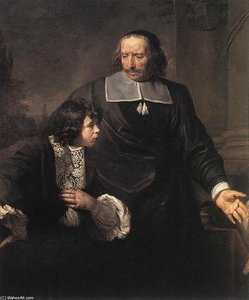
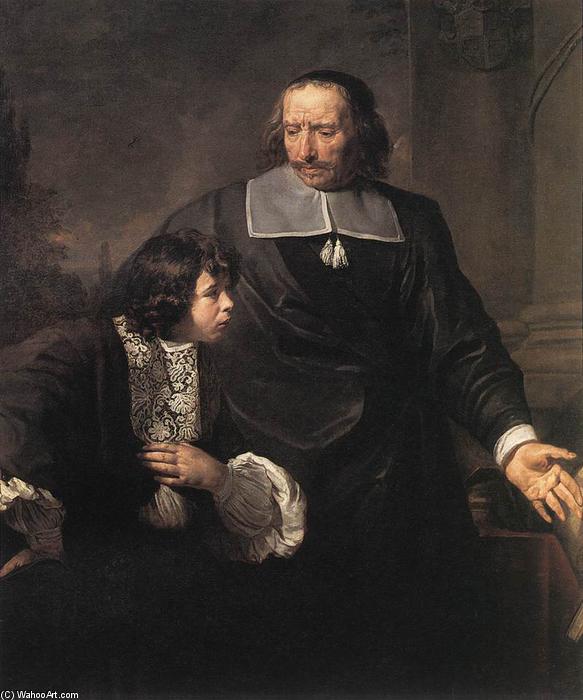
A Teacher and his Pupil
 Oil On Canvas
- WallArt
- Baroque
 1670
1670 135.0 x 111.0 cm
 The Louvre
 Read More
Hand Made Oil Reproduction
Hand-painted oil on canvas in your size and frame, made to order by our artists. ( Buy Print Buy Image)




P118B $10

P118H $10

P118W $10

P438Z $10

P508JH $12

P508YH $12

P805H $10

P805Z $10

P919BZ $10

P919G $10

P919XJ $10

P959ZH $10

P968JZ $12

W106C $8

W218G $10

W218JH $8

W218Y $10

W307PJ $10

W316G $10

W316PJ $8

W316Y $10

W398PJ $8

W4111J $10

W500HY $15

W500JH $15

W692G $12

W849H $8

W940BG $15

W953PJ $8




Pick from our preset sizes that match the artwork's original proportions.

You may enter your own dimensions to fit a specific frame or space. If your selected size does not match the original image's proportions, we will either crop the artwork or extend the painting with additional hand-painted elements. A digital mockup will be sent for your approval before production begins.
Please note that the on-screen preview does not reflect the actual cropping or extension. Only the mockup will accurately show the final composition.
While custom sizes are available, we recommend selecting a dimension from the predefined list to preserve the original proportions.
After order, ArtsDot.com team will email client for instructions and provide a mockup preview
Worldwide Delivery () in 3/4 weeks instead of standard 5 weeks. (17 August). No compromise on quality.

Free Worldwide Express Shipping

High-Quality Linen Canvas

Full Shipping Insurance

Customs Tax Refund Guarantee

True Color Matching Guarantee

60-Day Return Policy (Defects Only)

100% Money-Back Guarantee

Bulk Discount Offer
 Glass option is only available in size under 110 CM

A Teacher and his Pupil
Reproduction Medium
Reproduction Size
-


Total Price
$ 288
Artwork Description
A Window Into Baroque Mastery: Claude Lefebvre’s “A Teacher and His Pupil”
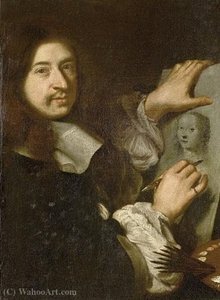
Claude Lefebvre's "A Teacher and His Pupil," completed in 1670, stands as a testament to the grandeur and contemplative beauty of Baroque art. More than just a portrait, it embodies the era’s fascination with dramatic lighting and psychological depth—a captivating glimpse into a moment of intellectual exchange frozen in time. Painted during Lefebvre's prolific period, this artwork exemplifies his signature style: meticulous realism blended seamlessly with expressive chiaroscuro, creating an immersive experience for the viewer.Composition and Technique – The Dance of Light
The painting’s triangular composition immediately draws the eye upwards towards the central figures—a distinguished gentleman imparting wisdom to a younger boy—establishing a harmonious balance between form and gesture. Lefebvre skillfully employs atmospheric perspective, subtly blurring the background to heighten the sense of depth and emphasize the illuminated faces of the subjects. The artist's masterful brushwork is evident throughout, particularly in capturing the textures of fabric – the folds of the teacher’s robe and the boy’s waistcoat—demonstrating a dedication to detail that was characteristic of Baroque painters striving for unparalleled accuracy. Lefebvre utilized oil paints on canvas, allowing for rich color saturation and layering effects crucial to achieving the painting's luminous quality.Historical Context: Patronage and Philosophical Reflection
“A Teacher and His Pupil” reflects the intellectual climate of seventeenth-century Europe, where humanist ideals championed reason and observation alongside religious fervor. Lefebvre’s work was commissioned by a wealthy aristocratic family, highlighting the importance of patronage in fostering artistic innovation during this period. Beyond its aesthetic merits, the painting speaks to broader themes of education, mentorship, and the transmission of knowledge—values deeply ingrained in Baroque culture. The scene captures not merely an instructional moment but also conveys a profound sense of connection between generations, symbolizing the enduring pursuit of wisdom and understanding.Symbolism: Shadows of Knowledge
The darkened background serves as more than just visual depth; it represents the unknown territories of learning and contemplation—a deliberate choice by Lefebvre to underscore the importance of intellectual exploration. The teacher’s posture exudes authority and guidance, while the boy’s gaze embodies eagerness and receptiveness – archetypal figures embodying the virtues of scholarship and humility. These symbolic elements elevate the painting beyond a simple depiction of individuals; they invite viewers to ponder the significance of human interaction and the pursuit of enlightenment.Emotional Resonance: Tranquility Illuminated
Ultimately, “A Teacher and His Pupil” evokes a feeling of serene contemplation—a rare achievement in Baroque art where dramatic emotion was often prioritized. Lefebvre’s careful attention to detail—the subtle nuances of facial expressions and the delicate rendering of fabric textures—creates an atmosphere of intimacy and warmth. The painting's luminous quality, achieved through masterful chiaroscuro lighting, imbues the scene with a palpable sense of peace and invites viewers to linger on its captivating beauty. It remains a timeless masterpiece, demonstrating Lefebvre’s unparalleled ability to capture not only visual reality but also the essence of human experience.Related Artworks

Artist Biography
Johannes Vermeer: A Life Illuminated by Light
Johannes Vermeer, a name synonymous with quiet intimacy and luminous beauty, remains one of the most enigmatic and revered figures in the history of art. Born in Delft, Netherlands, on October 31st, 1632, into a family deeply rooted in the silk trade, his life was remarkably short – he died on December 15th, 1675 – yet his artistic legacy continues to captivate audiences centuries later. While only thirty-six paintings are definitively attributed to him, each one possesses an extraordinary power, transporting viewers to fleeting moments of domestic tranquility and revealing a profound understanding of light, color, and human emotion.
Vermeer’s early life was shaped by the bustling commercial activity of Delft, a city renowned for its intricate textiles. His father, Reynier Jansz Vermeer, operated an inn and art dealership, providing young Johannes with exposure to both the practicalities of business and the world of artistic creation. This environment likely fostered his keen observational skills and appreciation for visual detail – qualities that would later become hallmarks of his distinctive style. He received a basic education, but it’s believed he was largely self-taught, absorbing techniques from various contemporary artists and diligently studying the works of masters like Anthony van Dyck and Hendrick ter Brugghen.
The Painter's Palette: Style and Technique
Vermeer’s artistic style is instantly recognizable for its remarkable subtlety and atmospheric depth. He eschewed grand, dramatic compositions in favor of intimate scenes depicting everyday life – women at their spinning wheels, children playing, merchants engaged in trade, and domestic interiors bathed in soft light. His paintings are not merely representations of reality; they are carefully constructed illusions, imbued with a sense of stillness and serenity. A key element of his technique lies in his masterful manipulation of light. Vermeer was obsessed with capturing the way light interacts with surfaces – reflecting off polished wood, shimmering on water, and casting subtle shadows across faces. He achieved this through an innovative use of *stiacciato*, a technique involving layering thin glazes of paint to create variations in tone and texture, giving his works a remarkable sense of volume and depth.
He employed a unique approach to color, often using muted tones and subtle gradations to create a harmonious and understated effect. Vermeer’s meticulous attention to detail is evident in every brushstroke, from the delicate folds of fabric to the intricate patterns of Delftware pottery. His use of ultramarine blue, painstakingly ground from lapis lazuli – one of the most expensive pigments available at the time – is particularly striking, adding a vibrant intensity to his compositions.
A Life of Quiet Industry and Limited Recognition
Despite his artistic talent, Vermeer’s life was marked by relative obscurity during his lifetime. He was not a wealthy man, earning a modest living primarily as an art dealer and selling his paintings to a small circle of patrons in Delft and The Hague. He married Catharina Bolnes in 1653, and they had eleven children, adding to the challenges of their existence. Vermeer’s working methods were slow and deliberate; he often spent months, even years, perfecting a single painting. This painstaking process contributed to the small number of works he produced.
Remarkably, Vermeer was largely forgotten after his death. His name barely appeared in Arnold Houbraken's *Grand Theatre of Dutch Painters*, a comprehensive survey of 17th-century artists, and as a result, his work remained obscure for nearly two centuries. It wasn’t until the late 19th century that Vermeer was rediscovered by art critics Gustav Friedrich Waagen and Théophile Thoré-Bürger, who championed his genius and brought attention to his remarkable talent.
Rediscovery and Enduring Legacy
The rediscovery of Vermeer coincided with a broader reassessment of Dutch Golden Age painting. Scholars began to recognize the unique qualities of his work – its luminous beauty, psychological depth, and innovative use of light – and his paintings quickly gained popularity in museums around the world. Today, Vermeer’s works are among the most prized possessions of major art institutions, including the Mauritshuis in The Hague, the Louvre in Paris, and the National Gallery in London.
Vermeer's influence on subsequent generations of artists is undeniable. His exploration of light, color, and domestic interiors paved the way for Impressionist painters like Claude Monet and Pierre-Auguste Renoir. His paintings continue to resonate with viewers today, offering a glimpse into a bygone era and reminding us of the enduring power of art to capture the beauty and complexity of human experience. The enigmatic smile in *Girl with a Pearl Earring*, perhaps his most famous work, remains an invitation to contemplate the mysteries of the human heart.
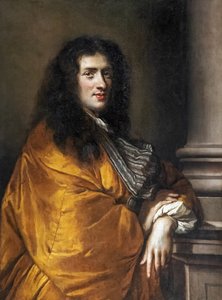
claude lefebvre
1632 - 1675 , France
Quick Facts
- Artistic Movement Or Style: Genre painting, Dutch Golden Age
- Artists Or Movements Influenced By This Artist:
- Gustav Friedrich Waagen
- Théophile Thoré-Bürger
- Artists Who Influenced This Artist:
- Frans Hals
- Rembrandt
- Date Of Birth: October 1632
- Date Of Death: December 1675
- Full Name: Johannes Vermeer
- Nationality: Dutch
- Notable Artworks:
- Girl with a Pearl Earring
- The Milkmaid
- View of Delft
- Woman Holding a Balance
- Place Of Birth: Delft, Netherlands
Related Articles

Monet's Masterpieces: 25 Iconic Artworks to Transform Your Home
Journey through 25 iconic Claude Monet masterpieces! Explore Impressionism’s beauty, from Water Lilies to Rouen Cathedral. Discover stunning art reproductions & curated decor ideas – explore the full collection online at ArtsDot.com.

Baroque Masterpieces: 10 Paintings That Defined an Era |
Journey through the drama & grandeur of Baroque art! Explore 10 masterpieces by Caravaggio, Rembrandt, Rubens & more. Discover stunning oil paintings, rich colors & timeless stories. Find museum-quality reproductions at .
Decoding Baroque Grandeur: A Guide to the Drama and Emotion of 17th-Century Art
Explore the breathtaking drama of 17th-century Baroque art. Our expert guide decodes the use of chiaroscuro, emotional intensity, and historical grandeur to help you appreciate and curate timeless masterpieces for your collection.

The Visceral Stage: Exploring Dramatic Narratives & Emotional Intensity in Baroque Art
Explore the dramatic world of Baroque art! Discover iconic masters like Caravaggio & Rembrandt, their techniques, and the movement's lasting impact. Expert insights for collectors & enthusiasts at ArtsDot.

The Dramatic Flourish: Exploring the Baroque Movement's Enduring Legacy in Art History
Explore the dramatic world of Baroque art! Discover iconic artists like Caravaggio & Rubens, defining techniques, and its lasting impact on art history. Expert insights for collectors & enthusiasts at ArtsDot.