 Preview
 Send
Send Share
Share
 Details

 Download
 Similars
 X-Ray
X-Ray Diaporama
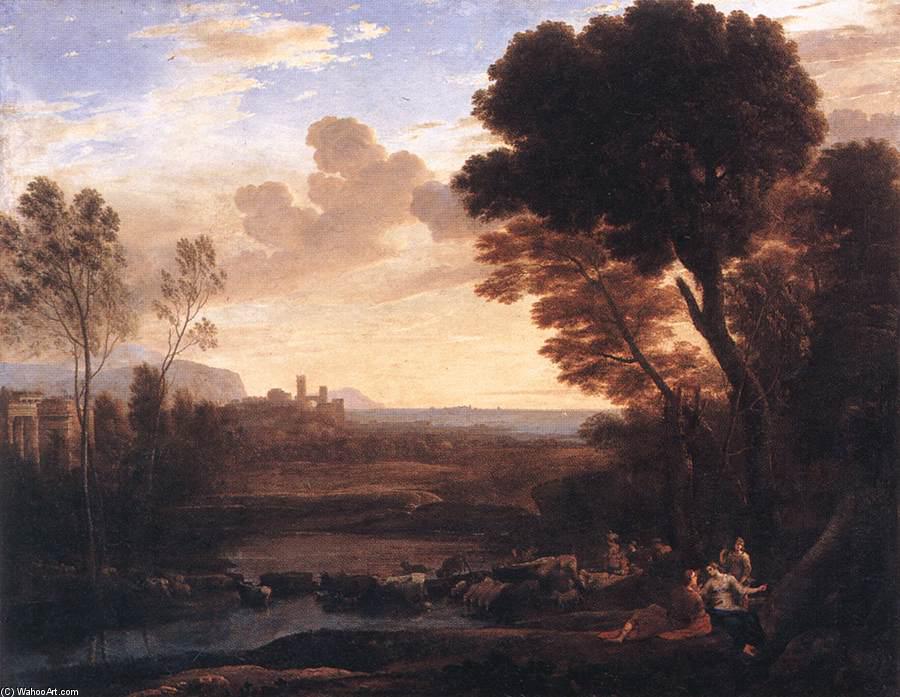
Landscape with Paris and Oenone
 Acrylic On Canvas
- WallArt
- Baroque Landscape
 1648
1648 119.0 x 150.0 cm
 The Louvre
 Read More
Hand Made Oil Reproduction
Hand-painted oil on canvas in your size and frame, made to order by our artists. ( Buy Print Buy Image)




P118B $10

P118H $10

P118W $10

P438Z $10

P508JH $12

P508YH $12

P805H $10

P805Z $10

P919BZ $10

P919G $10

P919XJ $10

P959ZH $10

P968JZ $12

W106C $8

W218G $10

W218JH $8

W218Y $10

W307PJ $10

W316G $10

W316PJ $8

W316Y $10

W398PJ $8

W4111J $10

W500HY $15

W500JH $15

W692G $12

W849H $8

W940BG $15

W953PJ $8




Pick from our preset sizes that match the artwork's original proportions.

You may enter your own dimensions to fit a specific frame or space. If your selected size does not match the original image's proportions, we will either crop the artwork or extend the painting with additional hand-painted elements. A digital mockup will be sent for your approval before production begins.
Please note that the on-screen preview does not reflect the actual cropping or extension. Only the mockup will accurately show the final composition.
While custom sizes are available, we recommend selecting a dimension from the predefined list to preserve the original proportions.
After order, ArtsDot.com team will email client for instructions and provide a mockup preview
Worldwide Delivery () in 3/4 weeks instead of standard 5 weeks. (25 August). No compromise on quality.

Free Worldwide Express Shipping

High-Quality Linen Canvas

Full Shipping Insurance

Customs Tax Refund Guarantee

True Color Matching Guarantee

60-Day Return Policy (Defects Only)

100% Money-Back Guarantee

Bulk Discount Offer
 Glass option is only available in size under 110 CM

Landscape with Paris and Oenone
Reproduction Medium
Reproduction Size
-


Total Price
$ 263
Artwork Description
A Symphony of Light: Unveiling Claude Lorrain's Masterpiece
Claude Lorrain’s “Landscape with Paris and Oenone,” painted in 1648, isn’t merely a depiction of a pastoral scene; it’s an immersive experience. Born into the Duchy of Lorraine – a region steeped in artistic tradition yet largely outside the dominant currents of Italian painting at the time – Lorrain forged his own distinct style, one characterized by an almost ethereal quality and a profound understanding of light and atmosphere. This particular work, now residing within the hallowed halls of the Louvre Museum in Paris, exemplifies these qualities with breathtaking precision. It’s a testament to the artist's meticulous observation of nature combined with a sophisticated grasp of classical composition and color theory – a rare confluence that secured Lorrain’s place as one of the most influential landscape painters of his era.
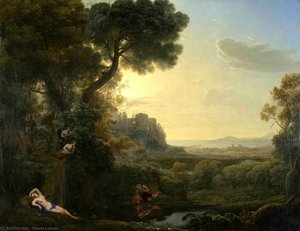
The scene unfolds within a classically conceived Roman countryside, reminiscent of idealized Arcadia. A gentle river meanders through a verdant valley, flanked by rolling hills dotted with ancient ruins—fragments of temples and villas that whisper tales of a glorious past. A small village nestles in the distance, its terracotta roofs glowing warmly under the diffused light. The figures – Paris, the legendary prince turned shepherd, and Oenone, his nymph lover – are rendered with an understated elegance, their forms integrated seamlessly into the landscape rather than dominating it. They represent a fleeting moment of idyllic romance amidst the timeless beauty of nature, a theme deeply rooted in classical mythology.
The Language of Light: Lorrain’s Revolutionary Technique
What truly distinguishes “Landscape with Paris and Oenone” is Lorrain's masterful manipulation of light. He wasn’t simply painting what he saw; he was capturing the *feeling* of light—its warmth, its diffusion, its ability to transform a scene into something almost dreamlike. Lorrain employed a technique known as “chiaroscuro,” carefully modulating the contrast between light and shadow to create depth and volume. Notice how the sunlight filters through the trees, casting dappled patterns on the ground and illuminating the figures with an almost divine glow. This wasn’t merely a stylistic choice; it was a deliberate attempt to evoke a sense of serenity and spiritual contemplation – a hallmark of Baroque art.
Lorrain's brushwork is remarkably smooth and refined, contributing significantly to the painting’s luminous quality. He utilized thin layers of paint, allowing the colors to blend seamlessly together and creating an illusion of atmospheric perspective. The use of subtle gradations in color—from the deep greens of the foliage to the hazy blues of the distant hills—further enhances the sense of depth and realism. His meticulous attention to detail is evident in every element of the composition, from the individual blades of grass to the weathered stones of the ruins.
Symbolism and a Moment Frozen in Time
Beyond its aesthetic beauty, “Landscape with Paris and Oenone” is rich in symbolic meaning. The figures themselves represent themes of love, loss, and the fleeting nature of earthly pleasures. Paris’s transformation from a proud prince to a humble shepherd symbolizes his repentance for abandoning his royal duties. The idyllic setting evokes the Golden Age of Arcadia—a mythical realm of pastoral harmony and innocence—offering a poignant contrast to the realities of human life. The ruins scattered throughout the landscape serve as reminders of the transience of power and beauty, while simultaneously celebrating the enduring spirit of nature.
Lorrain’s deliberate choice of subject matter – a mythological scene set in a classical landscape – reflects his ambition to elevate landscape painting beyond mere representation. He sought to create works that would not only capture the beauty of nature but also convey profound philosophical and spiritual truths. “Landscape with Paris and Oenone” stands as a testament to this vision, offering viewers a glimpse into a world where art and nature converge in perfect harmony.
Related Artworks

Artist Biography
Claude Lorrain (Claude Gellée): A Life in Light and Landscape
Early Life and Training
Born around 1600 in Chamagne, a small village in the Duchy of Lorraine (modern-day France), Claude Lorrain – originally Claude Gellée – remains one of the most celebrated landscape painters of the Baroque period. His early life is shrouded in some mystery, with conflicting accounts of his apprenticeship. One account, by Joachim von Sandrart, suggests a humble beginning as an apprentice to a pastry baker before finding employment with artists in Rome. Another, from Filippo Baldinucci, details earlier training in Naples with Goffredo Wals and later in Rome under Agostino Tassi.
Rise to Prominence
By the 1630s, Claude Lorrain had firmly established himself as the leading landscapist in Italy. His paintings quickly gained recognition for their atmospheric qualities and command high prices. He skillfully blended Italianate landscapes with classical and biblical themes, creating scenes that were both visually stunning and intellectually engaging.
Artistic Style and Key Characteristics
- Luminous Sunlight: A defining feature of Claude’s work is his masterful depiction of light. He was among the first artists to consistently portray sunlight streaming through landscapes, creating a sense of atmosphere and realism previously unseen.
- Classical Influences: His compositions often draw inspiration from classical antiquity, incorporating Roman ruins, mythological figures, and architectural elements.
- Idealized Landscapes: Claude didn’t aim for strict topographical accuracy; instead, he created idealized landscapes that evoked a sense of harmony and tranquility.
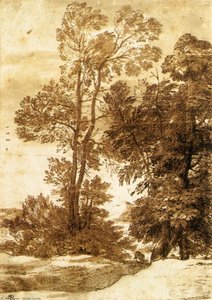
- Detailed Drawings: He was a prolific draughtsman, creating numerous sketches and studies in pen, watercolor wash, and chalk – many preserved in his Liber Veritatis.
Influences and Development
Claude’s early influences included the landscape traditions of Northern Europe, particularly those of the Flemish painters. He also studied the works of Italian Renaissance masters like Titian and Raphael. Over time, his style evolved from darker, more dramatic compositions to lighter, airier scenes characterized by a golden glow.
Notable Works
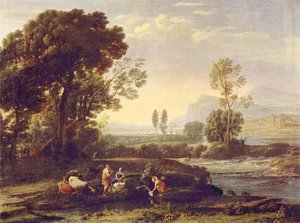
- Landscape with Peasants Returning with their Herds
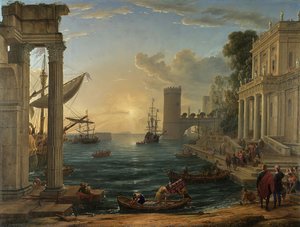
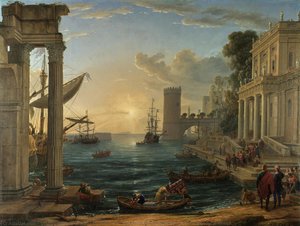
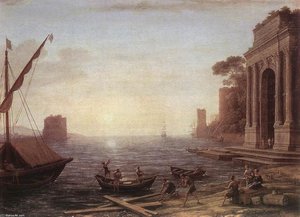
- Seaport with the Embarkation of the Queen of Sheba
- Sunrise
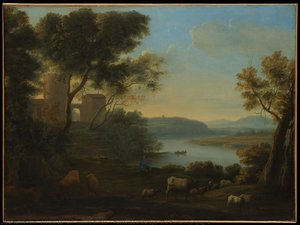
- Pastoral Landscape: The Roman Campagna
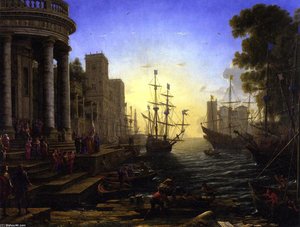
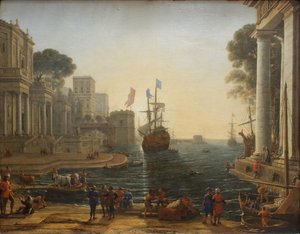
- The Disembarkation of Cleopatra at Tarsus
Historical Significance and Legacy
Claude Lorrain’s impact on landscape painting is immeasurable. He elevated the genre to a level of prestige previously reserved for historical and religious subjects. His works influenced generations of artists, including J.M.W. Turner and Impressionist painters who sought to capture the fleeting effects of light and atmosphere. Today, his paintings are highly valued and can be found in major museums worldwide, particularly the National Gallery (London) and the Art Gallery of South Australia.
Later Life and Death
Claude Lorrain passed away on November 23, 1682, in Rome. His tombstone in the church of San Luigi dei Francesi bears a simple inscription: “Claude / peintre de / rome / mort / le 23 novembre 1682”. He left behind a legacy as one of the most important and influential landscape painters in Western art history.
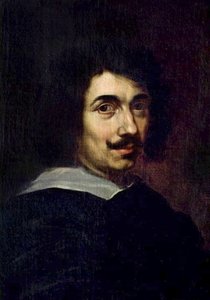
claude lorrain (claude gellée)
1600 - 1682
Quick Facts
- Birth_Date: c. 1600
- Birth_Place: Chamagne, Vosges, Duchy of Lorraine
- Death_Date: November 23, 1682
- Influenced_By:
- Goffredo Wals
- Agostino Tassi
- Movement: Baroque
- Name: Claude Lorrain (Claude Gellée)
- Nationality: French (Lorraine)
- Notable_Works:
- Landscape with Peasants returning with their herds
- Seaport with the Embarkation of the Queen of Sheba
Related Articles
Claude Lorrain: Master of Light & Landscape in the Golden Age
Explore the luminous landscapes of Claude Lorrain, a Baroque master renowned for his masterful use of light & atmosphere. Discover his life, techniques, key works & enduring influence on art history.
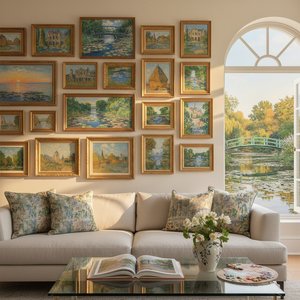
Monet's Masterpieces: 25 Iconic Artworks to Transform Your Home
Journey through 25 iconic Claude Monet masterpieces! Explore Impressionism’s beauty, from Water Lilies to Rouen Cathedral. Discover stunning art reproductions & curated decor ideas – explore the full collection online at ArtsDot.com.

Baroque Classicism: Reconciling Drama & Order in 17th-Century Art
Explore the captivating world of Baroque Classicism! Discover its history, key artists like Caravaggio & Rubens, and defining characteristics. Expert insights & high-quality reproductions at ArtsDot.

Romantic Landscapes: 10 Masterpieces for Your Home | ArtsDot
Journey through 10 Romantic landscape masterpieces by Friedrich, Turner & Cole. Explore emotional art, sublime nature scenes & iconic 19th-century paintings. Find museum-quality reproductions for your home at ArtsDot.com – discover the full collection online!

Evocations of Place: A Historical Journey Through Landscape Art
Explore the rich history of landscape art with ArtsDot. Discover renowned artists, movements like Impressionism & Romanticism, and expert guidance for collecting timeless pieces. Find your perfect serene escape today!