 Preview
 Send
Send Share
Share
 Details

 Download
 Similars
 X-Ray
X-Ray Diaporama
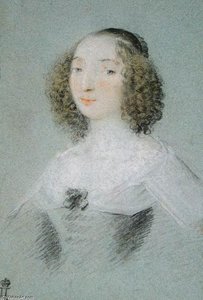
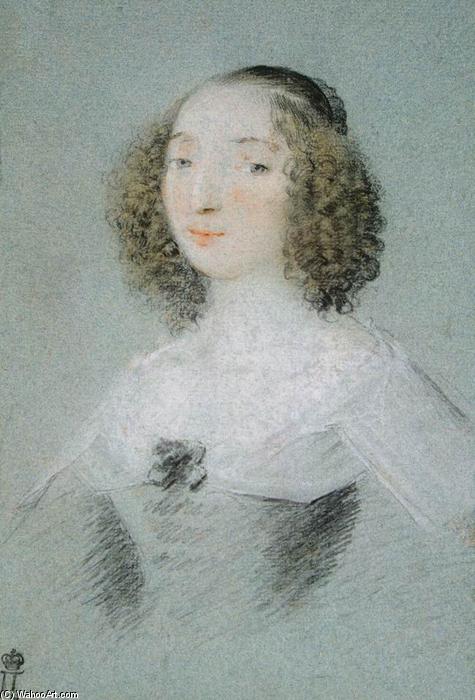
Portrait of Henriette-Marie de Buade-Frontenac
 Acrylic On Canvas
- WallArt
- Baroque Realism
 1641
1641 17.0 x 14.0 cm
 Hermitage Museum
 Read More
Hand Made Oil Reproduction
Hand-painted oil on canvas in your size and frame, made to order by our artists. ( Buy Print Buy Image)




P118B $10

P118H $10

P118W $10

P438Z $10

P508JH $12

P508YH $12

P805H $10

P805Z $10

P919BZ $10

P919G $10

P919XJ $10

P959ZH $10

P968JZ $12

W106C $8

W218G $10

W218JH $8

W218Y $10

W307PJ $10

W316G $10

W316PJ $8

W316Y $10

W398PJ $8

W4111J $10

W500HY $15

W500JH $15

W692G $12

W849H $8

W940BG $15

W953PJ $8




Pick from our preset sizes that match the artwork's original proportions.

You may enter your own dimensions to fit a specific frame or space. If your selected size does not match the original image's proportions, we will either crop the artwork or extend the painting with additional hand-painted elements. A digital mockup will be sent for your approval before production begins.
Please note that the on-screen preview does not reflect the actual cropping or extension. Only the mockup will accurately show the final composition.
While custom sizes are available, we recommend selecting a dimension from the predefined list to preserve the original proportions.
After order, ArtsDot.com team will email client for instructions and provide a mockup preview
Worldwide Delivery () in 3/4 weeks instead of standard 5 weeks. (31 August). No compromise on quality.

Free Worldwide Express Shipping

High-Quality Linen Canvas

Full Shipping Insurance

Customs Tax Refund Guarantee

True Color Matching Guarantee

60-Day Return Policy (Defects Only)

100% Money-Back Guarantee

Bulk Discount Offer
 Glass option is only available in size under 110 CM

Portrait of Henriette-Marie de Buade-Frontenac
Reproduction Medium
Reproduction Size
-


Total Price
$ 263
A Delicate Echo of Baroque Elegance: Claude Mellan’s Portrait of Henriette-Marie de Buade-Frontenac
Claude Mellan's “Portrait of Henriette-Marie de Buade-Frontenac,” completed in 1641, stands as a testament to the meticulous artistry characteristic of the French Baroque period. More than just a depiction of a noblewoman—Henriette Marie de Buade, sister to Louis de Buade de Frontenac, Governor General of Canada—the painting embodies an aesthetic sensibility deeply rooted in observation and refined execution. It’s a piece that whispers secrets of its time, inviting viewers into the quiet grandeur of 17th-century aristocratic life.
- Composition & Perspective: Mellan adheres to classical portrait conventions with a central focus on Henriette Marie's face and upper torso. The subtle tilt of her head directs the gaze inward, fostering contemplation—a hallmark of Baroque psychological realism. Shallow perspective reinforces this intimacy, creating an illusion of depth without overwhelming the subject’s presence.
- Color Palette & Texture: Dominating the canvas is a pastel symphony of muted hues – creams, whites, soft blues and greys punctuated by delicate pink accents on her lips and cheeks. Mellan skillfully employs pastel drawing technique, utilizing dry pigment sticks to achieve an ethereal texture reminiscent of silk or satin. The layering of strokes contributes to this luminous quality, capturing the subtle nuances of light and shadow.
- Style & Technique: Mellan’s style aligns perfectly with the Baroque tradition—a commitment to realism tempered by idealized representation. He meticulously blends pastel pigments, demonstrating mastery over color harmony and tonal gradation. The soft lines defining facial features and clothing are deliberately blurred, avoiding harsh outlines and enhancing the painting's overall softness.
Symbolism & Emotional Resonance
Beyond its formal beauty lies a profound symbolic significance. Henriette Marie’s serene expression conveys dignity and perhaps melancholy—a reflection of the societal pressures faced by women of noble birth during this era. The lace detailing adorning her gown serves as a visual emblem of wealth, status, and aristocratic refinement—elements meticulously rendered to convey an impression of sophistication.
Historical Context & Craftsmanship
Created in 1641, “Portrait of Henriette-Marie de Buade-Frontenac” reflects the artistic fervor of Louis XIV’s reign. Mellan's dedication to capturing light and texture exemplifies the Baroque preoccupation with illusionism—a desire to create an image that transcends mere representation, striving instead for emotional impact. The artwork itself was executed on bluish-grey paper using pastel pigments, a technique favored by artists seeking to achieve unparalleled subtlety and luminosity.
A Legacy of Delicate Beauty
Reproductions of Mellan’s masterpiece offer an opportunity to experience the enduring allure of Baroque artistry—a celebration of grace, restraint, and psychological insight. Its quiet elegance continues to inspire collectors and interior designers alike, transporting viewers back to a time when art served as both reflection of social ideals and conduit for emotional expression.
Related Artworks
Artist Biography
A Life Etched in Line: The World of Claude Mellan
Claude Mellan, a name perhaps less instantly recognizable than some of his Baroque contemporaries, nevertheless occupies a significant and unique position within 17th-century French art. Born in Abbeville in 1598, the son of a customs official, Mellan dedicated nearly seventy years to the meticulous crafts of drawing, engraving, and painting—though it is primarily through his extraordinary engravings that his legacy endures. His life unfolded against a backdrop of evolving artistic tastes, shifting royal patronage, and burgeoning scientific inquiry, all of which subtly informed his distinctive style and innovative techniques. While early training remains somewhat shrouded in mystery, the seeds of his artistic vocation were clearly sown in Paris by 1619, evidenced by extant prints from that period. This initial foray into printmaking signaled an active engagement with the Parisian art world, setting the stage for a career marked by both technical brilliance and intellectual curiosity.Roman Refinement and Vouet’s Influence
A pivotal chapter in Mellan's artistic development began with his relocation to Rome in 1624. This journey was not merely a geographical shift but a deliberate immersion into the heart of European art. Initially apprenticed to Francesco Villamena, a respected engraver, Mellan quickly absorbed the fundamentals of the craft. However, it was his subsequent association with Simon Vouet, a prominent French painter already established in Rome, that proved truly transformative. Vouet, recognizing Mellan’s inherent talent, championed the importance of drawing as the bedrock of both engraving and painting. This emphasis on draughtsmanship instilled within Mellan a dedication to precise observation and anatomical accuracy—qualities that would become hallmarks of his work. Under Vouet's guidance, Mellan was exposed to the prevailing classical ideals, absorbing the principles of composition, form, and narrative that characterized Roman Baroque art. He began producing reproductive engravings after designs by other artists, but also ventured into original compositions, demonstrating a growing confidence in his own artistic voice.The Innovation of Parallel Lines: A Revolutionary Technique
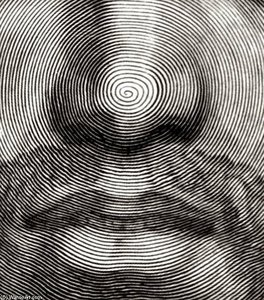
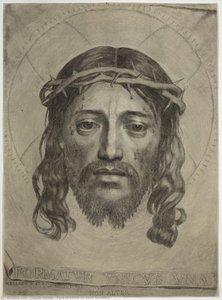
Upon returning to Paris around 1637, following a sojourn in Aix-en-Provence with the polymath Nicolas-Claude Fabri de Peiresc, Mellan embarked on a path of radical innovation. Dissatisfied with the conventional cross-hatching technique favored by many engravers, he pioneered a method utilizing exclusively parallel lines of varying width and density to create tonal effects. This was not simply a stylistic preference; it represented a fundamental rethinking of how light and shadow could be rendered through engraving. The result was an aesthetic characterized by remarkable softness, clarity, and subtlety—particularly well-suited for depicting individual figures and smaller subjects. His most celebrated achievement in this technique is undoubtedly “The Face of Christ (Sudarium of Saint Veronica)” created in 1649. This astonishing work depicts the image of Christ almost entirely from a continuous, spiraling line – an unparalleled feat of technical skill and artistic vision that continues to captivate viewers with its ethereal beauty and spiritual intensity.Portraiture, Patronage, and Lasting Significance
Mellan’s reputation flourished in Paris as a sought-after portraitist. He received commissions from members of the royal Bourbon family and other prominent figures, creating both drawings and engravings that captured their likenesses with remarkable fidelity. These portraits offer valuable insights into his artistic process; often, the drawings exhibit greater stylistic freedom than the finished engravings, revealing a nuanced approach to capturing character and personality. Beyond portraiture, Mellan continued to produce religious subjects, allegorical scenes, and landscapes, demonstrating the breadth of his artistic interests. His work reflects a delicate balance between classical ideals and a distinctly personal style—a synthesis that secured his place as a significant figure in 17th-century French art. Anatole de Montaiglon cataloged approximately 400 engravings and around 100 drawings attributed to Mellan, attesting to the prolific nature of his output. Though often overshadowed by more flamboyant Baroque masters, Claude Mellan’s contribution lies not only in his technical mastery but also in his unique artistic vision—a legacy etched forever in line and light. His innovative use of parallel lines revolutionized engraving techniques, influencing subsequent generations of artists and leaving an indelible mark on the history of printmaking.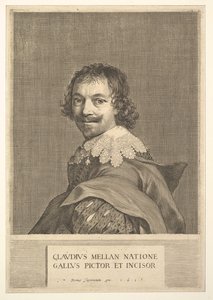
Claude Mellan
1598 - 1688 , France
Quick Facts
- Artistic Movement Or Style: Baroque
- Artists Or Movements Influenced By This Artist: Engraving techniques
- Artists Who Influenced This Artist:
- Simon Vouet
- Francesco Villamena
- Date Of Birth: 1598
- Date Of Death: 1688
- Full Name: Claude Mellan
- Nationality: French
- Notable Artworks:
- Face of Christ
- Young Woman with Dagger
- Portrait of James Howell
- Place Of Birth: Abbeville, France
Related Articles

Monet's Masterpieces: 25 Iconic Artworks to Transform Your Home
Journey through 25 iconic Claude Monet masterpieces! Explore Impressionism’s beauty, from Water Lilies to Rouen Cathedral. Discover stunning art reproductions & curated decor ideas – explore the full collection online at ArtsDot.com.

The Subtleties of Pastel: A Comprehensive Exploration of Technique, History & Emotional Resonance
Explore the captivating world of pastel art! Discover its rich history, Impressionistic masters like Degas, emotional power & unique techniques. Find museum-quality reproductions at ArtsDot.
The Subdued Radiance of Pastel: Exploring Nuance & Emotion in Art
Explore the nuanced world of pastel art! Discover its history, techniques & emotional power with expert insights from ArtsDot.com. Find museum-quality reproductions and learn about collecting this delicate medium.
The Subdued Radiance of Pastel Palettes: Exploring Emotional Resonance in Art History
Explore the emotional power of pastel palettes in art history! Discover Impressionism, Post-Impressionism & color psychology insights. Find museum-quality reproductions at ArtsDot.
Jacob Henricus Maris: A Master of Dutch Atmospheric Realism & the Intimate Landscape
Explore the captivating world of Jacob Henricus Maris, a leading figure of the Dutch Hague School. Discover his atmospheric landscapes, signature brushstrokes & lasting influence on 19th-century art. Learn more at ArtsDot.