 Preview
 Send
Send Share
Share
 Details

 Download
 Similars
 X-Ray
X-Ray Diaporama
 Stats
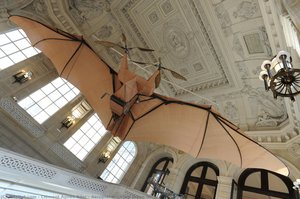
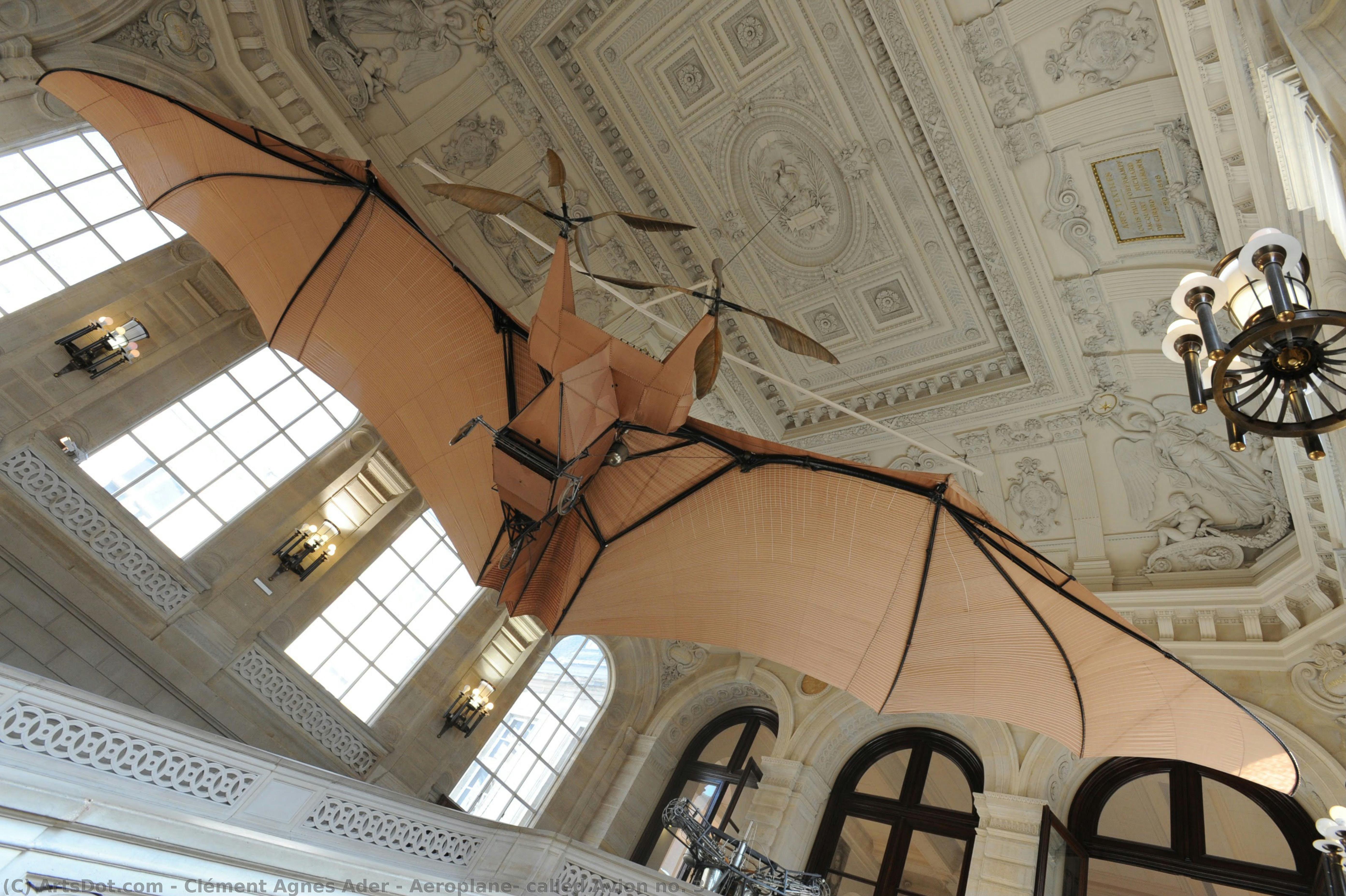
StatsAeroplane, called Avion no. 3


 Read More
Hand Made Oil Reproduction
Hand-painted oil on canvas in your size and frame, made to order by our artists. ( Switch to Print Switch to Digital Image)




































Pick from our preset sizes that match the artwork's original proportions.

You may enter your own dimensions to fit a specific frame or space. If your selected size does not match the original image's proportions, we will either crop the artwork or extend the painting with additional hand-painted elements. A digital mockup will be sent for your approval before production begins.
Please note that the on-screen preview does not reflect the actual cropping or extension. Only the mockup will accurately show the final composition.
While custom sizes are available, we recommend selecting a dimension from the predefined list to preserve the original proportions.
After order, ArtsDot.com team will email client for instructions and provide a mockup preview
Worldwide Delivery () in 3/4 weeks instead of standard 5 weeks. (9 September). No compromise on quality.

Free Worldwide Express Shipping

High-Quality Linen Canvas

Full Shipping Insurance

Customs Tax Refund Guarantee

True Color Matching Guarantee

100-Day Return Policy (Defects Only)

100% Money-Back Guarantee

Bulk Discount Offer
 Glass option is only available in size under 110 CM

Aeroplane, called Avion no. 3
Reproduction Medium
Reproduction Size
-


Total Price
$ 263
Related Artworks


Artist Biography
The Visionary Architect of the Skies
Born in the quiet town of Muret, near Toulouse, on April 2, 1841, Clément Agnés Ader was a man whose intellect soared far beyond the terrestrial bounds of his era. While his father, a skilled carpenter, envisioned a future for his son within the steady traditions of woodworking, the young Ader possessed a restless, mathematical mind that could not be contained by timber and joinery. His early education in Toulouse, marked by an extraordinary aptitude for drawing and science, laid the foundation for a life defined by the pursuit of the impossible. By the age of twenty, he had emerged from the prestigious industrial schools of his time not merely as a graduate, but as a trained engineer equipped with the technical precision necessary to reshape the modern world.
Ader’s journey was never a linear path through a single discipline; rather, it was a brilliant, interconnected web of innovation. His early professional years were spent navigating the iron veins of France, working for the Compagnie des Chemins de Fer du Midi. It was within this industrial landscape that his curiosity began to manifest as tangible invention. He looked at the heavy, clattering machinery of the mid-19th century and saw opportunities for refinement and grace. From developing specialized devices for railway maintenance to reimagining the very mechanics of the velocipede, Ader applied a singular philosophy to all his endeavors: the reduction of weight and the enhancement of efficiency through ingenious design.
The Dawn of Aerial Ambition
The true soul of Clément Ader’s legacy, however, lies in his profound obsession with the mechanics of flight. Long before the world accepted the reality of heavier-than-air travel, Ader was studying the delicate balance of nature and machine. His childhood experiments with kites and even the erratic movements of insects served as a primitive laboratory for what would become his greatest contribution to humanity. He did not merely dream of flight; he engineered it. Through a meticulous process of trial and error, he sought to replicate the aerodynamic principles found in the natural world, blending the strength of metal with the lightness of thought.
In 1890, the world witnessed a moment of pure, unadulterated magic when his creation, the Éole, achieved what many deemed a scientific impossibility: the first self-propelled flight of a heavier-than-air machine. This achievement was not merely a technical milestone but a poetic triumph of the human spirit over gravity. Though the flight was brief, its impact was eternal, signaling the birth of an era where the sky was no longer a ceiling, but a frontier. It is this sense of breathtaking possibility that defines his work—a bridge between the heavy industrialism of the 19th century and the soaring technological optimism of the 20th.
A Legacy of Innovation and Artistry
Beyond the roar of engines and the clatter of rails, Ader was a master of communication and sound. His invention of the théâtrophone—a system that allowed listeners to experience the stereophonic magic of live theater through telephone lines—demonstrated his ability to capture the ephemeral essence of human experience and transmit it across distances. He understood that technology could be used to bridge the gap between presence and absence, much like a painter uses light to evoke a memory. His work in electrical engineering and telephony reflected a deep sensitivity to the invisible threads that connect us all.
To look upon the history of Clément Ader is to witness the evolution of modern thought. He remains a towering figure whose influence stretches from the early days of cycling to the very foundations of aeronautics. His life was a testament to the power of a disciplined mind paired with an untamed imagination. As we reflect on his contributions, we see more than just an engineer; we see a pioneer who looked at the horizon and saw not a limit, but an invitation. His spirit lives on in every wing that catches the wind and every innovation that dares to defy the status quo.

clément agnes ader
1841 - 1925 , France
Quick Facts
- Artistic Movement Or Style: Impressionism
- Artists Or Movements Influenced By This Artist: ['Renoir influenced Watteau and Rubens']
- Artists Who Influenced This Artist:
- Courbet
- Monet
- Bazille
- Date Of Birth: 1841
- Date Of Death: 1919
- Full Name: Auguste Renoir
- Nationality: French
- Notable Artworks:
- Peaches and Almonds
- Dance at Le Moulin de la Galette
- Place Of Birth: Limoges, France
Related Articles
Neoclassical Art: 10 Masterpieces That Shaped History |
Explore 10 defining Neoclassical masterpieces by David, Ingres & Canova. Discover the history, symbolism & artistry behind these iconic paintings and sculptures. Find museum-quality art reproductions at – elevate your home with timeless beauty.

The Revival of Antiquity: Exploring Neoclassical Art's Ideals & Enduring Legacy
Explore the revival of classical ideals in Neoclassical art! Discover Jacques-Louis David & the movement's impact on painting, sculpture & architecture. Expert insights & high-quality reproductions at ArtsDot.

Francesco Clemente: Transcendent Narratives & the Alchemy of Identity
Explore the captivating world of Francesco Clemente, a Transavanguardia master blending Italian artistry with Indian spirituality. Discover his evocative paintings & symbolism – a valuable addition to any discerning collection.

The Revival of Antiquity: Exploring the Neoclassical Movement & its Enduring Legacy
Explore the revival of classical art with our deep dive into Neoclassicism! Discover key artists like Jacques-Louis David, Enlightenment influences & lasting impact on art history. High-quality reproductions at ArtsDot.
Modigliani's Masterpieces: 25 Iconic Paintings & Sculptures | ArtsDot
Explore 25 iconic artworks by Amedeo Modigliani, from his haunting portraits to captivating sculptures. Discover the stories behind these masterpieces of early 20th-century art & find museum-quality reproductions at ArtsDot.com.