 Preview
 Send
Send Share
Share
 Details

 Download
 Similars
 X-Ray
X-Ray Diaporama
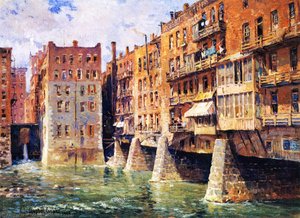
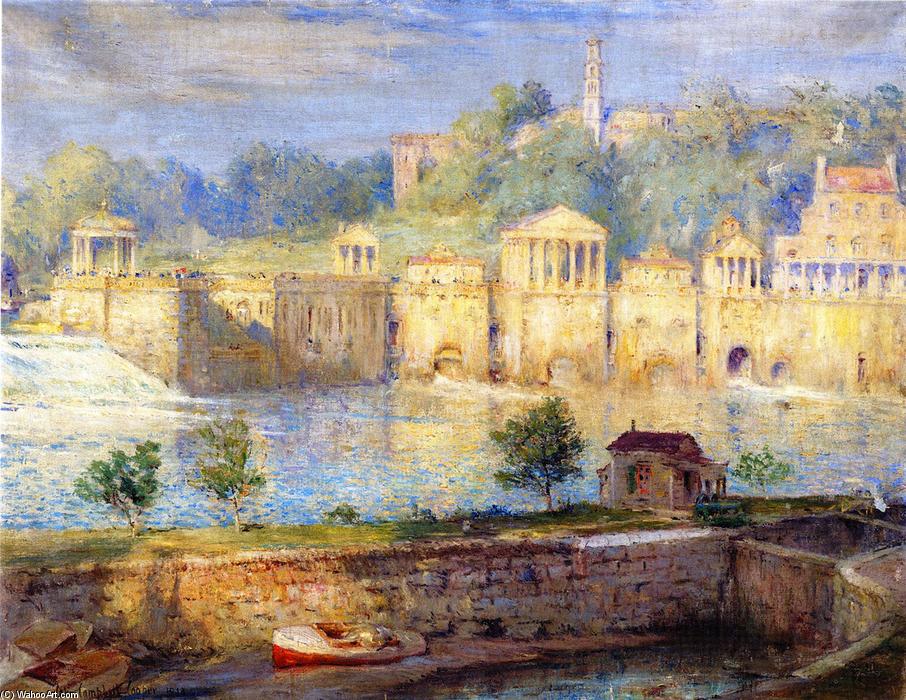
Old Waterworks, Fairmount


 Read More
Hand Made Oil Reproduction
Hand-painted oil on canvas in your size and frame, made to order by our artists. ( Buy Print Buy Image)




P118B $10

P118H $10

P118W $10

P438Z $10

P508JH $12

P508YH $12

P805H $10

P805Z $10

P919BZ $10

P919G $10

P919XJ $10

P959ZH $10

P968JZ $12

W106C $8

W218G $10

W218JH $8

W218Y $10

W307PJ $10

W316G $10

W316PJ $8

W316Y $10

W398PJ $8

W4111J $10

W500HY $15

W500JH $15

W692G $12

W849H $8

W940BG $15

W953PJ $8




Pick from our preset sizes that match the artwork's original proportions.

You may enter your own dimensions to fit a specific frame or space. If your selected size does not match the original image's proportions, we will either crop the artwork or extend the painting with additional hand-painted elements. A digital mockup will be sent for your approval before production begins.
Please note that the on-screen preview does not reflect the actual cropping or extension. Only the mockup will accurately show the final composition.
While custom sizes are available, we recommend selecting a dimension from the predefined list to preserve the original proportions.
After order, ArtsDot.com team will email client for instructions and provide a mockup preview
Worldwide Delivery () in 3/4 weeks instead of standard 5 weeks. (16 August). No compromise on quality.

Free Worldwide Express Shipping

High-Quality Linen Canvas

Full Shipping Insurance

Customs Tax Refund Guarantee

True Color Matching Guarantee

60-Day Return Policy (Defects Only)

100% Money-Back Guarantee

Bulk Discount Offer
 Glass option is only available in size under 110 CM

Old Waterworks, Fairmount
Reproduction Medium
Reproduction Size
-


Total Price
$ 263
Artwork Description
A Riverside Reverie: Capturing Philadelphia's Past
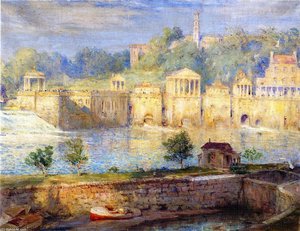
To gaze upon Colin Campbell Cooper’s Old Waterworks, Fairmount is to step directly into a moment suspended in amber—a tranquil vision of early twentieth-century Philadelphia. This painting is far more than a mere depiction of architecture; it is a profound meditation on the passage of time and the enduring spirit of a great American city. The eye is immediately drawn along the serpentine curve of the waterway, which acts as both the artery and the mirror for the entire scene. Dominating one bank stands the magnificent, castle-like structure of the Fairmount Water Works, an imposing monument to industrial ingenuity that now whispers tales of a bygone era. Cooper masterfully frames this landmark against the backdrop of other historic buildings, inviting us to wander through the painted memory of the city.
The Artistry of Light and Line
Cooper’s technical prowess shines through in every visible detail. Executed in oil on canvas, the medium allows him to build up layers of color that give the scene a remarkable depth and palpable texture. Observe how he captures the play of light upon the water; it is not a flat surface but a shimmering expanse reflecting the grand structures above. His technique is one of meticulous observation blended with romantic idealization. The interplay between the solid, grounded mass of the architecture and the fluid, ethereal quality of the river creates a dynamic tension that keeps the viewer engaged. Even the small details—the boat drifting near the center, the figures standing quietly on the left bank—are rendered with such care that they feel integral to the narrative flow.
A Historical Echo: Nostalgia in Pigment
The context of this work adds a layer of poignant resonance. Painted in 1913, it captures the Fairmount Water Works just two years after its decommissioning. This timing imbues the canvas with an undeniable sense of nostalgia—a beautiful ache for what was. Cooper, known for his deep connection to Philadelphia, presents us not just with a view, but with a historical artifact rendered in paint. It speaks to the rapid evolution of American infrastructure and the way that grand industrial achievements eventually yield to memory. For the collector or designer, this piece offers a sophisticated dialogue between permanence and change.
Bringing the Scene Home: Reproduction for Modern Spaces
For those who wish to incorporate the serene grandeur of Cooper’s vision into their own living spaces, ArtsDot.com offers high-quality reproductions. These are not mere copies; they are careful recreations that honor the original artist's techniques and materials. Owning a reproduction allows one to possess this evocative atmosphere—the peaceful confluence of nature and monumental human endeavor—without needing to visit the Philadelphia Museum of Art. It serves as an instant focal point, transforming any room into a picturesque retreat by the water.
Related Artworks

Artist Biography
A Philadelphia Beginning and European Foundations
Colin Campbell Cooper Jr., born in 1856 into a prosperous Philadelphia family of English-Irish descent, embarked on an artistic journey shaped by both rigorous academic training and a lifelong passion for travel. His father, a surgeon and lawyer with a keen appreciation for the arts, and his mother, an amateur watercolorist, fostered young Colin’s early inclinations toward painting. A pivotal moment arrived at the 1876 Philadelphia Exposition, where he encountered art that ignited within him a desire to pursue creative expression. This initial spark led him to enroll in 1879 at the prestigious Pennsylvania Academy of the Fine Arts, studying under the influential realist painter Thomas Eakins for three formative years. Eakins’ emphasis on anatomical accuracy and direct observation would leave an indelible mark on Cooper's approach to form and structure, even as his style evolved. Seeking further refinement, Cooper journeyed to Paris in 1886, immersing himself in the artistic milieu of the Académie Julian and Académie Delacluse, where he studied with luminaries like Bouguereau and Lefebvre. These years were crucial in honing his technical skills and exposing him to the broader currents of European painting, particularly the Barbizon school’s landscape tradition which initially dominated his early works.The Rise of an American Impressionist
Cooper's artistic development wasn’t a linear progression but rather a dynamic interplay of influences and experiences. While his initial paintings echoed the Barbizon style in their focus on natural landscapes, his extensive travels throughout Europe and beyond – sketching and painting scenes from across the continent and into Asia – broadened his perspective and fueled a stylistic shift. A devastating fire in 1896 destroyed many of these early works, ironically creating space for a new artistic direction. Around this time, Cooper began to focus on architectural subjects, specifically the burgeoning skylines of American cities. This marked the beginning of his signature style: an American Impressionism uniquely focused on capturing the dynamism and modernity of urban life. He wasn’t merely documenting buildings; he was interpreting them through a lens of light, atmosphere, and vibrant color. His technique, while rooted in Impressionistic principles, possessed a distinct architectural sensibility, setting him apart from contemporaries like Childe Hassam who favored more traditional landscape or figurative subjects. The influence of Eakins remained subtly present, informing his understanding of structure, but it was now blended with the atmospheric effects and broken brushwork characteristic of Impressionism.Skyscrapers and Urban Symphonies
Colin Campbell Cooper became renowned for his depictions of skyscrapers in New York City, Philadelphia, and Chicago – a subject matter that resonated deeply with the spirit of early 20th-century America. He didn’t simply paint buildings; he painted *the experience* of being within and observing these rapidly evolving urban landscapes. His canvases throbbed with energy, capturing the play of light on glass and steel, the bustling streets below, and the sheer verticality that defined a new era of architectural ambition. Broad Street, New York (1902), which earned him the W. T. Evans Award from the New York Watercolor Club, exemplifies this mastery – a vibrant cityscape rendered with an Impressionistic touch that conveyed both the grandeur and the fleeting moments of urban life. The French government’s acquisition of Fifth Avenue, New York for the Musée du Luxembourg further cemented his international recognition. Cooper's unique focus on architectural subjects distinguished him from many of his contemporaries; he wasn’t interested in idyllic rural scenes or portraits of society figures – he was captivated by the modern metropolis and its potential for artistic expression. He saw beauty not just *in* the buildings, but in their reflection of a changing world.Legacy and Enduring Influence
Beyond his painting, Cooper dedicated himself to education, teaching watercolor classes and architectural rendering at the Drexel Institute of Art, Science and Industry (now Drexel University). He married fellow artist Emma Lampert Cooper in 1897, forming a creative partnership that enriched both their lives. A move to New York City in 1904 solidified his position within the American art world, followed by a relocation to Santa Barbara, California, in 1921 where he served as dean of the Santa Barbara School for the Arts. Cooper’s work is now recognized as significant not only for its aesthetic qualities but also for its historical importance. He captured a pivotal moment in American history – the rise of the skyscraper and the transformation of urban landscapes – with an artistic vision that was both innovative and deeply rooted in tradition. The New York Times aptly declared him “the skyscraper artist par excellence of America.” His paintings continue to resonate today, offering viewers a glimpse into a bygone era while celebrating the enduring power of modern architecture and the beauty found within the urban environment. He helped define a visual language for representing the rapidly changing cityscape of the early 20th century, influencing subsequent generations of artists who sought to capture the energy and dynamism of modern life.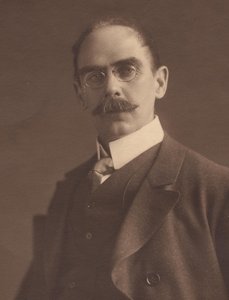
Colin Campbell Cooper
1856 - 1937 , United States of America
Quick Facts
- Artistic Movement Or Style: American Impressionism
- Artists Or Movements Influenced By This Artist:
- Urban Art
- American Impressionism
- Artists Who Influenced This Artist:
- Thomas Eakins
- Barbizon School
- Bouguereau
- Lefebvre
- Date Of Birth: March 8, 1856
- Date Of Death: November 6, 1937
- Full Name: Colin Campbell Cooper Jr.
- Nationality: American
- Notable Artworks:
- Lower Broadway in Wartime
- Hudson River Waterfront
- Old Grand Central Station
- Broad Street, New York
- Place Of Birth: Philadelphia, USA
Related Articles

Beyond the Horizon: 10 Landscape Masterpieces for Your Home Decor
Journey through 10 breathtaking landscape paintings by Monet, Van Gogh & more! Explore iconic artworks, artistic techniques & find inspiration for your home decor. Museum-quality reproductions at ArtsDot.com. Discover all masterpieces on ArtsDot.com

Evocations of Place: A Historical Journey Through Landscape Art
Explore the rich history of landscape art with ArtsDot. Discover renowned artists, movements like Impressionism & Romanticism, and expert guidance for collecting timeless pieces. Find your perfect serene escape today!

Romantic Landscapes: 10 Masterpieces for Your Home | ArtsDot
Journey through 10 Romantic landscape masterpieces by Friedrich, Turner & Cole. Explore emotional art, sublime nature scenes & iconic 19th-century paintings. Find museum-quality reproductions for your home at ArtsDot.com – discover the full collection online!
Evocations of Place: A Historical Journey Through Landscape Art
Explore the rich history of landscape art with ArtsDot. Discover renowned artists, movements like Impressionism & tonalism, and expert guidance for collecting timeless pieces. Find your perfect serene escape today!

John Constable's Masterpieces: Explore 25 Iconic Landscapes for Your Home
Journey through John Constable's 25 most celebrated landscapes. Explore Romanticism, Dedham Vale & his masterful use of light in iconic paintings like 'Hay Wain'. Find museum-quality art reproductions and elevate your home decor on ArtsDot.com.