 Preview
 Send
Send Share
Share
 Details

 Download
 Similars
 X-Ray
X-Ray Diaporama
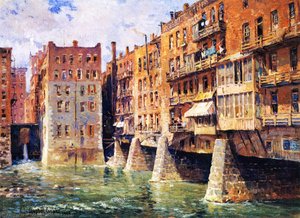
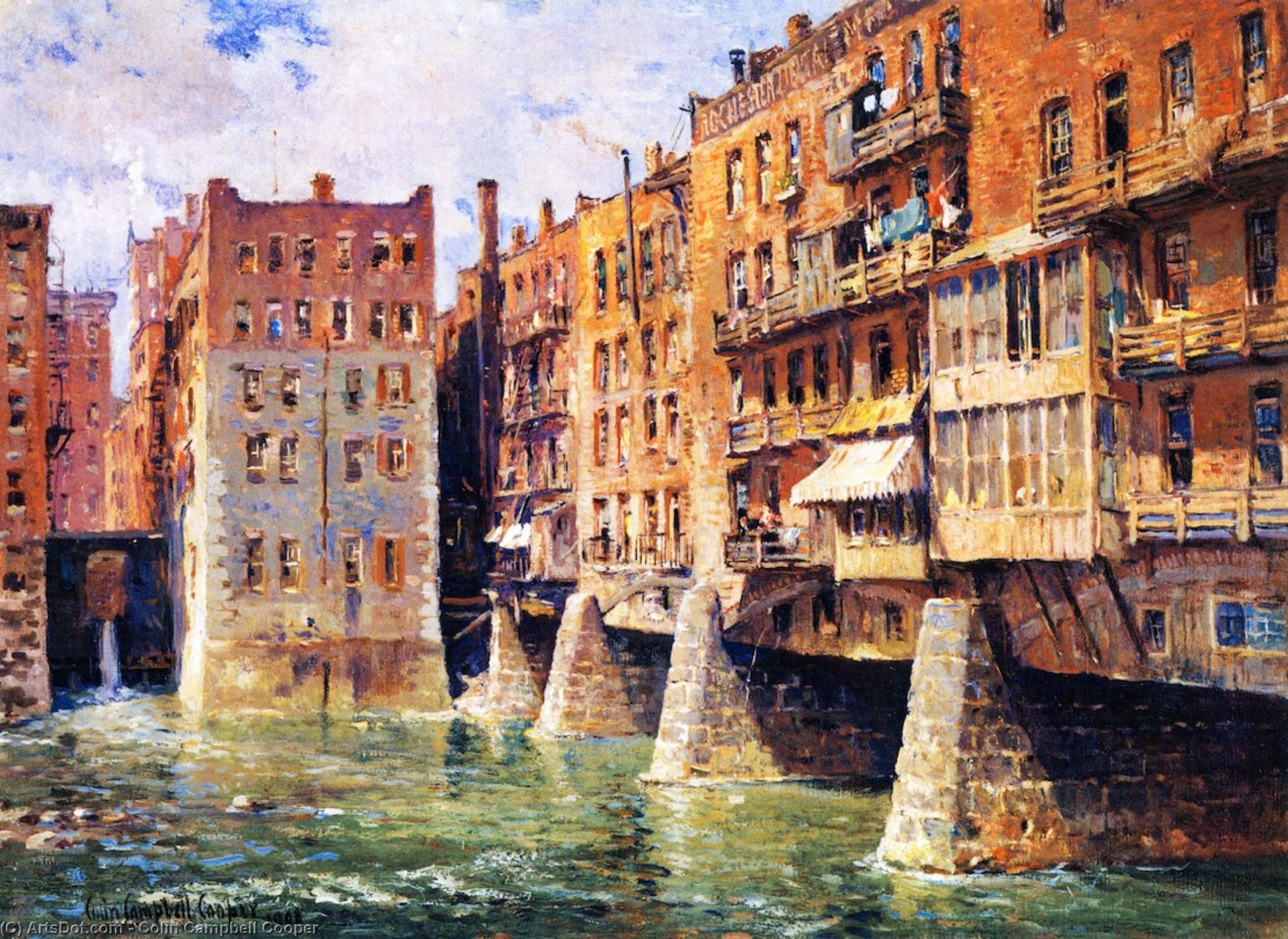
Main Street Bridge, Rochester


 Read More
Hand Made Oil Reproduction
Hand-painted oil on canvas in your size and frame, made to order by our artists. ( Buy Print Buy Image)




P118B $10

P118H $10

P118W $10

P438Z $10

P508JH $12

P508YH $12

P805H $10

P805Z $10

P919BZ $10

P919G $10

P919XJ $10

P959ZH $10

P968JZ $12

W106C $8

W218G $10

W218JH $8

W218Y $10

W307PJ $10

W316G $10

W316PJ $8

W316Y $10

W398PJ $8

W4111J $10

W500HY $15

W500JH $15

W692G $12

W849H $8

W940BG $15

W953PJ $8




Pick from our preset sizes that match the artwork's original proportions.

You may enter your own dimensions to fit a specific frame or space. If your selected size does not match the original image's proportions, we will either crop the artwork or extend the painting with additional hand-painted elements. A digital mockup will be sent for your approval before production begins.
Please note that the on-screen preview does not reflect the actual cropping or extension. Only the mockup will accurately show the final composition.
While custom sizes are available, we recommend selecting a dimension from the predefined list to preserve the original proportions.
After order, ArtsDot.com team will email client for instructions and provide a mockup preview
Worldwide Delivery () in 3/4 weeks instead of standard 5 weeks. (16 August). No compromise on quality.

Free Worldwide Express Shipping

High-Quality Linen Canvas

Full Shipping Insurance

Customs Tax Refund Guarantee

True Color Matching Guarantee

60-Day Return Policy (Defects Only)

100% Money-Back Guarantee

Bulk Discount Offer
 Glass option is only available in size under 110 CM

Main Street Bridge, Rochester
Reproduction Medium
Reproduction Size
-


Total Price
$ 263
Artwork Description
A Window into the Gilded Age: The Vibrancy of Rochester
In his 1908 masterpiece, Main Street Bridge, Rochester, Colin Campbell Cooper invites the viewer to step through a portal into the rhythmic pulse of early twentieth-century American urban life. This oil on canvas is far more than a mere topographical record; it is a soulful meditation on the intersection of human ambition and the natural world. As the eye traverses the bridge spanning the river, one feels the palpable energy of a city in transition. The scene is alive with the quiet drama of daily existence—pedestooners strolling along the water's edge, the silent presence of a parked bicycle, and the architectural dialogue between enduring stone structures and the burgeoning modernity of the era. Cooper captures a moment where the industrial spirit of the United States began to harmonize with the serene beauty of its landscapes.
The emotional resonance of the painting lies in its ability to evoke nostalgia for a lost era of elegance and communal connection. There is a profound sense of peace found in the way the river flows beneath the man-made span, suggesting a symbiotic relationship between the city's infrastructure and the natural elements that sustain it. For the collector or interior designer, this piece offers a sophisticated atmosphere of stability and grace, making it an ideal centerpiece for spaces that value historical depth and a sense of timelessness.
Mastery of Light and the Impressionistic Spirit
Technically, Main Street Bridge, Rochester showcases Cooper’s remarkable ability to manipulate light and color to create a captivating atmosphere. While his early training under the realist Thomas Eakins instilled in him a rigorous understanding of form and structure, this particular work leans into a more luminous, painterly approach. The artist employs a palette that hints at the burgeoning Fauvist movement, utilizing strong, emotive colors to define the play of sunlight upon the water and the textures of the urban facades. His brushwork is deliberate yet fluid, allowing light to dance across the canvas and breathe life into the bustling street scene.
The interplay of shadow and brilliance creates a three-dimensional depth that draws the viewer into the heart of Rochester. By focusing on the way light interacts with both the organic curves of the river and the rigid lines of the architecture, Cooper achieves a visual balance that is both intellectually stimulating and aesthetically pleasing. This mastery of atmosphere ensures that the painting remains dynamic, changing its mood depending on the light in which it is displayed within a home or gallery.
A Legacy of Urban Elegance
To possess a reproduction of this work is to hold a fragment of American art history. Colin Campbell Cooper was a chronicler of the American cityscape, and his ability to find beauty in the "man-made" allows this painting to serve as an inspiring tribute to human ingenuity. The historical significance of the piece is anchored by its depiction of Rochester's architectural heritage, preserved forever through the medium of oil paint. It serves as a reminder of a time when urban expansion was met with an aesthetic consideration for beauty and public enjoyment.
For those seeking to curate a collection that speaks to themes of progress, nostalgia, and the enduring beauty of the American landscape, this painting provides an unparalleled opportunity. Whether integrated into a contemporary minimalist setting or a classic, traditional interior, the Main Street Bridge, Rochester brings with it a storied past and a sophisticated, light-filled elegance that transcends generations.
Related Artworks
Artist Biography
A Philadelphia Beginning and European Foundations
Colin Campbell Cooper Jr., born in 1856 into a prosperous Philadelphia family of English-Irish descent, embarked on an artistic journey shaped by both rigorous academic training and a lifelong passion for travel. His father, a surgeon and lawyer with a keen appreciation for the arts, and his mother, an amateur watercolorist, fostered young Colin’s early inclinations toward painting. A pivotal moment arrived at the 1876 Philadelphia Exposition, where he encountered art that ignited within him a desire to pursue creative expression. This initial spark led him to enroll in 1879 at the prestigious Pennsylvania Academy of the Fine Arts, studying under the influential realist painter Thomas Eakins for three formative years. Eakins’ emphasis on anatomical accuracy and direct observation would leave an indelible mark on Cooper's approach to form and structure, even as his style evolved. Seeking further refinement, Cooper journeyed to Paris in 1886, immersing himself in the artistic milieu of the Académie Julian and Académie Delacluse, where he studied with luminaries like Bouguereau and Lefebvre. These years were crucial in honing his technical skills and exposing him to the broader currents of European painting, particularly the Barbizon school’s landscape tradition which initially dominated his early works.The Rise of an American Impressionist
Cooper's artistic development wasn’t a linear progression but rather a dynamic interplay of influences and experiences. While his initial paintings echoed the Barbizon style in their focus on natural landscapes, his extensive travels throughout Europe and beyond – sketching and painting scenes from across the continent and into Asia – broadened his perspective and fueled a stylistic shift. A devastating fire in 1896 destroyed many of these early works, ironically creating space for a new artistic direction. Around this time, Cooper began to focus on architectural subjects, specifically the burgeoning skylines of American cities. This marked the beginning of his signature style: an American Impressionism uniquely focused on capturing the dynamism and modernity of urban life. He wasn’t merely documenting buildings; he was interpreting them through a lens of light, atmosphere, and vibrant color. His technique, while rooted in Impressionistic principles, possessed a distinct architectural sensibility, setting him apart from contemporaries like Childe Hassam who favored more traditional landscape or figurative subjects. The influence of Eakins remained subtly present, informing his understanding of structure, but it was now blended with the atmospheric effects and broken brushwork characteristic of Impressionism.Skyscrapers and Urban Symphonies
Colin Campbell Cooper became renowned for his depictions of skyscrapers in New York City, Philadelphia, and Chicago – a subject matter that resonated deeply with the spirit of early 20th-century America. He didn’t simply paint buildings; he painted *the experience* of being within and observing these rapidly evolving urban landscapes. His canvases throbbed with energy, capturing the play of light on glass and steel, the bustling streets below, and the sheer verticality that defined a new era of architectural ambition. Broad Street, New York (1902), which earned him the W. T. Evans Award from the New York Watercolor Club, exemplifies this mastery – a vibrant cityscape rendered with an Impressionistic touch that conveyed both the grandeur and the fleeting moments of urban life. The French government’s acquisition of Fifth Avenue, New York for the Musée du Luxembourg further cemented his international recognition. Cooper's unique focus on architectural subjects distinguished him from many of his contemporaries; he wasn’t interested in idyllic rural scenes or portraits of society figures – he was captivated by the modern metropolis and its potential for artistic expression. He saw beauty not just *in* the buildings, but in their reflection of a changing world.Legacy and Enduring Influence
Beyond his painting, Cooper dedicated himself to education, teaching watercolor classes and architectural rendering at the Drexel Institute of Art, Science and Industry (now Drexel University). He married fellow artist Emma Lampert Cooper in 1897, forming a creative partnership that enriched both their lives. A move to New York City in 1904 solidified his position within the American art world, followed by a relocation to Santa Barbara, California, in 1921 where he served as dean of the Santa Barbara School for the Arts. Cooper’s work is now recognized as significant not only for its aesthetic qualities but also for its historical importance. He captured a pivotal moment in American history – the rise of the skyscraper and the transformation of urban landscapes – with an artistic vision that was both innovative and deeply rooted in tradition. The New York Times aptly declared him “the skyscraper artist par excellence of America.” His paintings continue to resonate today, offering viewers a glimpse into a bygone era while celebrating the enduring power of modern architecture and the beauty found within the urban environment. He helped define a visual language for representing the rapidly changing cityscape of the early 20th century, influencing subsequent generations of artists who sought to capture the energy and dynamism of modern life.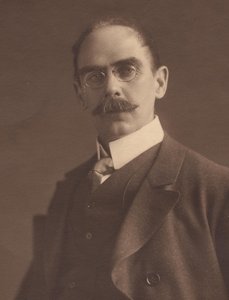
Colin Campbell Cooper
1856 - 1937 , United States of America
Quick Facts
- Artistic Movement Or Style: American Impressionism
- Artists Or Movements Influenced By This Artist:
- Urban Art
- American Impressionism
- Artists Who Influenced This Artist:
- Thomas Eakins
- Barbizon School
- Bouguereau
- Lefebvre
- Date Of Birth: March 8, 1856
- Date Of Death: November 6, 1937
- Full Name: Colin Campbell Cooper Jr.
- Nationality: American
- Notable Artworks:
- Lower Broadway in Wartime
- Hudson River Waterfront
- Old Grand Central Station
- Broad Street, New York
- Place Of Birth: Philadelphia, USA
Related Articles
Concrete Narratives: Exploring Urban Life in Modern & Contemporary Art
Explore the evolution of cityscape painting with ArtsDot. Discover key artists from Realism to contemporary movements & invest in timeless urban visions. Expert guidance, museum-quality reproductions.
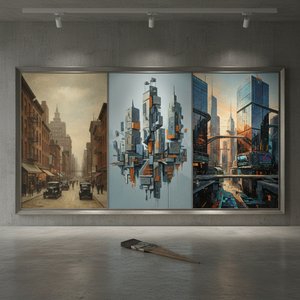
Concrete Visions: Exploring the Urban Landscape in Painting – From Realism to Contemporary Art
Explore the evolution of cityscape painting from Realism to contemporary art with ArtsDot. Discover key artists & invest in timeless urban visions. Expert guidance, museum-quality reproductions.
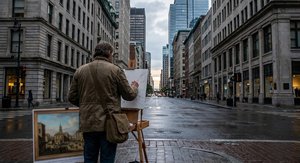
Urban Visions: A Historical & Artistic Exploration of the Cityscape in Painting
Explore the evolution of cityscape painting from historical maps to Impressionist masterpieces. Discover artists like Caillebotte & Utrillo. Find museum-quality reproductions at ArtsDot.

Concrete Visions: Exploring Representations of Urban Life in Modern & Contemporary Art
Explore the evolution of cityscape painting from Realism to contemporary art. Discover key artists & invest in timeless urban visions with ArtsDot's expert guidance and museum-quality reproductions.
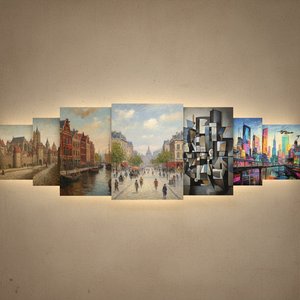
Urban Visions: A Historical & Artistic Exploration of the Cityscape in Painting
Explore the evolution of cityscape painting from historical maps to Impressionist masterpieces. Discover artists like Caillebotte, Utrillo & Matsumoto Shunsuke. Find museum-quality reproductions at ArtsDot.