 Preview
 Send
Send Share
Share
 Details

 Download
 Similars
 X-Ray
X-Ray Diaporama
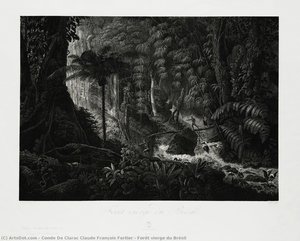
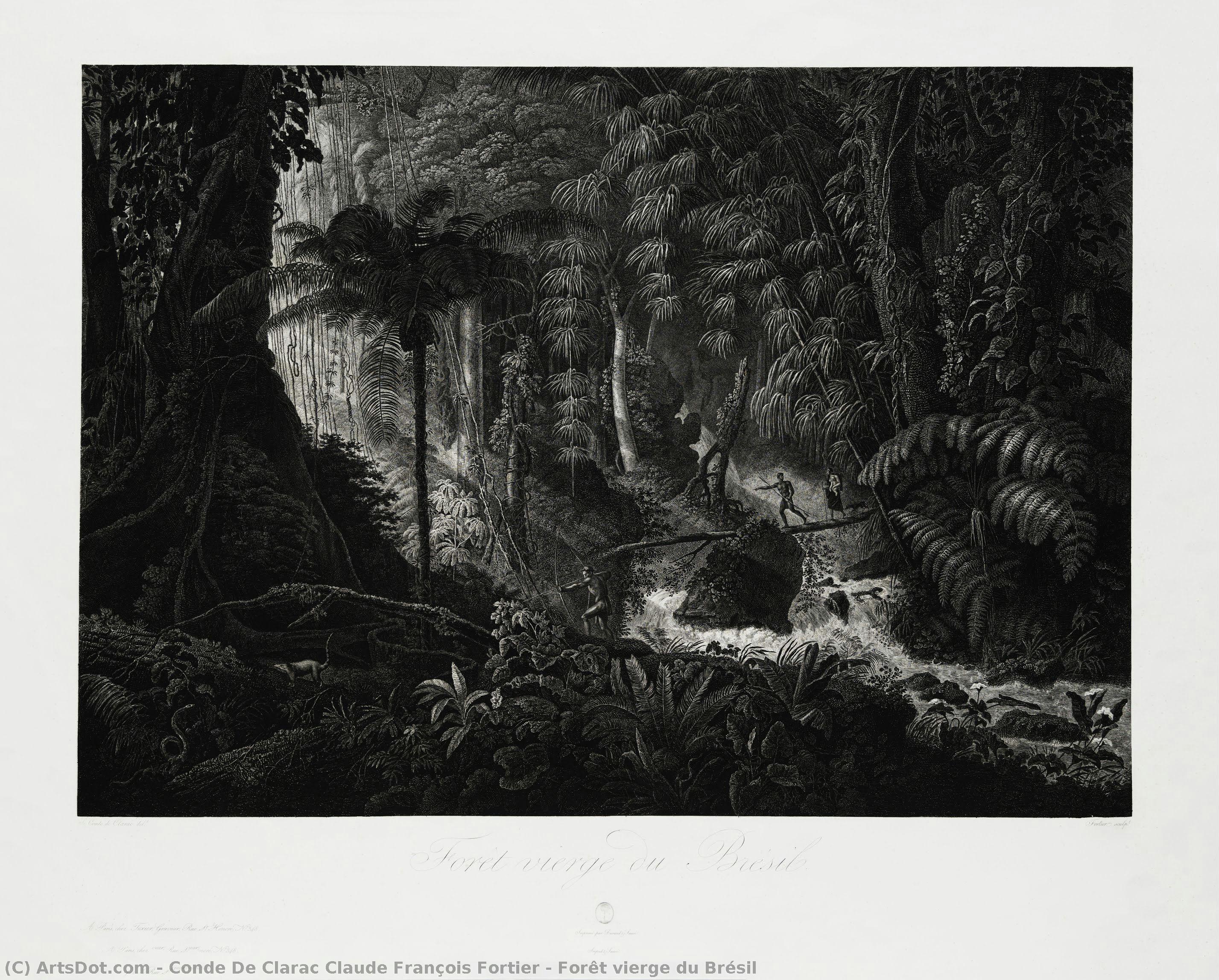
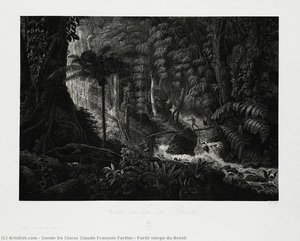
Forêt vierge du Brésil
 Romanticism
 1822
1822 2.0 x 76.0 cm
 Itaú Cultural Institute
 Read More
Giclée / Art Print
Museum-quality giclée or canvas print with fast production and flexible finish options. ( Buy Hand Made Painting Buy Image)




































Pick from our preset sizes that match the artwork's original proportions.

You may enter your own dimensions to fit a specific frame or space. If your selected size does not match the original image's proportions, we will either crop the artwork or extend the image with a mirrored or solid-fill edge. A digital mockup will be sent for your approval before production begins.
Please note that the on-screen preview does not reflect the actual cropping or extension. Only the mockup will accurately show the final composition.
While custom sizes are available, we recommend selecting a dimension from the predefined list to preserve the original proportions.
Worldwide Delivery () in 2 weeks instead of standard 4/5 weeks. (25 August)

Free Worldwide Express Shipping

High-Quality Linen Canvas

Full Shipping Insurance

Customs Tax Refund Guarantee

True Color Matching Guarantee

60-Day Return Policy (Defects Only)

100% Money-Back Guarantee

Bulk Discount Offer
 Glass option is only available in size under 110 CM

Forêt vierge du Brésil
Giclée / Art Print
Reproduction Size
-


Total Price
$ 63
Related Artworks
![Vida De Miguel De Cervantes Saavedra (life Of Miguel De Cervantes Saavedra). Book V Of The Edition Of Don Quixote (biblioteca Nacional De España)\n\n[7] — Martín Fernández De Navarrete Y Ximénez De Tejada, Academic Art](/media/artworks/images-thumb/8c/b6/8cb67a4dd450447373a546c8dd039e57.jpg)
Artist Biography
Claude-François Fortier: A Pioneer of Brazilian Naturalism
Born in Paris in 1775, Claude-François Fortier was more than just a painter; he was a polymath—a meticulous observer and recorder of the natural world, an archaeologist fascinated by ancient civilizations, and a skilled illustrator who profoundly shaped the visual landscape of his era. His career spanned several decades, marked by expeditions to distant lands, collaborations with leading scientists, and a dedication to capturing the essence of both European culture and the exotic wonders of South America. Fortier’s legacy lies not only in the beauty of his artwork but also in his pioneering role as one of the first Western artists to systematically document and interpret the flora, fauna, and archaeological sites of Brazil.
Fortier's early artistic training was rigorous, encompassing painting, engraving, and lithography. He honed his technical skills under the tutelage of prominent artists, developing a keen eye for detail and an understanding of color theory that would become hallmarks of his work. His draftsman’s skill was particularly noteworthy; he produced intricate drawings showcasing a mastery of line and form—a foundation upon which he built his larger compositions. This early training instilled in him a methodical approach to observation and representation, crucial elements in his later explorations.
The Egyptian Expedition and the Birth of a New Style
Fortier’s career took a dramatic turn with his appointment as a tutor to the children of Joachim Murat, King of Naples, in 1808. Murat's archaeological excavations at Pompeii provided Fortier with an unprecedented opportunity to immerse himself in ancient Roman life and art. This experience profoundly influenced his artistic style, shifting him towards a more naturalistic approach. However, it was his subsequent journey to Brazil, beginning in 1816, that truly defined his artistic trajectory. He joined the expedition led by Auguste de Saint-Hilaire, a renowned botanist, embarking on a remarkable exploration of the Amazon rainforest and its surrounding regions.
During this expedition, Fortier’s role expanded beyond mere illustration. He became an active participant in documenting the newly discovered flora and fauna, meticulously sketching plants, animals, and landscapes. His artistic style evolved dramatically, incorporating vibrant colors and exotic motifs—a direct reflection of his immersion in the Amazonian environment. The influence of Saint-Hilaire's scientific observations is evident in Fortier’s work; he didn’t simply depict what he saw but sought to understand and represent the complex ecological relationships within the rainforest.
Notable Works: A Testament to Observation
Among Fortier’s most celebrated works is “Forêt vierge du Brésil” (Virgin Forest of Brazil), an exquisite engraving created in 1822. This piece, currently housed at the Itaú Cultural Institute in São Paulo, exemplifies his artistic prowess and meticulous attention to detail. The monochrome image captures a dense Brazilian forest scene with remarkable realism—a testament to Fortier’s observational skills and his ability to convey depth and atmosphere through line and shading. The work is not merely a depiction of nature; it's an exploration of light, texture, and the intricate patterns found within the rainforest ecosystem.
Beyond “Forêt vierge du Brésil,” Fortier’s contributions include illustrations for "Voyage dans la basse et haute égypte" (Journey in Lower and Upper Egypt), a significant work documenting the archaeological discoveries made during Napoleon's campaign. His detailed renderings of Egyptian monuments, artifacts, and landscapes provided invaluable visual documentation for scholars and historians. His artistic style was adapted to accurately represent ancient structures and people, showcasing his versatility as an artist.
Legacy and Enduring Influence
Claude-François Fortier’s legacy extends far beyond the individual artworks he produced. He played a crucial role in shaping the development of botanical illustration and archaeological documentation during a period of significant scientific exploration. His meticulous approach to observation, combined with his artistic skill, set a new standard for representing the natural world. His work continues to be admired for its beauty, accuracy, and insightful portrayal of both European culture and the wonders of Brazil.
Fortier’s influence can be seen in the works of subsequent artists who followed in his footsteps, particularly those interested in depicting exotic landscapes and documenting scientific discoveries. His legacy is preserved through his paintings, engravings, and illustrations, which are displayed in museums such as the Musée des Beaux-Arts Strasbourg, France, and other notable institutions worldwide. Claude-François Fortier remains a significant figure in art history—a pioneer who bridged the gap between artistic expression and scientific observation.
conde de clarac claude françois fortier
1775 - 1835 , France
Quick Facts
- Artistic Movement Or Style: Illustrator, archaeologist
- Artists Or Movements Influenced By This Artist:
- Botanical illustration
- Vintage print
- Artists Who Influenced This Artist:
- Auguste de Saint-hilaire
- Joachim Murat
- Date Of Birth: April 10, 1775
- Date Of Death: 1835
- Full Name: Claude-François Fortier
- Nationality: French
- Notable Artworks:
- Forêt vierge du Brésil
- Voyage d'Égypte
- Place Of Birth: Paris, France
Related Articles

Goya's Masterpieces: Explore 25 Iconic Paintings & Art Prints | ArtsDot
Delve into the world of Francisco Goya with ArtsDot. Explore 25 iconic paintings – from 'The Third of May' to his haunting Black Paintings. Discover the stories, techniques & emotions behind these Spanish masterpieces. Find museum-quality art reproductions for your home at ArtsDot.com!

Monet's Masterpieces: 25 Iconic Artworks to Transform Your Home
Journey through 25 iconic Claude Monet masterpieces! Explore Impressionism’s beauty, from Water Lilies to Rouen Cathedral. Discover stunning art reproductions & curated decor ideas – explore the full collection online at ArtsDot.com.

About Us
Discover our story! We bring world-class art into your life through expert curation, personalized creations, and free previews. Trusted by individuals and businesses since 2000.
Engraving's Golden Age: 10 Masterpieces That Redefined Art | ArtsDot
Journey through art history with our Top 10 Legendary Engravings! Explore masterpieces by Dürer, Rembrandt & Goya. Discover the stories behind these iconic prints and find museum-quality reproductions for your home at ArtsDot.com.
Engraving: A Historical Survey of Technique, Artistic Expression & Enduring Legacy
Explore the rich history of engraving with ArtsDot. Discover techniques, iconic artists like Dürer & Callot, collecting tips, and expert guidance for preserving your art investment. Learn about intaglio printing & more!