 Preview
 Send
Send Share
Share
 Details

 Download
 Similars
 X-Ray
X-Ray Diaporama
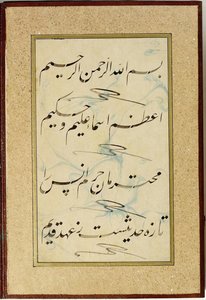
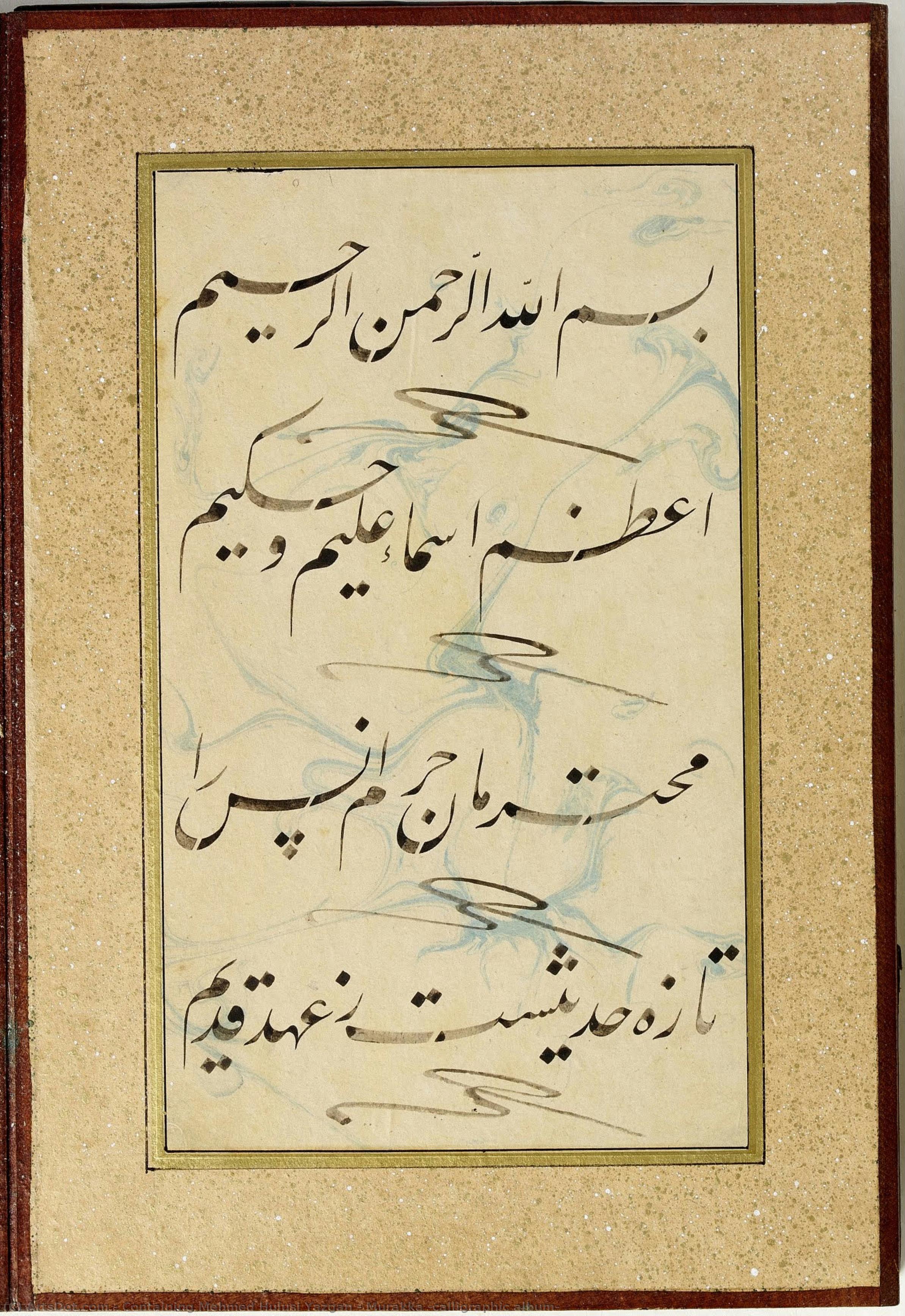
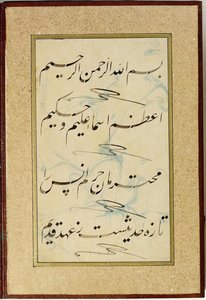
Murakka (calligraphic album)
 Manuscript
- Ottoman Calligraphy
 1905
1905- 19th Century
 25.0 x 17.0 cm
 Sakıp Sabancı Museum
 Read More
Giclée / Art Print
Museum-quality giclée or canvas print with fast production and flexible finish options. ( Buy Hand Made Painting Buy Image)




P118B $10

P118H $10

P118W $10

P438Z $10

P508JH $12

P508YH $12

P805H $10

P805Z $10

P919BZ $10

P919G $10

P919XJ $10

P959ZH $10

P968JZ $12

W106C $8

W218G $10

W218JH $8

W218Y $10

W307PJ $10

W316G $10

W316PJ $8

W316Y $10

W398PJ $8

W4111J $10

W500HY $15

W500JH $15

W692G $12

W849H $8

W940BG $15

W953PJ $8




Pick from our preset sizes that match the artwork's original proportions.

You may enter your own dimensions to fit a specific frame or space. If your selected size does not match the original image's proportions, we will either crop the artwork or extend the image with a mirrored or solid-fill edge. A digital mockup will be sent for your approval before production begins.
Please note that the on-screen preview does not reflect the actual cropping or extension. Only the mockup will accurately show the final composition.
While custom sizes are available, we recommend selecting a dimension from the predefined list to preserve the original proportions.
Worldwide Delivery () in 2 weeks instead of standard 4/5 weeks. (22 August)

Free Worldwide Express Shipping

High-Quality Linen Canvas

Full Shipping Insurance

Customs Tax Refund Guarantee

True Color Matching Guarantee

60-Day Return Policy (Defects Only)

100% Money-Back Guarantee

Bulk Discount Offer
 Glass option is only available in size under 110 CM

Murakka (calligraphic album)
Giclée / Art Print
Reproduction Size
-


Total Price
$ 63
Collectible Description
The Soul of the Script: A Journey Through the Murakka
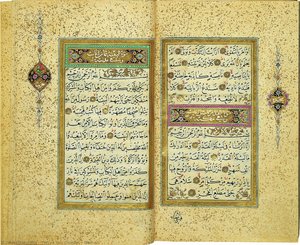
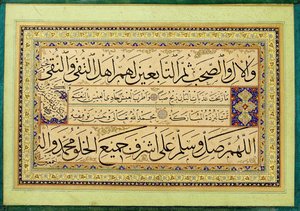
To open the Murakka (calligraphic album) is to step into a silent, meditative world where ink and intention converge. Created in 1905 by the master calligrapher Mehmed Hulusi Yazgan, this exquisite piece of Ottoman artistry transcends mere writing; it is a rhythmic dance of the reed pen across paper. The album presents nine kıt'as—short poetic compositions—rendered in the fluid, sweeping ta'lik script. Each stroke carries the weight of tradition, flowing with an elegance that suggests the movement of water or the gentle sway of wind through a garden. For the discerning collector or interior designer, this work offers more than visual beauty; it provides a window into a vanished era of profound spiritual and aesthetic discipline.
The technique employed by Yazgan is a testament to years of rigorous apprenticeship under the legendary masters of the Ottoman tradition, such as Haci Arif Bey. The ta'liq style itself is characterized by its graceful, sloping lines and the masterful manipulation of thickness and thinness in each letter. This interplay of light and shadow within the black ink creates a sense of depth and motion, making the text appear almost alive upon the page. The warm, aged tones of the paper provide a soft, organic backdrop that complements the dark, decisive strokes of the calligraphy, creating a harmonious balance that is both soothing to the eye and intellectually stimulating.
A Legacy of Devotion and Decorative Elegance
Beyond its technical brilliance, the Murakka serves as a profound symbol of cultural identity and spiritual devotion. In the context of Islamic art, calligraphy is often viewed as the highest form of artistic expression, a way to manifest the divine through the beauty of language. Yazgan’s work embodies this sanctity, where every curve and dot is placed with deliberate precision. For those looking to integrate fine art into a contemporary living space, such a piece brings an air of timeless sophistication and a sense of historical continuity. It acts as a focal point that invites contemplation, encouraging viewers to slow down and appreciate the intricate details of a craft perfected over centuries.
Integrating a high-quality reproduction of this masterpiece into a curated interior can transform a room from a mere space into a sanctuary of culture. Whether placed in a study adorned with leather-bound books or as a centerpiece in a minimalist modern gallery, the Murakka’s earthy tones and rhythmic patterns harmonize beautifully with both classical and contemporary decor. It offers an emotional resonance that speaks to the human desire for order, beauty, and connection to the past, making it an incomparable choice for those who seek art that possesses both a historical heartbeat and a lasting aesthetic power.
Related Artworks
Artist Biography
Mehmed Hulusi Yazgan: A Master of Murakka in the Shadow of Tradition
The world of Ottoman calligraphy, a realm of exquisite detail and profound spiritual significance, rarely yields figures as quietly compelling as Mehmed Hulusi Yazgan. Born in Turkey – details surrounding his early life remain frustratingly sparse, shrouded in the mists of time – Yazgan dedicated his entire artistic existence to the meticulous practice of murakka, a form of calligraphic album creation that represents the pinnacle of Ottoman decorative script. While not widely celebrated during his lifetime, and lacking extensive biographical documentation, Yazgan’s work speaks volumes about his dedication, skill, and deep understanding of Islamic art principles.
Yazgan's journey into calligraphy began under the tutelage of prominent masters like Haci Arif Bey of Carsamba and Sami Effendi. These formative years instilled in him a rigorous approach to the craft, emphasizing not just technical proficiency but also an intimate connection with the divine. He honed his skills in both ta’liq (a cursive script) and thuluth and naskh (formal scripts), ultimately specializing in the graceful elegance of murakka. This particular form, characterized by its expansive layouts and intricate floral motifs interwoven with flowing Arabic text, demanded a mastery of both penmanship and artistic composition – a balance that few achieved with Yazgan’s level of success.
The Art of Murakka: A Visual Symphony
At the heart of Yazgan's oeuvre lies the murakka album. These monumental works are not merely collections of calligraphy; they are visual poems, intricate tapestries of text and floral design. The process itself is extraordinarily demanding, requiring immense patience, precision, and a deep understanding of perspective and proportion. Each piece begins with a carefully drawn preparatory sketch, meticulously outlining the layout and placement of both the Arabic script and the accompanying floral elements. The calligraphy is then executed in layers, building up the text gradually, while the flowers are painted with painstaking detail – often incorporating vibrant colors and delicate shading.
Yazgan’s murakka albums stand apart through their remarkable balance of calligraphic beauty and artistic embellishment. He eschewed overly ornate or flamboyant styles, favoring instead a refined elegance that reflects the spirit of Ottoman art. His compositions are characterized by a sense of harmony and equilibrium, with each element carefully considered to contribute to the overall aesthetic effect. The use of gold leaf – a hallmark of Ottoman craftsmanship – further elevates the visual impact of his work, adding a layer of luxuriousness and spiritual significance.
A Life Dedicated to Craft
Despite his undeniable talent and artistic achievements, Yazgan’s life was marked by relative obscurity and financial hardship. Limited biographical information suggests he struggled financially throughout much of his career, often relying on modest commissions to sustain himself. He taught calligraphy at various institutions, including the Darüssafaka Lycee and the Medresetül Hattatin, imparting his knowledge to a new generation of calligraphers. However, his dedication to his craft seemed to outweigh any desire for personal recognition or material wealth.
One notable achievement during his career was his participation in the 6th State Painting and Sculpture Exhibition in 1944, where he received first prize – a testament to the esteem in which his work was held by contemporary critics. He also gained international recognition at the Tehran Art Biennial in 1966. His legacy, however, extends far beyond these specific accolades; it resides in the enduring beauty and spiritual depth of his murakka albums, which continue to inspire admiration and study today.
Legacy and Influence
Mehmed Hulusi Yazgan’s work represents a crucial link in the chain of Ottoman calligraphy. While he may not be as widely known as some of his more celebrated contemporaries, his contributions to the art form are undeniable. His meticulous technique, refined aesthetic sensibility, and profound understanding of Islamic symbolism have left an indelible mark on the history of Turkish art. His murakka albums serve as a powerful reminder of the enduring beauty and spiritual significance of calligraphy – a testament to the dedication and skill of a master craftsman who quietly shaped one of the world’s most exquisite artistic traditions.
Further research into Yazgan's life and work continues, driven by a desire to uncover more details about this enigmatic figure and fully appreciate his profound contribution to Ottoman art. The few surviving examples of his murakka albums offer a tantalizing glimpse into the mind of a master calligrapher – a man who dedicated his entire life to the pursuit of artistic perfection.
Quick Facts
- Artistic Movement Or Style: Calligraphy (Murakka)
- Artists Or Movements Influenced By This Artist:
- Islamic Art
- Ottoman Calligraphy
- Artists Who Influenced This Artist: ['Haci Arif Bey']
- Full Name: Mehmed Hulusi Yazgan
- Nationality: Turkish
- Notable Artworks: ['Murakka Album (1905)']
- Place Of Birth: Turkey
Related Articles
Cy Twombly: Scribbles of Emotion – Deconstructing Post-War Expressionism Through Calligraphy & Abstraction
Explore the captivating world of Cy Twombly with ArtsDot. Discover the emotional depth & artistic significance behind his abstract calligraphy. Expert insights for collectors.