

 Preview
 Send
Send Share
Share
 Details

 Download
 Similars
 X-Ray
X-Ray Diaporama
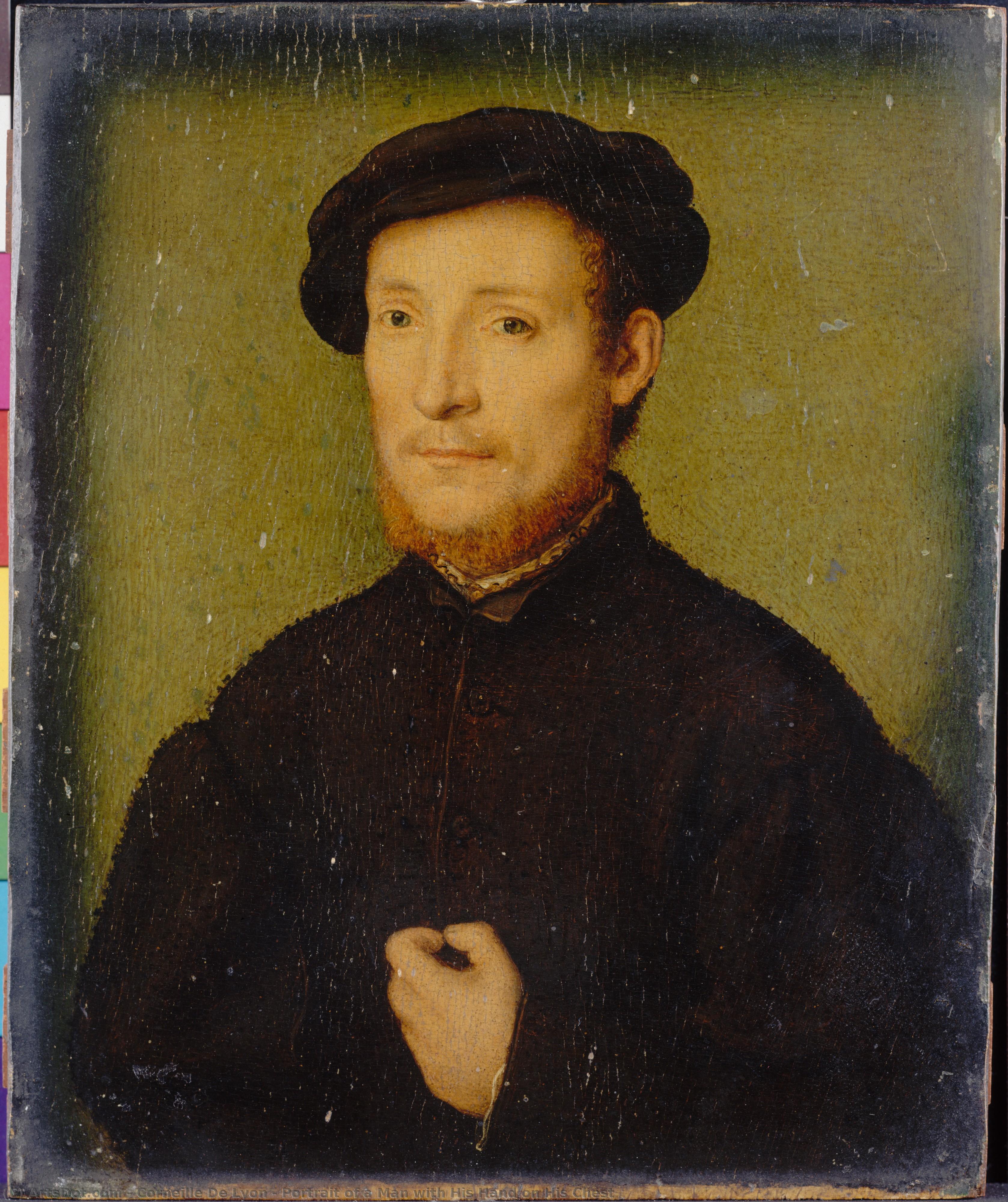
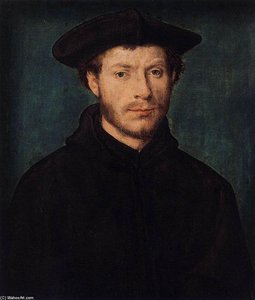
Portrait of a Man with His Hand on His Chest
 Oil On Panel
- Early Renaissance
 1540
1540- Renaissance
 18.0 x 15.0 cm
 Metropolitan Museum of Art
 Read More
Purchase a high-resolution, enhanced digital image, far superior to the online preview.
Each file is meticulously prepared by our in-house specialists using advanced tools and expert manual retouching. We ensure every image has exceptional clarity, precise color accuracy, and fine detail.
The final file is delivered via email within 72 hours, optimized for immediate use in professional, editorial, and print environments. This is the same quality trusted by top-tier design studios, publishers, and galleries.
Digital Image
Download a high-resolution file for personal display, printing, and creative projects. ( Buy Print Buy Hand Made Painting)
Included in Every Digital Image Order
Expert Digital Delivery, Guaranteed
When you choose ArtsDot.com, you're not just getting an image - you're receiving a professionally enhanced digital artwork, crafted with precision and backed by a satisfaction guarantee. Here's everything that comes with your order, automatically:

Fast Email Delivery
Your high-resolution digital image file will be emailed to you within 72 hours of ordering - ready for immediate use.

AI-Enhanced Digital File
Your artwork is professionally optimized using advanced AI tools and manual editing, ensuring maximum detail, clarity, and color accuracy.

Free Lifetime Re-Delivery
Accidentally deleted or lost your file? No worries - we'll resend it to you anytime, free of charge.

No Import Fees - Ever
Enjoy your artwork instantly with zero customs, duties, or delivery fees - digital downloads are always tax-free.

Color Accuracy Guarantee
We ensure your digital image reflects the original colors as closely as possible using professional tools and color management.

60-Day Satisfaction Guarantee
If you're not satisfied with your digital image, we'll revise it or refund 100% within 60 days - no questions asked.

100% Money-Back Guarantee
Not satisfied? Get a full refund within 60 days of receiving your digital file - no questions asked.

Bulk Order Discounts
Buy 3 images, save 10% - Buy 5, save 15% - Buy 10+, save 20%. Great for creative projects, galleries, and agencies.
The Enigmatic Gaze of Renaissance Court Life
To stand before this portrait is to step directly into the gilded salons of 16th-century Lyon. The subject, a young gentleman whose identity remains veiled by time, confronts the viewer with an arresting directness. His expression—a subtle upturn at the corners of his mouth suggesting wit or perhaps practiced composure—invites speculation. He is clad in the sober elegance of a man belonging to the upper echelons of Lyonnais society, garments rendered in deep blacks that speak of status and restraint. The gesture of his left hand, delicately touching the fastening upon his chest, is not merely decorative; it is a carefully choreographed moment, suggesting both self-possession and an almost palpable sense of inner contemplation.
Mastery in Oil on Panel: Technique and Texture
The technical brilliance evident in this piece speaks volumes about the skill of its creator, Corneille de Lyon. The artist has achieved a remarkable balance between meticulous realism and painterly suggestion. Observe how the soft, diffused light catches the planes of his face, defining bone structure with an almost sculptural precision. The handling of the fabric is particularly noteworthy; one can almost feel the weight and texture of the black tunic through the visible brushstrokes. This suggests a mastery of oil paint applied to a wooden panel support—a durable medium that allowed for such rich tonal depth. The background, a muted wash of green, serves not as a distraction, but as a carefully chosen counterpoint, allowing the dark richness of the figure to emerge with dignified clarity.
Historical Echoes: Corneille de Lyon's Courtly Touch
This work is inextricably linked to the vibrant artistic currents flowing through France during the Renaissance. Corneille de Lyon was more than just a portraitist; he was an observer, chronicling the very essence of courtly existence for patrons like Francis I. Owning a reproduction of this piece connects the modern admirer to that sophisticated milieu—a time when portraiture served as both commemoration and declaration of standing. It embodies the transition from the detailed naturalism of earlier Netherlandish traditions toward a more elegant, psychologically nuanced depiction of human character.
Emotional Resonance for the Modern Collector
Beyond its historical pedigree, this painting possesses a quiet emotional power. It is a study in controlled emotion—the hint of a smile that suggests untold stories beneath the surface composure. For the collector or designer seeking an accent piece imbued with depth, this portrait offers more than mere decoration; it offers conversation. Its formal dignity and rich tonality allow it to anchor a room, lending an air of cultivated history and enduring refinement, making it a timeless focal point for any discerning interior space.
Related Artworks
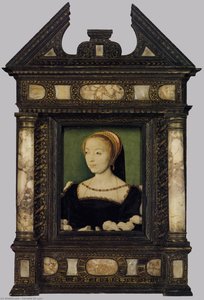
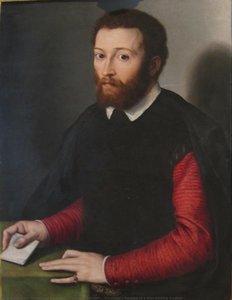
Artist Biography
A Courtly Gaze: The Life and Art of Corneille de Lyon
Corneille de Lyon, born Claude Corneille in The Hague around 1500 and passing away circa 1575, occupies a fascinating, if somewhat enigmatic, position within the history of Renaissance portraiture. He wasn’t merely a painter; he was an international presence, a chronicler of European nobility at a time of shifting power dynamics and burgeoning artistic innovation. While often referred to as Dutch, his career blossomed primarily in France, serving as *the* premier portraitist for Francis I and later, during the reigns of Henry II and Charles IX. His story is one of adaptation, skillful imitation, and ultimately, the creation of a distinctive style that captured not just likeness, but also the very essence of courtly life.From Northern Realism to French Elegance
Corneille’s early training remains largely undocumented, though it's believed he initially worked in the tradition of Early Netherlandish painting – a world steeped in meticulous detail and realistic representation. This foundation is visible in his earliest works, characterized by precise rendering of fabrics, jewelry, and facial features. However, upon arriving in France around 1524, Corneille encountered a different aesthetic sensibility. The French court favored a more refined, elegant style, heavily influenced by the Italian Renaissance masters like Leonardo da Vinci and Raphael. Crucially, he was exposed to the work of Hans Holbein the Younger, whose portraits – with their psychological depth and sophisticated use of color – profoundly impacted Corneille’s development. He didn't simply copy Holbein; instead, he synthesized Northern realism with Italian grace and Holbein’s penetrating character studies, forging a unique artistic language.The King’s Portraitist: A Career at the French Court
Corneille quickly ascended to become Francis I’s official portraitist, a position of immense prestige and responsibility. He wasn't painting grand allegorical scenes or religious narratives; his focus was almost exclusively on capturing the likenesses of the king, queen, courtiers, and visiting dignitaries. This specialization allowed him to hone an extraordinary skill in portraying status and power through subtle details – the cut of a garment, the arrangement of jewelry, the very posture of the sitter. His portraits are remarkably consistent in their format: typically half-length, with sitters posed against dark backgrounds, emphasizing their faces and elaborate attire. He employed a limited palette, favoring rich blacks, reds, and golds, which further enhanced the sense of opulence and authority. Hundreds of these miniature portraits were created, often as diplomatic gifts or keepsakes for members of the court. These weren’t intended to be monumental statements; they were intimate objects meant to circulate within a select circle, reinforcing social bonds and projecting an image of royal power.Beyond Likeness: Symbolism and Artistic Legacy
While celebrated for his technical skill, Corneille's work also reveals a subtle understanding of symbolism. The clothing worn by sitters often conveyed their rank or allegiance; jewelry could signify wealth, piety, or marital status. He was not merely recording appearances but constructing narratives about identity and belonging. His influence extended beyond the French court. He trained numerous artists, disseminating his style throughout France and contributing to the development of the “Lyon School” of painting – a group of portraitists known for their refined technique and elegant compositions. Although he didn’t invent new artistic techniques or explore radical subject matter, Corneille de Lyon perfected the art of the courtly portrait, leaving behind a vast body of work that provides an invaluable glimpse into the lives and personalities of 16th-century European nobility. His portraits remain compelling not just for their historical significance but also for their enduring beauty and psychological insight – a testament to the power of observation and the artistry of capturing a fleeting moment in time. His legacy is one of refined elegance, meticulous detail, and an unparalleled ability to portray the essence of courtly life.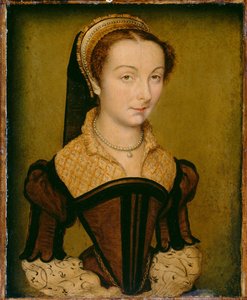
Corneille de Lyon
1500 - 1575 , Netherlands
Quick Facts
- Artistic Movement Or Style: High Renaissance
- Artists Or Movements Influenced By This Artist: ['Da Vinci family']
- Artists Who Influenced This Artist: ['Andrea del Verrocchio']
- Date Of Birth: April 15, 1452
- Date Of Death: May 2, 1519
- Full Name: Leonardo di ser Piero da Vinci
- Nationality: Italian
- Notable Artworks:
- Mona Lisa
- The Last Supper
- Vitruvian Man
- Place Of Birth: Vinci, Italy

