

 Preview
 Send
Send Share
Share
 Details

 Download
 Similars
 X-Ray
X-Ray Diaporama
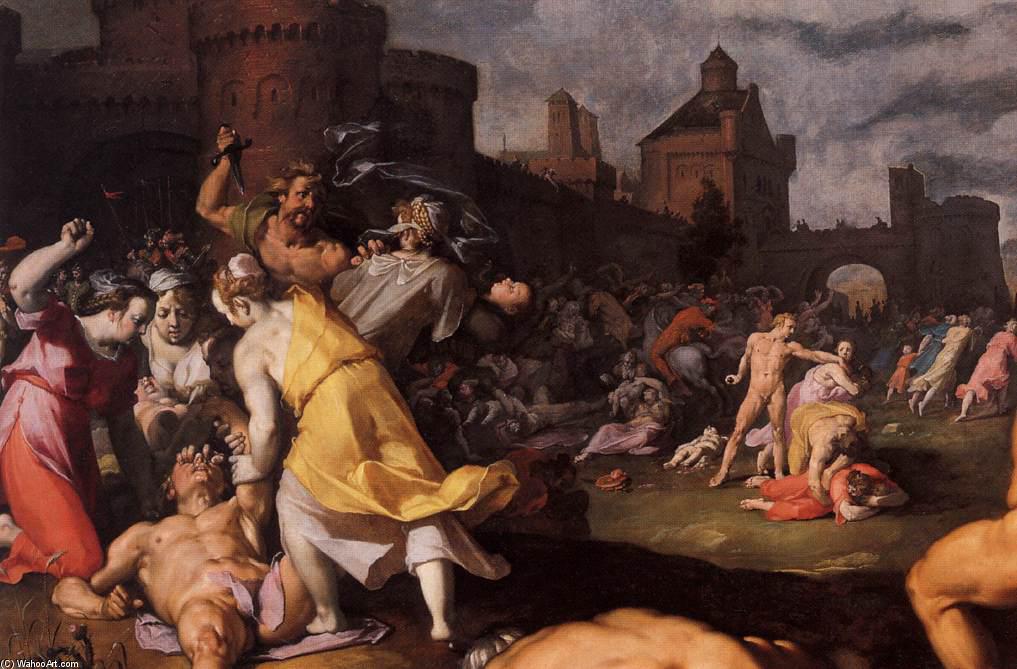
Massacre of the Innocents (detail)


 Read More
Purchase a high-resolution, enhanced digital image, far superior to the online preview.
Each file is meticulously prepared by our in-house specialists using advanced tools and expert manual retouching. We ensure every image has exceptional clarity, precise color accuracy, and fine detail.
The final file is delivered via email within 72 hours, optimized for immediate use in professional, editorial, and print environments. This is the same quality trusted by top-tier design studios, publishers, and galleries.
Digital Image
Download a high-resolution file for personal display, printing, and creative projects. ( Buy Print Buy Hand Made Painting)
Included in Every Digital Image Order
Expert Digital Delivery, Guaranteed
When you choose ArtsDot.com, you're not just getting an image - you're receiving a professionally enhanced digital artwork, crafted with precision and backed by a satisfaction guarantee. Here's everything that comes with your order, automatically:

Fast Email Delivery
Your high-resolution digital image file will be emailed to you within 72 hours of ordering - ready for immediate use.

AI-Enhanced Digital File
Your artwork is professionally optimized using advanced AI tools and manual editing, ensuring maximum detail, clarity, and color accuracy.

Free Lifetime Re-Delivery
Accidentally deleted or lost your file? No worries - we'll resend it to you anytime, free of charge.

No Import Fees - Ever
Enjoy your artwork instantly with zero customs, duties, or delivery fees - digital downloads are always tax-free.

Color Accuracy Guarantee
We ensure your digital image reflects the original colors as closely as possible using professional tools and color management.

60-Day Satisfaction Guarantee
If you're not satisfied with your digital image, we'll revise it or refund 100% within 60 days - no questions asked.

100% Money-Back Guarantee
Not satisfied? Get a full refund within 60 days of receiving your digital file - no questions asked.

Bulk Order Discounts
Buy 3 images, save 10% - Buy 5, save 15% - Buy 10+, save 20%. Great for creative projects, galleries, and agencies.
Collectible Description
A Descent into Darkness: Exploring Van Haarlem’s ‘Massacre of the Innocents’
Cornelis Cornelisz van Haarlem's “Massacre of the Innocents,” a detail from his monumental 1590 painting, isn’t merely a depiction of biblical tragedy; it’s a visceral plunge into human suffering and a haunting meditation on violence. Born in Haarlem during a period of intense political and religious upheaval – the Eighty Years' War between Spain and the Dutch Republic – van Haarlem witnessed firsthand the brutality of conflict, an experience that profoundly shaped his artistic vision. This particular detail, focusing on the immediate aftermath of Herod’s decree, captures a moment of agonizing despair, radiating with a dramatic intensity characteristic of the Northern Mannerist style.
The painting immediately commands attention through its masterful use of chiaroscuro – the stark contrast between light and shadow. Van Haarlem expertly manipulates darkness to engulf much of the scene, emphasizing the figures in distress while simultaneously creating an atmosphere of profound gloom. The muted palette, dominated by browns, grays, and deep reds, further contributes to this sense of foreboding. Notice how the light catches on the faces of the victims – a young mother cradling her lifeless child, a man desperately clutching his infant – highlighting their vulnerability and amplifying the horror of their fate.
The Anatomy of Emotion: Technique and Composition
Van Haarlem’s technical skill is evident in every meticulously rendered detail. The figures are not idealized; they are realistically portrayed with all the imperfections of human anatomy, reflecting a shift away from the smoother, more stylized forms of earlier Mannerist painting. The artist's attention to texture – the rough fabric of clothing, the slickness of wet skin, the chilling cold of the winter landscape – adds an incredible layer of realism and immediacy. The composition itself is carefully constructed, drawing the viewer’s eye through a series of interconnected figures, each contributing to the overall narrative of devastation.
The arrangement of bodies on the ground creates a sense of chaotic urgency. The central figure, lying prone with outstretched arms, immediately draws attention, while the seated woman weeping and the man holding his infant evoke powerful emotions of grief and helplessness. The inclusion of the fortified cityscape in the background serves as a stark reminder of the broader context of violence and political instability that fueled this tragedy. It’s not simply a scene from scripture; it's a commentary on the human cost of war.
Symbolism and Historical Context
The “Massacre of the Innocents” is deeply rooted in biblical narrative, but van Haarlem imbues it with layers of symbolic meaning. The event itself represents the vulnerability of innocence and the ruthlessness of power. Herod’s act of infanticide symbolizes a desperate attempt to eliminate any potential threat to his reign, while the massacre of the infants embodies the tragic consequences of political ambition. Considering the turbulent times in which van Haarlem worked – the Dutch Republic struggling for independence from Spanish rule – the painting can be interpreted as an allegory for the challenges faced by a nation fighting for its freedom.
Furthermore, the winter setting—a bleak and unforgiving landscape—underscores the harshness of the situation. The cold, snow-covered ground mirrors the emotional chill felt by those who have witnessed such devastation. The inclusion of elements like the pond covered in ice further emphasizes the frozen state of innocence and the enduring nature of grief.
A Timeless Masterpiece: Reproduction and Beyond
Van Haarlem’s “Massacre of the Innocents” remains a profoundly moving work of art, captivating viewers with its dramatic intensity and emotional depth. Reproductions offer an accessible way to experience this masterpiece firsthand, bringing its powerful message into any space. When selecting a reproduction, consider the quality of materials and the artist's attention to detail – ensuring that it faithfully captures the nuances of van Haarlem’s original vision. This painting is more than just a historical depiction; it’s a timeless exploration of human suffering, loss, and the enduring power of hope in the face of adversity.
Related Artworks

Artist Biography
A Forerunner of the Dutch Golden Age: The Life and Art of Cornelis Cornelisz van Haarlem
Cornelis Cornelisz van Haarlem, born in 1562 within the burgeoning artistic hub of Haarlem, Netherlands, stands as a pivotal figure bridging the late Mannerist period with the dawn of the Dutch Golden Age. His journey was one of stylistic evolution and significant influence, particularly on the celebrated portraitist Frans Hals. Initially steeped in the highly stylized conventions prevalent at the time, van Haarlem’s early training under Pieter Pietersz in his native city and later Gillis Coignet in Antwerp laid a foundation for a career marked by both technical prowess and an eventual embrace of more naturalistic representation. The political turmoil of the Eighty Years' War cast a long shadow over his youth; when Spanish forces besieged Haarlem in 1573, his parents fled, leaving young Cornelis to be raised by Pieter Pietersz, solidifying his artistic path. This early experience likely instilled within him a sense of resilience and a deep connection to the cultural identity of his hometown, themes that would subtly permeate his later work.From Mannerist Grandeur to Netherlandish Realism
Van Haarlem’s initial artistic output was characterized by large-scale compositions featuring dramatically posed figures—often Italianate nudes—with an emphasis on artifice and exaggerated anatomy. These works, while demonstrating considerable skill, reflected the prevailing Northern Mannerist aesthetic heavily influenced by artists like Bartholomeus Spranger whose drawings were introduced to Haarlem by Carel van Mander in 1585. However, a distinct shift began to emerge as van Haarlem matured. He gradually moved away from these highly stylized forms towards a more grounded and realistic approach rooted in the Netherlandish tradition. This transformation wasn’t abrupt but rather a considered evolution, reflecting not only his artistic growth but also a broader cultural movement within the Netherlands toward greater naturalism and emotional depth. His evolving style mirrored a changing society—one increasingly focused on individual expression and observable reality.Key Works and Civic Recognition
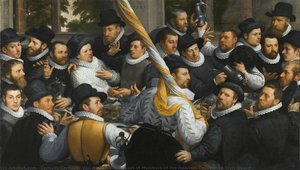
Throughout his career, van Haarlem secured numerous commissions that attest to his growing reputation and skill. One of his earliest significant works, The Banquet of the Haarlem Civic Guard (1583), showcased his emerging talent as a portraitist and ability to capture group dynamics with impressive detail. This piece, along with subsequent civic commissions, cemented his position within the community and established him as a reliable and capable artist. The Fall of the Titans (1588-1590), a monumental mythological scene, demonstrates his mastery of complex compositions and narrative storytelling. These large-scale paintings weren’t merely displays of technical skill; they were statements of civic pride and artistic ambition. He became deeply involved in the Haarlem art community, participating in informal drawing groups with Hendrick Goltzius and Carel van Mander—a collective often referred to as the “Haarlem Mannerists” or the "Haarlem Academy"—where ideas were exchanged and new artistic directions explored.A Lasting Legacy: Influence on Frans Hals and Beyond
Cornelis van Haarlem’s influence extended far beyond his own prolific output. He is particularly remembered for his profound impact on Frans Hals, one of the most celebrated portrait painters of the Dutch Golden Age. While the exact nature of their relationship remains a subject of scholarly debate, it's clear that van Haarlem served as an important mentor and source of inspiration for the younger artist. His emphasis on capturing individual character and psychological depth in his portraits likely paved the way for Hals’s groundbreaking approach to portraiture—an approach characterized by spontaneity, vitality, and a remarkable ability to convey personality. Van Haarlem's role as city painter of Haarlem further solidified his legacy, ensuring that his artistic vision continued to shape the cultural landscape of the region. His students included Salomon de Bray, Cornelis Jacobsz Delff, and Gerrit Pietersz Sweelink, continuing his influence into subsequent generations. His work can be found in prominent museum collections today, including the Rijksmuseum in Amsterdam and the Frans Hals Museum in Haarlem, ensuring that his artistic contributions continue to inspire and captivate audiences worldwide.Exploring Van Haarlem’s World Today
The enduring appeal of Cornelis van Haarlem's art is readily accessible through various online resources. Platforms like ArtsDot.com offer a comprehensive collection of his paintings, allowing enthusiasts to delve into the breadth and depth of his oeuvre. Detailed biographical information and critical analyses can be found on Wikipedia, providing valuable context for understanding his artistic development and historical significance. The Getty Museum and National Gallery websites also provide insights into specific works within their collections. Through these digital avenues, van Haarlem’s legacy is preserved and shared with a global audience, ensuring that this important forerunner of the Dutch Golden Age continues to receive the recognition he deserves. His paintings remain powerful testaments to an era of artistic innovation and cultural transformation.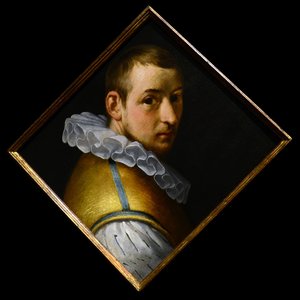
Cornelis Cornelisz van Haarlem
1562 - 1638 , Netherlands
Quick Facts
- Artistic Movement Or Style: Northern Mannerism
- Artists Or Movements Influenced By This Artist: ['Frans Hals']
- Artists Who Influenced This Artist:
- Pieter Pietersz
- Gillis Coignet
- Date Of Birth: 1562
- Date Of Death: 1638
- Full Name: Cornelis Cornelisz van Haarlem
- Nationality: Dutch
- Notable Artworks:
- Banquet of the Haarlem Civic Guard
- The Fall of the Titans
- Place Of Birth: Haarlem, Netherlands

