 Preview
 Send
Send Share
Share
 Details

 Download
 Similars
 X-Ray
X-Ray Diaporama
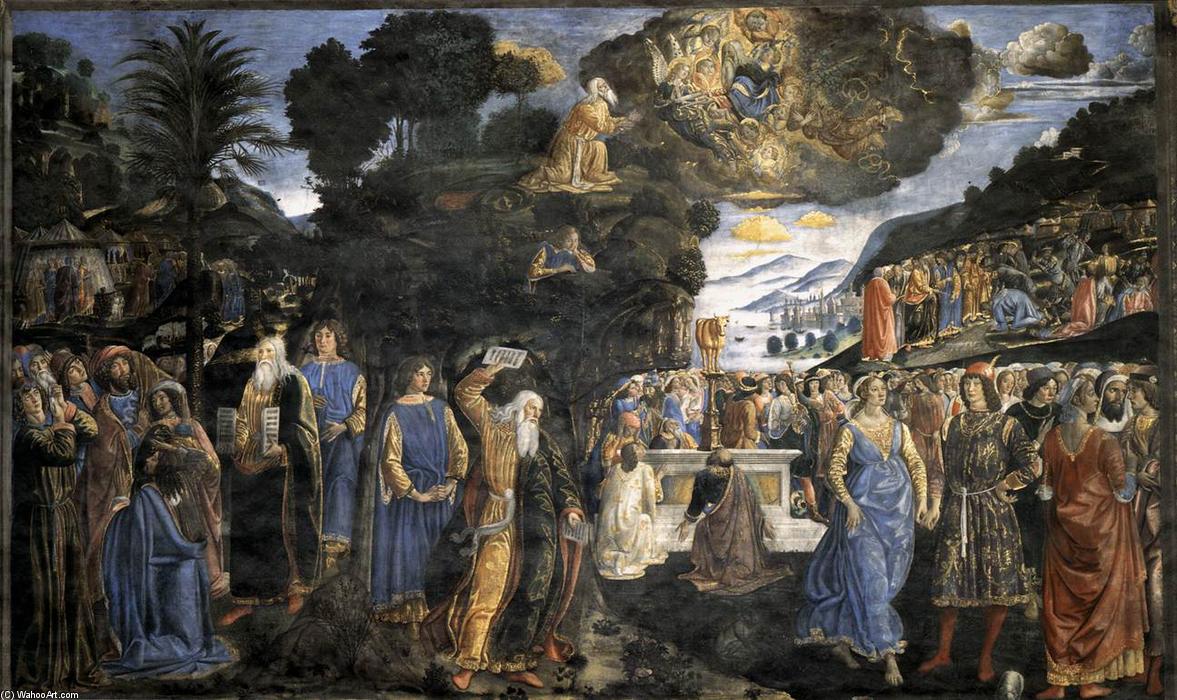
Tables of the Law with the Golden Calf
 Oil On Canvas
- WallArt
- Renaissance Early Renaissance
 1481
1481 350.0 x 572.0 cm
 Cappella Sistina
 Read More
Hand Made Oil Reproduction
Hand-painted oil on canvas in your size and frame, made to order by our artists. ( Buy Print Buy Image)




P118B $10

P118H $10

P118W $10

P438Z $10

P508JH $12

P508YH $12

P805H $10

P805Z $10

P919BZ $10

P919G $10

P919XJ $10

P959ZH $10

P968JZ $12

W106C $8

W218G $10

W218JH $8

W218Y $10

W307PJ $10

W316G $10

W316PJ $8

W316Y $10

W398PJ $8

W4111J $10

W500HY $15

W500JH $15

W692G $12

W849H $8

W940BG $15

W953PJ $8




Pick from our preset sizes that match the artwork's original proportions.

You may enter your own dimensions to fit a specific frame or space. If your selected size does not match the original image's proportions, we will either crop the artwork or extend the painting with additional hand-painted elements. A digital mockup will be sent for your approval before production begins.
Please note that the on-screen preview does not reflect the actual cropping or extension. Only the mockup will accurately show the final composition.
While custom sizes are available, we recommend selecting a dimension from the predefined list to preserve the original proportions.
After order, ArtsDot.com team will email client for instructions and provide a mockup preview
Worldwide Delivery () in 3/4 weeks instead of standard 5 weeks. (16 August). No compromise on quality.

Free Worldwide Express Shipping

High-Quality Linen Canvas

Full Shipping Insurance

Customs Tax Refund Guarantee

True Color Matching Guarantee

60-Day Return Policy (Defects Only)

100% Money-Back Guarantee

Bulk Discount Offer
 Glass option is only available in size under 110 CM

Tables of the Law with the Golden Calf
Reproduction Medium
Reproduction Size
-


Total Price
$ 263
Artwork Description
A Divine Narrative Unveiled: The Tables of the Law with the Golden Calf by Cosimo Rosselli
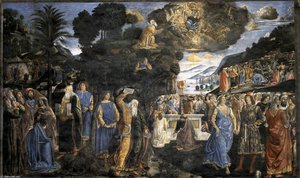
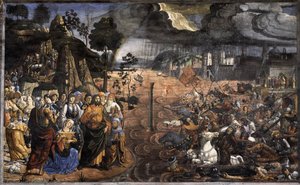
Cosimo Rosselli’s “Tables of the Law with the Golden Calf,” painted in 1481 as part of the magnificent frescoes adorning the Cappella Sistina within Vatican City, is more than just a depiction of biblical events; it's a vibrant, dynamic tableau brimming with theological weight and artistic innovation. Commissioned during a pivotal moment in Renaissance Rome – a period grappling with papal authority and burgeoning humanist thought – this fresco transcends mere illustration, becoming a powerful statement on obedience, transgression, and the enduring struggle between divine law and human fallibility. Rosselli’s masterful handling of color, composition, and narrative detail elevates the scene to an unforgettable visual experience.
The painting immediately captivates with its dramatic landscape—a rugged, mountainous terrain bathed in a turbulent sky, mirroring the emotional intensity of the story unfolding below. Trees, rendered with a surprising degree of realism for the time, frame the central action, drawing the viewer’s eye to the foreground where a multitude of figures are engaged in various activities. These aren't static representations; Rosselli imbues them with movement and life—some conversing animatedly, others observing the unfolding drama with expressions ranging from concern to outright condemnation. The use of color is particularly striking: earthy tones dominate the landscape, grounding the scene in a sense of earthly reality, while vibrant hues – reds, blues, and golds – are strategically employed to highlight key figures and elements, drawing attention to the central narrative.
The Heart of the Story: Moses and the Golden Calf
At the heart of the fresco lies the pivotal moment depicted—the story of Moses’s return from Mount Sinai after receiving the Ten Commandments, only to discover that his people have fashioned a golden calf in his absence. Rosselli masterfully captures the shock and dismay on Moses' face as he witnesses this act of idolatry. The sheer scale of the golden calf itself is arresting – a symbol of humanity’s inherent tendency towards self-worship and rebellion against divine authority. The figures surrounding it, caught in the act of worship, are rendered with a stark realism that underscores the gravity of their transgression. Note the detail in their clothing—a deliberate choice by Rosselli to emphasize their earthly nature and vulnerability before God.
Rosselli’s artistic choices extend beyond mere representation; he employs techniques characteristic of the Florentine Renaissance while simultaneously pushing the boundaries of traditional fresco painting. The use of *sfumato*, a subtle blurring technique, softens the edges of figures and creates an atmospheric depth that enhances the sense of drama. The layering of colors—a hallmark of Rosselli’s style—results in a rich, textured surface that seems to shimmer with light. This masterful application of color and form is further enhanced by the fresco technique itself – a method involving pigments mixed with water and applied directly onto wet plaster, creating a durable and luminous image.
Symbolism and Historical Context
Beyond its immediate narrative, “Tables of the Law with the Golden Calf” is laden with symbolism. The Ten Commandments themselves represent the foundation of Jewish law and morality, while the golden calf symbolizes idolatry—the worship of anything other than God. The scene can be interpreted as a broader allegory about the dangers of disobedience and the importance of upholding divine principles. Painted during a period of intense religious reform under Pope Sixtus IV, the fresco likely served as a visual reminder to the Church’s subjects of their obligations to obey God's law.
Furthermore, Rosselli’s inclusion of figures like Joshua—a young boy accompanying Moses—suggests a theme of succession and continuity. The painting also reflects the humanist ideals that were beginning to emerge during the Renaissance, emphasizing human reason and observation alongside traditional religious beliefs. The dynamic composition and detailed depiction of human emotion demonstrate Rosselli's skill in capturing the complexities of the human experience within a theological framework.
A Timeless Masterpiece: Reproductions and Legacy
Today, “Tables of the Law with the Golden Calf” stands as a testament to Cosimo Rosselli’s artistic genius and a cornerstone of Renaissance art history. High-quality reproductions, such as those offered by ArtsDot.com, allow viewers around the world to experience the power and beauty of this iconic fresco. Whether displayed in a grand gallery or a private home, these reproductions capture the essence of Rosselli's original masterpiece—a timeless narrative of faith, transgression, and the enduring quest for spiritual truth.
Related Artworks
Artist Biography
A Florentine Hand in Rome: The Life and Art of Cosimo Rosselli
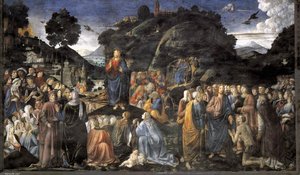
Cosimo Rosselli, born around 1439 in the vibrant heart of Florence, emerged from a family of established merchants—a background that afforded him a stable upbringing and access to the burgeoning cultural life of the Renaissance. Unlike many artists who began their training in youth, Rosselli’s artistic journey commenced relatively late, around the age of twenty. He entered the workshop of Domenico Ghirlandaio, a leading figure in Florentine painting renowned for his masterful frescoes and exquisitely detailed altarpieces. This environment was not merely an apprenticeship; it was immersion into a bustling hub of creativity where numerous assistants contributed to a constant stream of commissions. Here, Rosselli absorbed the fundamentals of drawing, composition, and the meticulous techniques that would define his early style. Ghirlandaio’s influence was profound, instilling in him a linear precision, a vibrant palette, and a narrative clarity that characterized much of his work. Yet, even within this formative period, Rosselli began to demonstrate an individual sensibility, subtly absorbing elements from earlier masters like Masaccio and Fra Angelico—artists who had already revolutionized the depiction of space, light, and emotion in painting.The Sistine Chapel and a Moment of Papal Favor
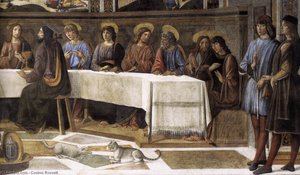
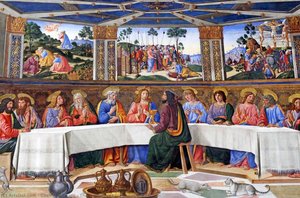
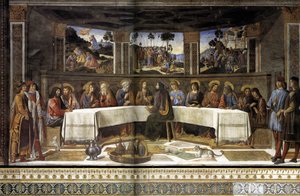
A pivotal moment arrived in 1481 when Rosselli received an invitation to participate in the monumental fresco cycle decorating the walls of the Sistine Chapel in Rome. This commission, alongside such luminaries as Pietro Perugino and Sandro Botticelli, marked a significant turning point in his career, catapulting him onto an international stage. The overarching theme of these frescoes was a carefully constructed parallel between the stories of Moses and Christ—a deliberate attempt to legitimize papal authority and underscore the continuity of divine law. Rosselli’s contributions focused on scenes from the Life of Jesus, showcasing his ability to translate complex narratives into visually compelling compositions. While later accounts, notably those penned by Giorgio Vasari, portrayed him as one of the less gifted artists involved in the project—subject even to ridicule from his peers—it is recorded that his bold use of color and generous application of gold leaf particularly pleased Pope Sixtus IV himself. This papal favor suggests a keen understanding of decorative effect and an ability to cater to the tastes of his patron, qualities essential for success in the competitive world of Renaissance art. His *Last Supper* within the chapel remains a testament to this period, displaying a dynamic composition and attention to detail that reveals his growing mastery.Florentine Commissions and a Developing Style
Upon returning to Florence from Rome, Rosselli continued to receive a steady flow of commissions for altarpieces, frescoes, and panel paintings. His mature style blossomed during this period, characterized by refined compositions, elegant figures, and increasingly detailed landscapes. He retained the linear precision and vibrant colors he had learned from Ghirlandaio but began to incorporate elements of Perugino’s more graceful and harmonious aesthetic. Notable works from this time include frescoes for the Santissima Annunziata church—a significant commission that allowed him to showcase his evolving style on a grand scale—and numerous altarpieces adorning chapels throughout Florence. Rosselli developed a distinctive approach to depicting religious scenes, emphasizing human emotions and interactions while maintaining an atmosphere of reverence and piety. He possessed a talent for portraying the psychological states of his figures, imbuing them with a sense of inner life that resonated with contemporary audiences. The inclusion of contemporary portraits within his biblical narratives also added a layer of realism and engagement, connecting the sacred stories to the everyday lives of those who viewed them.Legacy and Historical Significance
Cosimo Rosselli continued working diligently throughout the early 16th century, securing commissions from prominent Florentine families and religious institutions. However, as new artistic stars rose—Raphael and Michelangelo foremost among them—his prominence gradually diminished. He passed away in Florence around 1520, leaving behind a body of work that reflects his skill as a painter and his dedication to depicting religious themes with clarity and elegance. Today, Rosselli is remembered as a skilled Florentine artist who played an important role in the development of Renaissance art. His participation in the Sistine Chapel frescoes helped solidify Florence’s position as a leading center of artistic innovation, and his own works demonstrate his ability to synthesize diverse influences into a distinctive and refined style. While perhaps not achieving the same level of fame as some of his contemporaries, Cosimo Rosselli's contributions remain significant—a testament to his talent, dedication, and enduring legacy within the rich tapestry of Renaissance art.Influences and Artistic Development
- Early Foundations: Domenico Ghirlandaio’s workshop provided Rosselli with a crucial foundation in painting techniques and compositional principles, shaping his early aesthetic sensibilities.
- Roman Experience: Working alongside other leading Renaissance artists in the Sistine Chapel exposed him to new styles and approaches, broadening his artistic horizons and influencing his later work. The collaborative environment fostered an exchange of ideas and a heightened awareness of contemporary trends.
- Perugino’s Grace: Pietro Perugino's graceful style and harmonious compositions exerted a noticeable influence on Rosselli’s artistic development, encouraging him to refine his figures and create more balanced arrangements.
- Echoes of the Past: He absorbed elements from earlier masters like Masaccio and Fra Angelico, incorporating their innovations—such as realistic depictions of space and emotional expression—into his own distinctive style. This demonstrates a deep understanding of art history and a willingness to learn from those who came before him.
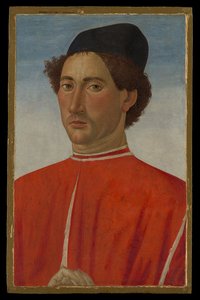
Cosimo Rosselli
1439 - 1507 , Italy
Quick Facts
- Artistic Movement Or Style: Early Renaissance
- Artists Who Influenced This Artist:
- Domenico Ghirlandaio
- Masaccio
- Fra Angelico
- Perugino
- Date Of Birth: 1439
- Date Of Death: 1507
- Full Name: Cosimo Rosselli
- Nationality: Italian
- Notable Artworks: ['The Last Supper (detail)']
- Place Of Birth: Florence, Italy
Related Articles

Dutch Masters: 10 Golden Age Paintings That Still Inspire |
Journey into the Dutch Golden Age! Explore 10 iconic paintings by Rembrandt, Vermeer & Hals. Discover the stories behind these Baroque masterpieces and find museum-quality art reproductions to elevate your home decor on .
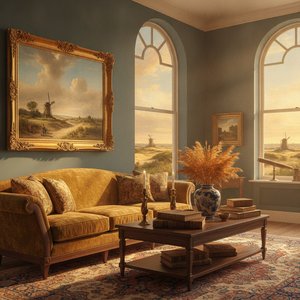
Golden Light & Dutch Skies: Bringing the Magic of Dutch Golden Age Landscapes into Your Home
Transform your home with the breathtaking light of Dutch Golden Age landscapes. Discover how hand-painted oil reproductions of masterworks like Ruisdael and Vermeer bring timeless elegance, atmosphere, and soulful texture to modern interiors. Elevate your space with museum-quality art.

Illuminating Innovation: Exploring the Dutch Golden Age of Painting
Explore the Dutch Golden Age of painting with ArtsDot. Discover Rembrandt, Vermeer & other Masters. Learn about key characteristics, iconic artworks, and lasting influence. Expert insights for collectors & enthusiasts.

Golden Age Reflections: Dutch Baroque Painting & Cultural Innovation
Explore the Dutch Golden Age of painting! Discover key artists like Vermeer & ter Borch, their innovative techniques, and the rich cultural context behind these Baroque masterpieces. Learn about collecting & appreciating this iconic art period.

Illuminating Realism: Exploring the Dutch Golden Age of Painting (1600-1700)
Explore the Dutch Golden Age of painting (1600-1700) with ArtsDot. Discover Rembrandt, Vermeer & other masters. Learn about techniques, history & find museum-quality reproductions.