 Preview
 Send
Send Share
Share
 Details

 Download
 Similars
 X-Ray
X-Ray Diaporama
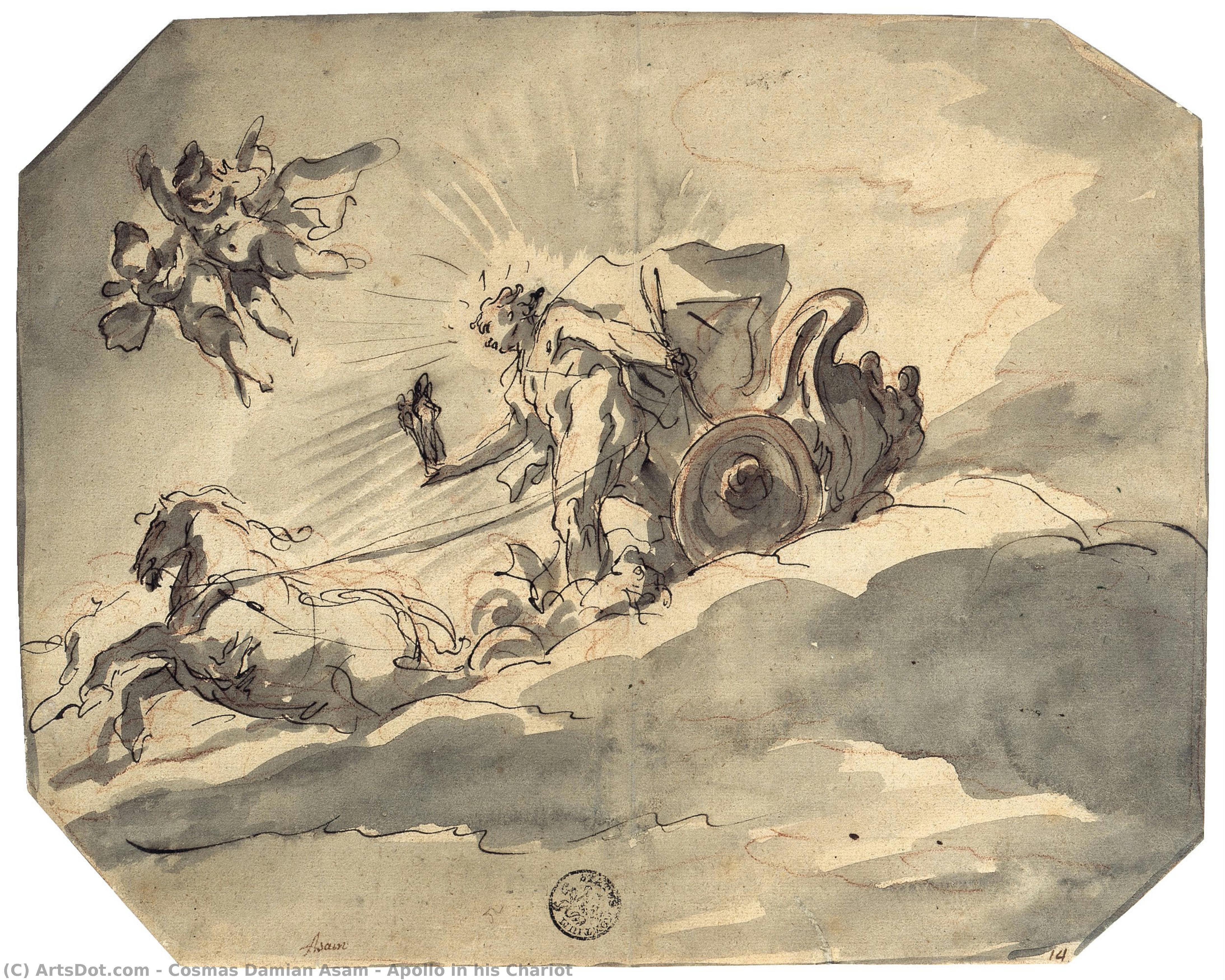
Apollo in his Chariot
 Oil
Oil- WallArt
- Baroque
 1730
1730- Early Modern
 378.0 x 305.0 cm
 Kunstpalast
 Read More
Hand Made Oil Reproduction
Hand-painted oil on canvas in your size and frame, made to order by our artists. ( Buy Print Buy Image)




P118B $10

P118H $10

P118W $10

P438Z $10

P508JH $12

P508YH $12

P805H $10

P805Z $10

P919BZ $10

P919G $10

P919XJ $10

P959ZH $10

P968JZ $12

W106C $8

W218G $10

W218JH $8

W218Y $10

W307PJ $10

W316G $10

W316PJ $8

W316Y $10

W398PJ $8

W4111J $10

W500HY $15

W500JH $15

W692G $12

W849H $8

W940BG $15

W953PJ $8




Pick from our preset sizes that match the artwork's original proportions.

You may enter your own dimensions to fit a specific frame or space. If your selected size does not match the original image's proportions, we will either crop the artwork or extend the painting with additional hand-painted elements. A digital mockup will be sent for your approval before production begins.
Please note that the on-screen preview does not reflect the actual cropping or extension. Only the mockup will accurately show the final composition.
While custom sizes are available, we recommend selecting a dimension from the predefined list to preserve the original proportions.
After order, ArtsDot.com team will email client for instructions and provide a mockup preview
Worldwide Delivery () in 3/4 weeks instead of standard 5 weeks. (16 August). No compromise on quality.

Free Worldwide Express Shipping

High-Quality Linen Canvas

Full Shipping Insurance

Customs Tax Refund Guarantee

True Color Matching Guarantee

60-Day Return Policy (Defects Only)

100% Money-Back Guarantee

Bulk Discount Offer
 Glass option is only available in size under 110 CM

Apollo in his Chariot
Reproduction Medium
Reproduction Size
-


Total Price
$ 263
Artwork Description
A Celestial Ascent: The Radiance of Apollo
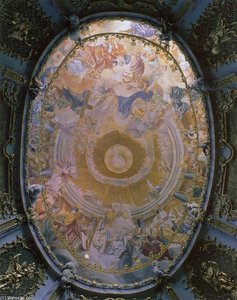
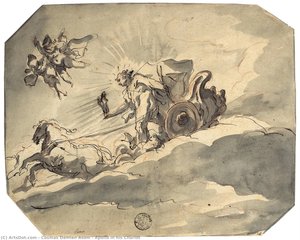
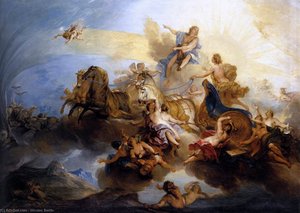
In the grand theater of the Baroque era, few images capture the sheer kinetic energy and divine splendor of the heavens quite like Cosmas Damian Asam’s Apollo in his Chariot. Created around 1730, this monumental masterpiece serves as a breathtaking window into the mythological cosmos. The scene unfolds with a sense of breathless motion, as the sun god Apollo commands his chariot across the sky, pulled by powerful horses that seem to surge through the very fabric of the atmosphere. As he holds aloft a torch—a symbol of the light that banishes darkness—the viewer is transported to a moment of cosmic transition, where the dawn of a new day breaks through the celestial clouds.
The composition is a masterclass in late Baroque dynamism. Asam utilizes a sweeping, upward movement that draws the eye from the terrestrial figures below toward the soaring heights of the chariot. The presence of figures suspended in mid-air and onlookers gathered in the landscape adds a layer of theatricality, suggesting a world where the divine and the mortal are momentarily intertwined. This sense of spectacle is not merely for show; it is designed to evoke awe, pulling the observer into a narrative of triumph, light, and the unstoppable cycle of nature.
Mastery of Light and Illusionistic Grandeur
As a painter deeply embedded in the tradition of German Baroque fresco and architectural decoration, Asam brings an unparalleled sense of scale and illusion to this work. The technique is characterized by a sophisticated use of chiaroscuro, where dramatic contrasts between light and shadow create a profound sense of three-dimensional volume. The way the sunlight catches the musculature of the horses and the flowing drapery of the figures creates a tactile reality that feels almost tangible. For the discerning collector or interior designer, this painting offers more than just a visual subject; it provides a structural focal point capable of commanding an entire room.
The artist’s ability to blend figures into a swirling, atmospheric background is reminiscent of the great illusionistic ceiling painters of his time. This mastery of depth makes the artwork particularly suitable for large-scale reproductions intended for grand halls, libraries, or sophisticated living spaces. The painting does not merely sit upon a wall; it expands the boundaries of the room, creating an architectural illusion of infinite sky and divine presence. It is a piece that invites long periods of contemplation, rewarding the viewer with new details in every glance—from the subtle textures of the chariot to the emotive expressions of the onlookers.
A Timeless Addition to the Refined Interior
Beyond its historical significance, Apollo in his Chariot carries an emotional weight that resonates across centuries. It embodies themes of hope, enlightenment, and the eternal victory of light over shadow. For those seeking to curate a space that exudes classical elegance and intellectual depth, this artwork serves as a profound statement piece. Its vibrant energy can breathe life into more muted color palettes, while its historical gravity provides a sophisticated anchor for contemporary decor.
Choosing a high-quality reproduction of such a significant work allows the splendor of the Asam brothers' legacy to inhabit modern homes. Whether placed in a sun-drenched morning room to echo the theme of the dawn or in a formal study to inspire greatness, this painting remains a testament to the enduring power of mythological storytelling and the sublime beauty of the Baroque spirit.
Related Artworks
Artist Biography
Frederik de Moucheron: A Master of Baroque Still Life
Born in 1633, Frederik de Moucheron’s life and artistic career unfolded within the vibrant tapestry of 17th-century Dutch painting. While not as widely celebrated as some of his contemporaries, De Moucheron carved a distinctive niche for himself through his exquisite still lifes—a genre he elevated with meticulous detail, dramatic lighting, and an almost obsessive focus on capturing the textures and nuances of perishable subjects. His work offers a fascinating glimpse into the tastes and sensibilities of his era, revealing a deep appreciation for nature’s fleeting beauty and the artistry of representation.
De Moucheron's artistic journey began in Florence, a city renowned for its rich artistic heritage. He was deeply influenced by the Baroque style that dominated the Italian art scene at the time, particularly evident in his use of chiaroscuro – the dramatic interplay of light and shadow – to create depth and atmosphere within his compositions. This influence is readily apparent when comparing his work to Carlo Dolci (1616–1686), another Florentine painter known for his devotional still lifes imbued with a similar sense of solemn beauty and meticulous detail. Dolci’s emphasis on the smooth, almost polished quality of his brushstrokes mirrors De Moucheron's own approach, though De Moucheron’s work often possessed a greater dynamism and theatricality.
Despite his success within his lifetime, De Moucheron’s style has not always enjoyed enduring popularity. His paintings, characterized by their sweetness and meticulousness, can sometimes appear overly sentimental to modern viewers. However, a closer examination reveals a remarkable technical skill and an astute understanding of color theory and composition. He was a master of capturing the subtle variations in texture – from the velvety sheen of fruit skins to the delicate folds of fabric – creating images that are both visually arresting and remarkably lifelike. His portraits, particularly those commissioned by British patrons visiting Florence, gained considerable acclaim for their understated elegance and objective portrayal of his subjects.
The Influence of Isaac
While De Moucheron’s direct connection to the renowned biblical painter Isaac (c. 1608 – 1674) is not definitively established, there's a compelling argument to be made for a significant influence. Isaac was known for his dramatic use of light and shadow, his ability to render textures with astonishing realism, and his penchant for depicting scenes of everyday life imbued with spiritual significance. De Moucheron’s paintings share several stylistic similarities with Isaac’s work, including the careful observation of natural forms, the skillful manipulation of chiaroscuro, and a tendency to arrange objects in compositions that evoke a sense of quiet contemplation.
Furthermore, both artists were deeply committed to capturing the ephemeral beauty of perishable subjects. Isaac frequently depicted fruits, flowers, and other foodstuffs – often arranged in still life settings – as symbols of mortality and the transience of earthly pleasures. De Moucheron followed this tradition, creating paintings that celebrate the fleeting nature of beauty while simultaneously reminding us of its inherent fragility. The influence of Isaac’s approach undoubtedly contributed to De Moucheron's distinctive artistic vision.
Technique and Composition
De Moucheron’s technical prowess is immediately apparent in his meticulous attention to detail. He employed a layering technique, building up the surface of his paintings with numerous thin glazes of paint – a method known as ‘alla prima’ – to achieve a remarkable level of luminosity and depth. His use of color was equally sophisticated, employing subtle gradations and delicate transitions to create a sense of atmospheric perspective and visual harmony.
Compositionally, De Moucheron favored arrangements that were both balanced and dynamic. He often placed his subjects in shallow, intimate settings, creating a sense of immediacy and drawing the viewer into the scene. The lighting in his paintings is typically dramatic, with strong contrasts between light and shadow used to highlight key elements and create a sense of theatricality. His still lifes are not merely decorative arrangements; they are carefully constructed narratives that invite contemplation and evoke a range of emotions.
Legacy and Historical Significance
Despite his relative obscurity during his lifetime, Frederik de Moucheron’s work has experienced a resurgence in interest among art historians and collectors in recent decades. His paintings are now recognized for their technical brilliance, their evocative atmosphere, and their subtle yet profound insights into the human condition. De Moucheron's contribution to the still life genre lies not only in his masterful technique but also in his ability to imbue these seemingly simple compositions with a sense of spiritual depth and emotional resonance.
His paintings serve as a valuable reminder that beauty can be found in the most unexpected places – in the fleeting moments of everyday life, in the delicate textures of perishable objects, and in the quiet contemplation of nature’s wonders. De Moucheron's legacy endures as a testament to the enduring power of art to capture and convey the essence of human experience.
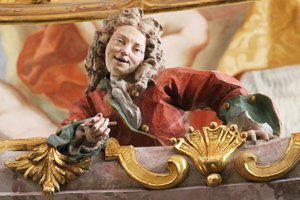
cosmas damian asam
1686 - 1739 , Germany
Quick Facts
- Artistic Movement Or Style: Baroque, Landscape painting
- Artists Who Influenced This Artist: ['Isaac']
- Date Of Birth: 1633
- Date Of Death: 1686
- Full Name: Frederik de Moucheron
Related Articles
German Expressionism's 10 Defining Masterpieces | Art for Your Home
Explore 10 defining German Expressionism masterpieces – from Munch's 'The Scream' to Kandinsky’s abstracts. Discover the artists, stories & bold colors behind this powerful art movement. Find museum-quality reproductions at ArtsDot.com.
The Noble Steed on Canvas: A Historical & Artistic Exploration of Horse Painting Across Cultures
Explore the rich history of horse painting! Discover masterpieces from Stubbs to Munnings & learn about symbolism, techniques & artists. Find museum-quality reproductions at ArtsDot.
The Equine Muse: A Historical & Artistic Exploration of Horses in Painting
Explore the captivating history of horses in painting! Discover Renaissance masterpieces, Baroque grandeur & expert insights for collecting equestrian art. Learn about symbolism, techniques & lasting value with ArtsDot.

Baroque Drama: Bringing Opulence & Emotion into Contemporary Interiors
Explore the opulent world of Baroque interior design! Discover key elements, modern applications & how to bring dramatic elegance into your home with 's authentic reproductions.

The Dramatic Flourish: Exploring the Baroque Movement's Enduring Legacy in Art History
Explore the dramatic world of Baroque art! Discover iconic artists like Caravaggio & Rubens, defining techniques, and its lasting impact on art history. Expert insights for collectors & enthusiasts at ArtsDot.