 Preview
 Send
Send Share
Share
 Details

 Download
 Similars
 X-Ray
X-Ray Diaporama
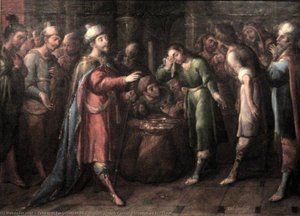
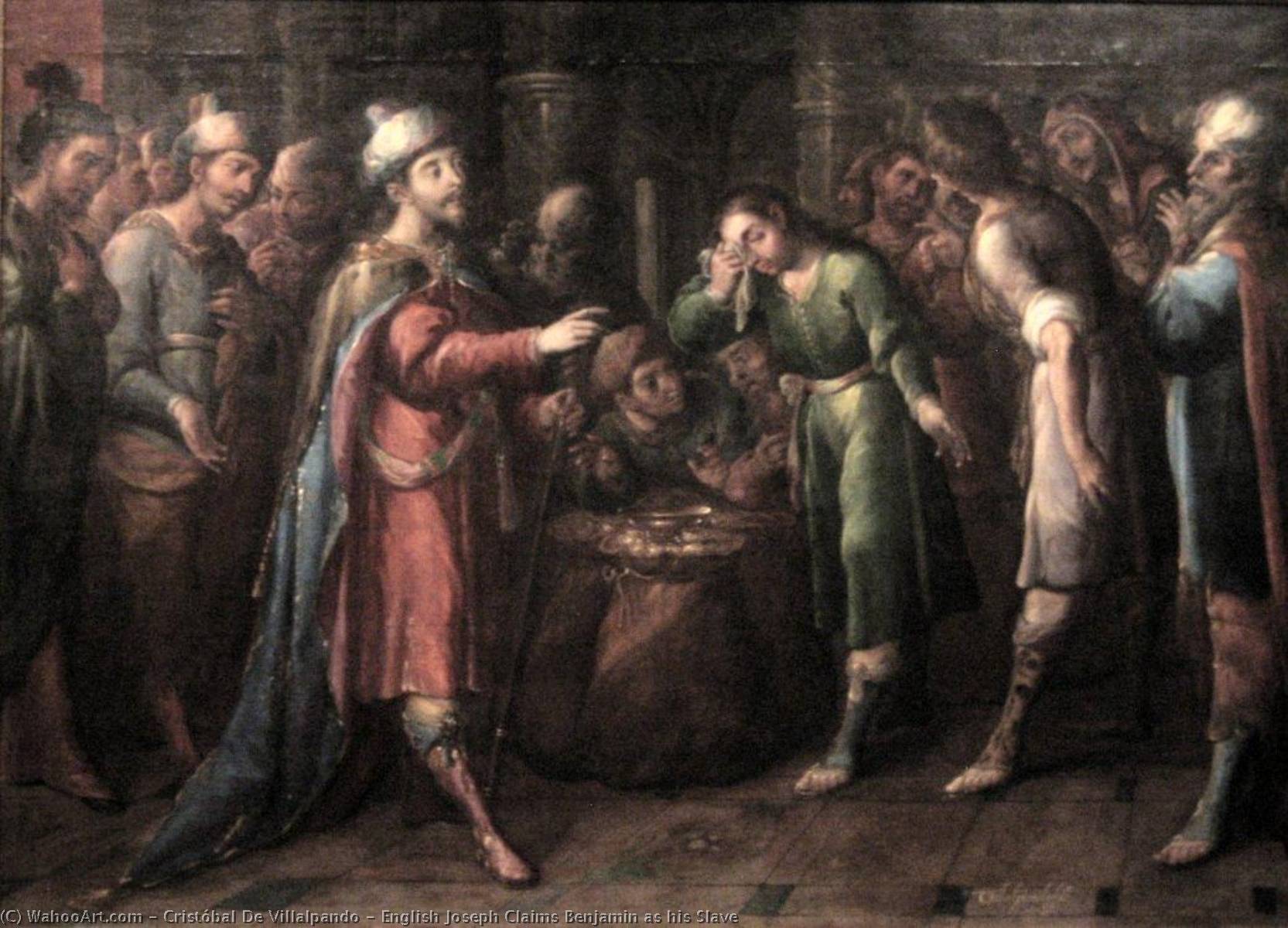
English Joseph Claims Benjamin as his Slave

 Read More
Hand Made Oil Reproduction
Hand-painted oil on canvas in your size and frame, made to order by our artists. ( Buy Print Buy Image)




































Pick from our preset sizes that match the artwork's original proportions.

You may enter your own dimensions to fit a specific frame or space. If your selected size does not match the original image's proportions, we will either crop the artwork or extend the painting with additional hand-painted elements. A digital mockup will be sent for your approval before production begins.
Please note that the on-screen preview does not reflect the actual cropping or extension. Only the mockup will accurately show the final composition.
While custom sizes are available, we recommend selecting a dimension from the predefined list to preserve the original proportions.
After order, ArtsDot.com team will email client for instructions and provide a mockup preview
Worldwide Delivery () in 3/4 weeks instead of standard 5 weeks. (22 August). No compromise on quality.

Free Worldwide Express Shipping

High-Quality Linen Canvas

Full Shipping Insurance

Customs Tax Refund Guarantee

True Color Matching Guarantee

60-Day Return Policy (Defects Only)

100% Money-Back Guarantee

Bulk Discount Offer
 Glass option is only available in size under 110 CM

English Joseph Claims Benjamin as his Slave
Reproduction Medium
Reproduction Size
-


Total Price
$ 263
Related Artworks





Artist Biography
A Life Immersed in Baroque Splendor
Cristóbal de Villalpando, born in Mexico City in 1649 and passing away in the same vibrant metropolis in 1714, stands as a pivotal figure in the development of Spanish Baroque painting within the viceregal context of New Spain. He wasn’t merely an artist; he was a product of his time—a man deeply entwined with both the artistic currents flowing from Europe and the unique cultural tapestry being woven in colonial Mexico. Villalpando's life unfolded against a backdrop of religious fervor, social stratification, and burgeoning artistic patronage, all of which profoundly shaped his oeuvre.
His origins within the influential Villalpando family afforded him opportunities beyond those available to many aspiring artists. Early on, he demonstrated an aptitude for painting, leading to an apprenticeship with Baltasar de Echave Rioja (Echave the Younger) in the Echave workshop—a crucial formative experience that laid the foundation for his technical skills and artistic sensibility. Simultaneously, Villalpando embraced a life of civic duty, serving in the local militia as an ensign, a testament to his family’s standing and his own sense of responsibility. In 1669, marriage to María de Mendoza further solidified his position within Mexico City society, and together they raised four children.
The Flourishing of a Prolific Career
Villalpando quickly established himself as a highly sought-after artist, receiving numerous commissions for religious works. His talent wasn’t confined to a single location; he secured projects in both Mexico City and Puebla, showcasing his versatility and growing reputation. The sacristy of the Mexico City Cathedral became a significant canvas for his artistry, housing several notable paintings that exemplify his evolving style. Beyond individual artworks, Villalpando's administrative capabilities were recognized when he repeatedly served as director (veedor) of the painters’ guild—a role indicating both respect from his peers and an ability to navigate the complexities of artistic production.
Perhaps one of his most compelling achievements is his depiction of the Zócalo, Mexico City's main square. This work isn’t simply a topographical rendering; it’s a poignant record of the 1692 riot that damaged the viceregal palace three years prior. The painting serves as both historical documentation and a powerful statement about social unrest within the colonial environment. Villalpando even included a self-portrait, subtly embedded within his *Apparition of Saint Michael on Mount Gargano* in the sacristy of the Mexico City Cathedral—a testament to his artistic ego and desire for lasting recognition, nestled amongst the clergy at the bottom right.
Influences and Artistic Development
The early works of Villalpando bear a clear imprint of Peter Paul Rubens’ influence. The dynamism, rich colors, and dramatic compositions characteristic of the Flemish master are readily apparent in his initial paintings. However, Villalpando wasn't content to simply imitate; he embarked on a journey of stylistic evolution, gradually moving away from the extremes of vivid coloring and excessive robustness that defined some Baroque approaches. He cultivated a more measured style, embracing a broader palette and skillfully incorporating elements of New World painting traditions—a fusion that distinguished his work from purely European models.
As his career progressed, Villalpando demonstrated an increasing mastery of light and shadow. He moved away from uniform luminosity, employing greater contrast to create depth and drama within his compositions. This technique wasn’t merely aesthetic; it served to heighten the emotional impact of his religious scenes, drawing viewers into the narrative and fostering a sense of spiritual contemplation. He tailored his style meticulously to the specific nature of each work and the preferences of its patron, showcasing both versatility and sensitivity.
A Legacy of Emulation and Historical Significance
Villalpando’s impact on Mexican Baroque painting is undeniable. His work was widely emulated by other artists, solidifying his position as a leading figure in the artistic landscape of New Spain. He possessed an exceptional ability to balance technical precision with expressive power, creating paintings that were both visually stunning and emotionally resonant.
His significance extends beyond purely aesthetic considerations. Villalpando’s art provides valuable insights into the religious beliefs, social dynamics, and political tensions of colonial Mexico. His depictions of sacred subjects reflect the deep faith prevalent within society, while his historical paintings offer glimpses into moments of unrest and upheaval. He wasn't just painting *for* the Church or the elite; he was painting a visual record of a complex world—a world where European influences collided with indigenous traditions, creating a unique artistic synthesis.
- Major Works: Depiction of the Zócalo (Mexico City), Apparition of Saint Michael on Mount Gargano (Mexico City Cathedral sacristy).
- Style Characteristics: Spanish Baroque, dramatic lighting, vivid colors evolving to a more measured palette, incorporation of New World traditions.
- Influences: Peter Paul Rubens, Baltasar de Echave Rioja.
Cristóbal de Villalpando’s legacy endures not only in the magnificent paintings he left behind but also in the enduring influence he exerted on generations of Mexican artists. He remains a testament to the power of art to reflect, shape, and preserve cultural memory—a Baroque master whose work continues to captivate and inspire.
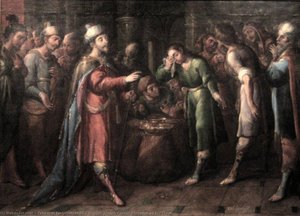
cristóbal de villalpando
1649 - 1714
Quick Facts
- Artistic Movement Or Style: Baroque
- Artists Who Influenced This Artist: ['Peter Paul Rubens']
- Date Of Birth: 1649
- Date Of Death: 1714
- Full Name: Cristóbal de Villalpando
- Nationality: Spanish-Mexican
- Notable Artworks:
- Zócalo depiction
- Apparition of Saint Michael
- Place Of Birth: Mexico City, Mexico