 Preview
 Send
Send Share
Share
 Details

 Download
 Similars
 X-Ray
X-Ray Diaporama
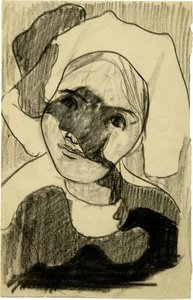
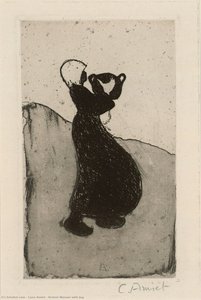
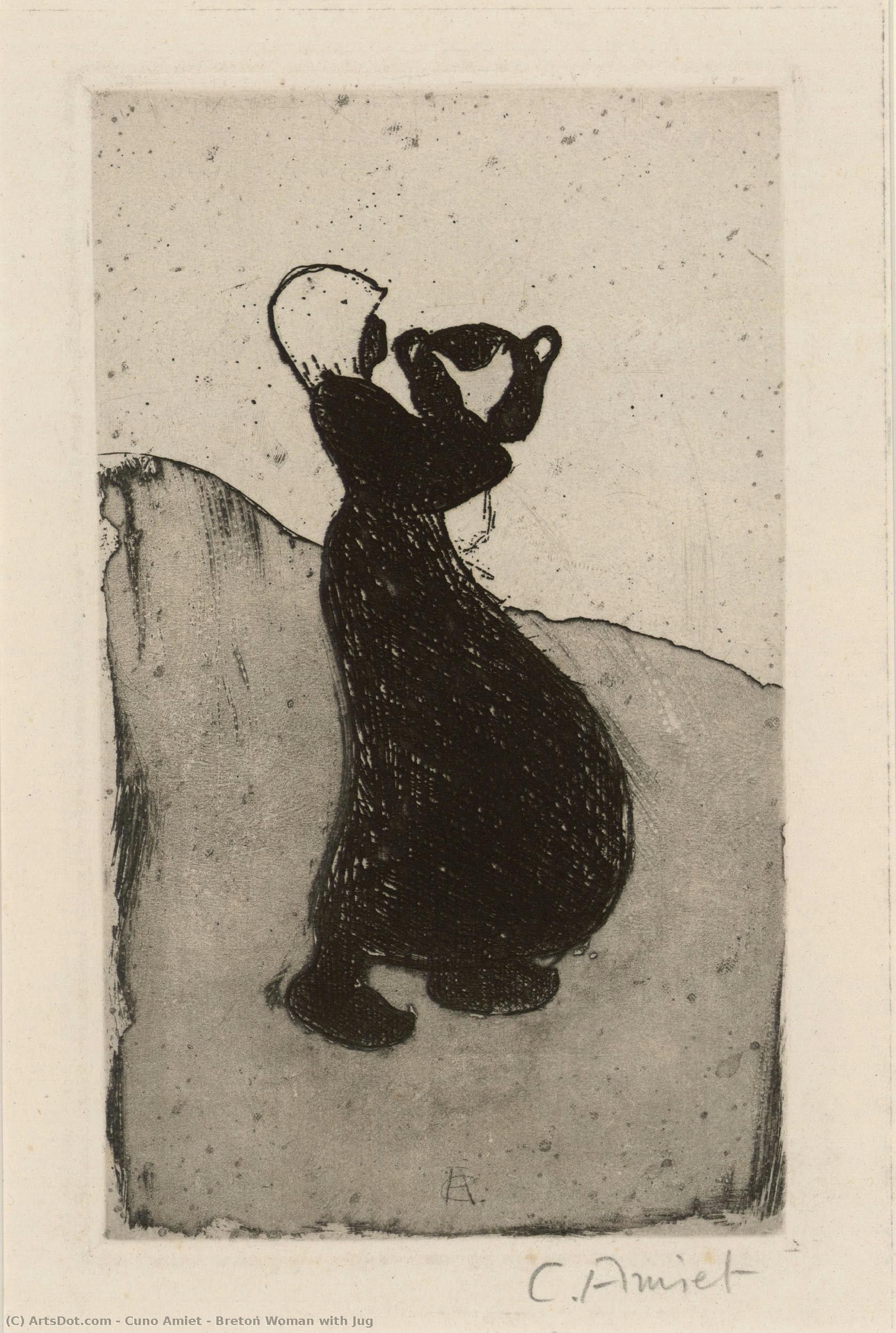
Breton Woman with Jug
 Etching
- Symbolism
 1893
1893- 19th Century
 18.0 x 11.0 cm
 Musée de Pont-Aven
 Read More
Hand Made Oil Reproduction
Hand-painted oil on canvas in your size and frame, made to order by our artists. ( Buy Print Buy Image)




P118B $10

P118H $10

P118W $10

P438Z $10

P508JH $12

P508YH $12

P805H $10

P805Z $10

P919BZ $10

P919G $10

P919XJ $10

P959ZH $10

P968JZ $12

W106C $8

W218G $10

W218JH $8

W218Y $10

W307PJ $10

W316G $10

W316PJ $8

W316Y $10

W398PJ $8

W4111J $10

W500HY $15

W500JH $15

W692G $12

W849H $8

W940BG $15

W953PJ $8




Pick from our preset sizes that match the artwork's original proportions.

You may enter your own dimensions to fit a specific frame or space. If your selected size does not match the original image's proportions, we will either crop the artwork or extend the painting with additional hand-painted elements. A digital mockup will be sent for your approval before production begins.
Please note that the on-screen preview does not reflect the actual cropping or extension. Only the mockup will accurately show the final composition.
While custom sizes are available, we recommend selecting a dimension from the predefined list to preserve the original proportions.
After order, ArtsDot.com team will email client for instructions and provide a mockup preview
Worldwide Delivery () in 3/4 weeks instead of standard 5 weeks. (17 August). No compromise on quality.

Free Worldwide Express Shipping

High-Quality Linen Canvas

Full Shipping Insurance

Customs Tax Refund Guarantee

True Color Matching Guarantee

60-Day Return Policy (Defects Only)

100% Money-Back Guarantee

Bulk Discount Offer
 Glass option is only available in size under 110 CM

Breton Woman with Jug
Reproduction Medium
Reproduction Size
-


Total Price
$ 263
Artwork Description
A Moment of Quietude in Brittany
In the delicate, monochromatic lines of Breton Woman with Jug, we are transported to the rugged, windswept coasts of France in 1893. This exquisite etching by the Swiss master Cuno Amiet captures a fleeting moment of pastoral tranquility, where the boundaries between humanity and the wild landscape seem to dissolve. The subject, a woman poised with a jug in hand, stands as a silent sentinel upon a hillside, overlooking the vast, unseen expanse of the ocean. There is a profound sense of stillness in her posture, a contemplative grace that invites the viewer to pause and breathe alongside her. Through the masterful use of light and shadow inherent in the etching technique, Amiet breathes life into the textures of the earth and the soft contours of the figure, creating a scene that feels both intimately personal and timelessly universal.
The composition is layered with subtle narratives that reward the wandering eye. While the woman remains the focal point, the presence of distant figures and a solitary bottle resting on the ground suggests a shared human experience—perhaps a momentary respite during a day of labor or a quiet gathering in the salt-kissed air. The interplay between the foreground subject and the receding background creates a sense of depth that pulls the observer into this coastal dreamscape. For the collector, this piece offers more than just a visual depiction; it provides a window into the Symbolist spirit of the late 19th century, where the external landscape serves as a mirror for internal emotional states.
The Mastery of Line and the Legacy of Pont-Aven
Technically, this work represents a rare and precious chapter in Amiet’s storied career. During his transformative time in Pont-Aven, a period heavily influenced by the burgeoning movements of Art Nouveau and Expressionism, Amiet produced only a handful of works centered on the Breton theme. This specific etching is one of an incredibly limited series, with only a few prints ever brought into existence. The precision of the etched lines demonstrates his ability to command the medium, using stark contrasts to evoke the atmospheric weight of the Atlantic coast. It is a testament to his skill that such a small-scale work, measuring just 18 x 11 cm, can carry such immense emotional gravity.
For interior designers and connoisseurs of fine art, a reproduction of this caliber serves as a sophisticated focal point in any curated space. Its monochromatic elegance allows it to integrate seamlessly into diverse decor styles, from the minimalist modern gallery look to the rich, textured layers of a classical study. Owning a piece that echoes the historical significance of the 1931 Glaspalast exhibition—where much of Amiet's Pont-Aven period was tragically lost to fire—is to hold a fragment of art history in one's hands. This artwork is not merely a decoration; it is an invitation to experience the enduring beauty of the human spirit intertwined with the quiet majesty of nature.
Related Artworks
Artist Biography
The Architect of Color: The Life and Legacy of Cuno Amiet
In the grand tapestry of European modernism, few threads are as vibrant or as transformative as those woven by Cuno Amiet. A pioneer who dared to elevate color above all other formal elements, Amiet did not merely paint landscapes; he reimagined the very language of Swiss art. Born in Solothurn in 1868, his early life was steeped in an intellectual atmosphere shaped by his father, Josef Ignaz Amiet, the chancellor of the canton. This foundation of humanist ideals provided the quiet strength behind a career that would eventually shatter the rigid boundaries of academic tradition and introduce a revolutionary, expressive vitality to the Swiss landscape.
Amiet’s artistic journey was one of constant movement and profound discovery, traversing the great art capitals of Europe. His early training under Frank Buchser led him to the prestigious Munich Academy of Fine Arts, where he forged lasting bonds with contemporaries like Giovanni Giacometti. However, it was his time in Paris that truly ignited his creative spirit. Immersed in the academic rigor of masters such as Adolphe William Bouguereau, Amiet simultaneously found himself drawn to the radical whispers of the Pont-Aven School. Influenced by the likes of Émile Bernard and Paul Sérusier, he began to move away from the heavy reliance on tonal shading, instead embracing a philosophy where pure, unadulterated color became the primary vehicle for emotion and composition.
A Symphony of Light and Expression
The true genius of Amiet lies in his ability to synthesize these diverse influences into a singular, unmistakable style. Upon returning to Switzerland in 1893, he established a studio in Hellsau, creating a sanctuary for artistic experimentation. His work from this period reflects a fascinating tension between the delicate precision of etching and the bold, sweeping gestures of modernism. In pieces such as Breton Woman with Jug, one can witness his mastery of line and the quiet, Symbolist spirit that sought to mirror internal emotional states through the external world.
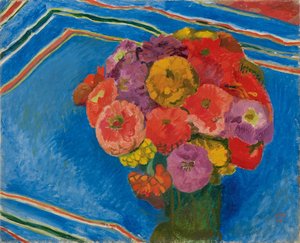
As his career progressed, Amiet’s palette grew increasingly daring. He became a master of the Expressionist idiom, utilizing thick brushstrokes and textural impasto to breathe life into his subjects. Whether capturing the serene glow of a sunset in Evening in Hellsau or the intense, rhythmic energy of a still life like Zinnias on a Blue Cloth, his work remains anchored by a profound respect for nature. His ability to manipulate light and pigment allowed him to transform ordinary scenes into extraordinary experiences of color, making him a vital link between the late 19th-century traditions and the burgeoning avant-garde movements of the 20th century.
Historical Significance and Enduring Impact
The legacy of Cuno Amiet is measured not just in the thousands of works he left behind, but in the way he fundamentally altered the trajectory of Swiss painting. By prioritizing color as a dominant compositional force, he paved the way for future generations of artists to explore abstraction and emotional expressionism without the constraints of literal representation. His life was a testament to the power of artistic evolution—a journey from the disciplined halls of Munich and Paris to the creation of a uniquely Swiss modernism.
Today, Amiet is remembered as a monumental figure whose contributions extend far beyond the canvas. His impact can be summarized through several key pillars of his career:
- Revolutionary Color Theory: He was the first Swiss painter to grant precedence to color over line and tone, establishing a new standard for modern composition.
- Bridge Between Movements: His work seamlessly integrated the influences of the Pont-Aven School with the emerging energy of Expressionism.
- Cultural Catalyst: Through his studio in Hellsau, he fostered an artistic community that helped modernize the Swiss art scene.
- Versatility of Medium: From delicate etchings and illustrations to powerful oil paintings and sculptures, his prolific output demonstrated a complete mastery of diverse artistic disciplines.
Cuno Amiet passed away in 1961, leaving behind a world that had been permanently brightened by his vision. His works remain enduring witnesses to a time of great transition, inviting every viewer to pause and experience the profound beauty of a world seen through the lens of pure, expressive color.
Cuno Amiet
1861 - 1924
Quick Facts
- Artistic Movement Or Style: Expressionism
- Artists Or Movements Influenced By This Artist: ['Ferdinand Hodler']
- Artists Who Influenced This Artist:
- Giovanni Giacometti
- Frank Buchser
- Adolphe William Bouguereau
- Date Of Birth: March 28, 1868
- Date Of Death: July 6, 1961
- Full Name: Cuno Amiet
- Nationality: Swiss
- Notable Artworks:
- Evening in Hellsau
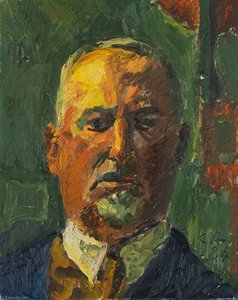
- Selbstportrait, 1934
- Zinnias on a Blue Cloth
- Place Of Birth: Solothurn, Switzerland
Related Articles

White on Canvas: 10 Masterpieces & Timeless Elegance for Your Home Decor
Explore 10 iconic white paintings by Monet, Whistler & Rothko! Discover the stories behind these serene masterpieces and their impact on art history. Find museum-quality reproductions for your home decor at .
Etching Masters: 10 Legendary Prints That Revolutionized Art | ArtsDot
Journey through 10 legendary etching masterpieces by Rembrandt, Dürer & Goya. Explore the history of printmaking and discover timeless art for your home. Find museum-quality reproductions at ArtsDot.com.

Dark Masterpieces: 10 Iconic Paintings Dominated by Black Tones |
Explore 10 iconic paintings dominated by black tones, from Rembrandt’s chiaroscuro to Goya's dark expressions. Discover the stories behind these masterpieces & find museum-quality art reproductions for your home at .

Etching: A Historical Survey of Technique, Aesthetic Qualities & Enduring Artistic Significance
Explore the rich history of etching, from its origins to Rembrandt's masterful innovations. Discover the technique, aesthetic qualities & enduring legacy of this captivating art form. Expert insights for collectors and enthusiasts.
The Intricate World of Etching: A Historical Survey of Technique, Aesthetic Evolution, and Enduring Artistic Impact
Explore the rich history of etching, from its origins to modern practice. Discover techniques, key artists like Rembrandt, and insights for collectors. A comprehensive guide by ArtsDot.