 Preview
 Send
Send Share
Share
 Details

 Download
 Similars
 X-Ray
X-Ray Diaporama
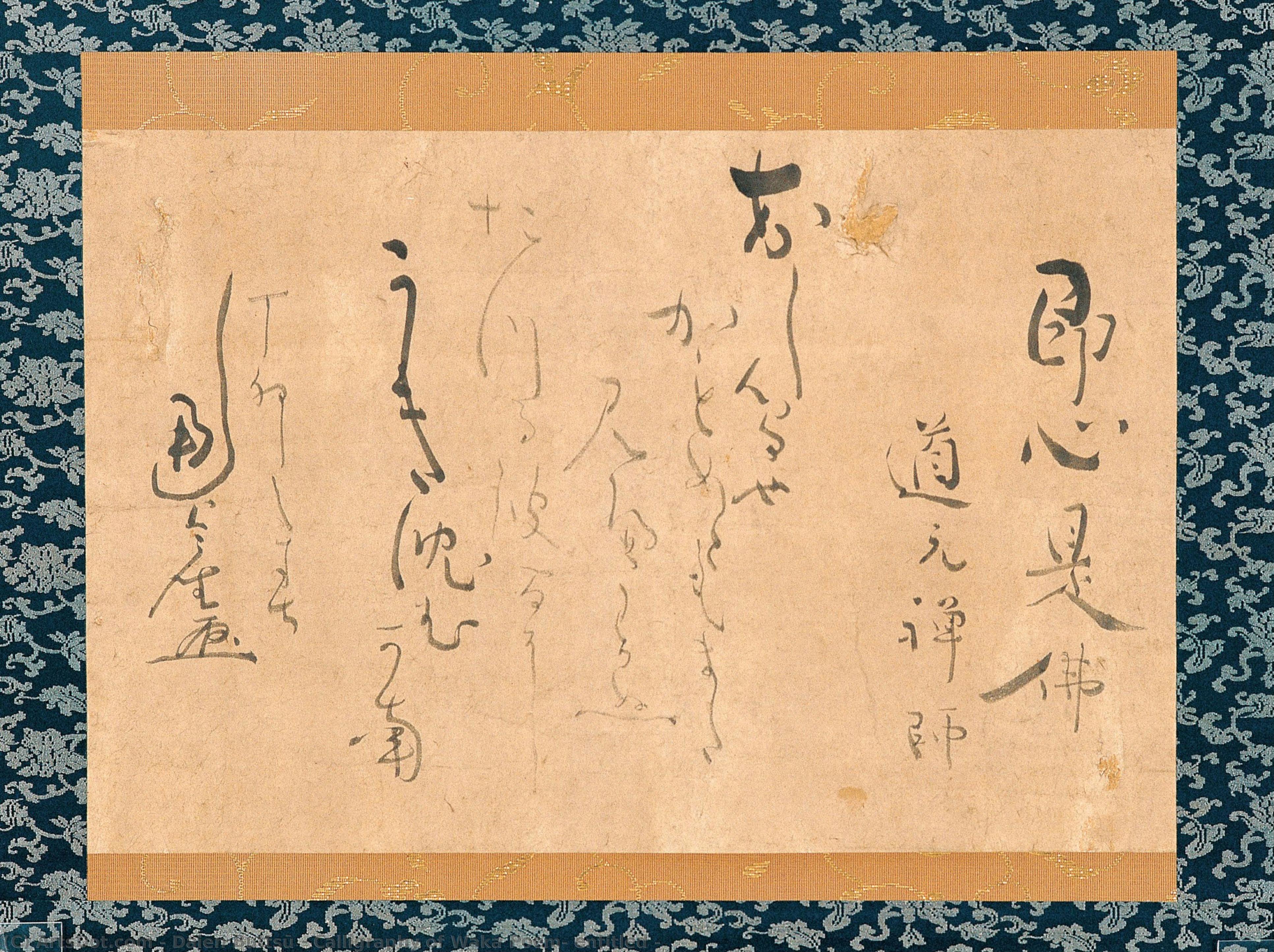
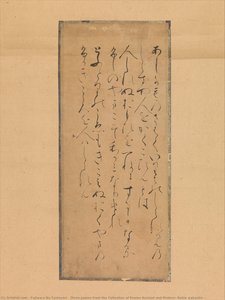
Calligraphy of Waka Poem, entitled

 Read More
Giclée / Art Print
Museum-quality giclée or canvas print with fast production and flexible finish options. ( Buy Hand Made Painting Buy Image)




































Pick from our preset sizes that match the artwork's original proportions.

You may enter your own dimensions to fit a specific frame or space. If your selected size does not match the original image's proportions, we will either crop the artwork or extend the image with a mirrored or solid-fill edge. A digital mockup will be sent for your approval before production begins.
Please note that the on-screen preview does not reflect the actual cropping or extension. Only the mockup will accurately show the final composition.
While custom sizes are available, we recommend selecting a dimension from the predefined list to preserve the original proportions.
Worldwide Delivery () in 2 weeks instead of standard 4/5 weeks. (27 August)

Free Worldwide Express Shipping

High-Quality Linen Canvas

Full Shipping Insurance

Customs Tax Refund Guarantee

True Color Matching Guarantee

60-Day Return Policy (Defects Only)

100% Money-Back Guarantee

Bulk Discount Offer
 Glass option is only available in size under 110 CM

Calligraphy of Waka Poem, entitled
Giclée / Art Print
Reproduction Size
-


Total Price
$ 63
Related Artworks






Artist Biography
The Echoes of the Everyday: Exploring the Work of William Adames
William Adames (1803-1825), a name perhaps less familiar than his contemporaries, nevertheless represents a fascinating and quietly powerful voice within the burgeoning Romantic movement in England. Born in Wotton under Edgehill, Gloucestershire, into a family of modest means – his father was a carpenter – Adames’ early life instilled in him an appreciation for craftsmanship and a keen observation of the natural world. This foundation would profoundly shape his artistic trajectory, leading him to create a body of work characterized by its meticulous detail, evocative landscapes, and a subtle yet persistent exploration of human experience within the context of rural England. His tragically short life – he succumbed to illness at just 21 – only served to amplify the poignant beauty found in his paintings.Early Influences and Artistic Training
Adames’ artistic journey began with a rudimentary apprenticeship under local portrait painter, Thomas Busby. However, it was the influence of the Pre-Raphaelites, particularly their emphasis on direct observation and detailed rendering of nature, that truly ignited his passion. While he never formally joined the group, Adames shared many of their core principles – a rejection of idealized forms in favor of honest representation, a fascination with folklore and mythology, and a deep connection to the English countryside. Crucially, he was deeply impacted by the works of John Everett Millais, whose meticulous depictions of rural life resonated strongly with Adames’ own sensibilities. He also studied under William Hayley at the Royal Academy, absorbing classical techniques while simultaneously developing his unique style.A Palette of Rural England
Adames' paintings are overwhelmingly landscapes, but they are not simply picturesque views. He possessed a remarkable ability to imbue even the most commonplace scenes – a farmer tending his sheep, a cottage nestled amongst rolling hills, a stream meandering through a wood – with a sense of profound emotion and quiet contemplation. His technique was characterized by an almost obsessive attention to detail; every blade of grass, every ripple in the water, every weathered stone is rendered with painstaking accuracy. This meticulousness wasn’t merely technical; it served as a means of capturing the essence of his subjects – conveying not just their appearance but also their spirit and connection to the land. His palette was muted and earthy, dominated by greens, browns, and blues, reflecting the colors of the English countryside.Key Works and Recurring Themes
Among Adames’ most celebrated works are *The Shepherdess*, *A Cottage in Gloucestershire*, and *The River Wotton*. *The Shepherdess*, painted in 1823, is particularly notable for its evocative portrayal of a young woman tending her flock – a scene brimming with both vulnerability and resilience. The painting captures the quiet dignity of rural life, suggesting a deep connection between humanity and nature. Similarly, *A Cottage in Gloucestershire* showcases Adames’ ability to transform a simple dwelling into a symbol of warmth, comfort, and belonging. Recurring themes in his work include the beauty of the English countryside, the lives of ordinary people, and the importance of tradition. He frequently depicted scenes of rural labor, highlighting the dignity and hard work involved in sustaining life on the land.Historical Significance and Legacy
Despite his tragically short career, William Adames left a significant mark on English art. His meticulous realism and evocative depictions of rural England aligned him with the Pre-Raphaelites, though he maintained a distinct artistic voice. His work offers a valuable counterpoint to the grand narratives and idealized representations prevalent in much of 19th-century art. He is often overlooked, yet his paintings possess a quiet beauty and emotional depth that continues to resonate with viewers today. His dedication to capturing the authentic details of everyday life serves as a reminder of the power of observation and the enduring appeal of the English countryside. His work can be seen as a subtle but powerful expression of Romantic ideals – a celebration of nature, humanity, and the simple pleasures of rural existence.
daien buttsū
1825 , Japan
Quick Facts
- Artistic Movement Or Style: World Goes Pop
- Date Of Death: 1825
- Notable Artworks:
- Evelyne Axell
- Joav BarEl
- Thomas Bayrle