 Preview
 Send
Send Share
Share
 Details

 Download
 Similars
 X-Ray
X-Ray Diaporama
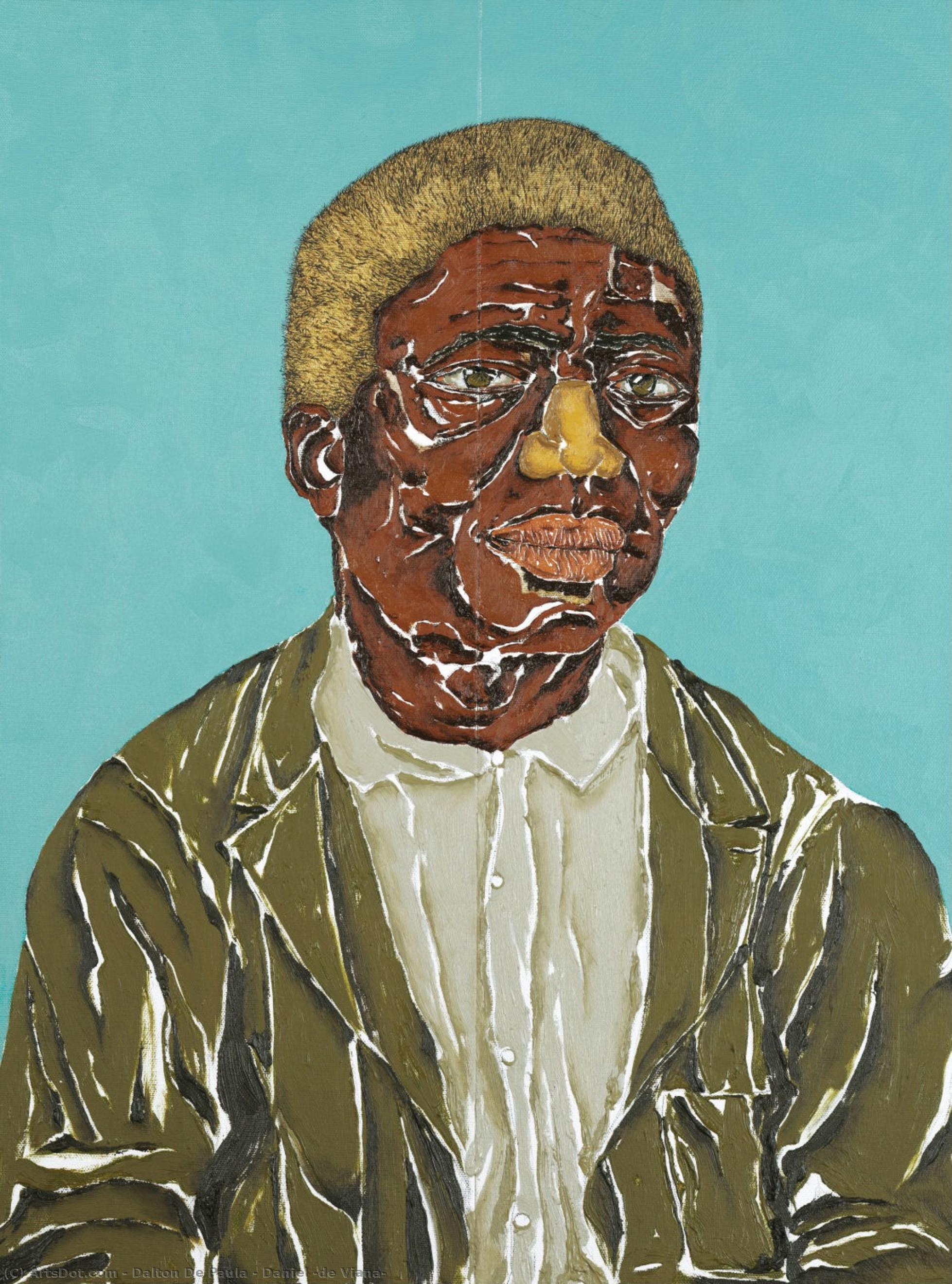
Daniel (de Viana)
 Oil On Canvas
- WallArt
- Contemporary Realism
 2020
2020- Contemporary
 7.0 x 45.0 cm
 Pinacoteca do Estado de São Paulo
 Read More
Hand Made Oil Reproduction
Hand-painted oil on canvas in your size and frame, made to order by our artists. ( Buy Print Buy Image)




P118B $10

P118H $10

P118W $10

P438Z $10

P508JH $12

P508YH $12

P805H $10

P805Z $10

P919BZ $10

P919G $10

P919XJ $10

P959ZH $10

P968JZ $12

W106C $8

W218G $10

W218JH $8

W218Y $10

W307PJ $10

W316G $10

W316PJ $8

W316Y $10

W398PJ $8

W4111J $10

W500HY $15

W500JH $15

W692G $12

W849H $8

W940BG $15

W953PJ $8




Pick from our preset sizes that match the artwork's original proportions.

You may enter your own dimensions to fit a specific frame or space. If your selected size does not match the original image's proportions, we will either crop the artwork or extend the painting with additional hand-painted elements. A digital mockup will be sent for your approval before production begins.
Please note that the on-screen preview does not reflect the actual cropping or extension. Only the mockup will accurately show the final composition.
While custom sizes are available, we recommend selecting a dimension from the predefined list to preserve the original proportions.
After order, ArtsDot.com team will email client for instructions and provide a mockup preview
Worldwide Delivery () in 3/4 weeks instead of standard 5 weeks. (18 August). No compromise on quality.

Free Worldwide Express Shipping

High-Quality Linen Canvas

Full Shipping Insurance

Customs Tax Refund Guarantee

True Color Matching Guarantee

60-Day Return Policy (Defects Only)

100% Money-Back Guarantee

Bulk Discount Offer
 Glass option is only available in size under 110 CM

Daniel (de Viana)
Reproduction Medium
Reproduction Size
-


Total Price
$ 263
Artwork Description
A Portrait of Defiance and Dignity
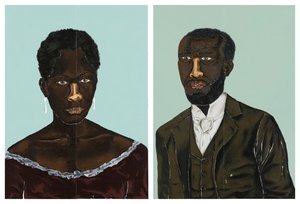
In the evocative oil on canvas titled Daniel (de Viana), the contemporary Brazilian artist Dalton de Paula breathes life into a historical figure of profound significance. The painting presents a striking portrait of Daniel Antônio Araújo, a man whose name is etched in the annals of resistance as a leader of the quilombola revolt in nineteenth-century Maranhão. Through a masterful command of light and shadow, De Paula captures more than just a likeness; he captures a soul caught between the weight of historical struggle and the quiet dignity of personal resolve. The subject sits before the viewer, his gaze direct and contemplative, inviting an intimate dialogue that transcends the boundaries of time.
The technique employed in this work showcases the meticulous skill characteristic of fine oil portraiture. Every detail, from the texture of the man's beard to the subtle folds of his suit jacket and the crispness of his white shirt, is rendered with a precision that honors the classical tradition. The artist utilizes a rich, saturated palette, where the deep tones of the subject's attire contrast sharply against a profound blue background. This choice of backdrop is not merely decorative; it provides a sense of infinite depth, isolating the figure in a space of eternal reflection and ensuring that the viewer’s focus remains locked upon the intensity of Daniel's expression.
The Weight of History and Symbolism
Beyond its aesthetic brilliance, Daniel (de Viana) serves as a powerful vessel for historical memory. The painting functions as a visual reclamation of a narrative often sidelined by mainstream history. By depicting the leader of the 1867 revolt in formal attire—a suit and tie that suggest a composed, statesman-like presence—De Paula subtly challenges the colonialist archetypes of the era. There is a profound symbolism in this juxtaposition: the clothing represents a sense of reclaimed agency and personhood, while the serious, unyielding gaze reminds us of the heavy cost of the fight for freedom. The work captures the tension of a man who sought to defend the enslaved without causing harm, yet was forced into a life of insurrection and eventual imprisonment.
For the discerning collector or interior designer, this piece offers an unparalleled emotional resonance. It is a conversation starter that brings both intellectual depth and a commanding presence to any space. Whether placed in a curated gallery setting or as a focal point in a sophisticated study, the painting radiates a quiet strength. The interplay of the somber subject matter with the luminous, expertly executed oil technique makes it an ideal acquisition for those who seek art that is not only visually stunning but also deeply rooted in the human struggle for justice and identity.
Related Artworks


Artist Biography
Jean-Michel Basquiat: A Voice From the Streets and Beyond
Born in Brooklyn, New York, in 1960 to Haitian and Puerto Rican parents, Jean-Michel Basquiat’s life was a collision of cultures and experiences that profoundly shaped his art. His early years were marked by movement – leaving home at fifteen to live in Lower Manhattan, immersing himself in the vibrant, chaotic world of New York City's downtown scene. He found work as a messenger boy, a nightclub bouncer, and even a deckhand on a fishing boat, experiences that instilled a keen awareness of social inequalities and the complexities of urban life – themes that would become central to his artistic vision.
Initially known as SAMO (short for “same old, same old”), Basquiat began his career as a graffiti artist in the late 1970s. Alongside Al Diaz, he created cryptic statements and images on subway cars and building walls, challenging established art conventions and engaging with the city’s undercurrents of rebellion and disillusionment. These early works, characterized by bold lettering and provocative imagery, laid the groundwork for his later explorations of identity, power, and social commentary. The SAMO collaboration was a crucial period in developing his visual language and understanding of public space as an artistic canvas.
The Rise to Fame: 1980-1985
The turning point arrived in 1980 with the “Times Square Show,” a collective exhibition organized by Basquiat, Diaz, and other artists. This audacious event, held in an abandoned building in Times Square, brought Basquiat’s work to the attention of the art world. Critics quickly recognized his unique style – a potent blend of street art aesthetics, Neo-Expressionist techniques, and intellectual commentary. The influential article “The Radiant Child” by Rene Ricard in *Rolling Stone* magazine catapulted him to international fame, solidifying his position as a rising star.
This period saw Basquiat’s work evolve rapidly. He moved from the raw energy of graffiti to more refined canvases, incorporating elements of history, mythology, and personal experience. His paintings frequently featured crowns – a symbol of royalty and authority – alongside skulls, musical instruments, and fragmented text. These recurring motifs reflected his fascination with power structures, mortality, and the complexities of identity. The market for Basquiat’s work exploded, fueled by both genuine appreciation for his artistic vision and the speculative fervor of the 1980s art boom.
A Complex Legacy: Themes and Influences
Basquiat's art is a rich tapestry woven from diverse influences. He drew heavily on African history and culture, particularly the work of Congolese artist Mba Mobimba, incorporating symbols and imagery that referenced ancient traditions and spiritual beliefs. His interest in jazz music—its improvisational nature, its exploration of complex harmonies, and its roots in Black American experience—is evident in the layered, multi-referential quality of many of his paintings. He also engaged with pop culture, advertising, and the iconography of New York City, often juxtaposing these elements to create jarring and thought-provoking compositions.
Crucially, Basquiat’s work was deeply informed by his own experiences as a Black artist navigating a predominantly white art world. He acutely felt the tension between being celebrated for his talent and simultaneously subjected to racial stereotypes and tokenization. His paintings became a direct critique of this double standard, challenging viewers to confront issues of race, power, and representation. He frequently used lists, inventories, and diagrams within his works, creating a sense of overwhelming information—a reflection of the complexities and contradictions he perceived in society.
Style and Technique
Basquiat’s style is instantly recognizable – characterized by bold colors, energetic brushstrokes, and a distinctive layering of imagery. He often combined painting with drawing, collage, and text, creating works that were both visually arresting and intellectually stimulating. His use of drips, splatters, and gestural marks conveyed a sense of spontaneity and immediacy, while his meticulous attention to detail—particularly in the rendering of anatomical diagrams and historical symbols—added layers of complexity and meaning.
His paintings frequently resemble jazz compositions – improvisational, expansive, and brimming with unexpected connections. Many images carry multiple meanings, some deliberately obscured, inviting viewers to actively engage with the work and construct their own interpretations. The artist sought collisions of seemingly disparate elements—history, pop culture, personal experience—to create a vibrant and unsettling reflection of the world around him.
A Tragic End and Lasting Impact
Jean-Michel Basquiat’s life was tragically cut short at the age of 27 in August 1988 due to a heroin overdose. Despite his brief career, he left behind an extraordinary body of work that continues to resonate with audiences today. His paintings have achieved remarkable prices at auction, demonstrating the enduring value of his artistic vision and the recognition of his place as one of the most important artists of the late 20th century. Basquiat’s legacy extends beyond the art world; he remains a powerful symbol of creativity, resilience, and social commentary – a voice from the streets that continues to challenge and inspire.
dalton de paula
1982 - , Brazil
Quick Facts
- Artistic Movement Or Style: Neo-Expressionism
- Artists Or Movements Influenced By This Artist:
- Jazz
- African art
- Artists Who Influenced This Artist:
- Andy Warhol
- Graffiti artists
- Date Of Birth: 1960
- Date Of Death: 1988
- Full Name: Jean-Michel Basquiat
- Nationality: American
- Notable Artworks:
- Untitled (1982)
- Dustheads
- Echoes in the Rain
- Place Of Birth: Brooklyn, New York
Related Articles

Demandes Commerciales
APS ofrece reproducciones de bellas artes y encargos personalizados desde 2004. Confían en nosotros corporaciones, hoteles y coleccionistas selectos para obras de arte de calidad museística, servicio discreto y soluciones artísticas completas. ¡Póngase en contacto con nosotros para obtener un presupuesto personalizado!

Goya's Masterpieces: Explore 25 Iconic Paintings & Art Prints | ArtsDot
Delve into the world of Francisco Goya with ArtsDot. Explore 25 iconic paintings – from 'The Third of May' to his haunting Black Paintings. Discover the stories, techniques & emotions behind these Spanish masterpieces. Find museum-quality art reproductions for your home at ArtsDot.com!

A riguardo di noi
Découvrez notre histoire ! Nous apportons l'art de classe mondiale dans votre vie grâce à une sélection experte, des créations personnalisées et des aperçus gratuits. Approuvé par les particuliers et les entreprises depuis 2000.

Alceu de Paula Penna: A Synthesis of Brazilian Modernism & Poetic Abstraction
Explore the captivating world of Alceu de Paula Penna, a pivotal figure in Brazilian Modernism. Discover his innovative concrete poetry & influence on Latin American art history. Expert insights for collectors.

Pieter de Hooch: Illuminating Dutch Domestic Life & Golden Age Charm
Explore the captivating world of Pieter de Hooch, a master of Dutch Golden Age painting. Discover his innovative use of light, intimate domestic scenes, and lasting influence on art history. Learn more at ArtsDot.