 Preview
 Send
Send Share
Share
 Details

 Download
 Similars
 X-Ray
X-Ray Diaporama
Voluptas
 Etching
- WallArt
- Renaissance
 1500
1500 225.0 x 136.0 cm
 Hermitage Museum
 Read More
Hand Made Oil Reproduction
Hand-painted oil on canvas in your size and frame, made to order by our artists. ( Buy Print Buy Image)




P118B $10

P118H $10

P118W $10

P438Z $10

P508JH $12

P508YH $12

P805H $10

P805Z $10

P919BZ $10

P919G $10

P919XJ $10

P959ZH $10

P968JZ $12

W106C $8

W218G $10

W218JH $8

W218Y $10

W307PJ $10

W316G $10

W316PJ $8

W316Y $10

W398PJ $8

W4111J $10

W500HY $15

W500JH $15

W692G $12

W849H $8

W940BG $15

W953PJ $8




Pick from our preset sizes that match the artwork's original proportions.

You may enter your own dimensions to fit a specific frame or space. If your selected size does not match the original image's proportions, we will either crop the artwork or extend the painting with additional hand-painted elements. A digital mockup will be sent for your approval before production begins.
Please note that the on-screen preview does not reflect the actual cropping or extension. Only the mockup will accurately show the final composition.
While custom sizes are available, we recommend selecting a dimension from the predefined list to preserve the original proportions.
After order, ArtsDot.com team will email client for instructions and provide a mockup preview
Worldwide Delivery () in 3/4 weeks instead of standard 5 weeks. (18 August). No compromise on quality.

Free Worldwide Express Shipping

High-Quality Linen Canvas

Full Shipping Insurance

Customs Tax Refund Guarantee

True Color Matching Guarantee

60-Day Return Policy (Defects Only)

100% Money-Back Guarantee

Bulk Discount Offer
 Glass option is only available in size under 110 CM

Voluptas
Reproduction Medium
Reproduction Size
-


Total Price
$ 288
Artwork Description
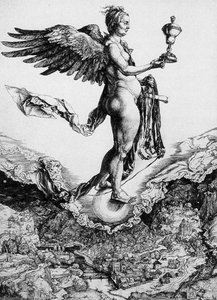
The Allure of Voluptas: A Renaissance Vision Etched in Shadow and Grace
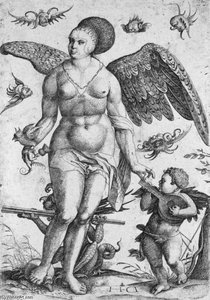
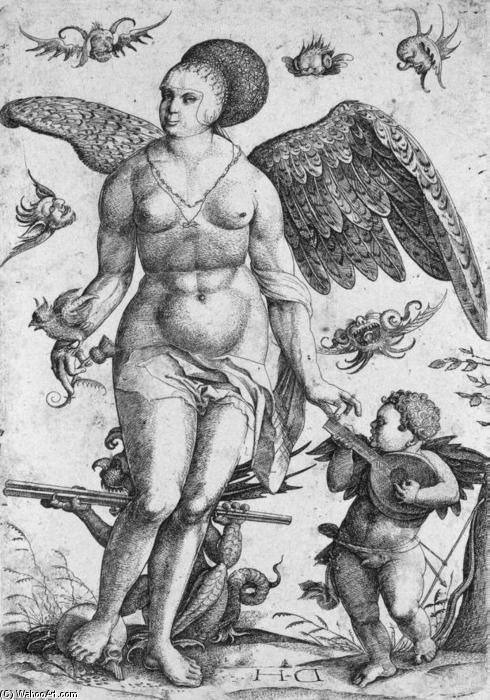
To gaze upon this etching, titled Voluptas, is to step directly into the luminous, intricate world of the High Renaissance. It is a masterpiece that transcends mere depiction; it is an eloquent meditation on beauty, desire, and the depths of human experience. The monochromatic drama, rendered solely in shades of gray, forces the viewer to look beyond color and engage with the very structure of light and shadow—the delicate dance between presence and void.
The central figure, a winged allegory, commands attention. Her posture speaks of inherent grace, yet her gaze, perhaps reflected in the mirror she holds, suggests a profound self-awareness. She stands poised upon a pedestal, an island of classical form amidst a teeming, mysterious ocean of life. This composition is not merely decorative; it is deeply symbolic, inviting contemplation on what we perceive as pleasure and what lies beneath the surface.
Mastery in Line: The Art of Renaissance Etching
The technical brilliance displayed here speaks volumes about the skill of its creator, Daniel Hopfer. This work exemplifies the pinnacle of Renaissance printmaking, a medium that allowed artists to achieve an almost architectural level of detail. Notice how the artist has employed fine lines with breathtaking virtuosity. These etched lines do not just outline; they build texture—the soft down of wings contrasting sharply with the hard scales of the surrounding marine life, or the ripple of flowing drapery.
The etching process itself, requiring needles to scratch into a metal plate, lends an inherent delicacy to the final product. The resulting tonal variations, achieved through varying densities of ink and line work, create an illusion of depth that is both palpable and ethereal. It is a testament to meticulous craftsmanship, where every curve and every shadow has been deliberately placed.
Symbolism Beneath the Surface: Pleasure and the Subconscious
The subject matter invites scholarly curiosity. Voluptas, meaning pleasure or delight, anchors the piece in classical allegory. The winged figure herself embodies this concept, elevated by her wings suggesting a divine or transcendent quality to earthly pleasures. Yet, the surrounding elements complicate this simple reading. The dense congregation of sea creatures—the fish and coral—often symbolize the subconscious mind, the untamed depths of emotion that lie beyond conscious thought. Meanwhile, the smaller cherub playing the lute adds an element of harmonious, perhaps even fleeting, joy.
This interplay between the self-reflective mirror, the sensual allegory, and the mysterious sea suggests a rich philosophical dialogue: what is true pleasure? Is it found in outward beauty, or in the quiet harmony achieved by acknowledging our deepest, hidden currents?
A Timeless Aesthetic for Modern Spaces
For the collector or designer seeking an object of profound cultural weight, this reproduction offers unparalleled depth. While its origins are rooted in the 16th century and the innovative hand of Daniel Hopfer, its emotional resonance remains utterly contemporary. Imagine this piece gracing a salon wall; it does not merely decorate—it elevates the atmosphere, lending an air of learned romance and sophisticated mystery to any interior. Owning a reproduction allows one to connect intimately with the Renaissance spirit: a time when art was inseparable from philosophy, where every line told a story of human aspiration.
Related Artworks

Artist Biography
Daniel Hopfer: Pioneer of Printmaking and Armour Decoration
Daniel Hopfer (c. 1470 – 1536) stands as a singular figure in Renaissance art history, credited as the first to master etching—a transformative technique that revolutionized printmaking and profoundly impacted decorative arts. Born in Kaufbeuren, Germany, he emerged from a family steeped in artistic tradition, inheriting his father’s skill as a painter and establishing himself firmly within Augsburg’s vibrant guild system. This city, renowned for its armour industry, would become the crucible of Hopfer's extraordinary career—a career marked by innovation, meticulous craftsmanship, and an enduring legacy that continues to inspire artists today.- Early Life and Training: Hopfer’s formative years were spent honing his artistic abilities under the tutelage of his father, Bartholomäus Hopfer, a respected painter whose influence undoubtedly shaped Daniel's aesthetic sensibilities. Augsburg provided an ideal environment for fostering creativity, attracting artists from across Europe and nurturing a thriving cultural landscape. The artist’s citizenship in 1493 solidified his position within this influential community.
- The Invention of Etching: Hopfer’s contribution to art history transcends mere stylistic imitation; he fundamentally altered the artistic process itself. Prior to Hopfer's experimentation with acid etching on metal—a technique previously confined to armourers—printmaking relied primarily on woodcuts. Hopfer recognized the potential of transferring intricate designs from woodblocks onto iron plates, achieving unparalleled precision and detail. This breakthrough dramatically expanded the expressive possibilities of printmaking and irrevocably altered its trajectory.
Armour Etching: A Synthesis of Craftsmanship and Artistic Vision
Hopfer’s fame rests largely upon his groundbreaking work in armour etching—a field where he achieved unparalleled mastery. Unlike many artists of his time who focused solely on painting, Hopfer skillfully blended artistic creativity with technical expertise, adapting techniques developed by gunsmiths to the creation of decorative armour plates. His designs weren't merely functional; they were imbued with symbolic meaning and stylistic sophistication, reflecting the grandeur of Augsburg’s imperial patronage and embodying the ideals of Renaissance ornamentation.- The Maximilian I Connection: Hopfer’s collaboration with Emperor Maximilian I cemented his reputation as a leading armour etcher. The emperor commissioned Hopfer to decorate ceremonial armour—a task that demanded not only technical skill but also an understanding of heraldry and visual symbolism. This association elevated Hopfer's artistic stature and ensured the dissemination of his designs throughout Europe.
- Influence on Dürer: Evidence suggests a significant influence between Hopfer and Albrecht Dürer, arguably the most celebrated artist of the German Renaissance. While the precise nature of their relationship remains debated, stylistic parallels—particularly in the use of linear etching techniques—strongly indicate that Dürer learned from Hopfer’s pioneering innovations.
Religious Prints and Landsknecht Imagery: Expanding Artistic Horizons
Beyond armour decoration, Hopfer produced a diverse body of prints encompassing religious subjects and depictions of landsknechts—the elite mercenary warriors who dominated the German landscape during Maximilian I’s reign. These prints showcased Hopfer's versatility as an artist, demonstrating his ability to adapt stylistic conventions to convey complex narratives and evoke powerful emotions. His meticulous attention to detail—characteristic of both etching and woodcut—captured the dynamism and grandeur of these historical scenes with remarkable accuracy.- Stylistic Innovation: Hopfer’s prints exemplify a distinctive artistic style characterized by bold lines, expressive shading, and masterful rendering of textures. He skillfully incorporated elements from Italian Renaissance art—particularly the influence of Leonardo da Vinci—into his compositions, reflecting the broader cultural exchange that flourished during Maximilian I's reign.
- Legacy: Hopfer’s enduring legacy extends beyond his individual artworks; he established a family tradition of etching excellence. His sons, Jörg, Hieronymus and Lambert, continued his father’s craft, furthering the development of etching techniques and disseminating Hopfer's artistic vision throughout Augsburg and Nuremberg.
Concluding Remarks: A Forgotten Renaissance Master Rediscovered
Despite facing relative obscurity during his lifetime—a consequence partly attributable to the ephemeral nature of printmaking—Daniel Hopfer’s contribution to art history has been steadily recognized in recent decades. Scholarly research, coupled with advancements in imaging technology, has illuminated the breadth and depth of his artistic oeuvre, revealing a truly remarkable artist who stands at the vanguard of Renaissance innovation. Today, Hopfer's etchings continue to captivate audiences worldwide—a testament to his enduring genius and an inspiring reminder that artistic excellence can emerge from unexpected corners of history.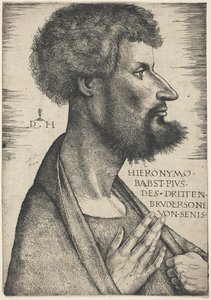
Daniel Hopfer
1470 - 1536 , Germany
Quick Facts
- Artistic Movement Or Style: Renaissance
- Artists Or Movements Influenced By This Artist: ['Italian Renaissance']
- Artists Who Influenced This Artist: ['Albrecht Dürer']
- Date Of Birth: c. 1470
- Date Of Death: 1536
- Full Name: Daniel Hopfer
- Nationality: German
- Notable Artworks:
- The Peasant Feast
- Geometric design for an ornamented ceiling
- Place Of Birth: Kaufbeuren, Germany
Related Articles
Etching: A Historical Survey of Technique, Aesthetic Qualities & Enduring Artistic Significance
Explore the rich history of etching, from its origins to Rembrandt's masterful innovations. Discover the technique, aesthetic qualities & enduring legacy of this captivating art form. Expert insights for collectors and enthusiasts.
Etching Masters: 10 Legendary Prints That Revolutionized Art | ArtsDot
Journey through 10 legendary etching masterpieces by Rembrandt, Dürer & Goya. Explore the history of printmaking and discover timeless art for your home. Find museum-quality reproductions at ArtsDot.com.
The Intricate World of Etching: A Historical Survey of Technique, Aesthetic Evolution, and Enduring Artistic Impact
Explore the rich history of etching, from its origins to modern practice. Discover techniques, key artists like Rembrandt, and insights for collectors. A comprehensive guide by ArtsDot.

Giclée Prints: Archival Quality & Aesthetic Nuances for the Discerning Collector
Explore the world of giclée prints with ArtsDot. Learn about archival quality, aesthetic nuances & investment potential. Expert guidance for discerning art collectors seeking museum-quality reproductions and lasting value.

The Enduring Legacy of Fine Art Prints: Technique, History & Aesthetic Impact
Explore the rich history & techniques of fine art prints. Discover investment potential, assess authenticity, and learn how to preserve your collection with expert guidance. Trusted insights for discerning collectors.